
Quick Answer: Identifying a Reliable Coat Stand for Everyday Use
A reliable coat stand for daily use in Singapore must balance structural stability, material resilience against high humidity, and a compact footprint that fits typical residential entryways. To ensure long-term durability, prioritize brands that provide explicit net weight specifications, maximum load capacities, and robust base designs, such as heavy flat steel plates or wide-set solid wood tripods. Look for manufacturers that offer clear assembly instructions, rust-resistant finishes, and transparent warranty terms rather than relying solely on aesthetic appeal.
Immediate checks include verifying the base-to-height ratio, inspecting the joint connection types, and confirming that the unit’s footprint leaves adequate clearance for your front door and walkway. By focusing on these physical indicators, you can select a durable organizer that withstands daily household wear without wobbling or tipping.
Core Criteria for Build Quality and Long-Term Durability
Evaluating a coat stand’s reliability requires looking beyond surface aesthetics. Because these items support asymmetrical loads—such as a single heavy bag on one side or multiple damp umbrellas—their structural integrity depends on specific engineering details. By understanding how frame materials, joint connections, and base geometries interact, you can accurately assess a stand’s lifespan before making a purchase.
Products mentioned in this guide

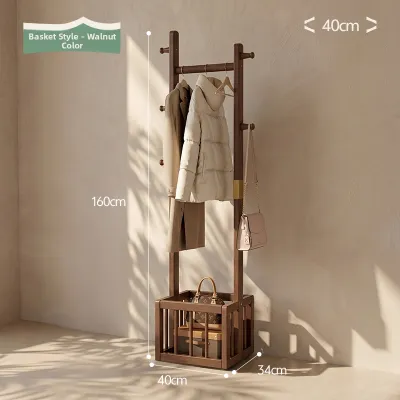
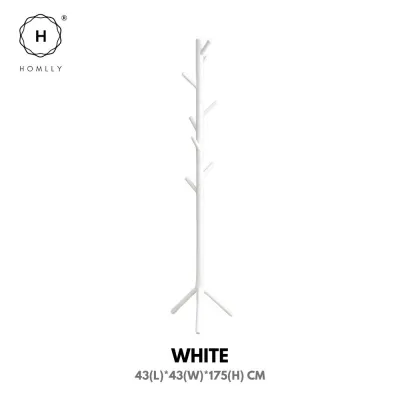
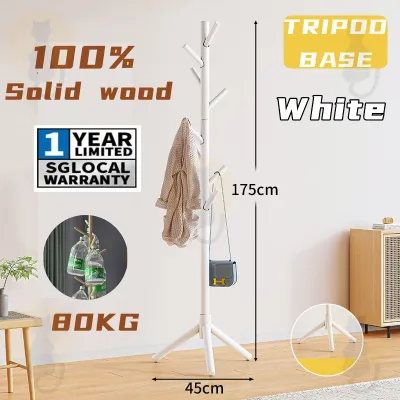

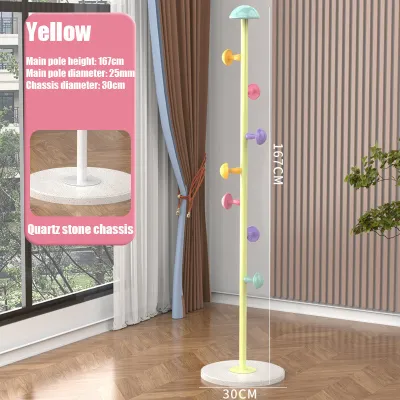
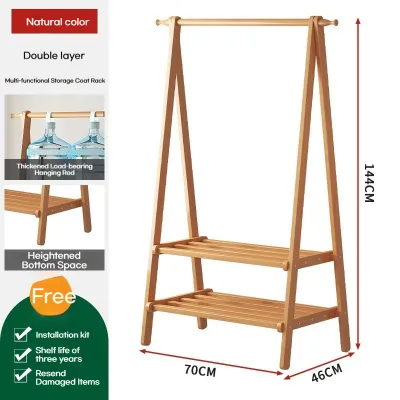
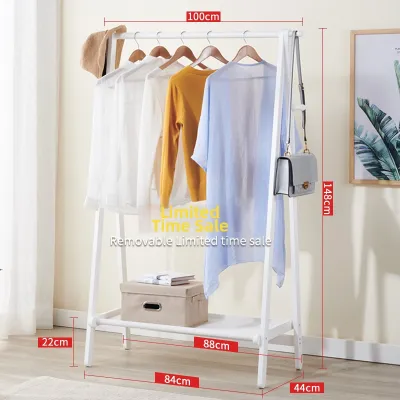
Prices are valid at publication and may change. Please refer to the product page for the latest price.

Frame Materials and Humidity Resilience
Singapore’s tropical climate, characterized by high relative humidity year-round, places unique demands on furniture materials. When evaluating coat stand brands, the choice of frame material directly impacts how well the unit resists warping, rusting, and structural degradation over time.
- Solid Wood: Often favored for its natural aesthetic and weight. However, not all wood species behave the same way in humid environments. Look for brands that specify hardwoods, such as oak, rubberwood, or teak, treated with moisture-resistant sealants or polyurethane topcoats. Avoid assuming that a wood name automatically guarantees durability; check the manufacturer's care instructions to see if the wood requires periodic oiling or must be kept away from damp umbrellas.
- Engineered Wood: Medium-density fibreboard (MDF) or particleboard is common in budget-friendly brands. While highly uniform, engineered wood is susceptible to moisture absorption if the protective laminate or veneer edges are compromised. If choosing an engineered wood stand, inspect the edge banding closely for any gaps where humidity could penetrate and cause swelling or splitting.
- Metal Frames: Steel, iron, and aluminum offer excellent structural strength and a slimmer profile. However, untreated metal will rust quickly in humid conditions. Look for brands that explicitly state the use of powder-coated steel, stainless steel, or anodized aluminum. Powder coating provides a thick, durable barrier against moisture and scratches, but you must still check the joints and screw holes—where the coating can chip during assembly—for signs of exposed metal.
Always verify the manufacturer’s care guidelines. A reliable brand will provide clear instructions on how to clean the frame, usually with a dry or slightly damp microfiber cloth, and whether the unit is rated for damp items like wet raincoats or umbrellas.
Base Design and Weight Distribution
The stability of a freestanding coat stand is governed by physics: the center of gravity must remain as low as possible, and the base must distribute the load across a sufficient surface area. When a stand is loaded with bags, hats, or jackets, an inadequate base will cause the unit to wobble or tip over.
- Tripod Bases: These designs use three angled legs to distribute weight. While inherently stable on slightly uneven floors, the footprint of a tripod base is often wider than other designs. Ensure the legs are securely bolted to the main shaft with heavy-duty metal hardware rather than simple wood screws, which can loosen over time under repeated stress.
- Flat Weighted Bases: Typically circular or square, these bases use a heavy plate, often made of cast iron, solid steel, or weighted resin, at the very bottom. This design keeps the center of gravity extremely low, allowing for a much smaller floor footprint. When browsing online, check the product specifications for the net weight of the base itself; a reliable stand should have a base that constitutes a significant portion of the total product weight.
- Cross-Bases: These consist of two intersecting bars forming an "X". While simple and cost-effective, they offer less surface contact than flat bases and can be prone to tipping if the legs are too short relative to the stand's height.
Visually evaluate the ratio between the base width and the overall height. As a general rule, a taller stand, above 170 cm, requires a wider or significantly heavier base to remain stable when fully loaded. Avoid top-heavy designs that feature large, heavy decorative elements or thick wooden hanging arms at the top paired with a lightweight, hollow base.
Space Planning and Stability for Compact Homes
In Singapore’s residential landscape, where HDB flats and condominiums prioritize efficient space utilization, selecting a coat stand requires careful spatial planning. A stand that is too large will obstruct high-traffic walkways, while one that is too small may fail to meet your household’s daily storage needs.
Before purchasing, measure your designated entryway or foyer space precisely. You must account not only for the physical footprint of the stand’s base but also for the active clearance zone. This zone includes the space occupied by hanging items, such as bulky bags, wide-brimmed hats, or thick jackets, which can extend the effective diameter of the stand by an additional 20 to 30 cm. Ensure that this expanded boundary does not interfere with the swing radius of your front door, safety gate, or nearby cabinet doors.
Furthermore, consider the path of movement through your home. A coat stand placed directly in a narrow corridor can easily be bumped by family members carrying groceries or school bags. If your entryway floor space is exceptionally tight, compare the trade-offs of different formats:
- Freestanding Towers: Offer the flexibility of being moved around and require no wall drilling, making them ideal for renters. However, they demand the most floor space and carry a higher risk of tipping if overloaded.
- Wall-Mounted Racks: Save valuable floor space entirely and are highly stable when installed correctly. However, they require drilling into your walls, which may be restricted in rental properties, and their load capacity is strictly limited by the wall material and the quality of the wall anchors used.
- Over-Door Hooks: The most space-efficient and damage-free option, but they offer limited capacity and can scratch door frames if not fitted with protective padding.
For households with young children or active pets, safety is a paramount concern. Freestanding coat stands can pose a serious tip-over hazard if a child attempts to climb them or pulls on a hanging strap. If you choose a freestanding model, place it in a low-traffic corner, away from play areas, and distribute the weight evenly, keeping heavier bags on the lower hooks. For ultimate peace of mind, look for brands that include anti-tip hardware or wall-anchoring straps, allowing you to secure the top of the freestanding stand directly to a wall stud or solid masonry.
Assessing Brands and Retailers: A Buyer’s Verification Checklist
When shopping for a coat stand in Singapore, you will encounter a vast array of brands across physical showrooms and online marketplaces. Because individual product reviews can sometimes be scarce or focus solely on initial aesthetics, you must use a systematic verification framework to evaluate a brand’s actual reliability and service quality.
First, scrutinize the retailer’s warranty and return policies. A brand that stands behind its build quality will typically offer a clear warranty period—even if it is a limited 6-month or 1-year warranty covering manufacturing defects, joint failures, or structural warping. Be cautious of sellers who offer no warranty or list items as “final sale” with no return options, as this often indicates lower-grade materials or poor quality control. Additionally, check if the brand sells replacement parts, such as extra hooks, rubber feet, or assembly hardware, which can greatly extend the lifespan of your purchase.
Second, analyze user feedback on e-commerce platforms with a critical eye. Skip the generic five-star reviews that only mention “fast delivery” or “nice color.” Instead, filter for reviews that have been updated after several months of use, or look for specific keywords such as “wobble,” “rust,” “peeling,” “screws,” or “tipping.” Pay close attention to how the seller responds to negative feedback; a responsive customer service team that offers solutions or replacements is a strong indicator of a reliable brand.
Third, confirm the exact product specifications and assembly requirements with the seller before finalizing your S$ checkout. Use this checklist to guide your pre-purchase inquiry:
- Finished Dimensions: Confirm the exact height, base diameter, and hook clearance to ensure it fits your space.
- Net Weight: Ask for the total weight of the product, particularly the weight of the base, to gauge its stability.
- Maximum Load Capacity: Verify the maximum weight limit per hook and for the entire stand.
- Assembly Conditions: Determine if the unit arrives fully assembled, or if it requires self-assembly. If self-assembly is required, ask if the necessary tools, such as Allen keys or wrenches, are included, and whether the instructions are available in English.
- Delivery and Access: For larger or heavier units, confirm that the delivery package can fit through your doorway and lift access without difficulty.
By systematically verifying these details, you can confidently select a coat stand that will withstand the rigors of daily use in your home.
Frequently Asked Questions (FAQ)
How many coats can a standard freestanding rack safely hold?
The safe capacity of a freestanding coat stand depends entirely on the manufacturer’s specified maximum load capacity, rather than the physical number of hooks available. While a stand might feature eight or ten hooks, overloading them can lead to joint failure, bent metal, or base tipping. When calculating your needs, factor in the actual weight of the items you plan to hang. For example, heavy winter jackets, wet raincoats, and fully packed work bags or backpacks weigh significantly more than light cardigans or hats. To maintain stability, always distribute the weight evenly around the stand and place the heaviest items on the lower hooks to keep the center of gravity low. Never exceed the manufacturer’s stated weight limits.
Are wall-mounted coat racks safer for households with young children?
Yes, wall-mounted coat racks generally offer a higher safety profile in households with young children because they completely eliminate the risk of the unit tipping over. However, this safety advantage is entirely dependent on proper installation. The rack must be securely anchored into solid masonry walls or wall studs using appropriate heavy-duty wall plugs and screws; relying on simple adhesive strips or weak drywall anchors can result in the rack pulling away from the wall under load. If you prefer a freestanding coat stand, it can still be used safely by placing it in a low-traffic corner behind other furniture, ensuring it has a wide, heavy base, and using wall-anchoring straps to secure the top of the frame to the wall.

Community discussion
Share your experience or ask a question. Comments are reviewed before publication.