
A 5ft sliding wardrobe, measuring approximately 150cm in width, serves as an exceptionally practical storage solution for compact bedrooms in Singapore, particularly within modern HDB flats where floor space is at a premium. Unlike traditional hinged-door wardrobes that require a clear outward swing radius, a sliding door system operates entirely within its own footprint. This space-saving design allows you to position your bed, bedside tables, or study desks much closer to the wardrobe without blocking access to your clothes. Selecting the right 5ft sliding wardrobe involves careful assessment of your room’s physical dimensions, the internal configuration of the cabinet, the durability of the track hardware, and the logistical constraints of delivering large furniture panels through standard HDB lifts and corridors. By focusing on these practical parameters, you can maximize your bedroom’s storage capacity while maintaining a comfortable, uncluttered living environment.
Space Planning and Clearance for a 5ft Sliding Wardrobe
Before purchasing a 5ft sliding wardrobe, precise physical measurements of your bedroom are essential to prevent installation failures. While “5ft” is the standard industry designation, the actual finished width of these wardrobes typically ranges from 150cm to 153cm depending on the manufacturer’s framing and side panel thickness. You must measure the designated wall space at three different heights—near the floor, at the midpoint, and near the ceiling—as walls in residential units are rarely perfectly plumb. Additionally, subtract the thickness of any skirting boards running along the base of the wall, as these can prevent the wardrobe from sitting flush against the wall, leaving gaps or reducing the available walkway space.
Beyond the basic width, you must account for existing room fixtures that cannot be easily relocated. Look closely for wall-mounted power sockets, light switches, and air-conditioning trunking. If a wardrobe covers a power socket, you lose access to that outlet unless the back panel is custom-cut, which may void the manufacturer’s warranty or compromise the structural integrity of the unit. Air-conditioning copper pipes and drainage trunking often run along the upper sections of HDB bedroom walls; ensure the wardrobe’s depth (typically 60cm to 65cm including the sliding track) and height do not collide with this trunking.
Products mentioned in this guide
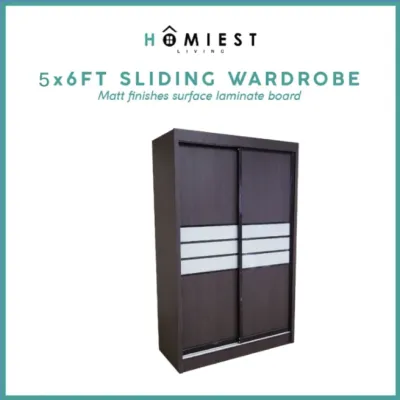
![[HOMIEST] TIA Melamine Half mirror Sliding Wardrobe in 4ft / 5ft](https://img.lazcdn.com/g/p/1776dd130c23b379885663629e56b0c8.jpg_400x400q80.jpg_.webp)
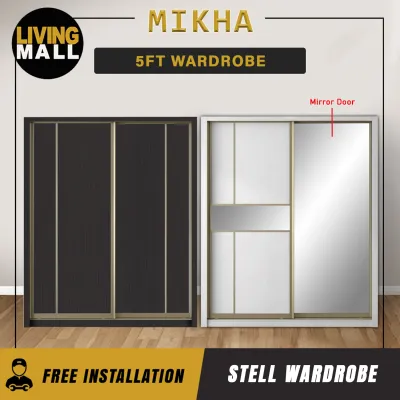
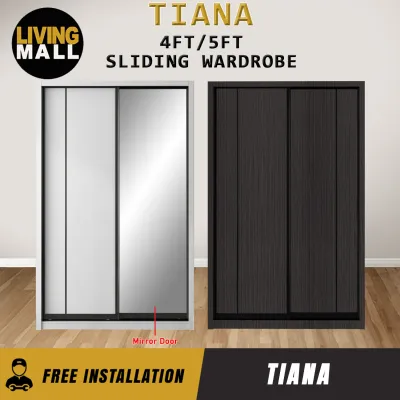
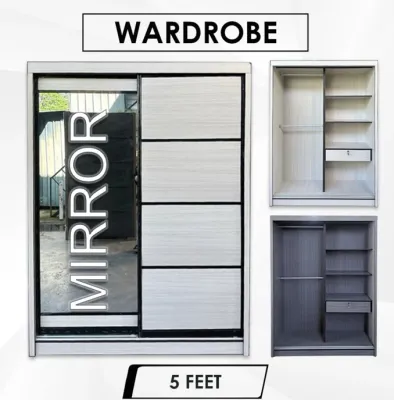
Prices are valid at publication and may change. Please refer to the product page for the latest price.
Clearance in front of the wardrobe is another critical factor for daily comfort. Although sliding doors do not swing outward, you still require adequate physical space to stand, slide the doors, and reach inside. A minimum clearance of 60cm between the front of the wardrobe and the edge of your bed frame is highly recommended. This distance provides just enough room for an adult to walk past and comfortably make the bed. If the clearance is less than 50cm, you may find yourself squeezing sideways, which significantly reduces the usability of the bedroom.
Finally, evaluate the vertical clearance of your bedroom. Standard HDB ceiling heights generally range from 2.6 meters to 2.8 meters, while typical off-the-shelf sliding wardrobes stand between 2.0 meters and 2.4 meters tall. You must ensure there is sufficient overhead clearance for the assembly process, especially if the wardrobe is built flat on the floor and raised upright. Furthermore, check the sweep of any ceiling fans and the position of ceiling light fixtures. A ceiling fan mounted too close to the wardrobe can create a safety hazard when doors are being adjusted or when you are reaching for items stored on the top shelves.
Design and Internal Layouts for Compact Bedrooms
The visual impact of a large piece of furniture in a small bedroom can make the space feel cramped or open, depending on the exterior finishes you choose. For compact HDB bedrooms, sliding wardrobe doors finished with mirrors or light-colored panels are highly effective design choices. Mirrored doors reflect light and the surrounding room, creating an illusion of double the depth and making a small room feel significantly more spacious. However, when choosing mirrored doors, it is vital to verify that the glass features a safety backing film. This film ensures that if the mirror is accidentally struck and shattered, the glass shards remain adhered to the backing rather than scattering across the bedroom floor. If you prefer non-reflective surfaces, light wood grains, matte white, or soft grey laminates help keep the room feeling bright and airy.

The internal layout of a 5ft sliding wardrobe must be carefully zoned to match your specific storage habits, as a poorly organized interior wastes valuable space. Because a 5ft wardrobe is typically split into two main compartments behind two sliding doors, you must decide how to allocate this space between hanging rails and shelving. If your wardrobe consists mostly of formal wear, dresses, and shirts, prioritize double hanging rails—one high and one low—to maximize vertical space. For folded clothing, bed linens, and accessories, a combination of drawers and shelves is more appropriate.
To ensure long-term utility, look for wardrobes that offer adjustable shelving systems. Pre-drilled holes along the interior side panels allow you to reposition shelves as your storage needs change over the years. For example, you can compress shelf heights during winter to store bulky travel gear, or expand them to accommodate storage boxes. If you plan to store heavy items like luggage or thick blankets on the upper shelves, check the manufacturer’s specified load capacity for each shelf to prevent sagging or structural failure.
Integrated lighting is another valuable addition to a deep sliding wardrobe, especially in dimly lit bedrooms. LED strip lights or motion-activated puck lights can be installed inside the cabinet frame or under shelves. When planning for integrated lighting, verify the power source requirements. Battery-operated, rechargeable LED lights are highly convenient for standard wardrobes as they do not require complex wiring. If you select mains-powered lighting, ensure that the power cables can be safely routed out of the wardrobe to a nearby wall socket without being pinched by the sliding doors or the back panel.
Evaluating Material Durability and Track Hardware
The longevity of a sliding wardrobe depends heavily on the quality of its moving parts and the materials used in its construction. Unlike hinged doors that rely on simple side hinges, sliding doors rely entirely on a track and roller system. Before making a purchase, inspect the sliding track mechanism. High-quality systems typically feature aluminum top and bottom tracks, which resist bending and rust. The rollers should be equipped with ball bearings to ensure smooth, quiet operation. When visiting a showroom or reviewing technical specifications, check the maximum weight capacity of the rollers. Heavy mirrored or solid wood doors require robust rollers; lightweight plastic rollers on heavy doors will wear down quickly, leading to misaligned doors that stick or jump off the tracks.
The structural panels of the wardrobe must be suited to Singapore’s tropical climate. High humidity levels can cause low-grade engineered wood to absorb moisture, leading to swelling, warping, and mold growth. While solid wood is highly durable, it is also heavy and expensive. Most modern wardrobes utilize engineered wood options such as Medium-Density Fibreboard (MDF) or particleboard. To ensure these materials withstand the local climate, verify their moisture-resistance ratings on the product label or technical data sheet. Look for boards treated with moisture-resistant resins or those certified under low-emission standards, which indicate better manufacturing quality and adhesive stability.
In addition to the core board material, pay close attention to the edge banding and surface finishes. Edge banding is the thin strip of material used to seal the exposed edges of engineered wood panels. Inspect the joints where the edge banding meets the main laminate surface. There should be no visible gaps, glue residue, bubbling, or peeling. Poorly applied edge banding allows moisture from the air or damp cleaning cloths to penetrate the inner wood core, causing it to swell and ruin the panel. A clean, seamless edge band is a reliable indicator of a well-manufactured wardrobe that will resist wear and tear over years of daily use.
Delivery Logistics and Installation Safety Checks
Purchasing a wardrobe that fits your bedroom is only half the challenge; it must also be successfully transported into your home. Because a 5ft sliding wardrobe consists of large, rigid panels—particularly the doors and side frames—you must measure the delivery pathway before placing an order. Measure the height and width of your HDB lift doors, the clearance height inside the lift cabin, and the width of any tight corners in your common corridor. If you live in an older HDB estate with narrow corridors or smaller lift cars, some long wardrobe panels may not fit. Always request the exact packaged dimensions and weight of the wardrobe components from the retailer or brand official store to confirm they can navigate these spaces.
Once the components arrive in your bedroom, professional assembly is highly recommended. Sliding door mechanisms require precise alignment; even a minor tilt of a few millimeters can cause the doors to slide unevenly or scrape against the frame. During installation, ensure the assembly team checks that the wardrobe is perfectly level on your bedroom floor. If your floor has a slight slope, installers should use shims under the wardrobe base to level the unit, ensuring the sliding doors function correctly.
Safety is paramount, especially with tall, heavy furniture. A fully loaded 5ft sliding wardrobe carries significant weight, and pulling a heavy drawer or sliding a door can shift the center of gravity. To prevent accidental tipping, verify if the manufacturer’s instructions require the unit to be anchored directly to the bedroom wall. Wall anchoring is a standard safety protocol that involves securing the top of the wardrobe to the wall studs or concrete wall using appropriate brackets and wall plugs.
Finally, carefully review the warranty terms provided by the retailer or manufacturer. A comprehensive warranty should cover structural defects in the wood panels as well as the moving parts. Pay close attention to the coverage duration for the sliding tracks, rollers, and soft-close dampers, as these components experience the most physical wear. A warranty that specifically covers track alignment and roller replacement for at least one to two years provides peace of mind that the wardrobe will remain functional and safe to use.
Frequently Asked Questions (FAQ)
Can a 5ft sliding wardrobe fit through standard HDB lift doors?
Yes, most 5ft sliding wardrobes are designed to fit through standard HDB lift doors, but you must verify the packaged dimensions before delivery. Because these wardrobes are delivered flat-packed, the longest components are typically the side panels and the sliding doors, which measure around 2.0 to 2.4 meters in length. Before finalizing your purchase, request the exact package dimensions from the retailer. Compare these figures against the diagonal clearance of your lift door and the interior height of the lift cabin. If the panels are too long to stand upright in the lift, delivery staff may need to carry them up the stairwell, which often incurs additional manual handling fees.
Are sliding wardrobes better than hinged doors for small bedrooms?
Sliding wardrobes are generally superior for small bedrooms because they eliminate the outward swing radius required by hinged doors, allowing you to maximize floor space. With a sliding system, you can place your bed or other furniture within centimeters of the wardrobe front without restricting access. However, sliding wardrobes do have practical trade-offs. You cannot open both sides of a two-door sliding wardrobe simultaneously, meaning you can only view half of your wardrobe contents at any given time. Additionally, the sliding tracks require regular vacuuming and cleaning to prevent dust and hair from clogging the rollers, which is not a concern with traditional hinged doors.

Community discussion
Share your experience or ask a question. Comments are reviewed before publication.