
When buying a bunk bed for your child, the most essential safety features to check are the height and continuity of the guardrails, the stability and rung design of the ladder, the spacing of the support slats, the overall structural integrity of the frame, and the weight limits specified by the manufacturer.
Bunk beds are excellent space-saving solutions, especially in space-constrained urban apartments in Singapore where maximizing bedroom floor area is a priority. However, because these beds elevate a sleeping child several feet off the ground, safety must be your primary filter during the selection process.
Evaluating these physical features before making a purchase ensures that the furniture piece provides a secure sleeping environment. By focusing on verifiable dimensions, manufacturer specifications, and structural checks, you can confidently select a model that minimizes the risk of falls, entrapment, or structural failure.
Products mentioned in this guide
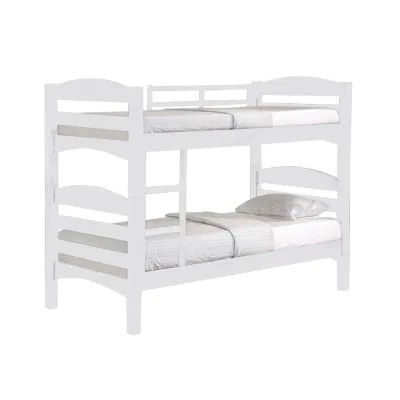
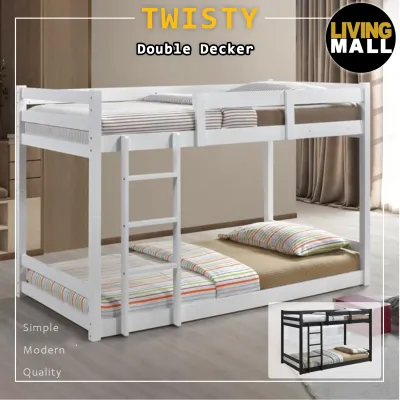



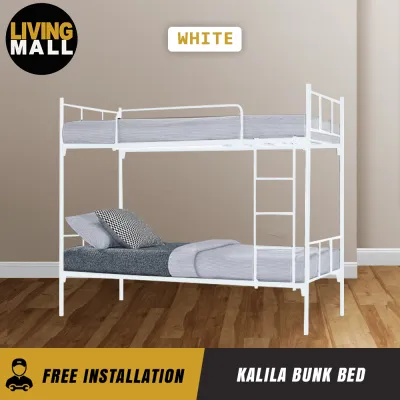
Prices are valid at publication and may change. Please refer to the product page for the latest price.
Guardrail Height and Gap Restrictions
Guardrails are the primary defense against falls from the elevated top bunk, making their dimensions and configuration critical. When browsing options, do not rely solely on the overall height of the bed frame; instead, verify the guardrail height relative to the top surface of the mattress you plan to use. The safety margin depends entirely on this relative height, as an overly thick mattress can easily compromise a guardrail that appears tall on an empty frame. Check the manufacturer’s manual or product specifications to ensure the guardrail will extend significantly above your chosen mattress.
Equally important is the spacing of the guardrail components. You must check for dangerous gaps between the individual guardrail slats, as well as the space between the bottom rail and the bed frame. If these gaps are too wide, a child’s head, neck, or limbs could easily become trapped. Look for specifications that detail these gap measurements, or physically measure them if you are viewing a display model in a showroom.
The continuity of the guardrails also requires close inspection. A safe top bunk must have continuous guardrails on all sides, particularly the side facing the wall, as children can easily slip into the gap between the bed and the wall. The only permissible opening should be a secure, narrow entry point for the ladder. Ensure this opening is no wider than necessary for comfortable access, leaving no large, unprotected spaces where a sleeping child could roll out.
Ladder Stability and Access Design
The ladder is the sole pathway to the top bunk, making its stability and design central to preventing slips and falls. When evaluating a bunk bed, pay close attention to how the ladder attaches to the main frame. It should lock securely into place with heavy-duty brackets or be integrated directly into the bed’s structure. Avoid models where the ladder wobbles, slides, or can be easily detached by a child during play.

The physical design of the ladder rungs also dictates how safely a child can climb. Examine the width and depth of each rung; wide, flat steps provide far better traction and foot support than narrow, rounded pegs. The spacing between the rungs should be uniform and comfortable for a child’s stride. If possible, have your child test the ladder in a showroom to observe whether they can maintain a secure grip and stable footing while ascending and descending.
Additionally, consider the ladder’s placement options and how they align with your room layout. Some bunk beds feature a fixed ladder that can only be installed on one side, while others offer a reversible design. You must verify that the ladder’s position allows for a completely clear, unobstructed access path in your child’s bedroom. A ladder positioned too close to a doorway, wardrobe, or other furniture can create tight squeeze points and increase the risk of tripping.
Slat Spacing and Mattress Fit
The foundation supporting the mattress plays a double role in structural safety and hazard prevention. Slat spacing is a critical dimension to verify in the product documentation. If the slats are spaced too far apart, the mattress can sag, creating uneven sleeping surfaces and potential entrapment zones. Ensure the distance between each slat complies with safety limits specified in the product documentation to prevent a child’s body or limbs from slipping through the gaps.
This structural foundation must be paired with a mattress of the correct thickness. Manufacturers typically specify a maximum mattress height for the top bunk to preserve the protective barrier of the guardrails. When purchasing, cross-reference this specification with the actual thickness of your intended mattress. Using a mattress that exceeds this limit reduces the effective height of the guardrail, rendering it useless if a child rolls over.
Beyond spacing, the material and support structure of the slats must be evaluated. Do not assume that a specific wood or metal type automatically guarantees durability. Instead, look for physical reinforcements such as center support bars, metal brackets, or multiple securing screws that anchor the slats to the side rails. These reinforcements ensure the bed can handle dynamic movement, such as a child sitting down heavily, without the slats bowing, cracking, or slipping out of their tracks.
Structural Integrity and Weight Limits
A bunk bed must remain completely stable under both static and dynamic loads. To assess this, start by checking the manufacturer’s stated weight limits for both the top and bottom bunks. Keep in mind that these weight limits are cumulative and must include the weight of the mattress, bedding, and the child. Never exceed these limits, and avoid assuming that a bed designed for young children can safely support teenagers or adults.
Physical checks of the frame’s construction will tell you more about its long-term sturdiness than material names alone. Look for robust joint connections, such as heavy-duty metal-on-metal bolts rather than simple wood screws. Examine the corners of the frame for reinforced brackets that prevent swaying. Gently shake the bed frame during your inspection; a high-quality bunk bed should feel rigid and exhibit minimal to no wobble.
Pay close attention to the finish and hardware of the bed frame. Ensure there are no sharp edges, exposed bolt threads, or protruding hardware that could snag clothing or scratch a child. Check the manufacturer’s warranty terms and assembly instructions to verify that the frame is designed for secure, long-term fastening. If you plan to assemble the bed yourself, ensure the package includes clear instructions and all necessary anchoring hardware to secure the unit safely.
Age Recommendations and Room Placement Safety
Even the safest bunk bed can become hazardous if used by a child who is developmentally unready or if it is placed in an unsafe location. Always verify the manufacturer’s age recommendations, which are typically printed on the product label or user manual. The top bunk is generally not recommended for children under six years of age, as younger children may lack the coordination and spatial awareness required to navigate the ladder and elevated platform safely.
Room placement is another critical factor that requires careful planning before you buy. Measure your child’s bedroom carefully, paying attention to the location of ceiling fans, light fixtures, and window blind cords. The bunk bed must be positioned far away from these items to eliminate the risk of impact injuries or strangulation. Ensure there is a clear path around the bed so that children do not trip over other furniture when getting in or out of bed.
Finally, measure the vertical clearance between the top of the mattress and the ceiling. A child should be able to sit up comfortably on the top bunk without any risk of bumping their head. In Singapore’s typical high-rise apartments, ceiling heights can vary, so taking precise vertical measurements of your room and comparing them to the assembled height of the bunk bed is an essential step before finalizing your purchase.
Frequently Asked Questions (FAQ)
Can I use a regular mattress on a bunk bed?
You should not use a standard, thick mattress on a bunk bed without first verifying the manufacturer’s maximum height specifications. Standard mattresses are often too thick, which significantly reduces the effective height of the top bunk’s guardrails and increases the risk of falls. Additionally, you must check that the mattress dimensions match the bed frame perfectly. A mattress that is too small will leave dangerous gaps along the sides or ends where a child’s limbs or head could become wedged, creating a severe entrapment hazard. Always choose a mattress specifically recommended or sized for bunk bed use.
How often should I inspect the bunk bed's hardware?
You should establish a regular maintenance routine to inspect and tighten all the bunk bed’s hardware at least once every six months. Daily use, climbing, and natural shifting can cause bolts, screws, and joint connectors to loosen gradually over time, compromising the bed’s structural integrity. During your inspection, check for any wobbling, squeaking, or loose joints. If you find any damaged, stripped, or missing hardware, do not attempt to fix it with generic hardware store substitutes. Instead, contact the manufacturer directly to obtain exact, approved replacement parts to ensure the bed remains safe and stable.

Community discussion
Share your experience or ask a question. Comments are reviewed before publication.