
A standard Build-To-Order (BTO) flat entrance is a high-traffic zone where space is at a premium. Determining how many pairs of shoes your entrance shoe rack can hold depends on a careful balance of physical dimensions, cabinet design, and your household’s footwear habits. Typically, a compact entryway rack can accommodate 10 to 15 pairs, while a full-height built-in cabinet can easily house 40 or more. Choosing the right capacity prevents cluttered entryways and ensures your home remains organized from the moment you step through the door.
To find the perfect fit, you must evaluate your household’s daily routines alongside the physical constraints of your foyer. A rack that is too small leads to shoes spilling onto the floor, while an oversized unit can make your entrance feel cramped and restrict movement. By taking precise measurements and planning for your specific storage needs, you can select a configuration that maximizes utility without compromising on style.
Assessing Your BTO Entrance Space
To find the perfect shoe storage solution, start by measuring the physical footprint of your foyer. Use a measuring tape to record the maximum width, depth, and height available next to your main door. It is crucial to account for the door swing clearance of both your main wooden door and the metal gate. A rack that is too deep can block the door from opening fully or restrict the walkway, creating a daily inconvenience for anyone entering or leaving the flat.
Products mentioned in this guide
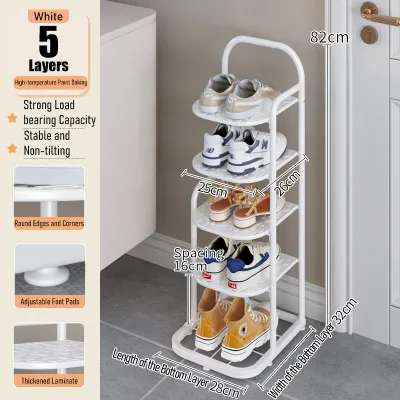
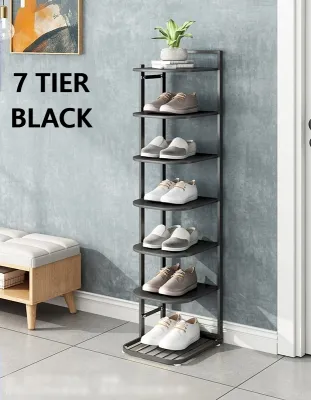
![[SG spot] metal shoe rack minimalist design shoe rack BTO shoe rack HDB shoe rack rust-proof shoe rack 5-10 layers](https://img.lazcdn.com/g/ff/kf/Sbf43e544afd04067a995ec80e540911dp.jpg_400x400q80.jpg_.webp)
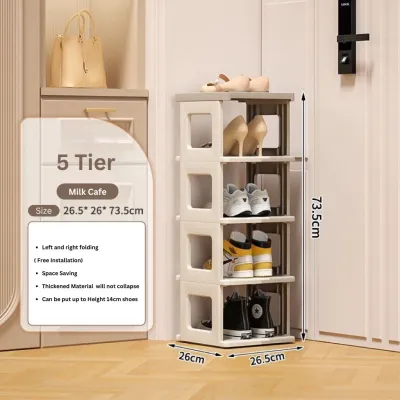
Prices are valid at publication and may change. Please refer to the product page for the latest price.
Look upward and check for fixed obstacles along the wall. Many BTO flats feature electrical distribution boards (DB boxes), intercom units, fiber termination points, or smart home hubs near the entrance. A tall shoe cabinet must not block access to these utility boxes, as you may need to reach them during power trips or maintenance. If your chosen space overlaps with these features, you will need to opt for a lower cabinet or a unit with a customized cutout.
If you plan to place a shoe rack along the external corridor, you must verify the local housing authority and town council regulations. Fire safety guidelines require maintaining a clear escape passage, meaning any external furniture must comply with strict width limits. Placing bulky items in narrow corridors can block evacuation routes and lead to safety violations, so keeping your primary shoe storage indoors is generally the safest and most reliable approach.
Estimating Shoe Capacity by Household Size
Calculating your required capacity starts with a realistic inventory of your household’s footwear. Begin by counting the number of everyday shoes each family member wears regularly. A single working adult might use three to five pairs of shoes weekly, including work shoes, running sneakers, and casual sandals. Multiply this baseline by the number of occupants to establish your core storage requirement.

Do not forget to account for specialized or seasonal footwear. High heels, bulky basketball sneakers, hiking boots, and safety shoes occupy significantly more physical volume than flat sandals or slip-ons. If your household frequently hosts guests, adding a buffer of two to four slots for visitor footwear is a practical step. Planning for future needs is also essential, especially if you expect your family to grow or if you are an avid collector whose footwear collection expands over time.
For a household of two, a shoe rack with a capacity of 15 to 20 pairs is usually sufficient for daily-wear items. Larger families of four or more will likely require storage for 30 to 40 pairs to keep the entryway clear. If your inventory exceeds these numbers, you may want to consider a dual-storage strategy: keep your most-worn pairs in the entryway rack and store seasonal or formal footwear in bedroom wardrobes or utility closets.
Matching Rack Dimensions to Your Layout
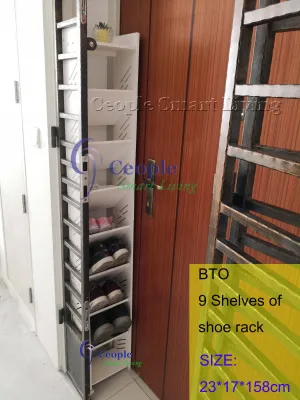
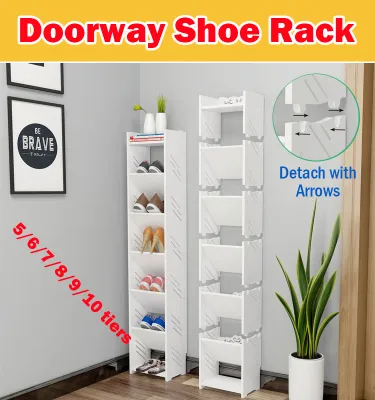
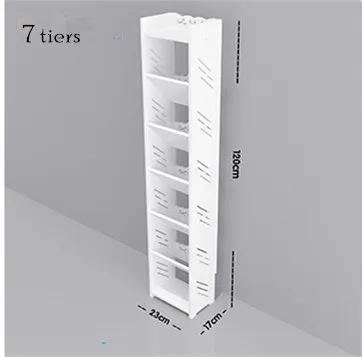
Once you know your required capacity, you can match it to specific shoe rack configurations. For narrow BTO foyers, slim vertical shoe cabinets with tipping buckets are highly efficient. These units store shoes vertically, reducing the cabinet depth to as little as 17 to 20 centimeters, making them ideal for tight corridors. However, they may not accommodate high-top sneakers or thick-soled boots easily, so check the internal clearance before purchasing.
If you have a broader wall near the entrance, a wide, low-profile shoe rack is an excellent alternative. These units often double as entryway benches, providing a convenient spot to sit while putting on shoes. When selecting any cabinet, prioritize models with adjustable or modular shelving. Removable shelf pegs allow you to customize the vertical spacing, ensuring you do not waste valuable internal volume on flat shoes while struggling to fit taller footwear.
Floating or wall-mounted shoe racks are another popular option for modern BTO flats. They lift the storage off the floor, creating a clean look and leaving a gap underneath for wet umbrellas or daily-wear slippers. Before installing a wall-mounted unit, always check the load-bearing capacity of your wall and ensure you use the correct wall plugs and anchoring hardware. A fully loaded shoe rack can become exceptionally heavy, making proper installation vital to prevent tipping hazards.
Common Sizing Mistakes to Avoid
One of the most frequent errors is ignoring the actual depth needed for larger footwear. Standard shoe racks often feature an internal depth of 30 to 32 centimeters, which may be insufficient for larger shoe sizes or extended heels. When shoes overhang, cabinet doors cannot close properly, leading to unsightly gaps and potential tripping hazards in your entryway. Always measure the longest pair of shoes in your home before purchasing a cabinet.
Another critical oversight is ventilation. Fully enclosed shoe cabinets without proper airflow can trap moisture and sweat, creating an ideal environment for mold growth and unpleasant odors. Look for cabinets with louvers, mesh doors, or ventilation cutouts at the back. If you choose a solid wooden cabinet, check the care instructions and consider adding moisture absorbers to protect both the furniture joints and your footwear.
Finally, always measure your delivery pathway before finalizing a purchase. A beautiful, fully assembled shoe cabinet is of no use if it cannot fit through your BTO flat’s lift door, the staircase landings, or your main entryway frame. Verify the finished dimensions of the furniture and compare them against the narrowest points of your delivery route to avoid costly return fees or delivery failures.
Frequently Asked Questions (FAQ)
Can I place a shoe rack outside my BTO main door?
In Singapore, placing items in common corridors is subject to strict fire safety guidelines set by the Singapore Civil Defence Force (SCDF). Generally, a minimum clear escape passage of 1.2 meters must be maintained at all times along the corridor. You must check with your local town council or estate management office before placing any shoe rack outside, as rules can vary between estates, and unauthorized obstructions may be subject to removal or fines.
How do I store tall boots in a standard shoe rack?
Storing tall boots in a standard rack requires a bit of flexibility. If your shoe cabinet features adjustable shelving, you can remove one or two shelves to create a taller compartment. For fixed-shelf units, consider using boot shapers or inserts to keep the shafts upright, or store them horizontally on their sides. Alternatively, keeping seasonal or tall boots in your bedroom wardrobe can free up prime entryway storage for daily-wear shoes.
What is the ideal depth for a BTO entrance shoe cabinet?
There is no single universal standard, as the ideal depth depends on the largest shoe size in your household. To find your ideal depth, measure the sole length of your longest pair of shoes, accounting for thick soles, extended heels, or protruding rear tabs. Generally, an internal depth of 32 to 35 centimeters accommodates most standard shoe sizes comfortably, while slim-profile tipping cabinets are better suited for smaller footwear or vertical storage configurations.

Community discussion
Share your experience or ask a question. Comments are reviewed before publication.