
Finding the best value in a home office working chair depends entirely on your daily usage, budget, and spatial constraints. Because market offerings and prices fluctuate, there is no single universal winner. Instead, identifying the best balance of quality, comfort, and price requires comparing brand tiers against your specific ergonomic needs and verifying their core specifications before purchase.
In Singapore’s diverse retail landscape, options range from basic utility seats to highly customizable ergonomic systems. Navigating these choices requires looking past marketing buzzwords and focusing on verifiable physical attributes. By understanding what drives long-term comfort and structural integrity, you can make an informed investment that supports your physical well-being and fits seamlessly into your home workspace.
Defining "Value" in a Home Office Working Chair
Value is often misunderstood as simply finding the lowest price tag. In the context of home office furniture, true value represents the relationship between the upfront purchase price and the total cost of ownership over the chair’s usable lifespan. A cheap chair that requires replacement after a year of daily use often costs more in the long run than a mid-range model designed to last for several years.
Products mentioned in this guide
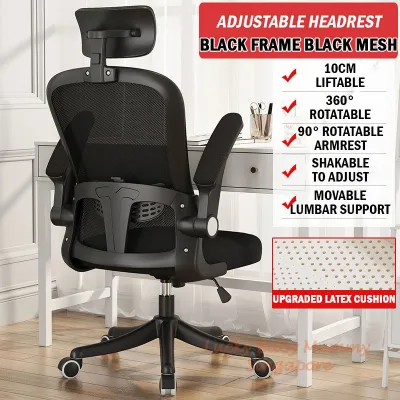
![[SG Ready Stock]Ergonomic Office Chair Computer Desk Chairs Mesh Home Office Desk Chairs with Lumbar Support](https://img.lazcdn.com/g/p/585691bae859ee8d697593367d59d085.jpg_400x400q80.jpg_.webp)
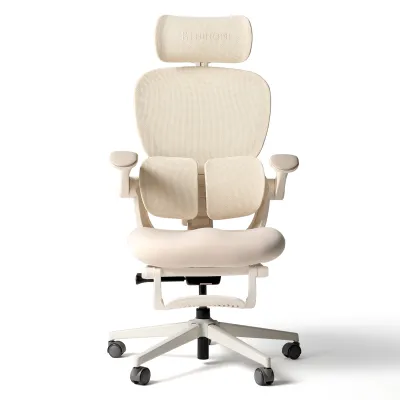
![[SG Ready Stocks] Ergonomic Office Chair - 8.5cm Thick Cushion + Antislip Surface Adjustable Backrest & Detachable Headrest Flip-Up Arms Rocking & Lock Function 15-Min Easy Assemble for Home/Office](https://img.lazcdn.com/g/p/056ecb65b2a442dd9a476ff654362085.jpg_400x400q80.jpg_.webp)
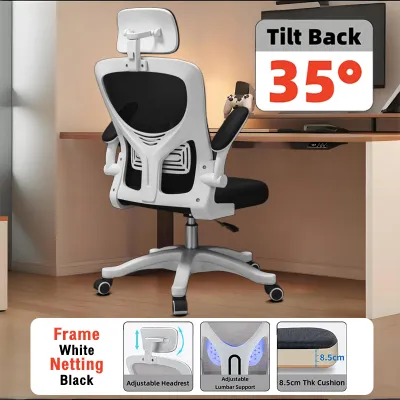
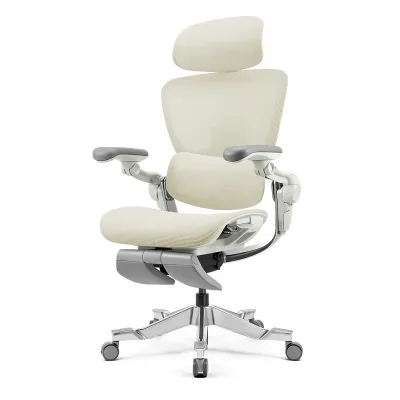
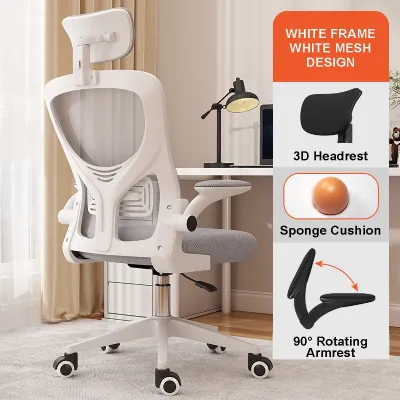
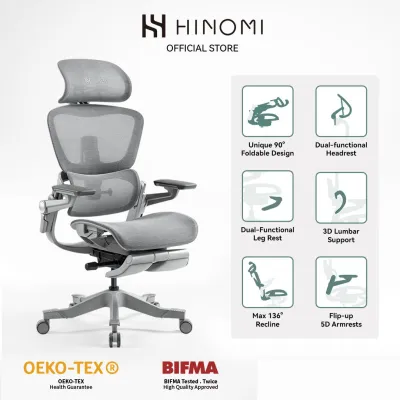
Prices are valid at publication and may change. Please refer to the product page for the latest price.
Your daily usage patterns dictate the level of investment required to achieve good value. If you sit at your desk for less than four hours a day, a basic chair with standard adjustments may offer excellent value. However, if you work full-time or spend eight or more hours daily in your chair, advanced ergonomic features become essential to prevent physical fatigue and discomfort.
Spatial constraints in typical Singapore home environments, such as compact HDB study corners or multi-purpose bedrooms, also influence value. A bulky executive chair might offer excellent cushioning but fail to provide value if it blocks walkways or cannot tuck fully under your desk. Measuring your available floor space and desk clearance is a critical first step before evaluating any brand.
Core Specifications to Compare Across Brands
To objectively compare different working chair brands, you must evaluate their physical and functional specifications. The adjustability range is the most critical factor in achieving a personalized fit. Look for chairs that allow you to adjust the seat height so your feet rest flat on the floor, and check if the armrests can be adjusted in height and width to support your shoulders without strain.

Lumbar support is another vital component that varies significantly across brands. Some chairs feature fixed lumbar curves, while others offer adjustable depth and height to align precisely with your spine. Additionally, tilt tension control allows you to adjust the resistance of the backrest when reclining, ensuring the chair supports your weight dynamically as you move.
Material durability and breathability are especially important in Singapore’s warm and humid climate. Mesh backrests allow for maximum airflow, keeping you cool throughout the day, but you must check the tension of the mesh to ensure it does not sag over time. High-density foam seats offer excellent cushioning and pressure distribution, provided the foam is resilient enough to maintain its shape under daily use.
Base and caster compatibility must match your home flooring to prevent costly damage. Hard casters are designed for carpeted areas, while soft polyurethane or rubber-coated casters are necessary to protect hardwood, laminate, or vinyl flooring from scratches. Always verify the wheel material and check if the manufacturer offers alternative caster options for your specific floor type.
Finally, structural integrity should be verified through the manufacturer’s specified weight capacity and warranty terms. A reliable brand will clearly state the maximum load capacity in the product manual. Reviewing the warranty details is crucial, as some brands offer comprehensive coverage for the entire chair, while others exclude moving parts, gas lifts, or fabric wear from their standard terms.
Navigating Brand Tiers and Conditional Choices
The working chair market is generally divided into distinct tiers based on design focus, material quality, and price positioning. Understanding these segments helps you align your budget with realistic expectations. Each tier involves specific trade-offs between customization, durability, and upfront cost, meaning the right choice depends on your personal priorities.
Budget-Friendly and Essential Ergonomic Brands
Entry-level brands focus on providing essential seating functionality at an accessible price point. These chairs typically offer basic adjustments, such as pneumatic seat height control and a simple tilt mechanism. The construction usually relies on standard molded foam cushions covered in fabric, paired with nylon bases and fixed plastic components.
While budget-friendly chairs are highly accessible, they often feature fixed lumbar supports and non-adjustable armrests. This lack of customization means the chair must fit your body shape naturally out of the box, as you cannot fine-tune the support zones. If you choose this tier, it is essential to verify the return policy and read user reviews regarding assembly difficulty and long-term cushion firmness.
Mid-Range Adjustability and Task-Focused Brands
Mid-range brands target full-time remote workers who require enhanced support without the premium price tag of high-end designer furniture. In this tier, you can expect multi-dimensional armrests that adjust in height, angle, and depth, alongside dedicated lumbar support systems with adjustable tension or height.
These chairs frequently utilize synchro-tilt mechanisms, where the backrest and seat recline at a synchronized ratio to keep your feet flat on the floor while opening up your torso. When comparing mid-range brands, evaluate the quality of the mesh and the frame construction. Look for reinforced nylon or aluminum bases, and compare warranty lengths specifically covering the gas lift and mechanical components.
Premium and Long-Term Investment Brands
Premium brands position their products as long-term investments in health and productivity. These chairs feature proprietary materials, such as advanced elastomeric mesh that conforms to your body shape while distributing weight evenly. They also incorporate sophisticated, weight-activated tilt mechanisms that automatically adjust recline resistance based on your body weight.
The primary advantage of premium brands lies in their comprehensive customization options and exceptional build quality. These manufacturers often back their products with extensive warranties that cover both structural and moving parts for a decade or more. Before making a premium purchase, determine if the advanced features align with your specific physical needs, and verify the local availability of replacement parts and authorized servicing.
Verifying Retailer Claims and Product Authenticity
With numerous online sellers offering working chairs, verifying product authenticity and retailer claims is essential to protect your investment. Start by cross-referencing the official brand website with local listings to ensure you are purchasing from an authorized distributor or a reputable local marketplace. This step is crucial for securing valid warranty support and access to genuine replacement parts.
Upon delivery, inspect the product packaging, labels, and user manual to confirm the specifications match what was advertised. Look for verified weight limits, material compositions, and safety certifications. Genuine ergonomic chairs often carry certifications from independent testing organizations, which verify that the chair has undergone rigorous durability and stability testing.
Be cautious of red flags such as vague ergonomic claims, missing warranty documentation, or sellers who cannot provide clear instructions on assembly and care. If a retailer cannot specify the maximum weight capacity or the exact materials used in the frame and base, it is best to look elsewhere. A reputable brand will always provide transparent, verifiable technical specifications.
Decision Framework: Choosing the Right Brand Tier
To select the ideal working chair brand tier, you must evaluate your daily routine, physical requirements, and home environment. If your desk work is limited to casual browsing or short tasks under four hours a day, a budget-friendly chair offers excellent value. This option keeps your upfront costs low while saving space in smaller rooms where a bulky chair is impractical.
For full-time remote professionals spending eight or more hours at a desk, a mid-range chair is the recommended baseline. The added adjustability of the armrests, seat depth, and lumbar support allows you to customize the chair to your body, reducing the risk of strain during long working sessions. Ensure the chair’s footprint and armrest height allow it to slide fully under your desk when not in use.
If you manage chronic back discomfort or require highly specialized support, investing in a premium brand is often justified. The advanced, self-adjusting mechanisms and superior materials provide continuous support as you shift postures throughout the day. Before purchasing, measure your desk clearance, verify your flooring type, and ensure the local distributor offers reliable delivery and assembly services to guarantee a seamless setup.
Frequently Asked Questions (FAQ)
How do I measure my desk clearance for a new working chair?
To ensure your new working chair fits your workspace, start by measuring the height of your desk from the floor to the underside of the desktop. Next, measure the clear width between the desk legs or drawers to ensure the chair’s base and armrests can slide underneath. You must also account for the chair’s maximum armrest height and width, as well as the overall diameter of the wheeled base. If your desk features a keyboard tray or a low drawer, measure the clearance from the lowest point of these attachments to the floor to avoid obstruction.
Are mesh chairs always better for home offices?
Mesh chairs are highly popular in Singapore due to their excellent breathability, which helps keep you cool in warm weather. However, they are not universally superior to fabric or foam options. High-density foam seats often provide better pressure distribution and cushioning for individuals who prefer a softer, more contoured seating surface. When evaluating mesh chairs, it is critical to check the tension of the mesh and the design of the outer frame. A poorly designed mesh chair can have hard plastic edges that press uncomfortably against your thighs, whereas a high-quality mesh or a well-padded fabric chair will distribute your weight evenly without causing pressure points.

Community discussion
Share your experience or ask a question. Comments are reviewed before publication.