
Optimising a compact home office in a Singapore HDB flat requires a smart balance of floor space and storage efficiency. When your desk surface is cluttered with stationery, tech accessories, and loose documents, your productivity inevitably suffers. Finding the right desk drawer under your workspace can dramatically improve your room’s organisation without requiring a larger desk or encroaching on your limited floor area. By utilising the empty void beneath your desktop, you can keep daily essentials within arm’s reach while maintaining a clean, minimalist aesthetic.
Choosing the perfect storage companion involves more than just picking a design that matches your decor. In a tight HDB study corner or bedroom alcove, every millimetre counts. You must consider how the unit interacts with your desk frame, your office chair, and your flooring. Understanding these spatial dynamics ensures you select a unit that enhances your workflow rather than restricting your legroom.
How to Measure and Choose the Right Desk Drawer Under Your HDB Workspace
Before browsing online marketplaces or visiting local furniture showrooms, you must establish the exact physical boundaries of your workspace. A drawer unit that is even slightly too tall or wide can ruin your ergonomic setup, forcing you to sit uncomfortably or park your office chair outside the desk footprint. Following a systematic measurement and evaluation process will prevent costly return shipping fees and assembly headaches.
Products mentioned in this guide
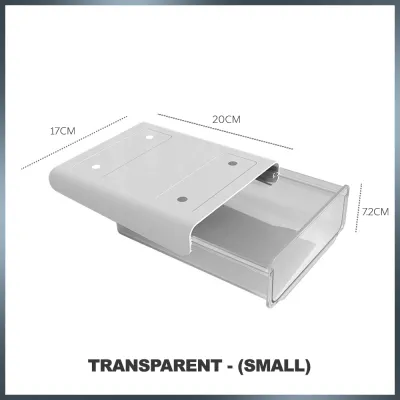
![[Local Seller] Minimalist Under Table Organiser Under Desk Drawer Organizer Stationery Organizer Under Desk Drawer Tray](https://img.lazcdn.com/g/p/e9e2896f2765e50b7f5bb096b3c5c23c.jpg_400x400q80.jpg_.webp)
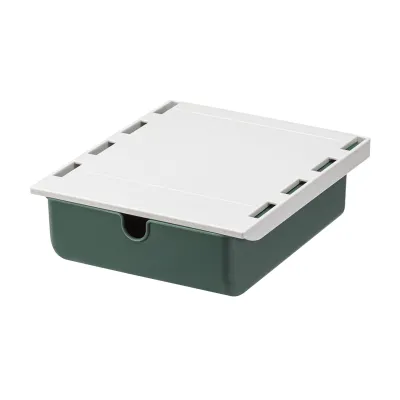
![Under Desk Drawer / Shelf Sliding Drawer/ Storage Drawer / Self Adhesive [Dear J]](https://img.lazcdn.com/g/p/43a336df1cd815eaa373a2b789bc844a.png_400x400q80.png_.webp)
Prices are valid at publication and may change. Please refer to the product page for the latest price.
Measure Desk Clearance
Begin by measuring the vertical clearance under your desk. Use a metal tape measure to find the distance from the floor to the absolute lowest point of the desk’s underside. Do not simply rely on the manufacturer’s listed desk height, as this usually refers to the top surface. You must account for structural elements like support crossbars, thick wood aprons, cable management trays, or pull-out keyboard drawers that hang below the desktop. These obstructions can reduce your usable clearance height by 5 to 15 centimetres. Next, measure the width between the desk legs. Ensure that after placing the drawer unit, there is still ample room for your office chair’s wheelbase and your legs to move comfortably. Finally, measure the depth from the front edge of the desk to the back wall or modesty panel to ensure the unit will not protrude into your walking path.
Mobility vs. Fixed Base
Deciding between a mobile pedestal and a fixed-base cabinet depends on how you use your space. Mobile units equipped with castor wheels offer exceptional flexibility, allowing you to roll the storage out for easy cleaning or to use the top surface as an extended work area when tackling large projects. If you choose a mobile model, look for high-quality castor wheels with robust locking mechanisms on the front wheels to keep the unit stable during daily use. Fixed-base units, on the other hand, sit directly on the floor or on low glides, providing maximum stability and a slightly higher weight capacity.
Your choice of base also directly impacts your flooring. HDB flats commonly feature vinyl, laminate, parquet, or ceramic tile floors. Hard plastic wheels can easily scratch parquet or leave deep indentations in softer vinyl and laminate under heavy loads. If your workspace has vinyl or wood flooring, look for castors made of soft polyurethane or rubber, or opt for a fixed unit fitted with thick, heavy-duty felt pads to protect the surface from scratches.
Material and Weight Capacity
Under-desk drawers are typically constructed from engineered wood, steel, or high-density plastic. Engineered wood, such as melamine-faced chipboard or MDF, offers a warm, residential aesthetic that easily coordinates with standard home furniture. However, you should check that the edges are fully sealed to prevent moisture from Singapore’s humid climate from causing the wood fibres to swell over time. Steel pedestals are incredibly durable, impact-resistant, and can support heavy loads without warping, making them excellent for long-term use. High-density plastic options are lightweight, budget-friendly, and completely immune to moisture, though they generally offer lower weight capacities and less structural rigidity. Always check the manufacturer’s specified weight limits for both individual drawers and the top surface to ensure the unit can safely support your files, books, or heavy tech accessories.
Drawer Extension and Depth
The internal hardware of the drawers determines how accessible your stored items will be. Look for units equipped with full-extension ball-bearing slides. These runners allow the drawer to open completely, exposing the entire drawer tray so you can easily reach items stored at the very back. Partial-extension slides are common in budget models, but they leave the back third of the drawer tucked under the cabinet frame, forcing you to grope in the dark or pull the entire cabinet out from under your desk to retrieve deep-seated items.
Recommended Under-Desk Drawer Profiles for Compact Workspaces
Every HDB home office has unique spatial constraints and storage requirements. By identifying your primary storage pain points, you can select a specific drawer profile designed to solve those challenges.

Best Overall 3-Tier Mobile Pedestal for Standard Desks
For standard-height desks (typically around 75 centimetres tall), a classic 3-tier mobile pedestal offers the most versatile and balanced storage configuration. This profile generally features two shallow top drawers designed to organise stationery, charging cables, tablets, and notebooks, combined with one deep bottom drawer equipped with adjustable hanging file bars.
This configuration is ideal for users who need to organise a wide variety of items and prefer to keep their desktop completely clear of clutter. The vertical stack maximizes storage capacity while maintaining a narrow footprint, usually around 39 to 42 centimetres wide, leaving plenty of room for your office chair.
Before purchasing, verify the exact width of the unit against your chair’s wheelbase. If your desk is narrow, a wide pedestal may force you to sit off-center, causing ergonomic strain. Additionally, look for models that feature an anti-tip mechanism—often a small fifth wheel attached to the bottom drawer face—which prevents the cabinet from tipping forward when the heavy bottom drawer is fully extended.
Best Low-Profile 2-Tier Unit for Tight Clearances
If your desk has a low-hanging support frame, a thick decorative apron, or if you use an adjustable standing desk with a bulky under-frame motor, a standard 3-tier pedestal will not fit. In these scenarios, a low-profile 2-tier unit or a slim-profile rolling cart is the ideal solution. These units typically stand under 55 centimetres tall, allowing them to slide easily under tight clearances.
This profile is best suited for minimalists who only need to store daily essentials like a laptop, a couple of notebooks, and basic writing instruments. By sacrificing one drawer layer, you preserve maximum vertical clearance, ensuring your knees and thighs do not bump against the bottom of the desk frame while sitting.
When shopping for a low-profile unit, check if the top surface is flat and structurally reinforced. Because these units are shorter, the top surface can double as a convenient dock for a small printer, a Wi-Fi router, or a laptop charging station when rolled out from under the desk.
Best Dual-Purpose Unit with Cushioned Seating
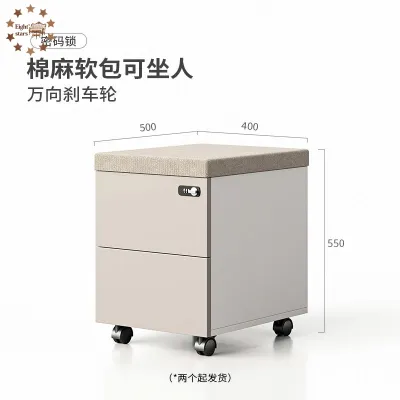
In compact HDB flats, multi-functional furniture is highly valuable. A dual-purpose drawer unit features a sturdy, reinforced frame topped with a padded, upholstered cushion. This clever design allows the storage pedestal to double as an occasional seat or a comfortable footrest.
This setup is perfect for workspaces located in shared areas, such as the living room or a master bedroom. If a family member or colleague needs to sit by your desk for a quick discussion, you can simply roll out the pedestal to provide an instant seat without needing to store an extra, bulky chair in the room.
When evaluating these models, check the manufacturer’s structural weight capacity to ensure it is certified for seating (typically supporting at least 100 kilograms). Additionally, consider the upholstery material. PU leather is highly durable and easy to wipe clean, making it well-suited for Singapore’s humid climate, while breathable fabric cushions offer greater comfort during longer periods of sitting.
Best Lockable Metal Cabinet for Secure Document Storage
For remote professionals, freelancers, or home business owners who handle sensitive physical files, contracts, or expensive tech equipment, security is a top priority. A heavy-duty steel mobile pedestal equipped with a central locking system provides the necessary peace of mind.
This profile features a single lock cylinder, usually located on the top drawer, that secures all drawers simultaneously with one key turn. It is ideal for storing passports, confidential client documents, external backup hard drives, and high-value camera gear out of sight from visitors or curious children.
Before buying, ensure the steel cabinet features a high-quality powder-coated finish to protect the metal from rust and corrosion caused by ambient humidity. Test the drawer operation; look for units with smooth ball-bearing slides and rubber dampeners to minimize the metallic clatter when opening and closing drawers. Finally, check that the lock mechanism and drawer handles are recessed or flush with the cabinet face to prevent them from catching on your clothing or scratching the underside of your desk.
Safe Setup and Maintenance for Under-Desk Storage
Integrating a new drawer unit into your HDB workspace requires careful physical setup and ongoing maintenance to protect your equipment, your flooring, and yourself.
Placement and Cable Management
When sliding your drawer unit under the desk, pay close attention to the routing of your power cables and extension strips. Avoid trapping or pinching cables between the back of the cabinet and the wall, as this can damage the insulation and create a fire hazard. Leave a gap of at least 5 to 10 centimetres between the unit and the wall. If you keep a desktop PC tower on the floor, position the drawer unit on the opposite side to ensure you do not block the computer’s cooling vents or trap hot exhaust air.
Stability and Load Distribution
To prevent your drawer unit from tipping over, always apply basic principles of gravity when loading your items. Place your heaviest belongings—such as reams of printer paper, heavy reference books, or backup power supplies—in the absolute bottom drawer. Use the top drawers strictly for lightweight items like pens, calculators, and cables. Opening a heavily loaded top drawer while the bottom drawers are empty can easily cause the unit to tip forward, potentially damaging your floor, spilling your belongings, or causing personal injury.
Track and Wheel Care
Over time, dust, lint, and hair will inevitably accumulate in your cabinet’s drawer slides and around the castor wheel axles. This debris can cause the drawers to stick and the wheels to drag, which can scratch sensitive vinyl or parquet flooring. Every few months, pull the unit out and use a vacuum brush attachment to clear away dust. Wipe down the drawer tracks with a dry microfiber cloth. If the tracks begin to squeak or stick, apply a small amount of silicone-based spray lubricant, following the manufacturer’s care instructions. Avoid using heavy grease or WD-40, as these substances can attract dust and clog the mechanism over time.
Frequently Asked Questions (FAQ)
Can I use an under-desk drawer without wheels on a vinyl or laminate floor?
Yes, you can use a fixed-base under-desk drawer on vinyl or laminate flooring, but you must take precautions to prevent surface damage. While fixed units offer excellent stability and will not roll away while you are working, dragging them across the floor for cleaning or rearranging can leave deep scratches or gouges in vinyl and laminate. To protect your floor, apply heavy-duty felt pads or soft silicone glides to all four bottom corners of the unit. Whenever you need to move the cabinet, always empty its contents first and lift it completely off the ground rather than sliding it.
How do I prevent a fully loaded under-desk drawer from tipping over?
The most effective way to prevent tipping is to maintain a low center of gravity by storing your heaviest items in the bottom drawer. When shopping, prioritize drawer units that feature built-in safety mechanisms, such as an anti-tilt system that prevents more than one drawer from being opened at a time, or an integrated counterweight in the rear of the cabinet. If your manufacturer’s instructions permit and your desk material allows, you can also secure the back of the drawer unit to your desk frame using a discreet safety strap or bracket for absolute stability.

Community discussion
Share your experience or ask a question. Comments are reviewed before publication.