
Finding efficient storage solutions is a constant priority for homeowners living in Singapore’s Housing & Development Board (HDB) flats, where kitchen space is often at a premium. A dedicated snack drawer offers an organized, accessible, and space-saving solution to keep your favorite treats, dry goods, and quick bites neatly tucked away. By choosing the right configuration—whether it is a slim pull-out pantry, a mobile rolling cart, or a hidden toe-kick unit—you can maximize every square centimeter of your kitchen without sacrificing style or functionality.
Selecting the ideal snack drawer requires a careful balance of spatial planning, hardware durability, and material suitability for Singapore’s tropical climate. Standard HDB kitchen layouts, such as galley, L-shaped, or open-concept designs, present unique structural boundaries that dictate what type of storage will work best. This guide details how to evaluate your kitchen footprint, compares the most effective space-saving drawer types, and highlights the essential features needed to keep your snacks fresh and easily accessible.
Evaluating Your HDB Kitchen Space for a Snack Drawer
Before purchasing any kitchen storage unit, you must accurately measure the physical footprint of your kitchen to ensure seamless integration. HDB galley kitchens are notoriously narrow, often leaving a central walkway of only 90 to 120 centimeters. This limited clearance means that any new drawer unit must not obstruct the primary traffic flow or interfere with existing fixtures. You need to measure the exact width, depth, and height of your proposed installation area, taking into account the swing radiuses of refrigerator doors, built-in ovens, and adjacent cabinet doors to prevent costly structural collisions.
Products mentioned in this guide
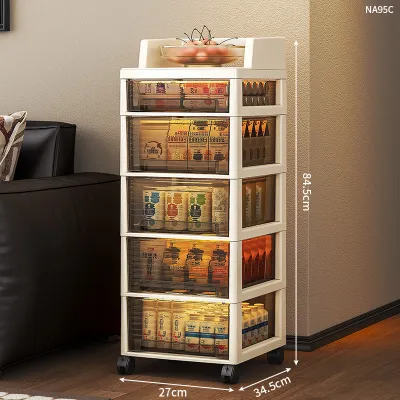
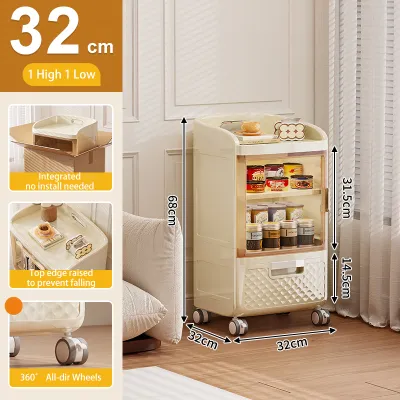
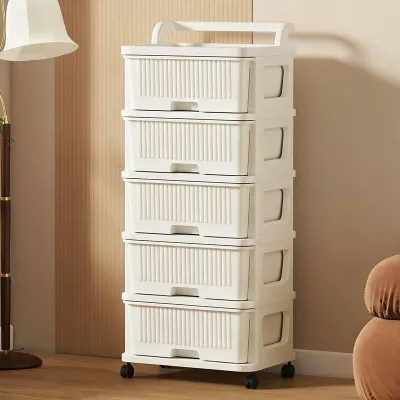
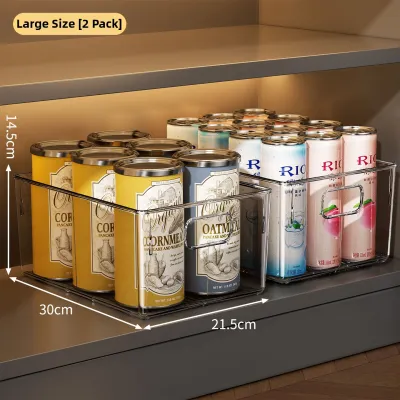
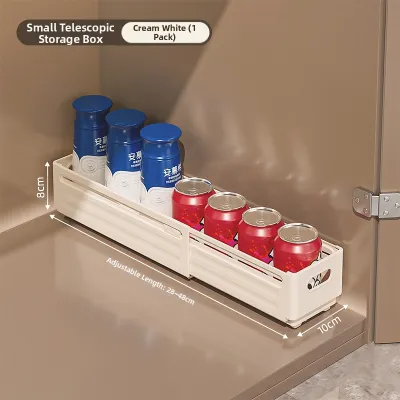
Prices are valid at publication and may change. Please refer to the product page for the latest price.
Your specific snack collection should directly influence the dimensions and internal configuration of the drawer you select. Bulky items like family-sized potato chip bags, biscuit tins, and cereal boxes require deep drawers with generous vertical clearance to avoid crushing the packaging. Conversely, small items such as seaweed packets, instant coffee sachets, and chocolate bars are better suited for shallow drawers equipped with low-profile organizers. If you plan to store tall beverage bottles or canned drinks alongside your snacks, prioritize drawers with high sides and robust weight capacities to keep these heavier items stable.
Deciding between a freestanding snack drawer and a fixed, built-in carpentry retrofit is a crucial step that depends on your long-term housing plans. If you are renting your HDB flat, freestanding units like rolling carts or tabletop drawer chests are the most practical choice because they require no permanent modifications and can easily move with you to a new home. For HDB homeowners planning a permanent residence, investing in custom, built-in kitchen carpentry offers a seamless, high-end look that maximizes every odd corner. However, custom carpentry retrofits require a larger upfront budget—often costing several hundred Singapore dollars per foot run—and require professional installation to ensure structural integrity.
Best Space-Saving Snack Drawer Types for HDB Kitchens
Slim Pull-Out Pantry Cabinets
Slim pull-out pantry cabinets are exceptionally efficient at transforming awkward, underutilized gaps into highly functional snack storage zones. These narrow vertical units are specifically designed to slide into tight spaces ranging from 10 to 20 centimeters wide, which frequently occur next to refrigerators, washing machines, or built-in ovens. By utilizing the full depth of your kitchen cabinets—typically around 60 centimeters—a slim pull-out unit provides multiple tiers of storage while occupying a minimal amount of floor space.

Because these units are tall and exceptionally narrow, they are highly susceptible to physical instability if they are not engineered correctly. When selecting or designing a slim pull-out drawer, it is critical to verify the weight capacity of the runner tracks and ensure the unit features a sturdy base-mounted or side-mounted slide system. Flimsy tracks can warp under the weight of canned drinks or glass jars, causing the drawer to sag, jam, or tip over when fully extended. Opting for high-quality, full-extension ball-bearing runners with integrated soft-close mechanisms will ensure smooth operation and prevent the unit from slamming shut.
To maximize safety and longevity, use slim pull-out drawers primarily for lightweight dry snacks, small spice jars, and packet drinks rather than heavy bulk items. Distribute the weight strategically by placing heavier items, such as canned sodas or bottled sauces, on the bottom shelf to lower the unit’s center of gravity. Reserve the upper shelves for lighter items like potato chips, crackers, and tea bags. This thoughtful weight distribution minimizes lateral wobble and extends the operational lifespan of your drawer hardware.
Rolling Kitchen Carts with Drawers
For HDB kitchens that lack flexible wall space or built-in cabinet gaps, a rolling kitchen cart equipped with deep drawers offers an excellent mobile storage alternative. These versatile carts can be parked flush against a wall or tucked into a corner during meal preparation, then easily rolled out to the dining area or living room when snack time arrives. This mobility is incredibly beneficial in tight galley kitchens where permanent floor fixtures would otherwise block the main walkway and hinder daily movement.
When shopping for a mobile snack cart, pay close attention to the quality and specifications of the caster wheels. The wheels must be constructed from durable, non-marking materials like polyurethane or rubber to prevent scratching your kitchen’s homogeneous or vinyl flooring. Furthermore, ensure that at least two of the casters feature robust, independent locking mechanisms to keep the cart firmly in place during use. It is also wise to check that the overall height of the cart aligns with your existing HDB kitchen countertops—typically between 85 and 90 centimeters—to create a cohesive look and comfortable working surface.
Beyond simple snack storage, a high-quality rolling cart provides valuable multi-functional benefits to a compact kitchen. The flat top surface of the cart can serve as an extension of your countertop, providing a dedicated space for a capsule coffee machine, a toaster, or a snack preparation station. Some carts also feature side-mounted towel rails, spice racks, or hanging hooks, allowing you to organize frequently used kitchen accessories alongside your dry snacks, keeping your main countertops entirely clutter-free.
Under-Counter and Toe-Kick Drawer Units
Under-counter and toe-kick drawer units are innovative, low-profile storage solutions that utilize the dead space located directly beneath your standard base cabinets. The toe-kick area—the recessed space at the very bottom of kitchen cabinetry that is usually covered by a decorative plinth—typically measures between 10 and 15 centimeters in height. Converting this wasted zone into a series of shallow drawers allows you to gain valuable storage space without sacrificing a single square centimeter of visible kitchen floor area.
Integrating toe-kick drawers into an existing HDB kitchen layout can be a complex carpentry task. If you are retrofitting these drawers into pre-existing cabinets, a professional carpenter must carefully cut away the existing plinth, install specialized low-profile drawer runners, and construct custom drawer boxes that fit the tight cavity. If this structural modification is too invasive or expensive for your budget, a highly viable alternative is to purchase a freestanding, low-profile drawer unit that can slide neatly under an open kitchen island or utility table.
Due to the highly restricted vertical clearance of toe-kick drawers, they are strictly suited for flat, lightweight snack packages. Excellent candidates for this low-level storage include chocolate bars, individual seaweed packets, snack bars, and spare tea boxes. Because these drawers are located at floor level, they are highly exposed to dust, dirt, and moisture from daily floor mopping. To protect your food items, ensure the drawer boxes are fitted with tight-closing lids or rubber dust gaskets, and verify that the drawer fronts feature a water-resistant finish to prevent moisture damage over time.
Essential Features for Multi-Functional Snack Drawers
Adjustable Dividers and Inserts
To keep your snack drawer from descending into a disorganized mess of crushed bags and loose packets, prioritize units that feature adjustable internal dividers or modular inserts. Unlike fixed compartments, adjustable dividers allow you to customize the drawer’s interior layout to match the changing shapes and sizes of your snack purchases. This flexibility is essential for preventing delicate items, like potato chips or wafer biscuits, from being crushed by heavier boxes when the drawer is opened and closed.
When planning your drawer organization, look for divider systems made from easy-to-clean materials like high-density plastics or powder-coated metals. Modular, drop-in bins are particularly useful because they can be completely removed for thorough cleaning or restocking. By designating specific zones for different snack categories—such as a dedicated bin for healthy nuts, a section for sweet treats, and a slot for savory crackers—you can easily monitor your inventory levels and prevent items from getting lost and expiring at the back of the drawer.
Ventilation and Moisture Resistance
Singapore’s tropical climate brings high relative humidity levels that can quickly compromise the freshness of your snacks, turning crispy crackers soggy and causing cardboard packaging to degrade. To combat this environmental challenge, your snack drawer must incorporate adequate ventilation and moisture-resistant design elements. For freestanding units, look for drawers constructed with breathable wire mesh or slatted bottoms that promote continuous air circulation around your food items.
For closed wooden or composite drawers, it is essential to check the manufacturer’s care labels and material specifications to ensure the surfaces are treated with a moisture-resistant sealant or laminate finish. Unfinished wood can absorb airborne moisture, leading to warping, joint separation, and mold growth. To add an extra layer of protection, line the bottom of your drawers with non-adhesive, moisture-wicking silicone liners. These liners not only barrier the drawer material against spills but also make cleaning up crumbs and sticky residues incredibly simple.
Safety and Stability
Safety is a paramount consideration when installing vertical or mobile storage units in a busy household. Tall, narrow pull-out cabinets have a high center of gravity, making them prone to tipping forward when multiple heavily loaded shelves are extended simultaneously. To eliminate this hazard, always secure tall freestanding units to an adjacent wall or sturdy cabinet carcass using heavy-duty anti-tip brackets. Never skip this installation step, as an unsecured vertical drawer poses a significant safety risk to everyone in the home.
If you have young children or pets in your household, incorporating safety locks into your snack drawer design is highly recommended. Magnetic child-safety locks can be installed discreetly on the inside of drawer fronts, keeping the exterior aesthetic clean while preventing curious hands from accessing snacks unsupervised. These locks not only prevent children from overconsuming sugary treats but also protect them from accidentally pulling heavy drawers out too far and causing the unit to tip or pinch their fingers.
Space Planning and Installation Tips for HDB Homes
Clearance Checks
Before finalizing the placement of any snack drawer, you must physically simulate the drawer’s full extension path within your kitchen. A standard kitchen drawer with a depth of 50 centimeters requires at least 50 centimeters of completely unobstructed clearance in front of it to open fully. Furthermore, you must factor in an additional 45 to 60 centimeters of space for a person to stand comfortably in front of the open drawer without being pinned against the opposite wall or kitchen counter.
Use painter’s tape to mark the exact dimensions of the fully extended drawer on your kitchen floor. Walk through your daily kitchen routines with the tape in place to verify that the open drawer will not block critical pathways, restrict access to the sink, or collide with the refrigerator door. If the mock-up reveals that a standard pull-out drawer will cause a bottleneck, consider opting for a rolling cart that can be easily repositioned, or a slim vertical pull-out that requires a much narrower clearance footprint.
HDB Renovation Guidelines
When planning any structural modifications to your HDB flat, you must strictly adhere to the housing board’s renovation guidelines to avoid safety violations and costly fines. Modifying built-in structural walls, hacking floor tiles to install recessed floor tracks, or altering common structural pillars are strictly prohibited without official HDB approval. If your dream snack drawer setup involves hacking existing concrete or modifying structural carpentry, you must engage an HDB-registered renovation contractor to submit the necessary permit applications before any work begins.
To avoid the bureaucratic hassle and expense of obtaining renovation permits, focus on non-structural retrofits and freestanding furniture solutions. Installing pull-out wire baskets inside existing cabinet carcasses, adding a freestanding rolling cart, or placing a low-profile drawer unit under an open counter are all considered non-structural modifications. These options do not require any official HDB permits, making them safer, faster, and far more budget-friendly choices for upgrading your kitchen storage.
Delivery and Access
One of the most common logistical pitfalls when purchasing new furniture in Singapore is failing to account for the delivery path leading to your flat. Many older HDB blocks feature narrow corridors, tight stairwell turns, and passenger lifts with restricted door dimensions. A pre-assembled pantry tower or a large kitchen cart might look perfect online, but if it cannot fit inside your building’s lift or pass through your front door frame, the delivery will fail.
Before placing an order, measure the exact height, width, and diagonal clearance of your HDB passenger lift doors, as well as the width of your main entrance door and kitchen door frames. Standard HDB lift doors typically have an opening width of 80 to 90 centimeters, while older flats may have even narrower configurations. If your delivery path features tight 90-degree turns in the corridor, ensure the furniture’s packaged dimensions can navigate these angles safely. When in doubt, opt for flat-packed furniture units that can be easily transported in pieces and assembled directly inside your kitchen.
Frequently Asked Questions (FAQ)
Can I install a pull-out snack drawer in my existing HDB kitchen cabinets?
Yes, retrofitting a pull-out snack drawer into your existing HDB kitchen cabinets is entirely possible and is an excellent way to upgrade your storage without undergoing a full kitchen renovation. To do this successfully, you must first verify that the existing cabinet carcass is structurally sound, free of water damage, and wide enough to accommodate standard drawer runner hardware. You will need to measure the internal width of the cabinet precisely, taking into account any hinge protrusions that might block the drawer’s path. If your cabinet doors use standard concealed hinges, you may need to install spacer blocks or swap to zero-protrusion hinges to allow the drawer to slide out smoothly. For heavy-duty snack storage, consult a qualified carpenter to ensure the existing cabinet base can support the dynamic load of fully loaded drawer slides.
What is the best material for a snack drawer in a humid kitchen?
In Singapore’s highly humid kitchen environments, the best materials for a snack drawer are powder-coated metal, high-density plastics, and treated engineered wood with water-resistant laminates. Powder-coated steel and aluminum are exceptionally durable, rust-resistant, and easy to wipe clean, making them ideal for high-use snack storage. High-density plastics are completely impervious to moisture and mold, making them excellent, budget-friendly options for internal drawer organizers and bins. If you prefer the look of wood, ensure the material is high-pressure laminate (HPL) or medium-density fiberboard (MDF) sealed with a robust polyurethane finish. Always check the manufacturer’s care instructions and avoid using untreated solid wood or cheap particle board, as these materials can absorb moisture from the air and floor-mopping water, leading to swelling, warping, and structural failure over time.

Community discussion
Share your experience or ask a question. Comments are reviewed before publication.