
Finding the right hanging clothes rack, or 吊衣服架子, for a compact Singapore apartment requires balancing space efficiency with structural stability. In space-constrained homes like typical Housing & Development Board (HDB) flats and modern condominiums, entryways are often narrow corridors where bulky furniture blocks pathways. Japanese brands like Yamazaki and MUJI, alongside global giants like IKEA and Nitori, offer some of the best space-saving coat racks tailored for small environments. These brands prioritize vertical height over floor footprint, offering modular, tension-mounted, over-the-door, or slim freestanding configurations that keep your daily wear organized without cluttering your living space. Selecting the perfect rack involves understanding your entryway’s physical limits, your wall composition, and how different brand designs perform under daily use in Singapore’s unique tropical climate.
Key Criteria for Choosing a Coat Rack in Small Spaces
When floor space is at a premium, every square centimeter must be justified. A standard entryway coat rack can easily become a bottleneck if its dimensions are not carefully matched to the surrounding clearance zones. In narrow HDB or condominium foyers, the primary goal is to maximize vertical storage while keeping the floor footprint as small as possible. This means looking for slim profiles—ideally with a base diameter or width of under 30 to 40 centimeters. By utilizing the vertical plane up to two meters high, you can hang multiple garments, hats, and bags without encroaching on the physical pathway needed to enter or exit the home comfortably.
Beyond physical dimensions, weight capacity and structural stability are critical safety considerations. Freestanding coat stands with slim profiles are inherently prone to tipping if they are loaded unevenly or if their base is too light. When shopping, always check the manufacturer’s specifications for both the overall load limit and the maximum weight allowed per individual hook. A high-quality freestanding rack should feature a heavily weighted base—often constructed from solid steel, cast iron, or dense natural stone—which lowers the center of gravity. If you plan to hang heavy items such as laptop bags, wet umbrellas, or multiple thick jackets, a wider base or a wall-anchored model is highly recommended to prevent accidental tip-overs.
Products mentioned in this guide
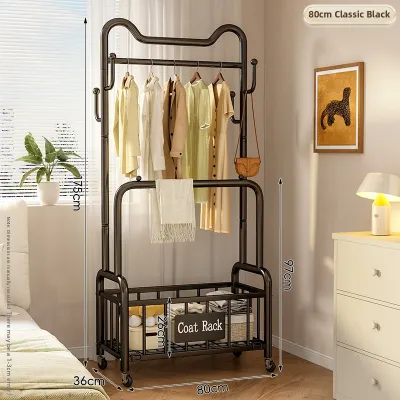
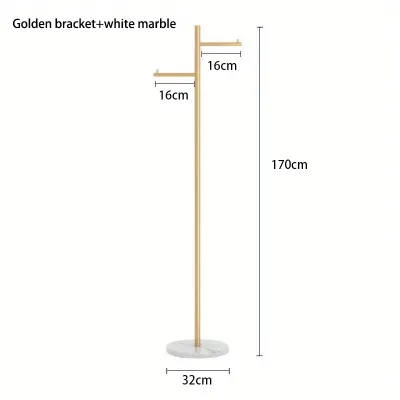
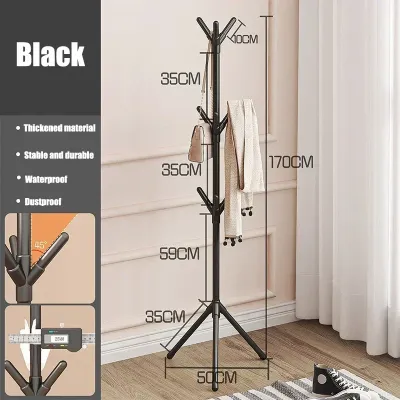
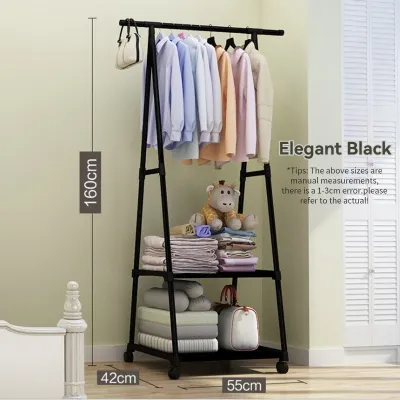

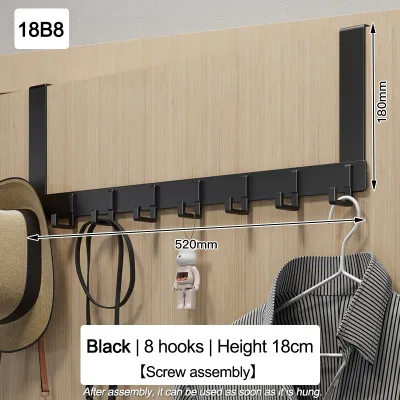
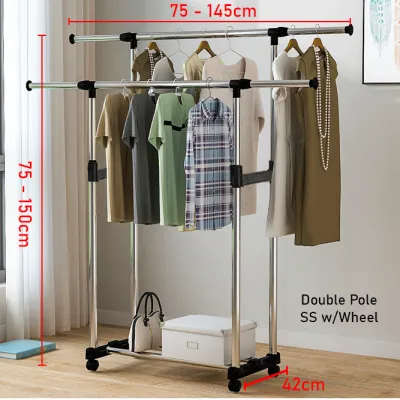
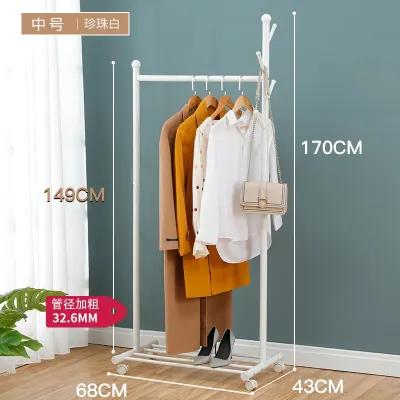
Prices are valid at publication and may change. Please refer to the product page for the latest price.
Multi-functionality is another excellent way to optimize space in a small apartment. Rather than purchasing separate pieces of furniture for different entryway needs, look for integrated coat racks that serve multiple purposes. Many modern designs incorporate lower tiers for shoe storage, built-in umbrella stands with drip trays, or small top shelves and trays for keys, mail, and loose change. Some models even feature integrated mirrors, allowing you to do a quick appearance check before leaving the house. Consolidating these functions into a single, cohesive unit reduces visual clutter and keeps your entryway looking organized and spacious.
Finally, you must evaluate the compatibility of the coat rack with your apartment’s walls and doors. Permanent wall-mounted racks are exceptionally space-efficient because they completely free up floor space, but they require drilling into your walls. In Singapore, internal walls are often made of solid concrete, which requires specialized tools and heavy-duty anchors to drill into. If you are a tenant in a rental property, or if you simply prefer not to damage your walls, you will need to look at non-damaging alternatives. Over-the-door hooks, magnetic hangers, and floor-to-ceiling tension-mounted poles offer excellent stability and storage capacity without requiring any drilling, making them highly versatile options for temporary or flexible living arrangements.
Recommended Hanging Clothes Rack (吊衣服架子) Brands for Compact Apartments
Finding a reliable brand that specializes in compact, high-quality entryway furniture makes the selection process much simpler. The following brands are highly regarded in Singapore for their innovative, space-saving designs and practical storage solutions.

IKEA
IKEA is a global leader in modular home furnishings, offering a wide array of customizable entryway solutions that can be tailored to fit almost any small space. Their product range includes everything from simple wooden coat trees to highly adaptable wall-mounted rail systems. These modular systems allow you to mix and match hooks, shelves, hanging bars, and shoe racks according to your specific storage needs and the exact dimensions of your wall. This flexibility is incredibly useful for HDB flats that have awkward alcoves, shallow recesses, or unused corners near the main entrance.
Before purchasing an IKEA system, it is highly recommended to visit their physical stores or use their online planning tools to verify the exact dimensions of each component. Because many of their wall-mounted systems are sold as individual parts, you must ensure that all the brackets, rails, and hooks you select are fully compatible with one another. Additionally, IKEA products generally do not include wall-mounting screws or plugs in the package. You will need to identify your wall type and purchase the correct heavy-duty fasteners separately to ensure a safe and secure installation.
MUJI
MUJI is famous for its minimalist, “no-brand” design philosophy, which emphasizes clean lines, natural materials, and functional simplicity. Their coat racks and wall-mounted hooks are designed to blend seamlessly into the background of a room, making them an excellent choice for open-plan apartments where the entryway flows directly into the living or dining area. By using slender vertical poles and unobtrusive wall pegs made of light oak, walnut, or brushed aluminum, MUJI helps maintain a sense of visual openness and calm in tight spaces.
While MUJI’s freestanding coat stands are beautifully designed, their ultra-slim frames mean you must pay close attention to weight distribution. Always check the product specifications for the base weight and avoid overloading one side of the rack to prevent it from tilting. Furthermore, Singapore’s tropical climate features consistently high humidity levels, which can affect natural wood and metal finishes over time. To preserve the appearance and structural integrity of your MUJI rack, review the manufacturer’s care instructions carefully. Avoid hanging soaking-wet items directly on untreated wooden surfaces, and regularly wipe down the frame with a dry, clean cloth to prevent mold growth or metal oxidation.
Yamazaki
Yamazaki is a Japanese brand that has earned a cult following for its highly specialized, ultra-slim metal storage solutions designed specifically for compact urban living. Their product philosophy centers on maximizing utility in “gap” spaces—those narrow, underutilized areas behind doors, between cabinets, or along tight corridors. Yamazaki’s offerings include leaning ladder racks that rest against the wall without drilling, over-the-door multi-hook hangers, and floor-to-ceiling tension poles with adjustable branches.
One of the standout features of Yamazaki’s designs is their compatibility with magnetic attachments. Many Singaporean HDB flats feature heavy steel household shelter (bomb shelter) doors near the entryway. Yamazaki’s heavy-duty magnetic key organizers and coat hooks can be attached directly to these steel doors, turning an otherwise unused structural element into a highly functional storage zone. If you are considering their over-the-door or gap-filling racks, take precise measurements of your door thickness and the clearance gap between the top of the door and the frame. Even minor dimensional discrepancies can prevent the door from closing properly or cause the rack to wobble.
Nitori
Nitori, often referred to as the “IKEA of Japan,” focuses on delivering highly practical, multi-functional, and budget-friendly home furnishings. Their entryway collection features a variety of clever space-saving designs, such as foldable wooden A-frame coat racks, retractable hanging bars, and multi-tier units that combine coat hooks with shoe shelves. These products are designed for maximum flexibility, allowing you to fold them flat and store them away when they are not needed, or expand them when hosting guests.
When shopping at Nitori, look closely at the mechanical joints, hinges, and locking devices on their foldable or adjustable models. Testing these components ensures they operate smoothly and lock securely, which is vital for maintaining the rack’s stability when fully loaded. Always verify the maximum load capacity per tier or hook as specified by the manufacturer. Adhering to these weight limits will prevent the frame from warping or collapsing over time, ensuring your investment remains safe and functional for years to come.
Which Space-Saving Design Fits Your Entryway?
Selecting the ideal coat rack configuration requires evaluating your specific entryway layout, your storage requirements, and your residential status. Renters, for example, must prioritize non-destructive installation methods, while homeowners have the freedom to mount heavy-duty fixtures directly into their walls.
The table below compares the four primary space-saving coat rack designs to help you determine which option best aligns with your home’s layout and structural constraints.
| Design Type | Best Suited For | Space Footprint | Installation Requirement | Key Limitation |
|---|---|---|---|---|
| Freestanding Slim | Homeowners and renters with empty corner spaces | Minimal floor area (typically 30×30 cm to 40×40 cm) | None; requires basic manual assembly | Can become unstable or tip over if overloaded unevenly |
| Wall-Mounted | Permanent setups in narrow corridors or foyers | Zero floor footprint; utilizes bare wall space | Drilling and anchoring into concrete or wall studs | Causes permanent wall damage; requires specialized tools |
| Over-the-Door | Renters and ultra-compact entryways | Zero floor footprint; utilizes existing door panels | Simply hangs over the top of the door; no tools needed | Limited by door clearance and lower overall weight capacity |
| Tension Pole | Floor-to-ceiling storage in tight, unused corners | Extremely small floor contact point (approx. 10 cm) | Wedged securely between floor and ceiling; no drilling | Not compatible with false ceilings; requires regular tension checks |
By analyzing these trade-offs, you can avoid common purchasing mistakes. For instance, while a wall-mounted rack is the ultimate floor-space saver, it may not be feasible if your entryway wall is made of shared structural concrete that is difficult to drill, or if your tenancy agreement strictly prohibits wall damage. In such scenarios, a tension pole or an over-the-door rack provides a highly effective, damage-free alternative.
Safe Installation and Wall Compatibility Checks
Installing a coat rack safely in a Singaporean apartment requires a clear understanding of your home’s structural materials. The vast majority of HDB flats and modern condominiums utilize solid concrete or precast panels for their structural and perimeter walls. These walls are incredibly dense and durable, meaning they can support heavy loads, but they require a rotary hammer drill and specialized masonry drill bits to penetrate. Standard hand drills will struggle to make an impact and can easily overheat. When mounting a rack to concrete, always use high-quality plastic wall plugs or expansion anchors that match the size of your screws to ensure the fixture remains firmly anchored under load.
In contrast, internal partition walls—such as those separating bedrooms or enclosing utility closets—are often constructed from drywall or gypsum board over a metal or timber frame. Drywall is relatively soft and cannot support the weight of a loaded coat rack on its own. If you attempt to screw directly into drywall without proper support, the screws will quickly pull out, damaging the wall and causing the rack to fall. To install a rack safely on drywall, you must use a stud finder to locate the vertical timber or metal studs behind the plasterboard and drive your screws directly into them. If no studs are available in your desired location, you must use specialized hollow-wall anchors, such as toggle bolts, which expand behind the drywall to distribute the weight across a wider area.
If you are using non-damaging installation methods, such as tension poles or heavy-duty adhesive hooks, you must still take precautions to protect your home’s finishes. Tension poles rely on a strong internal spring or screw mechanism to wedge themselves between the floor and the ceiling. While this is highly effective on solid concrete slabs, you must never install a tension pole against a hollow false ceiling, plasterboard ceiling, or fiberboard panel. The upward force required to secure the pole can easily crack, warp, or punch a hole through these delicate materials. For adhesive-based hooks, ensure the wall surface is completely clean, dry, and free of oil or dust before application. Keep in mind that high relative humidity can degrade adhesives over time, and removing strong adhesives from painted walls can peel away the paint or damage the underlying plaster.
Finally, safety should always be your top priority when undertaking any home installation. Drilling into walls blindly carries the risk of striking hidden utility lines, such as electrical wiring or water pipes. Puncturing an electrical conduit can cause severe shocks or short circuits, while hitting a water pipe can lead to costly flooding and water damage. Before you begin drilling, consult your building’s architectural layouts or contact your estate’s building management for guidance. Always use a high-quality multi-detector tool to scan the wall for live wires and plumbing before making any holes. If you are unsure about your wall’s composition, do not have the correct tools, or are uncomfortable performing the installation yourself, it is highly recommended to hire a licensed, professional handyman to complete the job safely.
Frequently Asked Questions (FAQ)
How much weight can a typical over-the-door coat rack hold?
The weight capacity of an over-the-door coat rack is determined by the manufacturer’s material specifications and the structural integrity of the door itself. Generally, standard metal or wooden over-the-door racks are rated to support between 5 kg and 15 kg of evenly distributed weight. However, hanging heavy items—such as fully packed backpacks, heavy wet coats, or multiple large bags—on a single hook can put excessive strain on the rack and the door hinges. Over time, this concentrated weight can cause the door to warp, sag, or fail to close properly within its frame. To prevent damage, always refer to the specific product label for weight guidelines and distribute your items evenly across all available hooks.
Are tension pole coat racks safe for high ceilings?
Yes, tension pole coat racks are safe and highly stable for high ceilings, provided the pole’s adjustable height range is officially rated to accommodate your specific floor-to-ceiling measurement. Standard residential ceilings in Singapore typically measure between 2.6 and 3 meters, but loft apartments or older properties may have significantly higher ceilings. Before purchasing, verify the maximum extension limit of the pole on the manufacturer’s product label. It is crucial to ensure that the pole is not extended past its safe operating limit, as over-extending can compromise its structural rigidity and cause it to buckle. Additionally, ensure the pole is mounted against a solid concrete ceiling rather than a delicate false ceiling, and regularly check the tension mechanism to ensure it remains tight and secure.

Community discussion
Share your experience or ask a question. Comments are reviewed before publication.