
The best space-saving bedside holder solutions for small HDB bedrooms include wall-mounted floating shelves, clip-on bedside trays, slide-under fabric caddies, and ultra-slim folding tables. These compact organizers keep your daily essentials within arm’s reach without occupying precious floor space. By shifting your storage off the floor, you can preserve clear walkways and ensure your built-in wardrobe doors can open fully without obstruction.
Modern HDB flat layouts, especially in newer Built-To-Order (BTO) developments, often feature compact master and common bedrooms. When you place a standard queen-size bed in a room that measures roughly 9 to 12 square meters, the remaining floor space is incredibly scarce. A traditional nightstand, which typically requires a footprint of at least 40 cm by 40 cm, quickly becomes a physical obstacle. It restricts movement, blocks wardrobe doors, and forces you to squeeze through tight gaps just to move around your own room.
Furthermore, floor-bound furniture creates cleaning bottlenecks in tight spaces. Dust, lint, and hair tend to accumulate in the narrow crevices between a heavy nightstand and the bed frame. Moving a bulky wooden table to vacuum or mop is a physical chore, and robotic vacuum cleaners often get trapped or fail to reach these tight corners entirely. By shifting your storage off the floor, you create a cleaner, more streamlined environment that visually expands the room, making a small bedroom feel significantly more spacious and airy.
Products mentioned in this guide
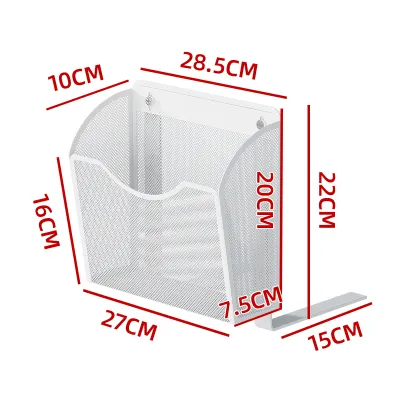
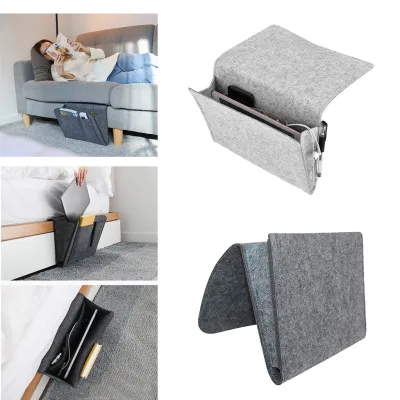
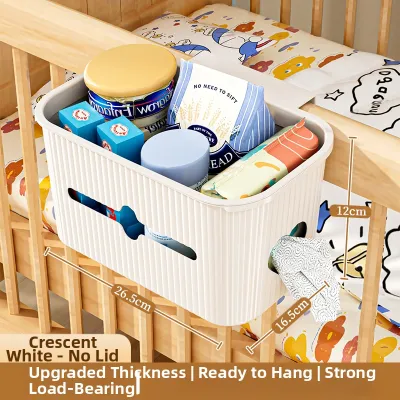
Prices are valid at publication and may change. Please refer to the product page for the latest price.
This is where a dedicated bedside holder becomes an invaluable design choice. Unlike traditional furniture, these compact organizers utilize vertical wall space, the bed frame itself, or the mattress structure to keep your nocturnal essentials—such as your smartphone, reading glasses, water bottle, and books—within easy reach. By adopting floating shelves, clip-on trays, or fabric caddies, you can completely eliminate the need for a floor-standing nightstand, reclaiming valuable floor area for smooth foot traffic and uninterrupted wardrobe access.
How to Choose the Right Bedside Holder for Your Space
Selecting the perfect bedside holder requires a careful evaluation of your bedroom’s physical layout, your bed frame’s design, and your daily habits. It is not a one-size-fits-all decision; a solution that works beautifully for a wooden bed frame might be completely incompatible with a fabric-upholstered divan. To make an informed choice, you must systematically assess several key criteria before making a purchase.
Available Clearance and Layout Constraints Measure the exact distance between the edge of your mattress and the nearest wall, wardrobe door, or window frame. If this gap is less than 15 cm, traditional tables are entirely out of the question, and even some wider clip-on trays might block wardrobe doors. In ultra-tight spaces, a vertical fabric caddy that hugs the side of the mattress or a very narrow, high-mounted floating shelf is the only way to maintain a clear walkway.
Weight Capacity and Intended Use Assess what you actually need to store on the holder. If you only need a safe spot for a smartphone, a pair of earbuds, and a sleeping mask, a lightweight fabric caddy is highly suitable. However, if you like to keep a heavy ceramic mug, a glass water carafe, or a stack of hardcover books by your bedside, you must prioritize rigid wooden, metal, or high-grade plastic holders. Always consult the manufacturer’s specified weight limits to ensure the holder can support your items without bending, sagging, or falling.
Installation Method and Reversibility Decide between drilling and non-drilling methods. Drilling provides the most secure, permanent mount but requires tools, basic DIY skills, and permission if you are renting your home. If you want to avoid permanent wall damage, non-drilling alternatives like adhesive-mounted shelves, clip-on frame trays, or slide-under mattress caddies are excellent options. However, non-drilling solutions have lower weight limits and require careful surface preparation to prevent accidental falls.
Bed Frame Compatibility Examine your bed frame’s structure. Does it have an exposed wooden or metal headboard, or is it a fully upholstered platform bed? Clip-on bedside trays rely on a rigid, flat rail or headboard lip to clamp onto securely. If your bed frame lacks these exposed rails, or if the frame is completely padded with fabric, a slide-under caddy that relies on the weight of the mattress to anchor itself is a far better choice.
Top Space-Saving Bedside Holder Types for HDB Flats
Categorizing these solutions by their mounting style allows you to match the holder to your room’s physical layout and structural realities. Let us explore the four primary designs that work best in Singapore’s compact homes.

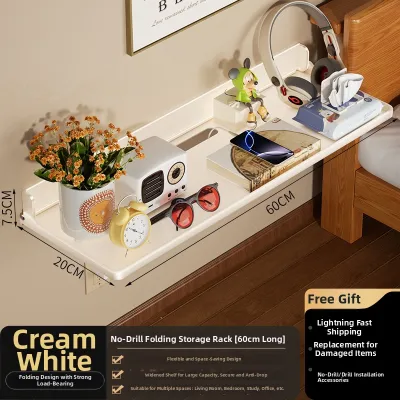
Wall-Mounted Floating Shelves
Best For: Bedrooms with zero side clearance between the bed and the wall, but where there is unused vertical wall space directly adjacent to the mattress.
Wall-mounted floating shelves are the ultimate solution for keeping your bedroom floor completely clear. By anchoring directly to the wall, these shelves create a minimalist, modern look that leaves the floor space beneath them entirely open for cleaning, walking, or placing low-profile storage bins.
The primary advantage of a floating shelf is its structural stability. When properly installed with screws and wall plugs, it can easily support heavier items like a reading lamp, a small potted plant, or a heavy water carafe. The main drawback is that installation requires drilling, which leaves permanent holes that must be patched and painted over if you decide to rearrange your bedroom layout in the future.
Verify the shelf’s depth before purchasing. A shelf that protrudes more than 15 cm to 20 cm from the wall can easily become a safety hazard, increasing the risk of bumped elbows or heads when you sit up or roll over in bed. Additionally, ensure the mounting hardware included with the shelf is suitable for your specific wall material, as solid concrete walls require different plugs and screws than hollow gypsum partition walls.
Clip-On Bedside Trays and Caddies
Best For: Homeowners and renters with sturdy wood or metal bed frames who want a solid, flat shelf without drilling into the walls.
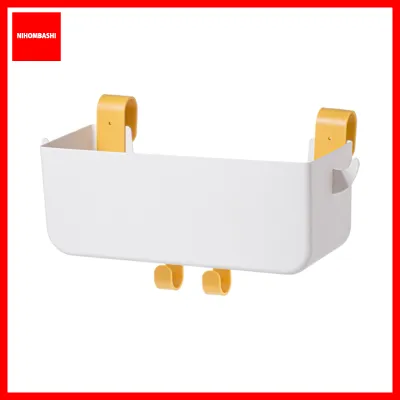
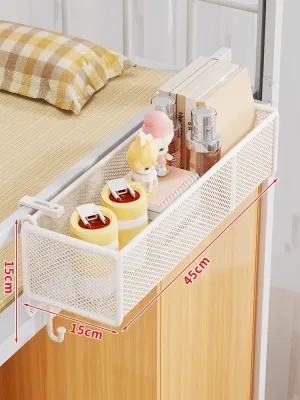
Clip-on bedside trays and caddies are rigid, flat shelves that attach directly to the side rails or headboard of your bed frame using adjustable clamp mechanisms. They offer a highly convenient, semi-permanent storage surface without requiring any wall modification.
These trays are exceptionally easy to install, adjust, and remove. They provide a stable, level surface that can comfortably hold a hot mug of tea, a tablet, or a smartphone while charging. However, they are entirely dependent on bed frame compatibility; they require an exposed, flat rail of a specific thickness to clamp onto, making them unusable on most fully upholstered divans or frameless platform beds.
Measure the exact thickness of your bed frame’s side rail or headboard before purchasing. Look for models that feature adjustable clamps lined with soft silicone, rubber, or felt padding. This protective lining is crucial for preventing the clamp from scratching, denting, or stripping the finish off your bed frame over time. Additionally, verify that the clamp’s maximum opening width is wider than your bed frame’s rails to ensure a secure fit.
Slide-Under Bed Caddies (Felt or Fabric)
Best For: Platform beds, divan bases, bunk beds, or mattresses resting directly on a bed base where wall mounting or clamping is physically impossible.
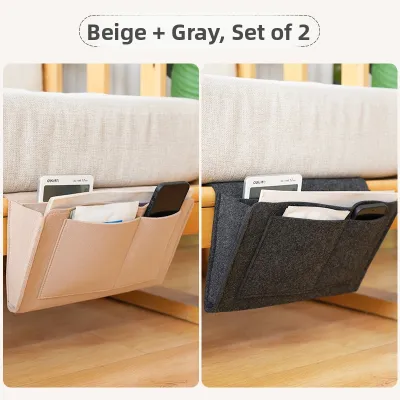
Slide-under bed caddies are soft, pocketed organizers designed to hang down the side of your bed. They are held in place by a long, flat anchor flap that slides directly between your mattress and the bed base or box spring.
These fabric organizers require absolutely zero tools or installation. They are highly affordable, lightweight, and completely soft, eliminating any risk of painful bumps in the dark. The trade-off is that they are strictly limited to lightweight, flat items such as remote controls, tablets, smartphones, and reading glasses. They cannot support open cups, hot liquids, or heavy decorative lamps.
Pay close attention to the length and texture of the anchor flap. A longer flap—ideally measuring 30 cm or more—provides greater leverage and uses the weight of the mattress more effectively to prevent the caddy from slipping out when loaded. Look for models constructed from high-density, structured felt or reinforced canvas with built-in internal boards; these materials help the pockets retain their shape and prevent them from sagging or collapsing when empty.
Ultra-Slim and Folding Bedside Tables
Best For: Sleepers who prefer the familiar look and high weight capacity of a traditional tabletop but are dealing with very tight side clearances.
Ultra-slim and folding bedside tables are highly compact, narrow floor-standing tables designed to fit into tight gaps beside the bed. Unlike traditional nightstands, these tables feature a minimal footprint, often measuring between 15 cm and 25 cm in width.
These tables provide the highest weight capacity and the familiar usability of a classic nightstand. Folding models offer the added benefit of being collapsible; if you need to open a nearby wardrobe door or vacuum the room, you can simply fold the table flat and tuck it away. The downside is that they still occupy physical floor space, which can slightly restrict movement compared to floating or frame-attached options.
Verify the exact footprint of the base or legs to ensure they do not interfere with your bed frame’s feet or block walking paths around the room. For folding models, closely inspect the hinge stability and locking mechanisms; a high-quality locking system is essential to ensure the table remains completely stable and does not accidentally collapse if bumped in the middle of the night.
Installation and Safety Checks for HDB Walls and Bed Frames
Ensuring a safe and secure installation is critical to preventing property damage, furniture scratches, or personal injury. Whether you are drilling into concrete or clamping a tray to a wooden frame, taking the time to perform proper safety checks will guarantee your bedside holder remains reliable for years to come.
Wall Assessments Before mounting any floating shelf, identify the structural composition of your bedroom wall. Most internal HDB walls are constructed from solid concrete or precast panels, which are incredibly strong but require a masonry drill bit, plastic wall plugs, and a hammer drill to penetrate. Some newer HDB partition walls are made of gypsum drywall, which requires specialized toggle bolts or drywall anchors rather than standard plugs. Never attempt to use standard adhesive strips on freshly painted, textured, or wallpapered walls to hold a floating shelf; the weight of the shelf and your items will eventually peel the paint or paper, causing the shelf to crash down and potentially damage your flooring or electronics.
Concealed Hazards Always check for hidden utility lines before drilling any holes into your bedroom walls. Use a digital wall scanner to locate concealed electrical wiring or water pipes, especially if you are planning to mount your shelf near light switches, power sockets, or an adjacent bathroom wall. Drilling into a live electrical wire is an immediate safety hazard that can cause severe shocks, power trips, or electrical fires, resulting in expensive repair bills.
Bed Frame Protection When installing a clip-on bedside tray, never tighten metal or hard plastic clamps directly against bare wood, laminate, or metal bed frames. Over time, the pressure and slight movements of the tray will scratch, dent, or chip the furniture’s finish. Always place self-adhesive felt pads, rubber grips, or a thin piece of foam between the clamp and the bed frame. This simple step not only protects your bed’s finish but also increases friction, ensuring the tray remains tightly clamped in place.
Routine Maintenance and Environmental Checks Singapore’s warm and humid climate can affect the integrity of adhesives, wood joints, and metal fasteners over time. High humidity can cause wood to expand and contract slightly, loosening screws, while moisture can degrade the grip of adhesive strips. Every few months, take a moment to inspect your bedside holder. Check the tightness of any clamps, screws, or wall mounts, and gently wiggle the holder to ensure it remains stable. If you notice any sagging, loose screws, or peeling adhesives, remove your items immediately and re-secure the mount before a complete failure occurs.
Frequently Asked Questions (FAQ)
Can I use adhesive wall shelves on HDB bedroom walls?
Yes, heavy-duty adhesive wall shelves can be used on smooth, painted concrete walls, but they come with strict limitations. They are only suitable for lightweight items like a smartphone, reading glasses, or a small plastic digital clock. They should not be used to hold heavy ceramic mugs, water bottles, or large books. Before applying the adhesive, ensure the wall surface is thoroughly cleaned with isopropyl alcohol and completely dry. Keep in mind that high-strength adhesives can peel off the top layer of paint or plaster when removed, so renters should exercise caution and consider drilling or non-adhesive bedside holders instead.
How do I stop a slide-under bed caddy from slipping?
To prevent a fabric slide-under caddy from slipping out from beneath the mattress, ensure the anchor flap is inserted as deeply as possible, ideally reaching the area where the sleeper’s primary body weight rests. You can also select a caddy that features anti-slip silicone dots or a textured rubberized backing on the anchor flap. If your current caddy lacks these features, placing a small piece of non-slip rug pad or double-sided hook-and-loop tape between the mattress and the bed base (sandwiching the caddy flap) will dramatically increase friction and keep the organizer securely in place.

Community discussion
Share your experience or ask a question. Comments are reviewed before publication.