
Finding extra storage in a standard Housing & Development Board (HDB) kitchen often requires looking at the unused vertical spaces and tight crevices that naturally occur between appliances, cabinets, and walls. A slim rack is an ideal solution to turn these awkward gaps into highly functional storage zones without obstructing walkways or compromising kitchen workflow. To choose the right one, you must balance precise physical dimensions with the specific environmental demands of your kitchen’s micro-zones.
Selecting the perfect rack involves more than just finding a unit that looks thin enough. Because HDB kitchens are highly utilized spaces with unique layout quirks, understanding your specific spatial constraints, material requirements, and safety needs will ensure your new storage solution is both practical and durable.
Understanding Your HDB Kitchen Gap Constraints
Before purchasing any slim storage unit, taking precise measurements of the target gap is essential. Walls in HDB flats, especially in older blocks or those with thick wall plaster, are rarely perfectly plumb. Similarly, built-in kitchen cabinets can experience minor misalignments over time. To avoid buying a rack that gets stuck halfway, measure the gap width at three distinct heights: near the floor (above the skirting board), at the midpoint, and near the top of the countertop. Always use the smallest of these three measurements as your absolute maximum width limit.
Products mentioned in this guide
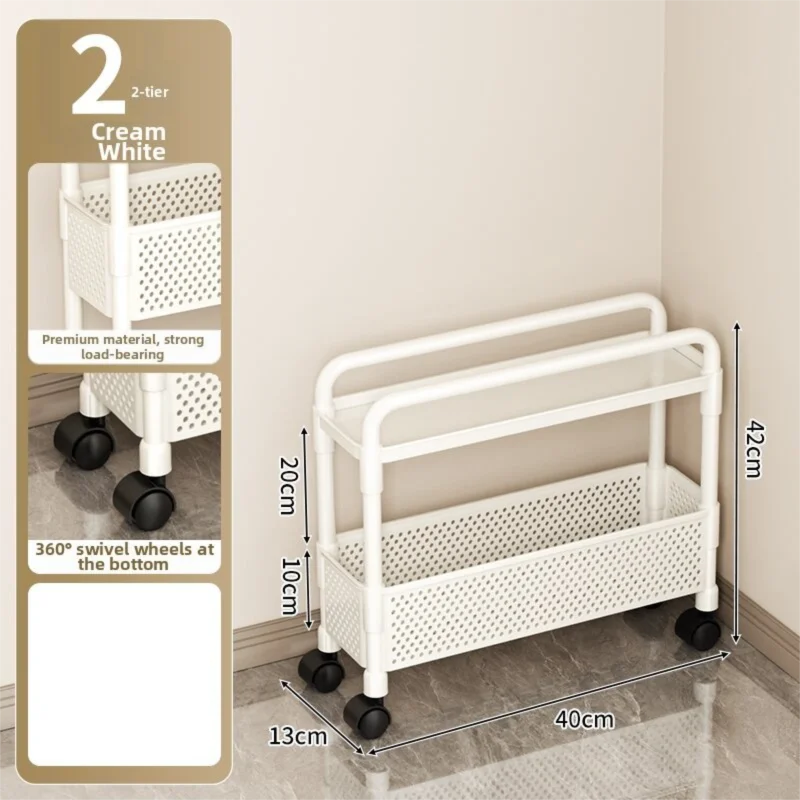
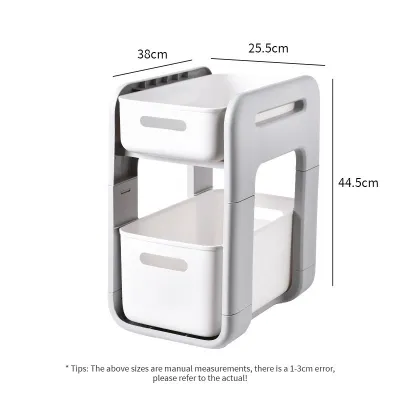
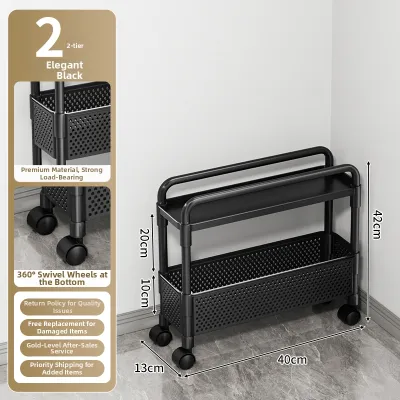
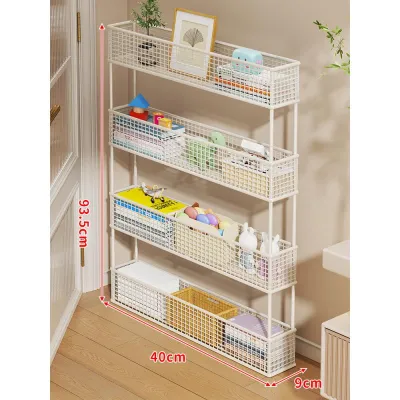
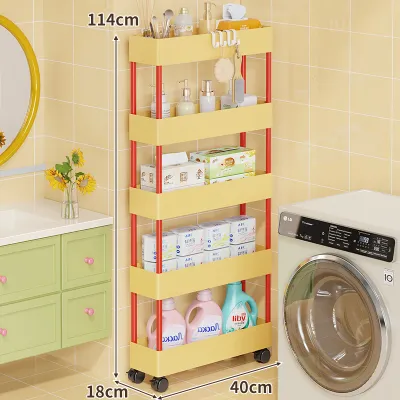
Prices are valid at publication and may change. Please refer to the product page for the latest price.
Depth is another critical dimension that dictates usability. Standard HDB kitchen countertops and built-in cabinets are typically designed with a depth of 600mm. However, gaps located near structural pillars, household shelter doors, or recessed plumbing areas might be significantly shallower, often ranging from 300mm to 450mm. Buying a standard 600mm-deep rack for a 400mm-deep recess will cause the unit to protrude into your walkway, creating a persistent tripping hazard and disrupting the visual flow of your kitchen.
Do not overlook physical obstructions hidden within the gap. Look closely at the floor and wall surfaces inside the crevice. HDB kitchens frequently feature tiled skirting boards that protrude 10mm to 15mm from the wall, which directly reduces the usable width at floor level. Other common obstructions include wall-mounted electrical sockets, exposed copper gas pipes, water inlet valves, and plastic electrical trunking. Ensure the rack’s frame, shelves, and wheels can slide past these elements without scraping or damaging them.
Finally, evaluate the clearance required for adjacent appliance doors and drawers. If your slim rack sits directly next to a refrigerator, oven, or washing machine, you must verify that these appliances can still open to their full operational angles. A rack that sits too far forward can block drawer pull-outs or prevent an oven door from opening completely, which poses a significant safety risk when handling hot cookware.
Key Features to Look for in a Kitchen Slim Rack
Because the kitchen is a high-humidity environment subject to grease, steam, and frequent spills, selecting the right material is crucial for the longevity of your rack. Do not assume that any metal rack is rust-proof or that any wooden unit is warp-resistant. Always check the manufacturer’s product specifications for protective finishes. For metal racks, prioritize powder-coated carbon steel or high-grade stainless steel such as SUS304. If you prefer plastic, verify that the material is high-density polypropylene (PP) or ABS plastic, which resists moisture and is easy to clean. Avoid untreated wood or low-grade particle boards, which can swell and degrade rapidly when exposed to kitchen steam.

Mobility is another key factor, as these racks are designed to slide in and out of tight spaces. Look for models equipped with smooth-rolling castor wheels. Swivel castors offer excellent maneuverability, while fixed straight-line castors can help keep the rack moving in a straight path within very narrow gaps. Ensure at least two of the wheels feature reliable locking brakes to keep the rack stable when parked. Additionally, check the vertical height of the wheels and the placement of the handle; the handle must sit at a height that allows you to pull the rack out comfortably without scraping your knuckles against countertop overhangs, which typically project 10mm to 20mm beyond the cabinet face.
Weight capacity and stability must be verified before purchase, especially since tall, narrow furniture is inherently prone to tipping. Check the manufacturer’s maximum load limits for both individual shelves and the entire unit. A quality slim rack should feature a design that prioritizes stability, such as a slightly wider base frame or reinforced lower joints. Avoid top-heavy configurations. If you plan to store heavy items, look for models that include optional wall-anchoring hardware or anti-tip brackets.
Storage needs change over time, so flexibility is highly beneficial. A rack with fixed shelf heights limits your options, forcing you to store tall bottles elsewhere. Look for slim racks with adjustable or removable shelves. This design allows you to customize the vertical clearance to accommodate tall items like cooking oil, large soy sauce bottles, or multi-liter detergent bottles, while keeping smaller spice jars on the shallower shelves.
Matching Slim Rack Types to Common HDB Kitchen Scenarios
The Fridge-to-Cabinet Gap
The gap between a refrigerator and adjacent kitchen cabinets is one of the most common unused spaces in an HDB kitchen. However, this area requires careful consideration due to appliance heat dissipation. Refrigerators release heat from their side or rear panels during operation. Placing a solid-sided slim rack directly against the fridge can trap this heat, forcing the appliance compressor to work harder, which increases electricity consumption and potentially shortens the fridge’s lifespan.
For this scenario, select an open-wire or slatted metal rack. These designs facilitate continuous airflow, allowing heat to escape efficiently. Open-wire shelves also prevent dust from accumulating rapidly and make it much easier to pull the rack out to vacuum or wipe down the side of the refrigerator and the surrounding floor.
The Washing Machine or Dryer Alcove
Many HDB flats, particularly those with integrated service yards or compact kitchen layouts, feature washing machines or dryers tucked into tight alcoves. The primary challenge in this zone is physical vibration. During high-speed spin cycles, laundry appliances vibrate significantly, which can cause adjacent, loosely constructed racks to rattle, slide, or even tip over.
Choose a slim rack with highly rigid, welded joints or heavy-duty screw connections that resist loosening over time. Avoid racks with glass shelves, loose plastic trays, or clip-on baskets that will create loud rattling noises during appliance operation. Furthermore, because laundry areas are highly prone to dampness, high humidity, and chemical exposure from detergents, prioritize rust-resistant finishes like heavy powder coatings or marine-grade plastics.
The Sink or Prep Zone Crevice
Gaps near the kitchen sink or food preparation counters are ideal for storing dishwashing liquids, sponges, hand soaps, and general cleaning supplies. However, this zone is constantly exposed to water splashes, dripping sponge runoff, and occasional chemical spills.
To protect your kitchen floor tiles and prevent water damage, select a slim rack that features raised shelf edges or guardrails to keep bottles from sliding off. More importantly, look for models equipped with removable plastic drip trays or solid, waterproof bottom bins. These trays catch any leaks or soapy runoff, allowing you to slide the tray out and wash it separately rather than letting dirty water pool on your kitchen floor, which can damage tile grout and attract pests.
Safe Setup and Maintenance for Narrow Spaces
Proper loading is the single most important factor in maintaining the stability of a narrow pull-out rack. Always apply the principle of gravity: place your heaviest items, such as liter bottles of cooking oil, canned goods, and glass jars, on the lowest shelf. Medium-weight items like vinegar bottles or boxed goods should occupy the middle shelves, while lightweight items like spices, paper towels, and sponges should be placed on the top shelves. This distribution lowers the overall center of gravity, significantly reducing the risk of the rack tipping over when you pull it out quickly.
If you choose a tall slim rack (especially units exceeding 1.2 meters in height) and place it in a high-traffic area, additional safety measures are necessary. Consult the product manual to see if the manufacturer provides or recommends anti-tip straps, wall anchors, or adhesive brackets. If permitted, secure the top portion of the rack to the side of the adjacent wooden cabinet or the concrete wall. This is particularly crucial in households with young children or pets who might pull on the rack.
A slim rack relies heavily on its moving parts to remain functional. Over time, kitchen grease, dust, and stray hair can accumulate in the castor wheel axles, causing them to stick or drag. Establish a routine to inspect and wipe down the wheels every few months. Check the metal joints and screws; the repetitive motion of pulling and pushing the rack can gradually loosen fasteners. Use a screwdriver to tighten any loose joints to maintain structural rigidity. If you notice early signs of rust on metal frames, clean the area immediately and apply a touch-up rust-inhibiting paint.
The narrow gaps where these racks reside are notorious dust-traps and can easily become breeding grounds for household pests like cockroaches or ants if food crumbs or moisture accumulate. Make it a habit to pull the slim rack completely out of its gap at least once a month. This gives you full access to sweep, vacuum, and mop the hidden floor space and wipe down the adjacent cabinet walls, keeping your kitchen hygienic and pest-free.
Frequently Asked Questions (FAQ)
What is the minimum gap width needed for a pull-out slim rack?
While some ultra-slim utility racks are manufactured to fit gaps as narrow as 10cm to 12cm, you should never purchase a rack that matches your gap measurement exactly. You must allow a minimum of 1cm to 2cm of clearance on each side of the rack (a total of 2cm to 4cm of extra space). This clearance accounts for minor wall irregularities, skirting boards, and slight steering deviations when pulling the rack out, preventing the frame from scraping against your walls or cabinets.
How do I prevent a tall slim rack from tipping over when pulled out?
To prevent tipping, always store heavy items on the bottom shelf to keep the center of gravity low. When pulling the rack out, pull it straight and smooth rather than jerking it sideways. If the rack is tall and unstable, look for models that feature wider base stabilizers or auxiliary wheels. Additionally, you can install furniture safety straps or tether anchors to secure the rear of the rack to the adjacent cabinet frame, provided it does not interfere with the pulling mechanism.
Are tension-rod slim racks safe for holding heavy kitchen items?
Tension-rod or pressure-mounted shelving units rely entirely on friction and upward pressure to stay in place. Because of this, they are generally not safe or suitable for holding heavy kitchen items like glass jars, canned food, or large liquid containers. They are best reserved for lightweight items such as spices, paper towels, or lightweight plastic containers. For heavier kitchen storage, always opt for freestanding wheeled slim racks or wall-anchored shelving units that have verified load-bearing capacities.

Community discussion
Share your experience or ask a question. Comments are reviewed before publication.