
Why Sliding Door Wardrobes Are Ideal for HDB Bedrooms
When planning the layout of a Housing & Development Board (HDB) bedroom in Singapore, space optimization is almost always the top priority. Standard BTO (Built-To-Order) flat bedrooms typically range from 9 to 11 square meters, leaving very little margin for layout errors. In these compact environments, choosing a wardrobe sliding door system over traditional hinged doors can make a dramatic difference in how usable and comfortable your bedroom feels.
Traditional hinged wardrobe doors require a significant amount of clearance to swing open fully—usually between 50 and 60 centimeters of unobstructed floor space directly in front of the cabinet. This swing zone effectively becomes “dead space” where you cannot place other furniture, such as a bed, a bedside table, or a study desk. If you force these items into the swing zone, you end up with doors that collide with your mattress or bedside drawers, creating daily frustration and limiting your access to your clothes.
A sliding door wardrobe, by contrast, operates entirely within its own footprint. Because the doors glide horizontally along a track parallel to the wardrobe frame, they require zero clearance in front of the unit to open. This allows you to position your bed frame just centimeters away from the wardrobe face without restricting access. You can place a functional bedside table directly next to the wardrobe, or even set up a compact vanity desk right up against the sliding panels, maximizing every square centimeter of your bedroom floor.
Products mentioned in this guide
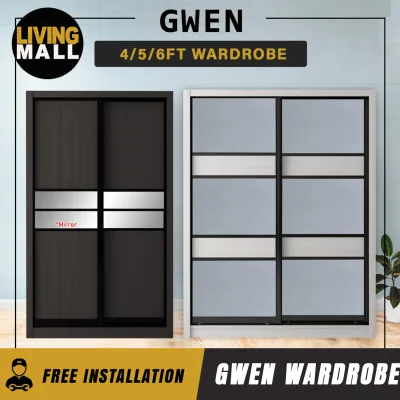
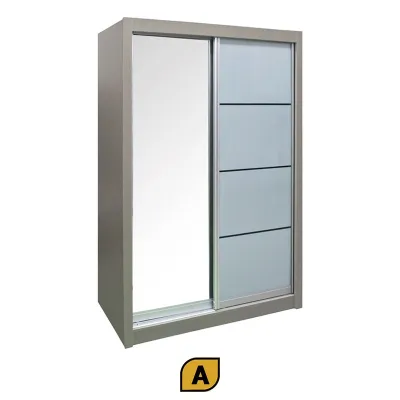
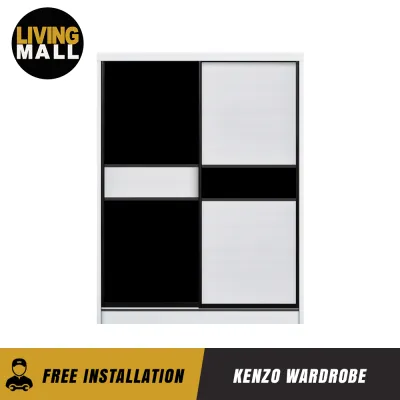
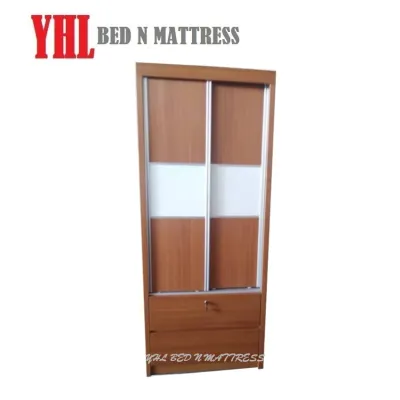
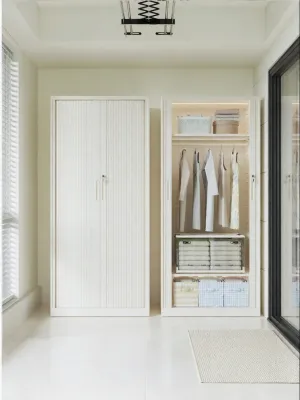
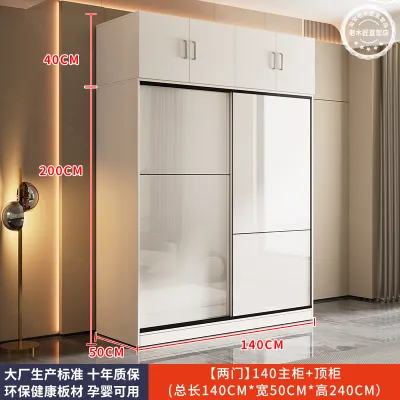
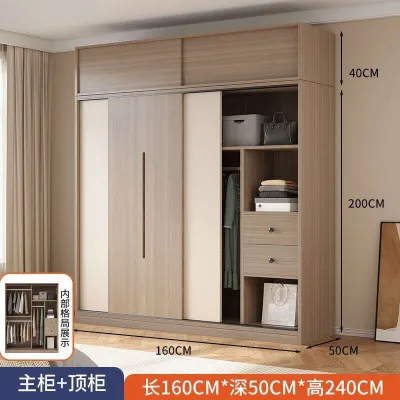
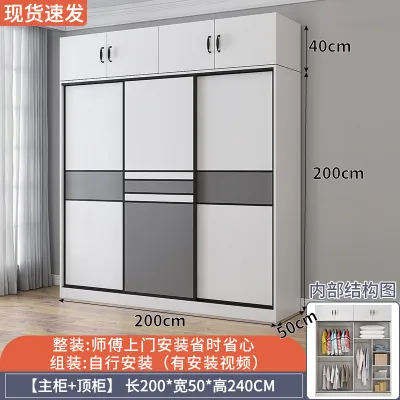
Prices are valid at publication and may change. Please refer to the product page for the latest price.
Beyond pure space efficiency, sliding doors greatly improve the flow of movement within a small room. In a tight HDB bedroom shared by two people, a hinged door left open can completely block the walking path between the bed and the wall, forcing one person to wait or squeeze past. Sliding doors maintain a clear, unobstructed pathway at all times. Even when you are actively browsing your wardrobe, the door remains flush within the frame, allowing your partner to move freely around the room without interruption.
From a design perspective, sliding door wardrobes offer a sleek, continuous aesthetic that complements modern Singaporean home interiors. Large, flat sliding panels act as a visual extension of the bedroom walls, creating a clean, minimalist appearance that reduces visual clutter. This seamless look is highly effective at making a small room feel visually larger and more open. Whether you opt for mirrored panels to bounce light around the room, or matte finishes that blend into your wall paint, sliding doors provide a cohesive design element that traditional hinged doors struggle to match.
Key Dimensions and Layout Constraints in HDB Rooms
To ensure your sliding door wardrobe fits perfectly and functions without issue, you must take precise measurements and account for the unique architectural features of Singaporean HDB flats. Skipping this step can lead to costly errors, such as wardrobes that block windows, cover essential electrical outlets, or fail to fit into the designated space entirely.

Measuring Your Space Step-by-Step
Step 1: Wall Width Measure the width of the wall where the wardrobe will stand at three different heights: near the floor, at midpoint, and near the ceiling. HDB walls, particularly in older resale flats, are rarely perfectly plumb. If you are purchasing a modular wardrobe, you must use the smallest of these three measurements to ensure the unit fits. If you are opting for custom built-in carpentry, these variations will help your carpenter prepare the necessary filler panels.
Step 2: Ceiling Height Measure the distance from the finished floor to the ceiling at both ends of the wall. Standard HDB ceiling heights are typically around 2.6 meters, but this can vary if you have installed a false ceiling, plastering, or thick flooring. Knowing the exact height is crucial if you want a floor-to-ceiling wardrobe, as even a one-centimeter difference can prevent a pre-fabricated wardrobe from standing upright.
Step 3: Wardrobe Depth While standard wardrobe carcasses are typically 60 centimeters deep, a sliding door wardrobe requires extra depth to accommodate the track system. The sliding tracks and door panels generally add an additional 8 to 10 centimeters to the overall depth. Therefore, you must plan for a total footprint depth of 68 to 70 centimeters. Ensure that this depth does not protrude past your bedroom doorway or block the entry path.
Identifying Common HDB Bedroom Obstacles
Air-Conditioning Trunking In Singapore, air-conditioning pipes and trunking are commonly run along the upper portion of bedroom walls. If your wardrobe is designed to be floor-to-ceiling, it will inevitably collide with this trunking. You must decide whether to stop the wardrobe height below the trunking, leave a gap behind the wardrobe, or have a carpenter custom-build a “box-up” to neatly enclose the pipes within the top cabinet.
Power Sockets and Light Switches Look closely at the wall where you plan to place your wardrobe. If there are power sockets, telephone jacks, or light switches, they will be covered by a standard wardrobe backing. You will need to decide whether to hire a licensed electrician to relocate these outlets, or instruct your installer to cut precise access holes in the wardrobe’s back panel so you can still use them.
Window Swings and Natural Light Ensure that the depth and width of your wardrobe do not interfere with your bedroom windows. If the wardrobe is placed too close to a window wall, it may block the window panels from swinging open fully, restricting ventilation. Additionally, a deep wardrobe placed next to a window can cast a shadow across the room, significantly reducing the amount of natural light that enters your space.
Structural Columns and Beams Many HDB layouts feature load-bearing columns or wall protrusions in the corners of bedrooms. Standard modular wardrobes cannot fit flush against walls with these structural features, leaving awkward, dust-gathering gaps. If your room has a column, you will need to evaluate whether a brand can customize the wardrobe frame to fit around the column, or use filler panels to hide the gap.
Determining Clearances and Internal Usability
To maintain a comfortable bedroom layout, aim for a minimum clearance of 50 centimeters between the face of the sliding wardrobe and the edge of your bed frame. While sliding doors can technically function with as little as 40 centimeters of clearance, anything less will make it difficult for you to stand comfortably in front of the wardrobe while retrieving your clothes.
Furthermore, pay close attention to the internal clear depth of the wardrobe. Because the sliding track system consumes a portion of the external depth, the internal usable depth is often reduced to around 50 to 55 centimeters. Standard adult clothes hangers are typically 40 to 45 centimeters wide. If your internal depth falls below 50 centimeters, your hung clothes will sit at an angle, or their sleeves will constantly rub against the sliding doors, causing friction that can damage delicate fabrics and derail the doors.
How to Evaluate Wardrobe Brands for HDB Sliding Doors
Choosing the right brand for your sliding door wardrobe requires looking beyond aesthetics. Because sliding doors rely heavily on moving parts, the quality of the hardware, materials, and construction methods will directly determine how long your wardrobe lasts in Singapore’s unique climate.
Track and Roller Systems
The sliding mechanism is the single most important component of your wardrobe. If the tracks or rollers fail, the entire wardrobe becomes unusable. When evaluating different brands, look closely at the type of system they use:
- Bottom-Running vs. Top-Hung Systems: Bottom-running systems carry the weight of the doors on the bottom track, making them highly stable and less prone to sagging over time. This is the preferred choice for heavy glass or solid wood doors. Top-hung systems suspend the doors from a top rail, offering a modern look with no visible bottom track profile, but they require an exceptionally sturdy wardrobe frame to prevent the top rail from bowing under the weight.
- Anti-Jump Mechanisms: High-quality sliding doors should feature anti-jump clips or guides. These mechanisms keep the rollers securely locked inside the track, preventing the doors from jumping off their tracks if they are opened too quickly or hit with accidental force.
- Dust-Resistant Track Designs: Deep, narrow grooves in bottom tracks are notorious for trapping dust, hair, and clothing fibers, which eventually clog the rollers and cause a bumpy, noisy slide. Look for brands that offer low-profile, shallow, or self-cleaning track designs that are easy to wipe down.
- Soft-Close Dampers: A premium sliding wardrobe should always include soft-close dampers. These hydraulic or spring-loaded mechanisms catch the door as it nears the side panel, slowing it down and pulling it gently and quietly to a complete close. This prevents loud slamming noises’—especially important in quiet HDB estates at night—and protects the wardrobe frame from structural damage caused by repeated impacts.
Material Durability in Singapore's Climate
Singapore’s tropical climate features high relative humidity, often exceeding 80 percent. This constant moisture poses a severe threat to low-grade engineered wood products, which can absorb water vapor, swell, warp, and become breeding grounds for mold.
When shopping, ask brands about the specific core materials they use. High-Moisture Resistant (HMR) boards or high-grade plywood are far superior to standard particle boards for humid environments. Plywood offers excellent screw-holding strength, ensuring that the heavy tracks and rollers remain securely anchored over years of daily use.
Additionally, verify the surface finish of the wardrobe. High-pressure laminates (HPL) or high-quality melamine finishes provide an effective moisture barrier, protecting the inner wood core from humidity while offering scratch resistance. Finally, check for recognized formaldehyde emission standards, such as E1 or E0 certifications. These ratings ensure that the adhesives used in the wardrobe boards do not release harmful chemical fumes into your enclosed, air-conditioned bedroom.
Customization vs. Modularity
A brand’s ability to adapt its wardrobes to your specific HDB bedroom layout is a key differentiator. You must decide whether you need a fully customized solution or a modular system:
- Scribing Capabilities: Scribing is the process of cutting and shaping filler panels to match the exact, often uneven contours of your bedroom walls, floor skirting, and ceiling beams. A brand that offers professional scribing can install a wardrobe that looks completely built-in, with no gaps between the wardrobe and your walls.
- Modular Adjustability: If you choose a modular brand, check how flexible their system is. Can you adjust the height of the hanging rails and shelves easily? Are there pre-drilled holes that allow you to reconfigure the interior layout as your storage needs change over the years?
Warranty and After-Sales Support
Do not be misled by broad warranty claims. A brand advertising a “10-year warranty” may only cover the wooden carcass against structural collapse, while completely excluding the moving parts.
Because sliding mechanisms are subject to constant friction and wear, always ask for a clear breakdown of the warranty terms. A reliable brand should offer a dedicated warranty of at least 2 to 5 years specifically covering the sliding tracks, rollers, and soft-close dampers. Furthermore, check if the brand maintains a local inventory of replacement parts, ensuring that if a roller breaks five years down the road, you can easily purchase a compatible replacement rather than having to replace the entire door system.
Types of Wardrobe Brands Available in Singapore
The wardrobe market in Singapore is diverse, catering to different budgets, timelines, and design preferences. Understanding the characteristics, advantages, and limitations of each brand category will help you align your expectations with the right type of provider.
Local Custom Carpentry and Built-in Brands
These brands consist of local interior design firms, direct carpentry workshops, and specialized built-in wardrobe companies that fabricate furniture to order.
- Pros: This option offers unmatched space maximization. Carpenters can build a seamless floor-to-ceiling wardrobe that curves around structural columns, conceals air-con trunking, and fits perfectly into awkward corners. You have complete creative control over the materials, laminates, and internal layout.
- Cons: Custom carpentry carries the highest upfront cost and the longest lead times, typically ranging from 3 to 6 weeks. Additionally, because these wardrobes are built specifically for your room's unique dimensions and are anchored directly to your walls, they cannot be dismantled and moved if you relocate.
- Ideal User: Homeowners undergoing a comprehensive HDB renovation who want a seamless, high-end built-in look and have a flexible budget and timeline.
International Modular Furniture Brands
These are large, well-established global retailers that offer mass-produced, flat-packed, or semi-assembled modular wardrobe systems.
- Pros: Modular brands offer highly competitive, transparent pricing with no hidden fees. Because the parts are mass-produced, lead times are incredibly short—often within a week. The modular design also allows you to easily add, remove, or adjust shelves, drawers, and baskets over time.
- Cons: Because the cabinet sizes are fixed (typically in widths of 50, 75, or 100 centimeters), they rarely fit HDB bedroom walls perfectly from corner to corner, often leaving empty spaces at the sides or top that waste valuable storage space and accumulate dust. They also cannot be easily modified to bypass air-con trunking or structural pillars.
- Ideal User: Tenants, budget-conscious homeowners, or those who need a functional wardrobe immediately and have a standard rectangular bedroom layout with no architectural obstacles.
Premium System Wardrobe Brands
These are high-end European or specialized local brands that focus on luxury, semi-customizable system wardrobes.
- Pros: The build quality and sliding mechanisms of premium system brands are exceptional, offering an incredibly smooth, silent glide. They feature luxurious design details, such as ultra-slim aluminum door frames, leather-wrapped jewelry drawers, integrated sensor-activated LED lighting, and glass wardrobe doors that create a boutique showroom feel.
- Cons: This category requires a significant financial investment, often costing several times more than standard modular options. Lead times can also be lengthy, especially if components are imported directly from Europe.
- Ideal User: Homeowners looking to create a luxurious master suite or walk-in wardrobe who prioritize cutting-edge hardware, premium aesthetics, and long-term durability.
Essential Pre-Purchase Checks and Installation Requirements
Even the highest-quality sliding door wardrobe can fail to perform if the delivery and installation processes are poorly managed. To prevent property damage, unexpected costs, and functional issues, you must verify several logistical and structural requirements before your wardrobe arrives.
Logistics and Access Verification
Before finalizing your purchase, you must ensure that the physical components of your wardrobe can actually reach your bedroom. Sliding doors for floor-to-ceiling wardrobes are often fabricated as single, massive panels that can stand over 2.4 meters tall and over a meter wide.
First, measure the door opening height, internal height, and diagonal depth of your HDB block’s lift. Many older HDB estates have small lifts that cannot accommodate long wardrobe panels. If the panels cannot fit into the lift, the delivery team will have to carry them up the stairs, which can be physically demanding and often incurs steep staircase delivery charges per floor. You must inform the brand of your lift limitations beforehand to avoid delivery day delays. Also, ensure there is enough clearance in your flat’s hallway and bedroom doorway to turn and maneuver the long panels into the room without damaging your walls or ceiling.
Site Preparation and Leveling
A sliding door wardrobe requires a perfectly level foundation to operate correctly. If your bedroom floor slopes—which is highly common in older resale HDB flats—gravity will affect the sliding doors. They may constantly drift open on their own, or slide shut when you want them to stay open.
Before installation begins, use a spirit level to check the levelness of your floor and walls. Inform your installation team of any unevenness. Professional installers should use adjustable levelling feet, shims, or custom base plinths to ensure the bottom track of the wardrobe is perfectly horizontal, regardless of any floor slope. Similarly, if your bedroom wall bows outward, the wardrobe frame must be shimmed so that it remains square, preventing the sliding doors from sticking or rubbing against the cabinet frame.
HDB Renovation Compliance
When installing a heavy, semi-permanent structure like a wardrobe, you must adhere to HDB renovation guidelines to ensure structural safety:
- No Hacking of Structural Walls: Wardrobes must be anchored to walls for stability to prevent tip-over accidents. However, you must ensure that your installers do not drill deeply into structural concrete columns or shear walls, which are load-bearing. Anchoring should only be done on non-structural partition walls or brick walls using appropriate wall plugs.
- Concealed Electrical Wiring: HDB flats often have electrical conduits running vertically or horizontally within the walls. Before your installers drill into any wall to anchor the wardrobe, consult your flat’s electrical layout plan or use a handheld stud and wire detector to locate hidden wires, preventing dangerous electrical punctures.
Handover Inspection Checklist
Once the installation is complete, do not sign the handover document until you have thoroughly inspected the wardrobe. Use the following checklist to verify the quality of the work:
- Test the Glide: Slide each door back and forth several times. The movement should be completely smooth, silent, and effortless. Listen closely for any scraping, grinding, or squeaking noises, which indicate misaligned rollers or debris in the tracks.
- Verify Door Alignment: Close the sliding doors fully. They should sit perfectly flush against the side panels from top to bottom, with no visible gaps. A gap at the top or bottom indicates that either the wardrobe frame is out of square or the rollers need to be adjusted.
- Check the Soft-Close Mechanism: Push the doors shut with moderate force. The soft-close mechanism should engage smoothly, catch the door, and gently pull it to a silent, complete stop. The door should not bounce back open.
- Inspect Board Edges and Joints: Examine all exposed edges of the wardrobe panels. Ensure that the edge banding is perfectly glued down with no lifting, gaps, or sharp edges. Exposed wood core is highly vulnerable to absorbing moisture from Singapore's humid air, which will cause the panels to swell over time.
- Confirm Internal Stability: Wiggle the internal shelves, drawers, and hanging rails. They should be firmly secured and capable of supporting weight without wobbling or sagging.
Frequently Asked Questions (FAQ)
Can I install a sliding door wardrobe in a very small HDB bedroom?
Yes, you can install a sliding door wardrobe in a very small HDB bedroom, provided you have a minimum floor depth of 65 to 70 centimeters to accommodate the wardrobe footprint. Because sliding doors do not swing outward, they are the single best wardrobe option for tight spaces, allowing you to place your bed frame or other furniture right up against the wardrobe clearance line.
However, if your bedroom is exceptionally narrow and cannot accommodate a 65-centimeter-deep wardrobe without blocking walking paths, you may need to consider alternative storage strategies. These include open-concept wardrobes without doors, which save about 10 centimeters of track depth, or utilizing under-bed storage drawers and wall-mounted clothes rails to keep the floor area completely clear.
Are sliding door wardrobes more expensive than hinged door ones?
In most cases, sliding door wardrobes are more expensive than equivalent hinged door wardrobes. This price difference is driven by several factors:
- Hardware Complexity: Sliding door systems require precision-engineered aluminum or steel tracks, heavy-duty roller assemblies, anti-jump mechanisms, and soft-close dampers, which are significantly more expensive than standard cabinet hinges.
- Door Panel Construction: Sliding doors are much larger and heavier than hinged doors. To prevent these large panels from warping over time, they must be constructed with thicker materials or reinforced with aluminum tension frames, adding to the manufacturing cost.
- Installation Labor: Installing sliding tracks and ensuring that large doors are perfectly aligned and balanced requires a higher level of skill and more time on-site, which increases installation fees.
How do I maintain the sliding tracks in a humid climate?
Maintaining your wardrobe’s sliding tracks is essential for ensuring smooth, long-term operation, especially in Singapore’s humid climate where moisture can cause dust to clump into sticky grime.
First, vacuum the bottom track grooves once a week using your vacuum cleaner’s narrow crevice tool. This removes dust, hair, pet fur, and fabric fibers that would otherwise clog the rollers and cause them to drag or wear out prematurely.
Second, wipe the tracks with a slightly damp microfiber cloth to remove stubborn dirt and grease. Avoid using harsh chemical cleaners or excessive water, which can seep under the tracks and damage the wooden base. Immediately dry the tracks with a clean, dry cloth to prevent moisture from lingering.
Third, apply a small amount of dry silicone spray or dry graphite lubricant specifically designed for sliding tracks if the doors begin to feel stiff or noisy. Do not use wet lubricants like standard WD-40, cooking oil, or grease, as these wet substances act as magnets for dust, quickly turning into a thick, abrasive paste that will permanently ruin the rollers. Spray the dry lubricant onto a cloth, wipe it along the tracks, and slide the doors back and forth a few times to distribute it evenly.

Community discussion
Share your experience or ask a question. Comments are reviewed before publication.