
Maximizing the utility of a Singapore HDB flat requires a strategic approach to interior design, especially as modern Build-To-Order (BTO) layouts become more compact. Traditional, static furniture often dominates valuable floor space, leaving rooms feeling cramped and restricting movement. Multi-functional collapsible cupboards offer an elegant solution to this spatial puzzle by combining high-capacity storage with secondary utilities like fold-out workspaces or dining surfaces. These dynamic furniture pieces allow homeowners to easily adapt their living environments, converting a quiet bedroom into a productive home office by day and a spacious relaxation area by night.
In the context of HDB living, a collapsible cupboard is defined by its ability to transition between an active, expanded state and a compressed, space-saving configuration. Unlike standard wardrobes, these units integrate smart engineering—such as fold-down panels, nesting shelves, or sliding tracks—to deliver dual-purpose functionality without permanent physical expansion. By investing in these adaptable systems, you can preserve open walkways, maintain a clutter-free aesthetic, and ensure that every square meter of your home serves multiple practical purposes throughout the day.
What to Look for When Buying Collapsible Storage Furniture
Selecting the right collapsible cupboard requires a careful evaluation of its structural components to ensure it can withstand daily transitions and Singapore’s unique climate. Frame and material durability should be your first consideration. While lightweight fabric and plastic-jointed wardrobes are highly affordable, they are prone to sagging and structural instability under heavy loads. For long-term durability, prioritize powder-coated steel frames or high-grade engineered woods like Medium-Density Fibreboard (MDF) and plywood. Because Singapore experiences high year-round humidity, ensure any wood-based panels are finished with quality laminate or melamine edge-banding to prevent moisture penetration, warping, and mold growth.
Products mentioned in this guide
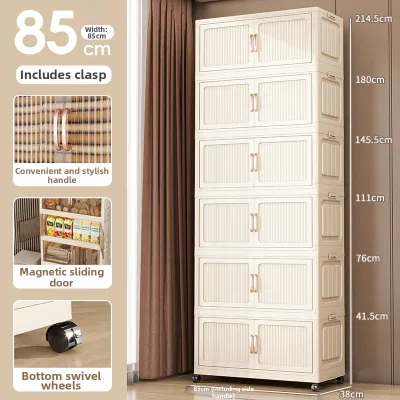
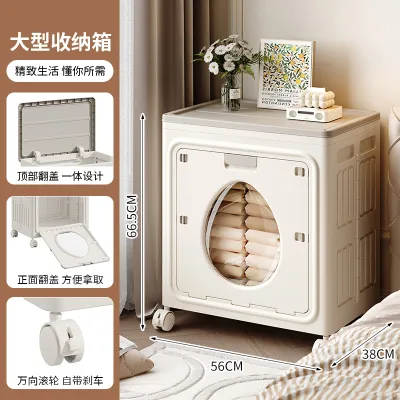
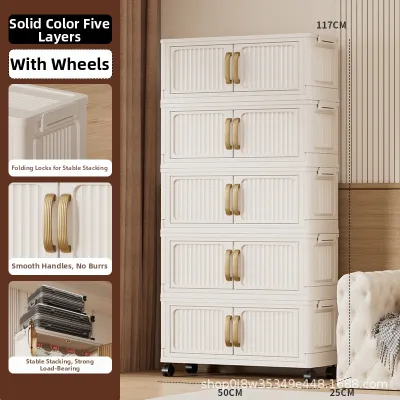
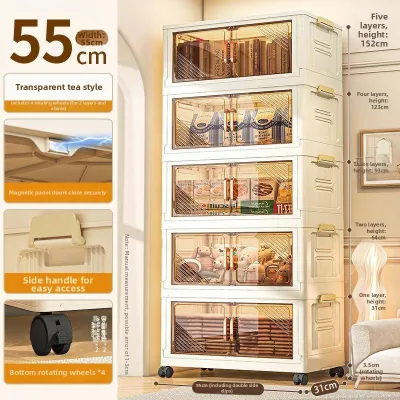
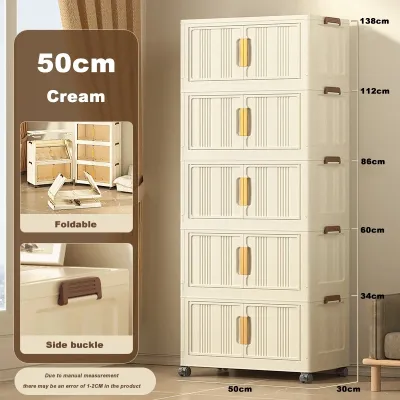
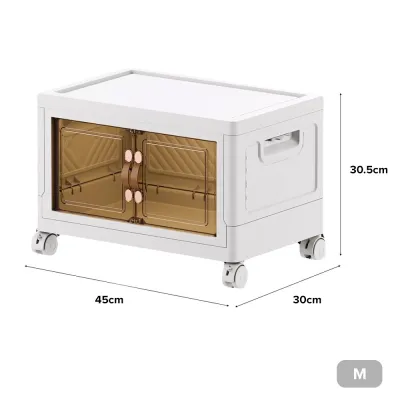
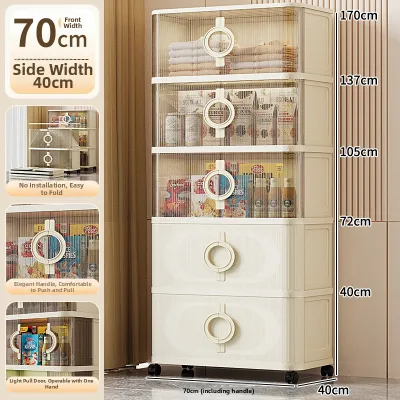
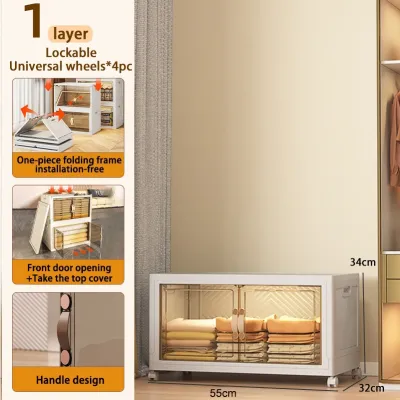
Prices are valid at publication and may change. Please refer to the product page for the latest price.
Hardware and hinge quality represent the true baseline of any folding furniture piece’s lifespan. The moving parts of a collapsible cupboard undergo continuous stress during daily folding and unfolding cycles. Look for units equipped with heavy-duty steel hinges, gas-spring struts, or smooth ball-bearing runners that facilitate effortless transitions. Safety locks, spring-loaded pins, or magnetic latches are critical safety features; these mechanisms ensure that fold-down desks or heavy storage panels remain securely locked in place, preventing accidental collapse or sudden deployment.
Weight capacity and stability must be verified against the manufacturer’s official specifications before purchase. A high-quality collapsible cupboard should clearly state the maximum load limit for both its internal shelving and any extended functional surfaces. For instance, a fold-out desk surface should ideally support at least 15kg to 20kg to accommodate laptops, external monitors, books, and the natural leaning pressure of your arms. Freestanding units must feature a broad base or integrated leveling feet to compensate for minor floor unevenness, ensuring the unit remains stable when fully extended.
Footprint analysis is the final, essential step in the selection process. You must compare the manufacturer’s listed dimensions for both the collapsed (storage-only) state and the fully expanded (in-use) state. A cupboard might appear perfectly compact when folded flat against the wall, but once the doors are swung open or a desk panel is lowered, it may block vital pathways. Measure your room carefully to ensure that even at maximum expansion, the furniture allows for a comfortable clearance zone of at least 60cm to 70cm for walking and sitting.
Top Multi-Functional Collapsible Cupboard Designs for Compact Rooms
To help you navigate the diverse options available on online marketplaces and in local furniture showrooms, it is helpful to categorize collapsible cupboards by their primary design configurations. Each style addresses specific spatial challenges within typical HDB layouts, offering unique benefits and structural trade-offs.

| Design Type | Ideal HDB Room | Primary Space-Saving Benefit | Key Limitation to Check |
|---|---|---|---|
| Fold-Down Desk & Storage Combos | Bedroom / Study Nook | Eliminates the need for a separate, static study desk | Requires solid wall anchoring; strict weight limits |
| Expandable Wardrobes | Guest Room / Household Shelter | Adjusts storage capacity on demand; easy to relocate | Fabric or plastic joints may degrade under heavy loads |
| Collapsible Kitchen Pantries | Kitchen / Service Yard | Slides into narrow gaps; mobile utility storage | Lower weight capacity per shelf; requires wheel locks |
Fold-Down Desk and Storage Combos
Fold-down desk and storage combos are highly effective solutions for creating temporary home offices within HDB bedrooms or quiet living room corners. These units typically resemble a standard wall cabinet or shallow cupboard when closed, projecting minimal depth into the room. When you lower the front panel, it transforms into a sturdy work surface, revealing interior shelves designed to organize stationery, files, and power adapters.
This design excels at keeping your work life separate from your personal life; at the end of the day, you can simply fold the desk upward, hiding your laptop and paperwork from view while instantly reclaiming valuable floor space. However, wall-mounted variants demand a secure installation. They must be anchored directly into solid concrete walls, as lightweight drywall partitions cannot safely support the downward leverage of a loaded desk. If you choose a freestanding version, ensure the base is sufficiently weighted or designed with counterbalances to prevent the entire unit from tipping forward when you lean on the desk.
Expandable Wardrobes with Hidden Compartments
Expandable wardrobes offer modular storage flexibility that is particularly useful in guest rooms, multi-purpose spaces, or inside HDB household shelters. These cupboards feature adjustable frames that can be compressed to a narrow width when storage needs are low, or pulled outward to reveal additional hanging rails and shelving during visits from relatives or seasonal wardrobe transitions. Many designs also incorporate hidden zippered compartments or false-bottom shelves to store valuables, travel documents, or bulky bedding out of sight.
While these wardrobes provide excellent storage volume on demand, lightweight fabric or plastic-connector models require careful handling. Overloading a flexible frame can cause the joints to warp or snap over time. When selecting an expandable wardrobe, check the quality of the zippers, ensure the fabric cover is breathable yet dust-proof, and verify that the frame utilizes reinforced metal corner joints rather than thin plastic connectors to guarantee a longer operational life.
Collapsible Kitchen Pantries and Utility Carts
Collapsible kitchen pantries and mobile utility carts are designed to optimize narrow corridors, service yards, and dining areas. These slimline storage units feature multi-tiered shelves that can fold completely flat when not in use, allowing them to be tucked away behind kitchen doors or in the gap beside your refrigerator. When expanded, they provide immediate, accessible storage for dry goods, small kitchen appliances, or laundry detergents.
Most of these utility cupboards are equipped with caster wheels, allowing you to roll the pantry directly to your food preparation zone or washing machine as needed. Because these units are frequently moved, high-quality wheel locks are essential to keep the cart stationary during use. Additionally, given the humid and wet conditions of HDB kitchens and service yards, look for models constructed from rust-resistant stainless steel or plastic-coated carbon steel to prevent corrosion.
How to Measure and Plan Your HDB Space Before Buying
Before purchasing any collapsible cupboard, conducting a thorough spatial assessment of your HDB flat is critical to avoid layout conflicts. Begin by mapping out the clearance zones in three dimensions. Use a physical measuring tape to plot the floor footprint of the cupboard in both its closed and fully extended states. Pay close attention to the swing radius of any doors, the extension length of fold-out desks, and the space required for your office chair or stool. Ensure that when the cupboard is fully deployed, it does not block access to bedroom doors, built-in wardrobes, or window openings.
Understanding the structural composition of your HDB walls is equally vital, especially if you plan to install a wall-mounted collapsible unit. HDB flats are constructed using a combination of load-bearing reinforced concrete walls, lightweight concrete partition walls, and hollow drywall panels. Heavy fold-down desk cupboards must be anchored into solid concrete walls using robust masonry plugs and screws to ensure safety. Attempting to mount a heavy, dynamic load onto a hollow drywall partition without professional reinforcement can result in severe wall damage and structural failure. If you are uncertain about the wall type in your flat, refer to your original HDB floor plans or consult a certified renovation contractor.
Finally, check the placement of electrical outlets, light switches, and air-conditioning trunking in the intended installation area. A tall collapsible cupboard must not block access to power points that you need for your laptop, charger, or kitchen appliances. Ensure the unit does not cover light switches or obstruct the airflow from your air-conditioning unit. Additionally, leave sufficient clearance around structural features like your home’s distribution board (DB box) or the ventilation sleeves of your household shelter, as blocking these areas can violate local housing regulations.
Installation Safety and Maintenance for Foldable Furniture
Ensuring the long-term safety and functionality of collapsible furniture requires proper installation and consistent maintenance. Anti-tip precautions are absolutely essential for tall, shallow, or top-heavy cupboards. Because multi-functional units feature moving parts that shift the center of gravity when extended, they carry an inherent risk of tipping forward. This risk is significantly higher in households with young children or active pets who might climb on open shelves or pull down on a desk surface. Always secure the main frame of the cupboard to the wall using heavy-duty anti-tip brackets and wall straps, following the manufacturer’s instructions precisely.
Routine maintenance is key to preventing mechanical failures and ensuring smooth operation over the years. Establish a biannual schedule to inspect all moving parts of your collapsible cupboard. Use a screwdriver to tighten any loose screws, bracket bolts, or hinge plates that may have loosened from daily vibrations. Apply a small amount of silicone-based lubricant to the hinges, metal joints, and drawer slides to prevent squeaking and ensure effortless folding. Carefully inspect safety latches, locking pins, and gas struts to verify they engage securely and show no signs of structural wear.
Proper weight distribution is another fundamental practice that protects the structural integrity of your furniture. Always place your heaviest items—such as books, storage boxes, or small kitchen appliances—on the lowest shelves of the cupboard. This keeps the unit’s center of gravity close to the floor, significantly enhancing overall stability and reducing the risk of tipping. Lighter items, such as clothing, stationery, or decorative objects, should occupy the upper shelves. Never exceed the manufacturer’s specified weight limits, and avoid placing heavy objects on the outer edges of fold-out surfaces to prevent warping the frame.
Frequently Asked Questions (FAQ)
Do collapsible cupboards require drilling into HDB walls?
Freestanding collapsible cupboards and mobile utility carts do not require any drilling and can be placed anywhere in your flat. However, wall-mounted fold-down desk cupboards must be securely anchored to the wall for safety. Note that drilling into certain HDB structural walls, columns, or the reinforced concrete walls of household shelters is strictly regulated. Always refer to HDB renovation guidelines and consult a certified contractor before mounting heavy fixtures.
How can I prevent a fold-down desk cupboard from tipping over?
To prevent a fold-down desk cupboard from tipping when the desk is extended, you should secure the main frame to a solid wall using heavy-duty wall anchors and brackets. If drilling is not an option, choose a freestanding model designed with a wide, weighted base or built-in counterweights at the bottom. Additionally, always load the lower shelves of the cupboard with your heaviest items to maintain a low center of gravity.

Community discussion
Share your experience or ask a question. Comments are reviewed before publication.