
Managing space in a modern Singapore Built-to-Order (BTO) or resale HDB flat requires a strategic approach to interior layout. With common bedrooms typically averaging between 9 and 11 square meters, floor space is at an absolute premium once a queen-sized bed and a wardrobe are introduced. Traditional standing furniture often blocks natural pathways, restricts airflow, and makes the room feel cramped. To reclaim floor area without sacrificing functionality, looking upward to vertical space is the most effective solution. A foldable wall organizer offers the ultimate compromise: it deploys to provide functional surfaces or storage when needed, then collapses flat against the wall to keep walkways completely clear.
By shifting storage from the floor to the walls, you can maintain an open, airy bedroom layout that promotes better traffic flow and easier cleaning. These versatile fixtures allow you to customize your storage setup dynamically throughout the day, transitioning a room from a productive home office to a restful sleeping sanctuary in seconds. However, selecting and installing these space-saving solutions in an HDB flat requires careful consideration of wall types, structural limits, and local environmental conditions.
Maximize Floor Space: Why Foldable Wall Organizers Work for HDB Bedrooms
The fundamental challenge of compact HDB bedroom layouts is the conflict between floor-bound furniture and daily movement. When you place a standard bed, a wardrobe, and a bedside table in a small room, the remaining floor footprint is highly restricted. Traditional chest of drawers, standing desks, or bulky laundry hampers permanently occupy this precious floor area, leaving little room to walk comfortably or open wardrobe doors fully. Foldable wall organizers utilize the vertical plane—specifically the often-underutilized wall space above desks, beside wardrobes, or next to the bed—to resolve this spatial bottleneck.
Products mentioned in this guide
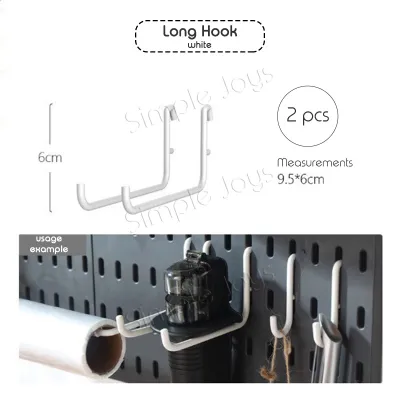
![[SG Stock] MEIDOO Bathroom Shelf Suction Cup Installation Bathroom Wall Organizer Storage Rack](https://img.lazcdn.com/g/p/8fa218a12287e55358c631cb5915513e.jpg_400x400q80.jpg_.webp)
Prices are valid at publication and may change. Please refer to the product page for the latest price.
These organizers employ mechanical hinges, drop-leaf brackets, or collapsible frames that allow them to sit flush against the wall when not in use. When folded, a high-quality unit typically protrudes only a few centimeters into the room. This ultra-slim profile ensures that narrow walkways remain entirely unobstructed, preventing stubbed toes and maintaining a clean visual line. When you require a desk, a shelf, or an ironing surface, the unit unfolds instantly, providing immediate utility without requiring permanent floor space.
Keeping the floor clear of bulky furniture legs also yields significant practical benefits for daily maintenance. In Singapore’s dusty urban environment, floor-bound clutter creates hard-to-reach dust traps that accumulate allergens over time. A clear floor simplifies vacuuming and mopping, allowing you to clean the entire room in a fraction of the time. Additionally, reducing floor clutter allows air from windows and fans to circulate more freely across the room, helping to cool the space naturally and mitigate the humid indoor climate.
What to Check Before Buying a Foldable Wall Organizer
To ensure a foldable wall organizer integrates seamlessly into your HDB bedroom without causing structural issues or layout frustration, you must evaluate several critical technical specifications before making a purchase.

Folded Profile and Protrusion Depth Always measure the exact depth of the organizer when it is fully collapsed. In a narrow bedroom walkway, even an extra 5 to 10 centimeters of protrusion can lead to collisions or block the swing path of wardrobe doors and bedroom entryways. Ensure that when the unit is folded down, it leaves at least 60 to 70 centimeters of clear walkway space for comfortable passage. If the organizer is installed next to a bed, verify that it will not strike the bed frame or mattress when transitioned between its open and closed states.
Weight Capacity and Leverage Mechanics Do not rely solely on static weight ratings. When a foldable shelf or desk is extended, any weight placed on the outer edge exerts dynamic leverage (torque) on the wall mounting brackets. This leverage multiplies the pull-out force exerted on the upper wall anchors. Always check the manufacturer’s specified weight limits for both the folded and unfolded states. Plan to store heavier items closer to the wall rather than on the outer edges of the shelf to minimize stress on the mounting hardware.
Anchoring and Fastener Requirements The longevity of your wall organizer depends heavily on how it attaches to the wall. Light, non-leveraged organizers (such as fabric pocket holders or small plastic key hooks) can sometimes rely on high-quality adhesive strips. However, any organizer that folds, hinges, or supports weight—such as drop-leaf shelves or fold-down desks—must be secured using mechanical fasteners like screws and wall plugs. Never attempt to use adhesives or tension rods for items designed to bear structural or dynamic loads.
Humidity Resistance and Material Composition Singapore’s tropical climate features high relative humidity, often exceeding 80% indoors. This environment accelerates the warping of untreated engineered wood (such as standard MDF or low-grade particleboard) and causes rust on cheap metal hinges. Look for organizers made from powder-coated steel, rust-resistant aluminum, solid treated wood, or high-density plastics. Ensure all hinges, brackets, and screws have a protective, moisture-resistant finish to prevent squeaking, rust staining, and structural degradation over time.
Top Foldable Wall Organizer Types for Bedroom Storage
Fold-Down Desks and Laptop Ledges
With the rise of hybrid work and home-based learning in Singapore, having a functional workspace in the bedroom is highly desirable. However, a traditional desk permanently consumes about one square meter of floor space, which can overwhelm a small HDB bedroom. A wall-mounted fold-down desk or slim laptop ledge solves this by folding completely flat against the wall when the workday ends. These units typically feature a drop-leaf tabletop supported by folding brackets, gas struts, or heavy-duty hinges.
When selecting a fold-down desk, carefully check the depth of the unit when closed; many high-quality models collapse to a profile of less than 5 to 8 centimeters. Because you will be resting your arms and a laptop on this surface, the downward leverage is substantial. It is critical to use robust, heavy-duty wall anchors and ensure the mounting brackets do not interfere with nearby furniture, such as the headboard of your bed or the swing path of your wardrobe doors. Look for models with built-in cable management slots and shallow interior shelves to store pens, notebooks, and chargers even when the desk is folded up.
Collapsible Ironing Boards and Utility Racks
Ironing is a necessary household chore, but standard free-standing ironing boards are notoriously awkward to store, often cluttering up wardrobe gaps or bedroom corners. A wall-mounted, collapsible ironing board folds neatly into a slim wall cabinet or sits flush against the wall behind a decorative cover or mirror. When needed, the board swivels or drops down into place instantly, providing a sturdy ironing surface without the hassle of setting up a traditional metal frame.
For safety, these units must feature a reliable safety latch or locking mechanism to prevent the heavy board from accidentally dropping down, which poses a risk to children or pets. Additionally, fold-out utility racks or valet rods offer excellent temporary hanging space for ironed clothes, next-day outfits, or air-drying delicate garments. When the laundry tasks are complete, these racks fold flat against the wall, preserving the clean visual lines of your bedroom.
Drop-Leaf Shelving and Fold-Out Storage Bins
For general storage of books, accessories, cosmetics, or folded clothing, drop-leaf shelving and fold-out storage bins offer flexible, on-demand capacity. Drop-leaf shelves function similarly to small tables, allowing you to raise individual shelves when displaying items or organizing daily essentials, and fold them down when you need to free up physical space. Fold-out storage bins, often constructed from durable canvas, felt, or flexible high-density plastics supported by a metal frame, can be pulled open to hold items and collapsed flat when empty.
When utilizing these systems, proper weight distribution is essential. Place heavier items on lower shelves or closer to the wall mounting points to minimize the pull-out force on the upper wall anchors. Avoid overloading the upper shelves of foldable units, as excessive top-heavy weight can compromise the structural integrity of the mounting hardware and cause the unit to sag or pull away from the wall.
Safe Installation and Wall Checks for HDB Flats
Installing a heavy, functional foldable wall organizer in an HDB flat requires careful attention to the wall structure to ensure safety and prevent damage. HDB walls are not uniform, and mounting methods must be tailored to the specific wall type.
Identifying HDB Wall Composition HDB flats generally feature two main types of walls within bedrooms. Structural walls are made of solid, reinforced concrete; these are incredibly strong but require a rotary hammer drill and specialized masonry drill bits to penetrate. Non-structural partition walls, commonly found separating bedrooms or built as internal dividers in newer BTO flats, are often made of lightweight concrete blocks, drywall, or hollow plasterboard panels. These partition walls have significantly lower load-bearing capacities than solid concrete.
Selecting the Right Anchor Hardware Never use generic wall plugs for every installation. For solid concrete walls, use high-quality plastic expansion plugs or sleeve anchors that expand tightly inside the drilled hole. For hollow partition walls or drywall, standard plastic plugs will fail under the dynamic leverage of a foldable organizer; instead, you must use specialized toggle bolts, metal cavity anchors, or spring toggles that expand behind the wall board to distribute the load over a wider surface area.
Adhering to Safety Boundaries and HDB Rules Before you begin drilling, consult your flat’s floor plan to identify structural elements. Drilling into structural walls is generally permitted for minor fixtures, but you must avoid damaging embedded electrical conduits or water pipes. If you are mounting a particularly heavy item, such as a large fold-down desk that will bear significant weight, or if you are unsure of your wall’s material and load-bearing capacity, stop and consult a qualified professional handyman or check the official HDB renovation guidelines. Never attempt to mount heavy, leveraged furniture on weak partition walls without verifying the manufacturer’s installation requirements and securing professional advice.
Frequently Asked Questions (FAQ)
Can I install heavy foldable organizers on HDB partition walls?
Installing heavy foldable organizers, such as large drop-leaf desks or multi-tiered shelving units, directly onto HDB partition walls or drywall is generally not recommended unless you can anchor them directly into the internal metal or wooden studs. Partition walls lack the structural density of solid concrete and can crack or sag under the dynamic leverage generated when opening and closing foldable furniture. If you must mount an organizer on a partition wall, restrict the unit to lightweight items, use heavy-duty toggle bolts, and strictly adhere to the manufacturer’s weight limits. For heavy-duty applications, it is always safer to mount the unit on a solid concrete wall or consult a professional contractor to assess the wall’s structural integrity first.
Are adhesive wall organizers safe for folded storage?
Adhesive-mounted wall organizers are only safe for very light, static storage, such as holding keys, lightweight plastic accessories, or small fabric pocket organizers. They are entirely unsuitable for foldable furniture or organizers with moving parts. The mechanical action of folding, unfolding, and placing items on a drop-leaf surface creates dynamic leverage and shifting weight. This constant movement breaks the adhesive bond over time, leading to sudden failure and potential damage to your wall paint or plaster. Any organizer that hinges or supports more than a few hundred grams should always be secured with mechanical fasteners like screws and appropriate wall plugs.
How do I prevent mold on wall-mounted organizers in Singapore?
Singapore’s high humidity can trap moisture behind wall-mounted furniture, leading to mold growth on both the organizer and the wall. To prevent this, choose organizers made from moisture-resistant materials such as powder-coated steel, aluminum, high-density plastics, or treated wood sealed with a water-resistant varnish. During installation, try to leave a tiny gap (using small washers behind the mounting brackets) between the organizer frame and the wall to allow air to circulate. Regularly wipe down the organizer with a dry microfiber cloth, open your bedroom windows to promote cross-ventilation, or use a dehumidifier in the room to keep indoor moisture levels under control.

Community discussion
Share your experience or ask a question. Comments are reviewed before publication.