
Why Foldable Shelf Racks Are Essential for HDB Living
Singapore’s residential landscape is defined by efficiency, and modern Housing & Development Board (HDB) flats require smart spatial planning. Whether you are moving into a newly completed Build-To-Order (BTO) flat or renovating a spacious resale unit, managing floor area is a constant priority. Modern layouts often feature compact service yards, narrow kitchen walkways, and multi-purpose living areas that leave little room for bulky, permanent furniture. Standard fixed shelving units can permanently crowd these tight zones, making the home feel smaller and restricting movement.
Foldable storage solutions offer a dynamic alternative by providing high-capacity shelving that can be deployed or tucked away at a moment’s notice. During seasonal events, festive hosting, or home cleaning projects, these racks can be set up to handle temporary overflows of groceries, gifts, or household supplies. When the event is over, the racks collapse into slim profiles that slide out of sight. This adaptability ensures that your living space remains flexible and uncluttered, shifting easily between a functional workspace, a hosting venue, or a relaxed family environment.
Beyond daily convenience, foldable racks play a vital role in maintaining home safety and compliance. The Singapore Civil Defence Force (SCDF) maintains strict fire safety guidelines regarding the obstruction of common corridors and escape pathways, requiring a minimum clear width of 1.2 meters. Using heavy, permanent shelving in transitional zones near main doors or corridors can create hazardous bottlenecks. Lightweight, collapsible racks allow residents to organize items within their flat boundaries while ensuring that emergency exits and walkways remain completely unobstructed.
Products mentioned in this guide
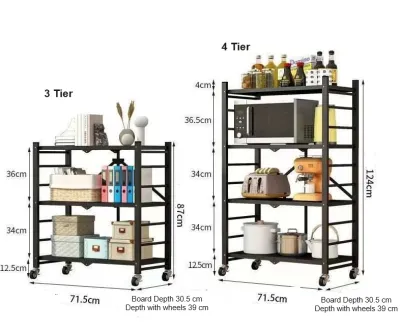
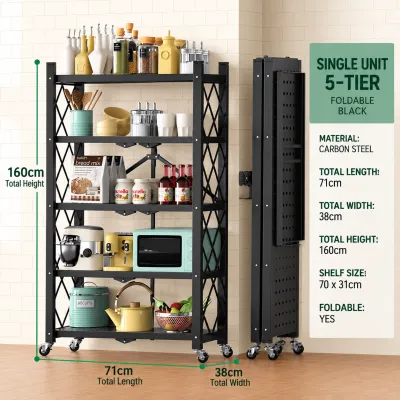
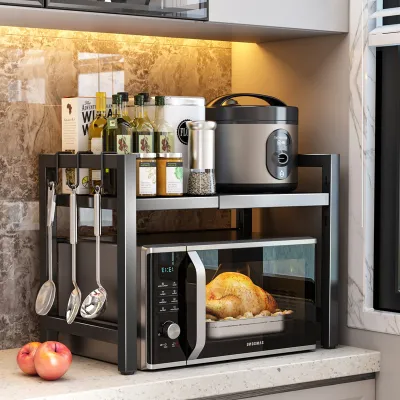
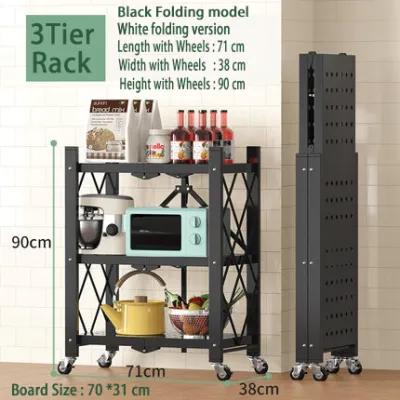
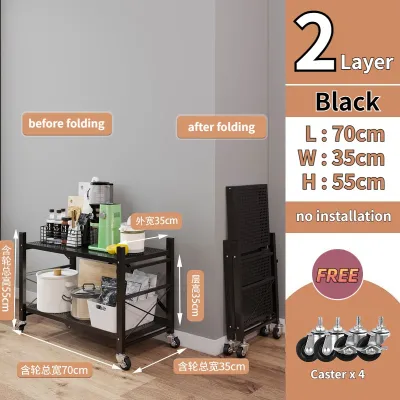
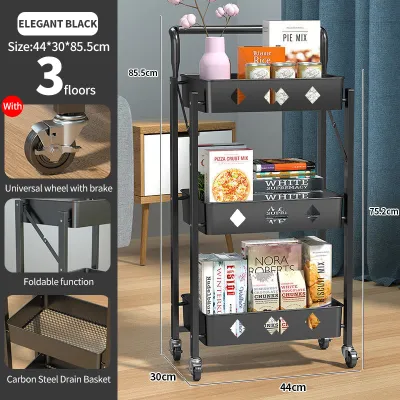
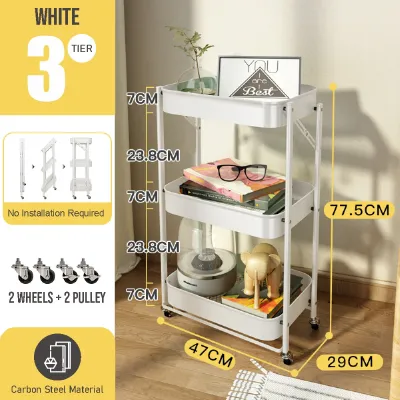
Prices are valid at publication and may change. Please refer to the product page for the latest price.
Key Features to Look for in an HDB-Friendly Foldable Rack
Selecting the right foldable shelf rack involves evaluating several structural and environmental factors. Because HDB flats experience high daily foot traffic and tropical environmental conditions, a generic storage rack may not perform well over time. Prioritizing specific design features ensures your investment remains stable, safe, and functional for years.

Dimensions and Clearance
Before purchasing any collapsible furniture, you must compare the fully deployed footprint against the collapsed dimensions. A high-quality foldable rack should fold down to a thickness of 10 centimeters or less. This ultra-slim profile is crucial because it allows the unit to slide into narrow gaps, such as the space between a washing machine and a wall, or behind a bedroom wardrobe. Additionally, verify the vertical clearance of the shelves when unfolded to ensure they can accommodate your specific storage boxes, small kitchen appliances, or pantry items without wasting vertical space.
Load Capacity and Stability
Storage racks are generally categorized into light-duty and heavy-duty systems, and choosing the wrong type can lead to structural failure or tipping hazards.
- Light-Duty Racks: Typically made of lightweight plastics, thin bamboo, or wire mesh, these are ideal for lightweight decor, toiletries, or small spice jars. They generally support between 5 kg and 15 kg per tier.
- Heavy-Duty Racks: Built from thick carbon steel or reinforced metal alloys, these are designed to hold heavy kitchen appliances, bulk detergent bottles, or canned goods. They often claim load capacities ranging from 30 kg to over 100 kg per shelf.
Always verify the manufacturer’s official load capacity ratings rather than relying on visual estimates. To prevent tipping, look for racks with a wide, low base design, adjustable leveling feet to compensate for uneven floor tiles, or built-in locking pins that prevent the frame from folding accidentally while loaded.
Material and Climate Resistance
Singapore’s tropical climate features high relative humidity levels that often exceed 80% year-round. This moisture-rich environment is highly corrosive to unprotected metals and can cause untreated organic materials to warp or develop mold.
- Powder-Coated Steel: This is the gold standard for durability in humid zones. The baked-on powder coating creates a thick, protective barrier that resists moisture, scratches, and rust far better than standard liquid paint or cheap chrome plating.
- Treated Bamboo and Hardwoods: These materials offer a warm, natural aesthetic suitable for living rooms or bedrooms. However, you must verify that the wood has been treated with a moisture-resistant sealant or lacquer to prevent mold growth in non-air-conditioned spaces.
- High-Density Plastics: Excellent for wet areas like bathrooms or open service yards because they are completely impervious to water. However, ensure they are kept away from direct afternoon sunlight, as prolonged UV exposure can cause plastics to become brittle and crack.
Folding Mechanism
The durability of a foldable rack depends heavily on its joint design and folding mechanism. Common configurations include one-click folding systems, slide-and-lock tracks, and tool-free scissor hinges. Inspect the pivot points and rivets; they should be constructed from robust metals rather than plastic pins. A high-quality mechanism should operate smoothly without sticking or requiring excessive force. If a mechanism feels loose or wobbles during its initial test, it is highly likely to degrade quickly under the stress of regular loading and unloading.
Best Foldable Rack Types for Different HDB Zones
Different areas of an HDB flat present distinct storage challenges. Matching the right style of foldable rack to each specific zone maximizes utility while preserving floor space.
Slim Trolley and Gap Racks for Kitchens and Bathrooms
Kitchens and bathrooms in modern HDB flats are notorious for tight layouts and underutilized “dead zones.” The narrow space between a refrigerator and the kitchen counter, or the gap beside a bathroom vanity, is highly valuable. Slim, tiered trolley racks with widths ranging from 12 to 20 centimeters are specifically engineered to slide into these tight crevices.
When choosing a gap trolley, look for models equipped with 360-degree rotating caster wheels. These wheels allow you to smoothly pull the rack out to access items and glide it back into place when finished. Ensure that at least two of the wheels feature reliable locking brakes to keep the trolley stationary during use.
It is also essential to measure the height of your kitchen countertop overhangs and any wall-mounted fixtures. The trolley’s handle and top-shelf items must clear these obstacles easily. For bathroom applications, select plastic or high-grade stainless steel models with slatted or perforated shelves to prevent water from pooling, which can lead to soap scum buildup and hygiene issues.
Heavy-Duty Collapsible Racks for Household Shelters
Every modern HDB flat includes a reinforced household shelter, commonly referred to as a bomb shelter. While these rooms are designed for civil defense, they serve as the primary storage hub for most households. However, HDB renovation rules strictly prohibit any drilling, nailing, or structural modifications to the walls, floor, or steel door of the shelter. This rule preserves the airtight seal and structural integrity of the room, making freestanding, non-invasive shelving the only permissible storage solution.
Heavy-duty collapsible metal racks are ideal for household shelters because they require zero wall mounting. A multi-tier steel rack can hold heavy storage boxes, luggage, vacuum cleaners, and bulk household supplies. Look for designs that feature a tool-free folding frame with a central hinge; these can be set up in under a minute without any screws or bolts.
Because household shelters lack active ventilation and windows, they can trap humidity, creating a microclimate prone to dampness. Ensure any metal rack placed inside a shelter features a high-quality, rust-resistant powder coating. Additionally, choose a rack that can be folded flat quickly. If you ever need to access the shelter’s ventilation sleeve, or if your air-conditioning technician needs to access the compressor pipework often routed nearby, the rack can be collapsed and moved out of the way without hassle.
Wall-Mounted and Drop-Leaf Shelves for Bedrooms and Studies
In compact bedrooms and home offices, floor space is at a premium. Wall-mounted foldable shelves, drop-leaf desks, and floating collapsible ledges allow you to utilize vertical wall space without permanently consuming valuable floor area. These fixtures fold flat against the wall when not in use, instantly opening up the room’s walkways.
Before purchasing or installing any wall-mounted foldable system, you must identify the exact composition of your HDB walls. HDB flats feature two main wall types:
- Precast Concrete Walls: These are structural, load-bearing walls. Drilling into them requires a heavy-duty rotary hammer drill, specialized masonry drill bits, and high-quality plastic or metal wall plugs (anchors) to secure the brackets safely.
- Non-Structural Partition Walls: Often found between bedrooms or separating the kitchen, these can be made of gypsum board, drywall, or lightweight concrete blocks. Standard wall plugs will fail in these materials under load. You must use specialized hollow-wall anchors or heavy-duty toggle bolts, and ensure the brackets are aligned with the internal wall studs if applicable.
Always consult a qualified professional installer if you are unsure of your wall’s load capacity or material. Never exceed the weight limits specified by the bracket manufacturer, and avoid placing heavy electronics or fragile items on wall-mounted folding shelves.
How to Measure and Plan Your HDB Space Before Buying
One of the most common home organization mistakes is purchasing furniture based on visual estimation alone. To avoid the frustration of returns or buying a rack that blocks your daily paths, follow a systematic measurement and planning routine.
Measuring the "Dead Space"
To find the true dimensions of the area where you plan to place the rack, always use a rigid steel measuring tape. Soft sewing tapes can sag, leading to inaccurate measurements. Measure the width, depth, and height of the target area at three different points: near the floor, in the middle, and near the top. HDB walls and floors, especially in older resale flats, are not always perfectly level or plumb. Using the smallest of the three measurements ensures your new rack will fit without scraping the walls or jamming during installation.
If you are planning storage for an HDB maisonette or an executive apartment with under-staircase areas, pay close attention to the sloping ceiling height. Measure the clearance at the lowest point of the slope to ensure the rack can unfold completely without striking the underside of the stairs.
Accounting for Swing and Clearance
An unfolded shelf rack must never interfere with the natural movement of your home’s doors, windows, or occupants. When planning your layout, physically open every door and window in the vicinity to its maximum angle.
- Door Swings: Ensure the rack sits completely outside the swing path of bedroom doors, wardrobe doors, and the heavy steel door of your household shelter.
- Window Grilles: Check that the height of the rack does not block the operation of sliding or casement window grilles, or impede access to window latches.
- Service Yard Bi-Fold Doors: These doors slide and fold along a track. Ensure the rack is placed far enough away that the folded door panels do not strike the shelf frame.
Delivery and Access Checks
Even if a foldable rack fits perfectly inside your flat, it must first get there. Many heavy-duty or multi-tier racks are delivered in large, flat-packed boxes that can be incredibly long and awkward to maneuver.
Before ordering, measure the width and height of your HDB passenger lift door, the interior cabin dimensions of the lift, and the width of your floor’s common corridor. If you live in an older block with narrow corridor corners, ensure there is enough clearance to turn a long box. Finally, measure your flat’s main entrance door and any internal hallway doorways to guarantee the delivery team can safely carry the packaged item into your home without damaging your walls or door frames.
Maintenance and Safety Tips for Foldable Shelves
To ensure your foldable shelf racks remain safe and structurally sound throughout their lifespan, implement a regular maintenance and sensible loading routine. Because these units rely on moving joints, they require slightly more care than static, welded furniture.
Weight Distribution
Proper weight distribution is the single most effective way to prevent a shelving unit from tipping over. Always place your heaviest items—such as bulk rice sacks, heavy kitchen appliances, or large storage boxes—on the lowest shelf. This keeps the unit’s center of gravity close to the ground, significantly increasing its overall stability. As you move up the tiers, place progressively lighter items on each shelf. Never overload the top shelf, and avoid hanging heavy bags or objects from the sides of the rack, as this can create an unbalanced lateral load that can cause the unit to topple.
Routine Checks
Because foldable racks are designed to move, their mechanical connections can loosen over time with regular use. Establish a habit of inspecting your racks once every few months.
- Hinges and Joints: Check all pivot rivets, screws, and folding joints. If you notice any screws backing out, tighten them gently with the appropriate hand tool.
- Locking Pins: Verify that safety locks, clips, or pins slide smoothly and engage fully. Never use a rack if its safety locking mechanism is damaged or missing.
- Caster Wheels: Inspect the wheels of mobile trolleys for hair, dust, or thread wraps that can jam the bearings. Ensure the wheel brakes engage firmly and do not slip when pressure is applied.
If you observe any structural bending, cracked weld joints, or deep cracks in plastic shelves, discontinue using the rack immediately and contact the manufacturer for guidance.
Cleaning and Care
Keeping your shelves clean prevents the accumulation of dust and moisture, which are the primary catalysts for rust and mold. Wipe down the shelves and metal joints regularly using a clean, dry microfiber cloth. For stubborn dirt, use a slightly damp cloth with a mild, pH-neutral dish soap.
Never use harsh chemical cleaners, bleach, scouring pads, or abrasive steel wool. These harsh materials can easily strip away protective powder coatings or scratch polished wood finishes, exposing the underlying metal or wood to rapid environmental decay. Always consult the manufacturer’s care label or instruction manual for specific cleaning guidelines tailored to your rack’s material.
Frequently Asked Questions (FAQ)
Do I need HDB approval to install wall-mounted foldable shelves?
No, general DIY drilling and the installation of wall-mounted shelves do not require formal renovation permits or written approval from the HDB. However, you must strictly adhere to structural safety guidelines. Drilling into structural concrete walls, precast facades, or the reinforced walls of your household shelter is restricted or prohibited. Always ensure you are drilling into non-structural partition walls or standard internal walls, and use the correct wall plugs. If you are unsure about your flat’s wall types, refer to your original HDB floor plan or consult a licensed renovation contractor.
Can I leave a foldable shelf rack in the HDB service yard permanently?
It depends entirely on the rack’s material specifications and exposure to the elements. HDB service yards are semi-outdoor spaces that are often exposed to direct afternoon sunlight, high humidity, and driving rain during monsoon seasons. If your rack is made of standard untreated wood, lightweight plastic without UV stabilizers, or cheap chrome-plated metal, it will degrade, rust, or warp very quickly.
If you plan to leave a rack in the service yard permanently, ensure the manufacturer explicitly rates the product for outdoor or high-moisture use. Look for materials like high-grade 304 stainless steel, heavy-duty hot-dip galvanized steel, or UV-resistant engineered plastics. If the rack is not rated for outdoor use, it is best to store it indoors when not actively drying laundry or organizing household chores.

Community discussion
Share your experience or ask a question. Comments are reviewed before publication.