
Maximizing square footage is a primary design challenge for homeowners navigating Singapore’s residential landscape. With the average size of modern Housing & Development Board (HDB) flats and compact condominiums steadily decreasing, rooms must frequently perform double or triple duty. A spare bedroom must serve as a home office by day and a guest room by night, while a living room may need to transition quickly into a sleeping area for visiting relatives.
Traditional manual sofa beds have long been used to address these spatial constraints, but they come with significant physical friction. Converting a manual sofa bed often requires lifting heavy steel frames, moving bulky cushions, and engaging stiff click-clack mechanisms. For older adults, individuals with back pain, or anyone performing this transition daily, the physical effort can become a major deterrent, often resulting in the furniture remaining permanently in one configuration.
Motorized mechanisms solve this daily friction by automating the transition. With the push of a button, a wall-switch, or a remote control, an electric sofa bed smoothly unfolds from a compact seating arrangement into a fully flat bed. This ease of use encourages homeowners to utilize their space dynamically, converting rooms back and forth without hesitation. By integrating seating, sleeping, and often hidden storage into a single motorized unit, these appliances support multi-purpose room layouts without requiring permanent, costly structural renovations.
Products mentioned in this guide
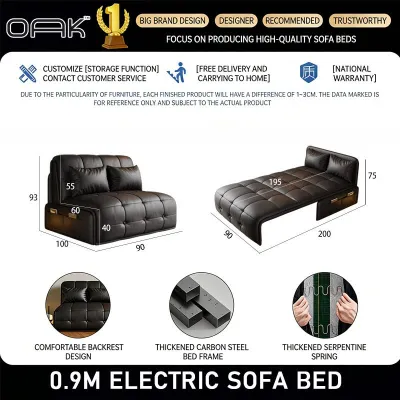
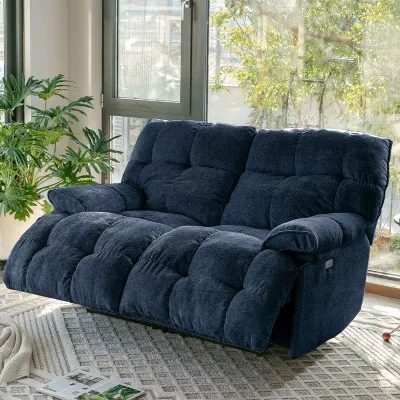
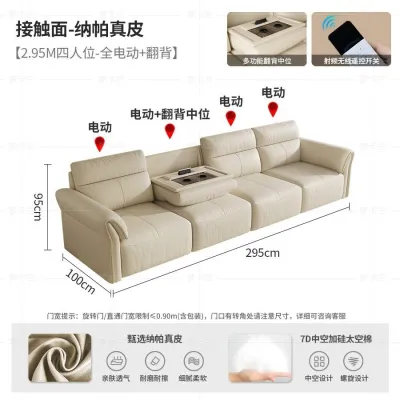
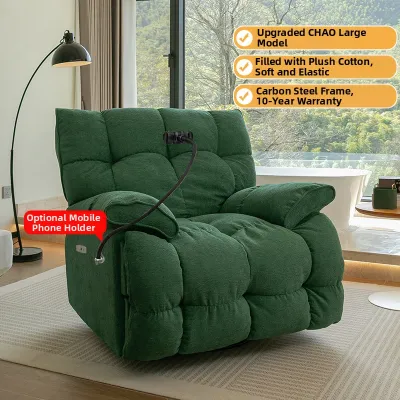
![[Free installation] Electric Recliner Sofa Chair | Single Zero Gravity Motorized Lounge Chair | Rotating Lazy Sofa Bed with Warranty](https://img.lazcdn.com/g/p/76a9b5a7220bfea1b826a65095b7fbbc.jpg_400x400q80.jpg_.webp)
![[SG Stock]Electric lazy sofa reclining sofa chair sofa bed adjustable and rotatable sofa a must-have for home](https://img.lazcdn.com/g/p/483a6a424d12e6bc350a2361d6b65422.png_400x400q80.png_.webp)

Prices are valid at publication and may change. Please refer to the product page for the latest price.
Core Criteria for Evaluating Electric Sofa Bed Brands
When shopping for an electric sofa bed in Singapore, relying on brand names or attractive upholstery is not enough. Because these pieces of furniture integrate mechanical, electrical, and structural components, you must evaluate them using specific, objective criteria to ensure long-term reliability and safety.
Motor Durability and Electrical Safety
The motor and actuator system form the heart of any electric sofa bed. When researching brands, prioritize those that openly specify the hardware they use, such as high-torque linear actuators or brushless DC motors designed for quiet, smooth operation.
In Singapore, safety is a paramount consideration for any motorized appliance. You should verify that the electrical components—specifically the power adapter, control box, and plug—comply with local electrical safety standards. Look for products that carry the Safety Mark certified by Enterprise Singapore, which indicates the electrical system has been tested against short circuits, power surges, and overheating.
Additionally, inquire about the motor’s cycle-test rating. Reputable manufacturers often test their mechanisms to withstand 5,000 to 10,000 continuous open-and-close cycles, which translates to years of daily use. Be aware that premium fabric labels or solid wood frame descriptions do not guarantee motor longevity. Always request explicit warranty terms for the motorized parts, which should ideally be covered under a dedicated warranty separate from the frame and upholstery.
Space-Saving Footprint and Clearance Requirements
A common mistake when purchasing furniture for compact rooms is looking only at the static dimensions of the sofa when closed. For small apartments, you must evaluate both the closed footprint and the fully deployed operational clearance.
Some electric sofa beds require significant rear clearance, meaning you must pull the sofa away from the wall before extending it. For tight rooms, look for brands that offer “zero-wall” or “wall-hugger” engineering. These mechanisms slide the seating platform forward as the backrest lowers, allowing the sofa to be placed almost flush against the wall.
Always request the manufacturer’s technical drawings showing the exact depth of the unit when fully extended. Ensure there is at least 50 cm to 60 cm of walking clearance around the foot and sides of the bed when it is completely open, allowing you to move around the room comfortably without being blocked by other furniture.
Integrated Storage Configurations
To truly maximize utility in a small apartment, look for electric sofa beds that incorporate storage without compromising the integrity of the motorized frame. The way a brand integrates storage speaks volumes about its engineering quality.
Under-seat lift-up storage is highly efficient but requires robust gas-lift struts or secondary motorized assistance to lift the heavy seating platform safely. Armrest compartments or side pockets offer convenient storage for remote controls, charging cables, and reading materials, keeping the surrounding space clutter-free. Some brands also offer modular, matching storage ottomans that can be moved around the room to serve as extra seating or footrests.
When evaluating these storage options, check the manufacturer’s specified weight limits for the storage cavities. Overloading under-seat compartments can obstruct the path of the motorized folding arms, leading to mechanical strain or frame misalignment over time.
Matching Multi-Functional Designs to Your Floor Plan
Selecting the right electric sofa bed design depends heavily on the primary function of the room and how often the bed will be used. A living room that occasionally hosts overnight guests demands a different configuration than a dedicated study that serves as a daily bedroom.

For a primary living room, prioritize seating comfort, cushion resilience, and fabric durability. In this scenario, a motorized pull-out bed that tucks completely under the seats is ideal, as it preserves the elegant appearance of a standard sofa during the day. If the room is primarily a home office, a fold-down backrest mechanism is often more compact, allowing the unit to sit unobtrusively against a study wall until needed.
To help you visualize how different setups fit into your home, consider the following breakdown of common transformation mechanisms and storage configurations:
Transformation Mechanisms and Storage Types for Small Spaces
| Mechanism/Storage Type | Best Use Case | Space Requirement | Potential Limitations |
|---|---|---|---|
| Pull-out Motorized Bed | Daily sleeping or dedicated guest rooms in studio apartments. | Requires extensive forward clearance (typically 200 cm to 220 cm from the wall). | Heavy base structure makes the unit difficult to reposition once installed. |
| Fold-Down Backrest | Narrow study rooms, home offices, or deep, narrow living spaces. | Requires minimal forward clearance but may need 10 cm to 20 cm of rear wall clearance. | The sleeping surface features a central seam which may require a mattress topper for comfort. |
| Under-Seat Lift-Up Storage | Storing bulky bedding, extra pillows, and seasonal linens. | Requires vertical clearance above the seat; does not expand the floor footprint. | Accessing the storage can be difficult when the bed mechanism is fully deployed. |
| Armrest/Console Storage | Organizing small electronics, remotes, and reading accessories. | Adds 10 cm to 20 cm to the overall width of the sofa frame. | Very limited volume; cannot accommodate larger bedding or pillows. |
Essential Pre-Purchase Checks for HDB and Condo Buyers
Before finalizing your purchase from any furniture brand in Singapore, you must conduct several practical, localized checks. Motorized furniture is exceptionally heavy due to the steel framing and integrated motors, making post-delivery adjustments or returns highly complex.
Measurements and Access
Never assume a sofa will fit into your home simply because your living room has open space. You must measure the entire delivery path. Start by measuring the height, width, and diagonal clearance of your building’s lift. Older HDB estates often have smaller passenger lifts that cannot accommodate long, single-frame three-seater sofas.
Next, measure all doorway frames, corridor corners, and staircase landings if the delivery team needs to carry the unit up stairs. Because electric sofa beds contain delicate motorized parts, they cannot be bent or forced through tight angles like traditional foam mattresses can. Confirm with the retailer whether the sofa is delivered fully assembled or if it can be brought in as modular components and assembled on-site.
Power Outlet Planning
An electric sofa bed requires a continuous connection to a power source to function. Before delivery, identify the exact location of your wall sockets relative to where the sofa will sit.
Avoid running long extension cords across high-traffic walkways in your living room or study. This not only creates an unsightly tripping hazard but also risks damaging the power cable if it is stepped on or pinched by other furniture. Ideally, the sofa should be positioned directly in front of or immediately adjacent to a wall outlet. If you are renovating, consider installing a floor outlet directly beneath where the sofa will stand for a completely seamless look.
Warranty and After-Sales Support
Because you are investing in an appliance-furniture hybrid, robust local after-sales support is essential. Verify exactly what the brand’s warranty covers. A standard warranty might cover the wooden frame for five years but only cover the motor and electrical control box for one year.
Confirm that the brand has a dedicated local service center or authorized repair technicians in Singapore. If a motor fails, you do not want to deal with shipping the heavy mechanism back to an overseas warehouse. Ask the retailer if they stock replacement motors and control units locally, and clarify the turnaround time for on-site repair visits.
Floor Protection
The sheer weight of an electric sofa bed, combined with the subtle vibrations of the motor during operation, can place significant stress on your flooring. Over time, this can lead to scratches, dents, or scuffs, especially on sensitive materials.
If your home features luxury vinyl tiles (LVT), engineered timber, or traditional parquet flooring, take preventive measures. Check the design of the sofa’s legs or base frame. Apply heavy-duty, industrial-grade felt pads to all contact points. Alternatively, place the entire sofa on a dense, low-pile area rug. This not only protects your floor from scratches but also helps dampen the operational noise and vibration of the motor.
Maintenance and Safety Guidelines for Motorized Furniture
To protect your investment and ensure the safe operation of your electric sofa bed, establish a routine maintenance schedule and clear safety boundaries for your household.
Keep the mechanical tracks and joints clean. Dust, lint, pet hair, and small debris can accumulate in the folding metal runners over time, increasing friction and putting extra strain on the motor. Vacuum the undercarriage and around the mechanical arms at least once a month using a brush attachment. While cleaning, inspect the power cords and control cables to ensure they are not frayed, kinked, or caught in the moving parts of the frame.
Always establish strict safety boundaries, particularly if you have young children or pets. Never allow children to operate the motorized transitions unsupervised, and ensure that pets are kept at a safe distance while the sofa is unfolding or folding. Before activating the motor, do a quick visual scan to confirm that no toys, cushions, or blankets are trapped in the frame.
If the mechanism encounters any resistance or an unexpected obstruction, stop the motor immediately. Forcing the motor against an obstruction can strip the gears or burn out the electrical actuator. If you ever notice a burning smell, sparks, unusual grinding noises, or if the sofa becomes unresponsive, disconnect the power plug from the wall immediately. Do not attempt any DIY electrical repairs; instead, contact the manufacturer’s authorized technician to diagnose and resolve the issue safely.
Frequently Asked Questions (FAQ)
Do electric sofa beds consume a lot of electricity?
No, electric sofa beds do not consume a significant amount of electricity. The motor only draws power during the actual transition phase, which typically takes between 10 to 30 seconds. During this brief window, the power draw is comparable to that of a small household appliance. When stationary, the standby power consumption of the control box is negligible, usually under 1 to 2 watts. If you want to eliminate standby power draw entirely, you can plug the unit into a switched wall socket and turn it off when the mechanism is not in use.
Can I use an extension cord for my electric sofa bed?
It is highly recommended to plug your electric sofa bed directly into a dedicated wall outlet. However, if an extension cord is absolutely necessary, do not use a cheap, lightweight domestic cord. Instead, use a heavy-duty, surge-protected extension cable that is fully rated for the wattage of the sofa’s motor. Ensure the cable is positioned flat along the floor, away from walkways where it could be stepped on, and completely clear of the sofa’s moving metal frame to prevent the cord from being pinched or severed during operation.
What happens to the motor during a power outage?
If the power cuts out while the sofa is in motion, the linear actuators will automatically lock in their current position for safety, preventing the bed from collapsing. Once locked, you will generally not be able to operate the motorized transition until power is restored. To address this, some premium brands design their systems with a manual override tool or include an emergency battery backup compartment that accepts standard 9V batteries, allowing you to return the bed to a flat or upright position during a blackout. Always check if your chosen model includes these emergency features before purchasing.

Community discussion
Share your experience or ask a question. Comments are reviewed before publication.