
Selecting the ideal black shoe rack requires balancing aesthetic preferences with practical storage capacity and spatial constraints. A black finish offers a sophisticated, modern look that easily conceals scuffs and dirt, making it a highly popular choice for contemporary entryways. However, a shoe rack that is too small will lead to cluttered floors, while an oversized unit can obstruct vital walkways and disrupt the flow of your home. To find the perfect balance, you must evaluate your household’s footwear habits, measure your available space with precision, and understand the structural requirements of different capacity tiers.
Assessing Your Space and Shoe Collection Size
Before browsing online marketplaces or visiting furniture showrooms, you must establish a precise blueprint of your entryway. Begin by using a metal measuring tape to record the width, depth, and height of the designated installation zone. It is crucial to account for structural elements that might not be immediately obvious, such as protruding baseboards, electrical outlets, light switches, and wall-mounted distribution boards. If your entryway features a recessed alcove or sits adjacent to a main door, measure the door’s swing radius to ensure the rack will not impede entry or exit. Leaving a clearance of at least eighty centimeters in front of the rack allows comfortable space for standing and bending down to retrieve footwear.
Next, conduct a thorough audit of your current shoe collection and project your future storage needs. Physically gather all shoes currently in use, categorizing them by type, such as flat sandals, bulky sneakers, high heels, and boots. Count the total number of pairs and add a buffer of twenty percent to accommodate future purchases or guests’ footwear. This total count will dictate whether you require a small, medium, or large capacity system. Remember that high-top sneakers and heels occupy more vertical space than flats, meaning a simple pair count is only half the equation; you must also calculate the vertical clearance required between shelves.
Products mentioned in this guide
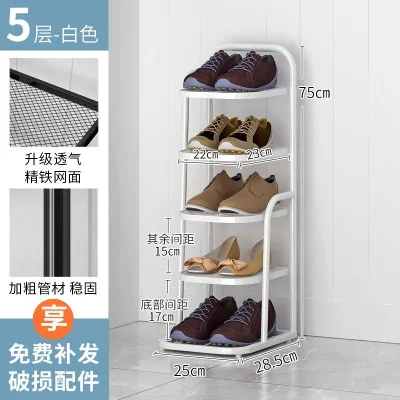
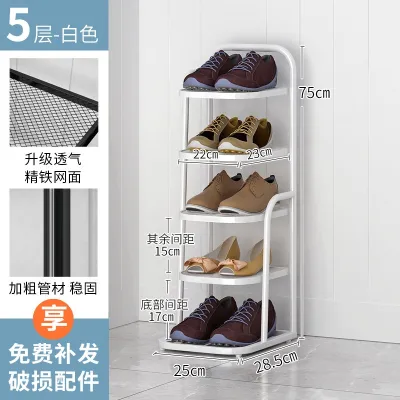
![[New arrival] Multi-Tier Metal Shoe Rack Stackable Organizer Freestanding Black Space Saving Storage for Closet Bedroom Indoor Outdoor Use](https://img.lazcdn.com/g/p/1f96d66e2225096dde126698b9792b57.jpg_400x400q80.jpg_.webp)
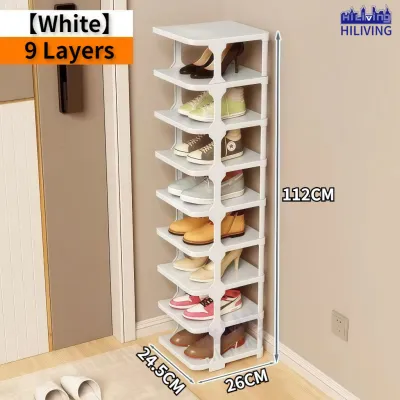
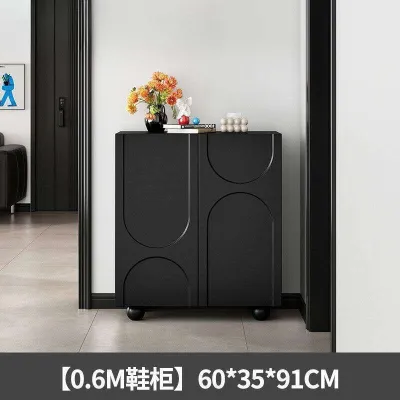
Prices are valid at publication and may change. Please refer to the product page for the latest price.
Finally, identify any environmental factors or physical obstacles unique to your home’s layout. In many high-rise apartments, entryways are narrow corridors where every centimeter of depth matters. Look upward to check for ventilation grilles, air conditioning units, or low-hanging light fixtures that could restrict the height of a tall utility cabinet. If you plan to place the rack inside a household shelter or a utility closet, verify the door clearance and ventilation options to prevent stagnant air from causing moisture buildup on your footwear.
Selecting Small-Capacity Black Shoe Racks for Compact Entryways
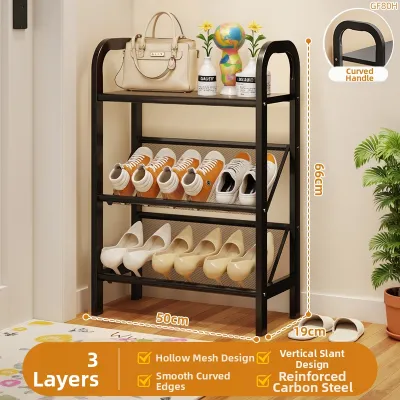
For compact apartments, studio units, or homes with minimal footwear, a small-capacity black shoe rack holding fewer than ten pairs is the most efficient choice. In tight corridors or narrow entryways, traditional deep shelving can severely restrict movement and create safety hazards. Instead, look for space-saving form factors such as slim, tilt-out shoe cabinets. These innovative designs store shoes vertically rather than horizontally, allowing the cabinet’s overall depth to remain under twenty centimeters. This ultra-slim profile keeps the walkway clear while keeping your daily footwear organized and out of sight.

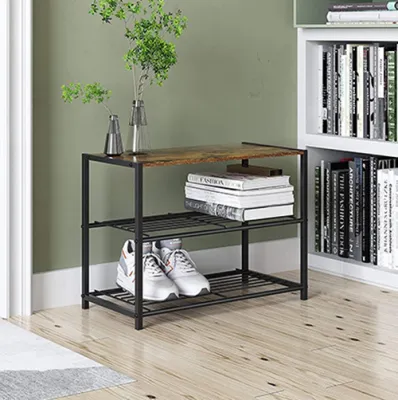
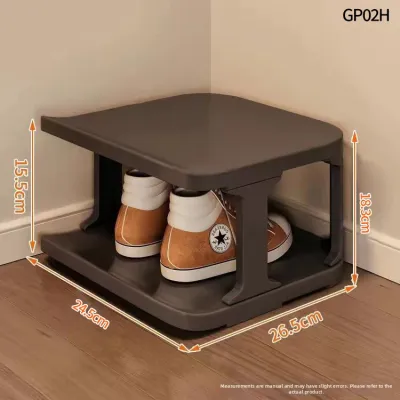
Another excellent option for limited spaces is under-bench storage or low-profile stackable wire racks. A storage bench serves a dual purpose, providing a convenient seat for putting on shoes while utilizing the empty space underneath for two or three pairs of frequently worn footwear. If you opt for stackable wire frames, ensure they feature secure interlocking mechanisms. Stackable units offer the flexibility to expand upward as your collection grows, but they must be monitored closely for stability as you add tiers.
When selecting any slim or tall small-capacity rack, checking the manufacturer’s exact depth and stability specifications is paramount. Because these units have a narrow footprint, they are inherently prone to tipping forward when drawers are pulled open or when heavy shoes are placed on the upper tiers. Always verify if the product package includes dedicated anti-tip wall anchors. If you are renting and cannot drill into the walls, prioritize low-slung, wide-base designs that maintain a low center of gravity without requiring wall penetration.
Choosing Medium-Capacity Black Shoe Racks for Standard Households
Standard households with moderate shoe collections typically require a medium-capacity black shoe rack designed to hold between ten and twenty pairs. At this tier, the primary decision lies between open multi-tier shelving and enclosed cabinets with doors. Open shelving, often constructed from metal wire or wooden slats, offers excellent ventilation, allowing damp shoes to dry quickly and preventing unpleasant odors from lingering. However, enclosed cabinets provide a cleaner visual aesthetic by hiding clutter and protecting your footwear from dust and ambient light, which can degrade certain materials over time.
To accommodate a diverse household collection, prioritize racks that feature adjustable shelf heights or removable internal dividers. A fixed-shelf design can leave you with wasted vertical space above low-profile flats while forcing you to bend or squeeze taller sneakers and ankle boots into tight gaps. Look for cabinets with pre-drilled peg holes spaced at close intervals, allowing you to customize the interior layout as your footwear collection evolves. Removable shelves are also highly beneficial for creating dedicated tall sections for seasonal boots or high-top athletic shoes.
Structural integrity is a critical consideration for medium-capacity units, as the cumulative weight of fifteen pairs of shoes can be substantial. Before purchasing, review the manufacturer’s stated weight capacity per shelf, which should ideally support at least ten to fifteen kilograms without bowing. Inspect the shelf support pins; solid metal pegs are far more durable and less prone to shearing under load than cheap plastic alternatives. If the rack features doors, check for soft-close hinges or magnetic catches that prevent slamming, which can destabilize the frame and cause shoes to shift inside.
Finding Large-Capacity Black Shoe Racks for Extensive Collections
For large families, multi-generational households, or dedicated shoe collectors, a large-capacity black shoe storage system capable of holding twenty or more pairs is essential. Managing a collection of this size requires high-density storage solutions that maximize vertical space without overwhelming the room’s footprint. Modular cube systems, floor-to-ceiling utility cabinets, and rotating shoe towers are excellent options for high-volume storage. Modular cubes allow you to customize the configuration to fit your specific wall space, while rotating towers provide quick, 360-degree access to dozens of pairs in a compact circular footprint.
With high-capacity storage, structural stability and safety become the absolute highest priorities. Tall cabinets and heavy modular units carry a significant risk of tipping over if they are not properly engineered and secured. Look for units constructed with reinforced joints, thick side panels, and robust backboards that prevent the frame from swaying or racking. For any shoe rack exceeding one meter in height, wall-mounting is not merely recommended—it is a mandatory safety requirement. Ensure the unit is anchored securely to the wall structure to prevent catastrophic accidents, especially in homes with active occupants.
Ergonomics and accessibility are also vital when dealing with large collections. A poorly designed high-capacity rack can make it difficult to reach shoes stored at the very top or back, leading to frustration and neglected footwear. Look for pull-out drawers, sliding shelves, or angled racks that bring the shoes forward for easy viewing and retrieval. If you choose a deep cabinet, ensure it has integrated interior lighting or a light-colored interior backing, as a solid black interior can make it challenging to distinguish between dark-colored shoes in low-light conditions.
Evaluating Materials and Finishes for Durability
The longevity of your black shoe rack depends heavily on the quality of its materials and surface finishes, particularly when subjected to humid indoor environments. If you prefer an industrial or minimalist metal frame, inspect the surface for a high-quality, rust-resistant powder coating. Unlike standard liquid paint, powder coating is baked onto the metal, creating a thick, durable barrier that resists chipping, scratching, and moisture-induced corrosion. This is especially important for shoe racks, as wet soles and damp umbrellas will frequently come into contact with the frame.
For wooden or engineered wood cabinets, pay close attention to the construction of the panels and the quality of the edge banding. Medium-density fiberboard (MDF) and particleboard are common in modern furniture, but they are highly susceptible to moisture damage if left unprotected. Ensure all exposed edges are sealed with thick, professionally applied PVC or ABS edge banding. This seal prevents humidity and wet footwear from penetrating the core material, which can cause the wood fibers to swell, warp, and split over time. Look for moisture-resistant ratings or protective laminate finishes on all interior shelving surfaces.
Finally, review the manufacturer’s care and maintenance instructions to ensure the black finish remains pristine over years of daily use. Matte black finishes are excellent at hiding minor dust but can show oily fingerprints, while high-gloss black surfaces reflect light beautifully but are highly prone to visible scratching. Verify that the surface can be cleaned easily with a damp microfiber cloth without requiring specialized chemical cleaners that could strip the protective topcoat. Avoid abrasive scrubbing pads, which will leave permanent swirl marks on any black finish.
Pre-Purchase Measurements and Assembly Safety Checks
Before finalizing your purchase, you must conduct a series of logistical and safety checks to ensure a smooth delivery and assembly process. High-rise living often presents unique delivery challenges that must be addressed beforehand. Measure the height, width, and diagonal clearance of your building’s elevator, as well as any tight turns in the corridors or stairwells. Compare these dimensions against the packaged box dimensions provided by the retailer to guarantee the delivery team can physically transport the product to your front door without damage.
Once the product arrives, review the assembly manual thoroughly before unboxing the components. Identify all the required tools, such as screwdrivers, rubber mallets, or spirit levels, and confirm whether they are included in the package or if you need to supply them. For tall or heavy units, the instructions will typically indicate if a two-person assembly is required. Attempting to lift or align heavy panels alone can result in personal injury or damage to the pre-drilled dowel holes and joints, compromising the structural integrity of the completed rack.
Lastly, verify the compatibility of the included wall-anchoring hardware with your home’s wall construction. Many imported furniture pieces come with standard plastic wall plugs designed for drywall or hollow brick. However, if your entryway walls are solid concrete or structural masonry, you must purchase heavy-duty masonry anchors and use a hammer drill to secure the anti-tip brackets safely. Taking the time to ensure a rock-solid connection to the wall structure is the single most effective way to guarantee long-term safety and peace of mind.
Frequently Asked Questions (FAQ)
How do I prevent a tall black shoe rack from tipping over?
To prevent a tall black shoe rack from tipping over, you must secure it directly to the wall using the manufacturer-provided anti-tip hardware. For solid concrete or masonry walls, use high-quality expansion plugs and a hammer drill to ensure a secure hold, rather than relying on standard drywall anchors. Additionally, practice smart weight distribution by placing your heaviest footwear, such as boots and thick-soled sneakers, on the bottom shelves. This lowers the unit’s overall center of gravity, significantly improving its inherent stability and reducing the risk of accidental tipping.
Can I adjust the shelf height for boots and high heels?
Yes, many modern black shoe racks feature adjustable shelf heights, but you must verify this feature in the product specifications before purchasing. Look for models that utilize adjustable shelf support pins and pre-drilled vertical tracks, which allow you to raise, lower, or completely remove individual shelves. Avoid forcing tall boots or high heels into fixed, low-clearance compartments. Doing so can crease and damage the leather or fabric of your footwear, while putting upward pressure on the shelf can weaken the support joints and compromise the rack’s structure.

Community discussion
Share your experience or ask a question. Comments are reviewed before publication.