
Bedside bags, also known as bedside caddies, are the ultimate space-saving solution for compact HDB bedrooms in Singapore, where floor space is at a premium. By hanging directly from the bed frame or slipping securely under the mattress, these organizers eliminate the need for bulky nightstands, keeping your daily essentials within arm’s reach without occupying a single square inch of floor space.
Whether you are living in a cozy two-room Flexi flat or trying to maximize a master bedroom shared with a wardrobe and a queen-sized bed, a bedside bag offers a practical, budget-friendly way to declutter. This guide will help you evaluate the best features, mounting styles, and installation safety checks to find the perfect bedside organizer for your home.
Why Bedside Bags Are Ideal for Compact HDB Bedrooms
In a typical Singapore HDB bedroom layout, fitting a queen-sized or king-sized bed often leaves very narrow walkways on either side. Traditional wooden or metal nightstands require at least 30 to 50 centimeters of width, which can restrict movement, block wardrobe doors from opening fully, or make the room feel incredibly cramped. A bedside bag completely bypasses this issue by utilizing the vertical, unused space along the side of your bed.
Products mentioned in this guide
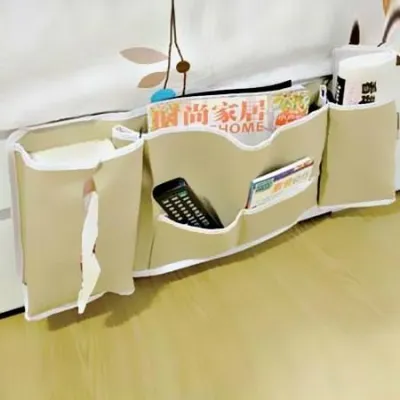
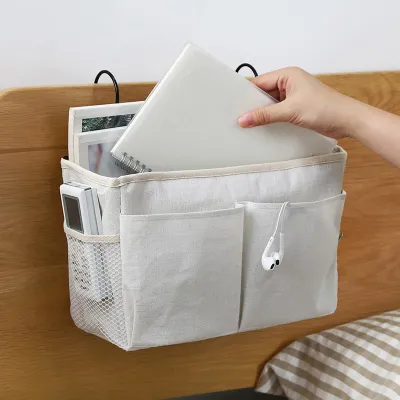
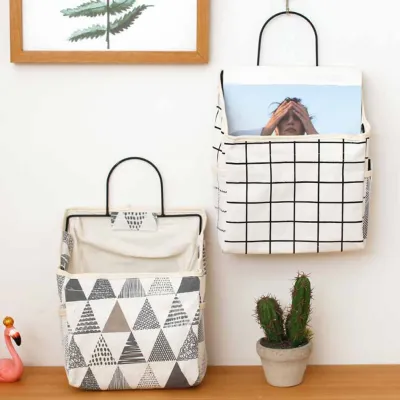
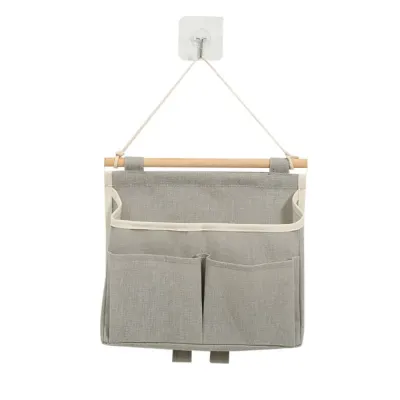
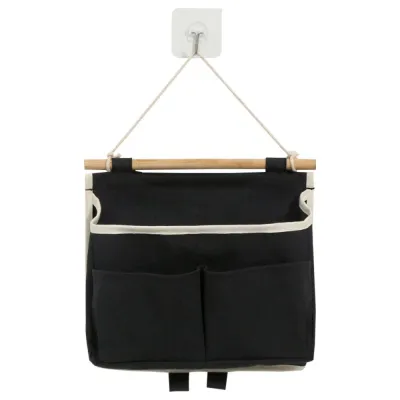
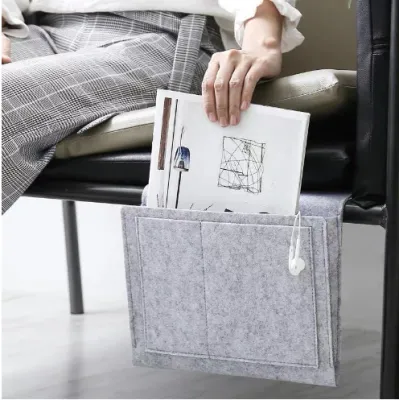
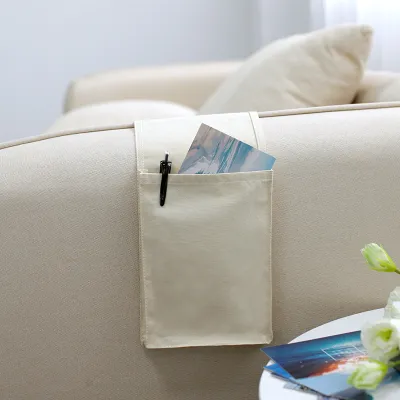
Prices are valid at publication and may change. Please refer to the product page for the latest price.
Keeping the floor clear also makes daily household chores significantly easier. Dust bunnies and lint tend to accumulate rapidly in tight bedroom corners, especially behind heavy, freestanding furniture that is difficult to move. By replacing a traditional bedside table with a hanging caddy, you leave the floor completely unobstructed, allowing vacuum cleaners, mops, or robotic vacuums to glide underneath without any hindrance.
From a convenience standpoint, a bedside bag keeps your sleeping area highly organized and efficient. Instead of stretching or rolling over to reach a distant table, your smartphone, reading glasses, remote controls, and books are stored in dedicated pockets right next to your mattress. This setup is particularly beneficial for high platform beds or custom built-in tatami storage beds where traditional nightstands do not align with the mattress height.
Visual clutter can make a small room feel even smaller than it actually is. Freestanding bedside tables often become magnets for random clutter, cups, and loose papers. A fabric or felt bedside bag naturally limits what you can store to your immediate nighttime essentials, and its low-profile design blends seamlessly into your bedding, creating a cleaner, more minimalist aesthetic that visually expands your bedroom.
Key Features to Evaluate When Choosing a Bedside Bag
When selecting a bedside bag, the pocket depth and compartment layout should match your specific storage habits. If you regularly use a tablet, e-reader, or enjoy reading physical books before sleep, look for a bag with a deep, wide main compartment that can support these larger items. For smaller items like lip balm, charging cables, and eye drops, multiple smaller front pockets or mesh dividers are essential to prevent items from getting lost at the bottom of the bag.

The choice of material directly impacts how well the bag holds its shape over time. Felt is a highly popular option for its soft texture and modern, cozy appearance, but low-density felt can sag or stretch when loaded with heavier items. For better longevity, look for thick, high-density felt or bags reinforced with internal plastic boards. Canvas and heavy-duty polyester offer excellent durability and are easier to wipe clean, making them highly practical if you occasionally keep a water bottle nearby.
Weight capacity and stitching quality are critical factors that determine the safety and lifespan of your organizer. A bedside bag must be able to support your devices without tearing or slipping out of place. Pay close attention to the stitching around the seams and attachment points; double-stitched seams, reinforced fabric borders, and metal rivets are strong indicators of a well-made product that can handle daily wear and tear.
Many modern bedside bags also feature built-in grommets, side slits, or cable routing holes designed specifically for charging cables. This allows you to charge your phone or tablet while it sits securely inside the pocket, keeping messy cords organized and preventing them from slipping onto the floor or getting tangled in your sheets overnight.
Common Mounting Styles and Their Best Use Cases
Understanding the different mounting styles will help you choose a bedside bag that is fully compatible with your specific bed frame and mattress setup.
- Under-Mattress Tuck-In Flaps: This design features a long, flat tongue that slides between your mattress and the bed base or slats. The weight of the mattress holds the bag securely in place. This style is highly versatile and works exceptionally well with heavy pocket-spring or latex mattresses on platform beds. To prevent the bag from slipping out under weight, look for flaps with textured surfaces, silicone grip dots, or a rigid T-shaped anchor at the end.
- Bed Rail Clip-Ons and Strap-Based Designs: If your HDB bed frame has exposed wooden or metal side rails, a strap-based bag is an excellent choice. These organizers use adjustable hook-and-loop straps, snap buttons, or adjustable buckles to wrap around the rails. This mounting style is incredibly secure and prevents the bag from shifting, making it ideal for bunk beds, loft beds, or traditional framed beds.
- Adhesive, Magnetic, or Hook-Mounted Options: For beds without side rails or platform bases where tucking a flap is difficult, adhesive or hook-mounted bags offer a practical alternative. These can be attached directly to a flat wooden headboard, a nearby wardrobe panel, or even the wall next to your bed. When choosing adhesive options, ensure the adhesive is rated for the weight of your loaded bag and is safe for your specific wall or furniture finish to avoid peeling paint or laminate.
Installation and Safety Checks for HDB Beds
Before installing your bedside bag, measure the physical clearance between the side of your bed and any adjacent walls or furniture. A fully packed bag can bulge outward by 10 to 15 centimeters. If the clearance is too tight, constant friction when you get in and out of bed can scuff your wall paint, tear wallpaper, or scratch nearby wardrobe doors.
If you choose a strap-on or hook-on model, inspect your bed frame’s rails carefully. Measure the width and thickness of the rails to ensure the straps are long enough to wrap around securely. For metal frames with thin round bars, ensure the straps can be tightened sufficiently to prevent the bag from sliding along the rail or tilting forward under weight, which could cause items to spill out.
To maintain the structural integrity of both the bag and your bed, distribute weight evenly across the pockets. Avoid placing all heavy items on one side, which can cause the bag to twist or slip. For tuck-in models, placing excessive weight in the bag can sometimes create a slight indentation in softer foam mattresses over time; periodically repositioning the flap by a few centimeters can help prevent localized wear.
Shopping Checklist for Online and Retail Purchases
To ensure a smooth shopping experience on online marketplaces or at local home goods stores, keep this quick verification checklist in mind:
- Take Precise Measurements: Measure your mattress thickness, bed frame rail dimensions, and the available clearance between the bed and surrounding furniture before browsing.
- Verify Return Policies: Because bed designs vary widely, there is always a chance a bedside bag might not fit your specific setup as expected. Prioritize sellers that offer clear return or exchange policies.
- Check Care Instructions: In Singapore's warm and humid climate, dust mites and mold can occasionally be a concern. Opt for breathable materials and check if the bag is machine washable or requires spot cleaning.
- Inspect Stitching and Hardware: Look for reinforced seams, sturdy zippers, and robust attachment mechanisms in product photos and customer reviews.
Frequently Asked Questions (FAQ)
Can I use a bedside bag on a mattress without a bed frame?
Yes, you can use a bedside bag even if your mattress sits directly on the floor or on a low divan base, but your mounting options will be more limited. Tuck-in models can still work if your mattress is heavy enough to hold the flap in place, though the bottom of the bag may rest directly on the floor, which can accumulate dust quickly. Alternatively, you can use adhesive-mounted or hook-mounted bags attached to a nearby wall or the side of an adjacent wardrobe. Ensure the mounting surface is clean and dry before applying any adhesives to guarantee a strong bond.
How do I clean and maintain a fabric bedside caddy?
Proper maintenance is key to keeping your bedside bag looking fresh and hygienic. For felt and structured fabric bags, spot cleaning with a damp cloth and mild detergent is usually the safest method. Avoid soaking structured bags, as water can weaken internal cardboard or plastic stiffeners. If the care label permits machine washing, use a gentle cycle and place the bag in a mesh laundry net. Always allow the bag to air dry completely in a well-ventilated area before reattaching it to your bed to prevent mold and mildew growth, which is especially important in Singapore’s humid climate.
Will a tuck-in bedside bag damage my mattress over time?
Generally, a lightweight bedside bag will not cause any damage to a standard mattress. However, if the bag is consistently overloaded with heavy items like multiple books and tablets, the constant downward pull can cause minor friction against the mattress cover or lead to slight indentations in soft memory foam. To prevent this, choose a bag with a wide, smooth tuck-in flap that distributes weight evenly. You can also place a thin piece of non-slip drawer liner under the flap to reduce friction, and periodically shift the bag’s position slightly to allow the mattress materials to recover.

Community discussion
Share your experience or ask a question. Comments are reviewed before publication.