
Choosing the right bed frame with a bed head board for a Housing & Development Board (HDB) flat in Singapore requires balancing style with strict spatial limits. Because HDB bedrooms typically feature compact layouts, the ideal choice depends on whether you prioritize modular space-saving designs, standard off-the-shelf convenience, or custom-built carpentry. By understanding how different brand categories approach headboard depth, frame footprints, and delivery logistics, you can select a setup that fits your room without blocking walkways or wardrobe doors.
Key Spatial Constraints for HDB Bedrooms
Standard HDB bedrooms, particularly in newer Build-To-Order (BTO) flats, present unique spatial challenges. A typical common bedroom measures roughly 9 to 10 square meters, while master bedrooms generally offer slightly more breathing room at 12 to 14 square meters. When planning your layout, you must account for essential clearances. A functional bedroom requires at least 50cm to 60cm of open walkway space around the sides and foot of the bed to allow for comfortable movement and to prevent a cramped feel.
Wardrobe doors and ceiling fans are the two most common obstacles in an HDB bedroom layout. If your wardrobe features traditional swing doors, you need to ensure the bed frame does not extend so far forward that it blocks the doors from opening fully. Sliding wardrobe doors can alleviate this issue, but they still require adequate clearance for you to stand comfortably in front of them. Additionally, the height and placement of your ceiling fan must be coordinated with your bed head board. A exceptionally tall or bulky headboard can disrupt the airflow of a low-hanging ceiling fan or even pose a safety hazard if positioned too close to the blades.
Products mentioned in this guide
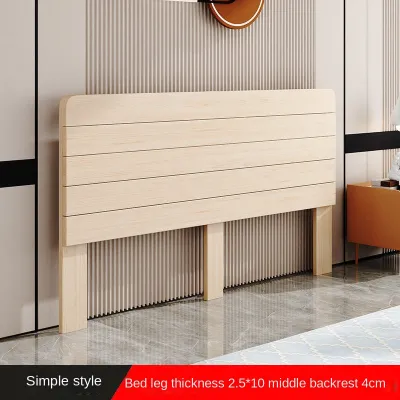
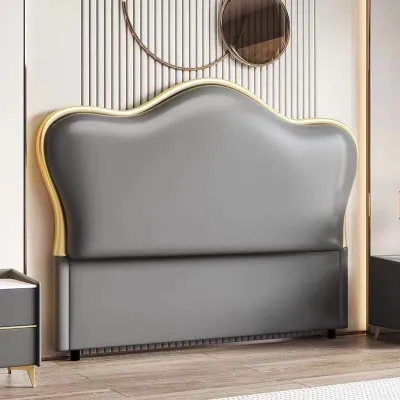
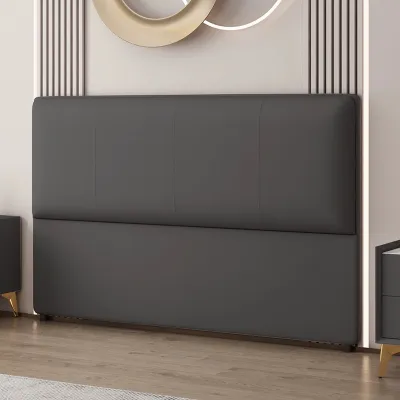
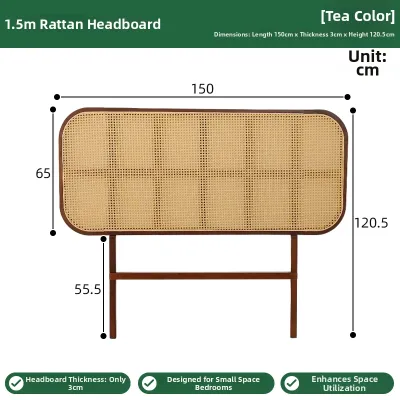
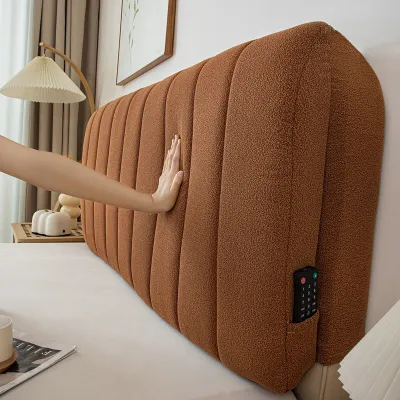
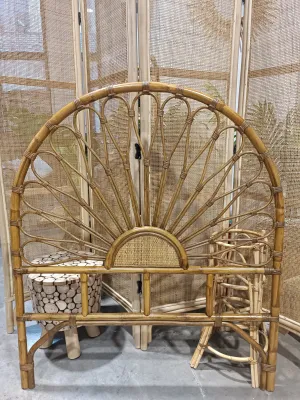
Prices are valid at publication and may change. Please refer to the product page for the latest price.
The thickness of your bed head board directly impacts the overall length of your bed footprint. While a standard Singapore Queen-size mattress measures 190cm in length, a thick, plush, or storage-integrated headboard can easily add another 15cm to 30cm to the total setup. This extension pushes the entire bed further into the room, shrinking the remaining walkway at the foot of the bed.
To determine your maximum allowable bed footprint, measure the distance from the wall where the headboard will rest to the nearest obstacle opposite it, such as a wardrobe, a doorway, or a window frame. Subtract the standard 190cm mattress length and your required walkway clearance from this total measurement. The remaining number represents the absolute maximum thickness your headboard and frame end-rails can occupy.
Evaluation Criteria for Compact Bed Frames and Headboards
When comparing different bed head board designs, establishing practical standards helps you look past aesthetics to evaluate how a frame will perform in a compact space. The profile of the headboard is the most critical factor. Thin, wall-mounted, or flush headboards are highly efficient, often adding less than 5cm of depth to the bed. In contrast, heavily upholstered headboards with deep tufting or built-in storage compartments offer excellent comfort and utility but demand a much larger physical footprint.

The frame footprint itself must also be evaluated. Some bed frames feature flush edges where the mattress sits directly on top of the platform, keeping the overall width and length as close to the mattress dimensions as possible. Other designs include protruding side rails, wide wooden borders, or extended footboards. In a tight HDB bedroom, these extra centimeters of wood or fabric can restrict movement and lead to stubbed toes.
Material selection is another vital consideration due to Singapore’s tropical, high-humidity climate. Fabric and velvet headboards provide a soft, cozy aesthetic but can trap dust mites, pet dander, and moisture if the room is not consistently air-conditioned or well-ventilated. For low-maintenance living, look for headboards made from solid wood with moisture-resistant sealants, metal, or high-quality synthetic leather that can be easily wiped down. Always check the manufacturer’s care instructions and verify the structural stability of the joints to ensure the frame can withstand daily use without developing squeaks over time.
Comparing Brand Categories for HDB Layouts
To find the right bed frame and headboard for your home, it helps to categorize the brands available in Singapore. The market is generally divided into three main segments: space-saving and modular specialists, mainstream retail and mattress brands, and custom carpentry or local boutiques. Each category approaches the challenges of compact HDB living with a distinct design philosophy.
Space-Saving and Modular Furniture Specialists
Brands that specialize in space-saving and modular furniture prioritize compact engineering and multi-functional designs. These manufacturers often create bed head board options that feature ultra-thin profiles, integrated charging ports, or slim ledges that replace the need for traditional bedside tables. Some modular systems allow you to attach or detach shelving units and lighting fixtures directly to the headboard, keeping the floor area completely clear.
The primary trade-off with modular specialists lies in customization limits and structural requirements. Because these products are engineered as complete systems, you generally cannot mix and match components outside of the brand’s ecosystem. Additionally, some ultra-thin or wall-mounted headboards require secure anchoring to the wall, which means you must verify if your bedroom wall is a solid concrete structure or a hollow partition wall before installation.
Mainstream Retail and Mattress Brands
Mainstream retail brands and established mattress manufacturers offer widely available, standardized bed frames with matching headboards. These brands are highly accessible and often sell bundled sets, allowing you to purchase your mattress and frame together. This ensures a perfect fit according to standard Singapore sizing (Single, Super Single, Queen, and King).
While mainstream brands offer convenience, reliable delivery services, and readily available replacement parts, their designs tend to be less flexible. The headboards in this category are often pre-attached and come in fixed, standard thicknesses that may be bulkier than necessary for a tight HDB layout. If you choose a mainstream brand, you must pay close attention to the product specifications to ensure the frame’s total depth does not overwhelm your room.
Custom Carpentry and Local Boutiques
For homeowners who want to maximize every single millimeter of their bedroom, custom carpentry and local boutique workshops offer bespoke solutions. This approach allows you to design a bed head board that spans the entire width of your wall, integrates seamlessly with your wardrobe, or wraps around structural pillars and electrical trunking.
Opting for custom carpentry ensures a perfect visual and physical fit, but it requires careful planning. Custom builds involve longer lead times, higher overall costs, and permanent installation. Because these structures are anchored directly to the wall, they cannot be easily moved if you decide to rearrange your room in the future. You must also ensure that any drilling or structural mounting complies with HDB renovation guidelines.
Decision Framework: Choosing the Right Brand for Your Room
To finalize your choice, use this conditional framework to match your specific bedroom constraints with the right brand category:
- Choose a space-saving specialist if your bedroom is highly compact and you need to eliminate separate bedside tables. Look for slim headboards with built-in ledges, integrated lighting, or modular shelving to keep your floor space clear.
- Choose a mainstream retail brand if your bedroom layout easily accommodates standard dimensions, you prefer a straightforward purchasing process, and you want the convenience of a bundled mattress-and-frame delivery.
- Choose custom carpentry if your bedroom wall features irregular shapes, structural pillars, or electrical trunking that prevents standard furniture from sitting flush against the wall, or if you want a seamless, built-in look that matches your wardrobe.
Before making any final purchase, it is crucial to verify the delivery logistics. Measure your HDB lift entrance, the interior cabin dimensions, your corridor turns, and your bedroom doorway. Large, rigid headboards—especially solid wood or fully upholstered King-size designs—may not clear tight lift doors or low corridor ceilings. Confirm with the brand whether the headboard is delivered as a single pre-assembled piece or if it is flat-packed and assembled directly inside your bedroom.
Frequently Asked Questions (FAQ)
Do headboards with built-in storage actually save space in HDB rooms?
While a bed head board with built-in shelves or cabinets can eliminate the need for separate bedside tables, it often increases the overall length of the bed footprint. A storage headboard typically adds 20cm to 40cm of depth to your bed setup. In a compact HDB bedroom, this extra length can severely restrict the walkway at the foot of the bed or block wardrobe doors from opening. Before choosing a storage headboard, measure your room carefully to ensure that saving horizontal floor space next to the bed does not create a major bottleneck at the foot of the bed.
How do I check if a bed frame will fit through my HDB lift and door?
To prevent delivery failures, measure the height, width, and diagonal clearance of your HDB lift door and cabin interior. Next, measure the width of your corridor turns and the clear opening of your bedroom doorway. When shopping, ask the retailer if the headboard is delivered as a single, rigid panel or if it arrives flat-packed. Flat-pack and modular designs are highly recommended for tight HDB layouts, as they can be easily transported through standard lifts and narrow hallways before being assembled directly in your bedroom.

Community discussion
Share your experience or ask a question. Comments are reviewed before publication.