
Finding the right storage solution for a compact HDB bedroom in Singapore requires a careful balance of spatial efficiency, practical design, and robust materials. A 2-door wardrobe is often the most practical choice for secondary bedrooms, study rooms, or master bedrooms with tight layouts. By selecting a configuration tailored to your specific room clearance, you can maximize your clothing storage without sacrificing valuable floor space or making your sleeping area feel cramped.
To make the most of your layout, you must evaluate how the wardrobe interacts with your bed, doorways, and the surrounding walls. In a typical 4-room or 5-room HDB flat, bedroom floor space is at a premium, making every centimeter count. Understanding how to assess door clearance, vertical height, and interior configurations will help you choose a 2-door wardrobe that serves your needs for years to come.
How to Choose a 2-Door Wardrobe for a Compact HDB Room
Selecting a wardrobe for an HDB bedroom is not just about finding a design that matches your aesthetic; it is about understanding the physical constraints of your room. Before browsing designs, you must measure your space carefully and consider how the wardrobe will function on a daily basis.
Products mentioned in this guide
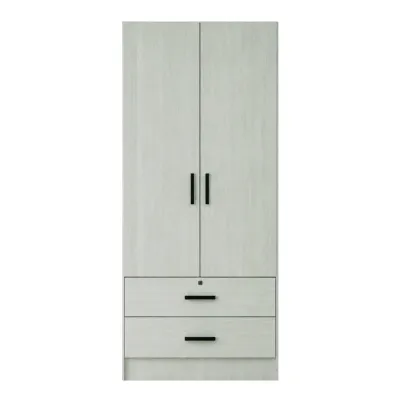
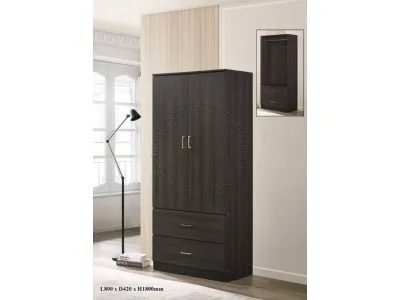
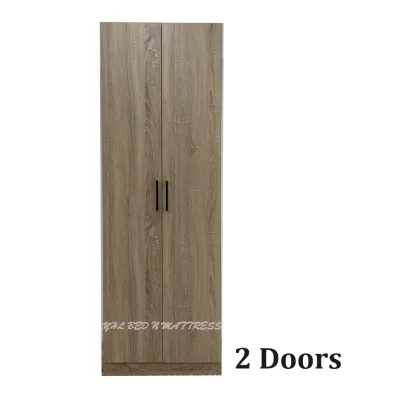
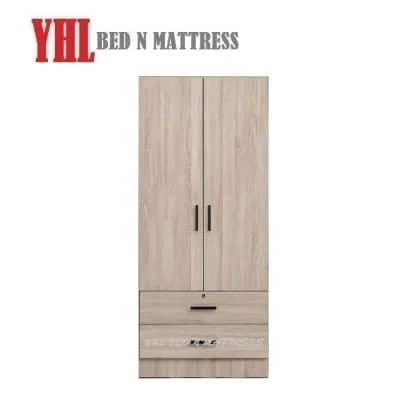
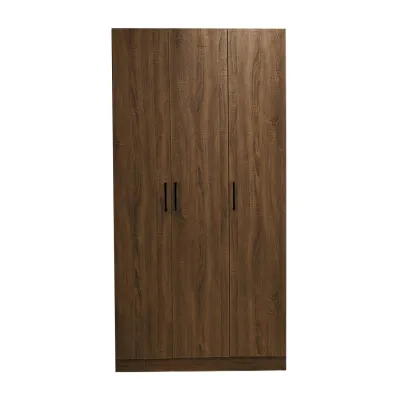
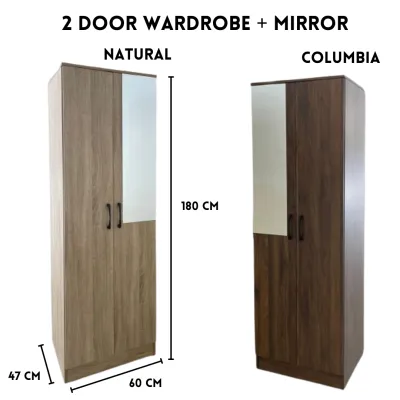
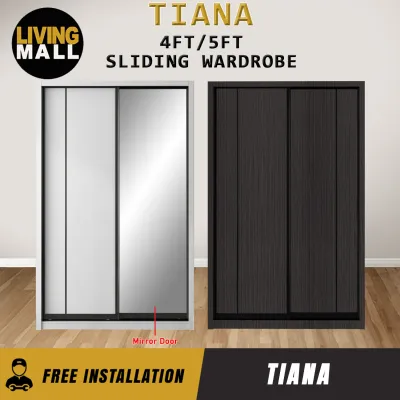
Prices are valid at publication and may change. Please refer to the product page for the latest price.
Clearance and Door Swing
The distance between your wardrobe and adjacent furniture, such as your bed frame or study desk, dictates what type of doors you can use. Hinged doors require a clear radius of at least 50cm to 60cm to swing open fully, plus an additional 30cm to 40cm of standing space for you to access your clothes comfortably. If your walkway is narrower than 90cm in total, a hinged wardrobe will feel incredibly tight and may constantly collide with your bed. In these restricted layouts, a sliding 2-door wardrobe is the superior choice because it operates entirely within its own footprint.
Vertical Space Utilization
Standard HDB ceiling heights generally range from 2.6 meters to 2.8 meters. Many mass-market freestanding wardrobes stop at a height of 1.8 meters to 2.0 meters, leaving a large, empty gap at the top. This gap not only wastes valuable vertical storage space but also becomes a major dust trap that is difficult to clean. To maximize your storage capacity, look for taller modular options that stand at 2.36 meters or higher, or consider custom-built solutions that extend all the way to the ceiling to keep the room looking clean and integrated.
Material and Finish
Singapore’s tropical climate brings high relative humidity levels, which can cause poor-quality furniture materials to warp, swell, or develop mold. Avoid unsealed particle board, which acts like a sponge for moisture. Instead, prioritize wardrobes constructed from high-density fiberboard (HDF), medium-density fiberboard (MDF) treated with moisture-resistant resins, or solid wood that has been properly sealed. For the exterior finish, high-pressure laminates and melamine coatings are excellent choices because they are highly durable, scratch-resistant, and easy to wipe down with a damp cloth. Always check the manufacturer’s care instructions to verify how to clean and maintain the specific finish.
Visual Weight
The visual impact of a large piece of furniture can drastically alter how spacious a room feels. A dark, solid-colored wardrobe can dominate a small HDB bedroom, making it feel closed-in and dark. To maintain an airy, open atmosphere, opt for light wood tones, soft grays, or matte white finishes. These lighter shades reflect natural light from your windows, helping the wardrobe blend seamlessly into the walls and making the entire room appear larger than it actually is.
Best 2-Door Wardrobe Configurations for Small HDB Bedrooms
Different room layouts demand different structural configurations. By matching the wardrobe’s door style and construction to your specific spatial challenges, you can resolve common small-room pain points.

Sliding Door 2-Door Wardrobes for Tight Walkways
Sliding door wardrobes are highly effective for rooms where space is at an absolute premium. Because the doors glide horizontally along a track, they do not require any frontal clearance to open, making them ideal for narrow layouts.
- Space-Saving Benefits: This configuration is perfect for bedrooms where the bed is positioned close to the wardrobe wall. Even with a walkway as narrow as 50cm, you can easily slide the doors open and retrieve your items without having to squeeze around an open door panel.
- Track and Hardware Checks: The performance of a sliding wardrobe depends entirely on the quality of its tracks and rollers. Before purchasing, verify that the wardrobe uses smooth-running aluminum tracks rather than plastic ones, and look for anti-jump mechanisms that prevent the doors from slipping off the rails. Soft-closing dampers are also highly recommended to prevent the heavy doors from slamming.
- Limitations: It is important to note that sliding doors overlap, meaning you can never view or access both sides of your wardrobe simultaneously. Additionally, the bottom tracks naturally accumulate dust, lint, and hair over time, which can obstruct the rollers. You will need to vacuum or wipe the tracks regularly to maintain smooth operation.
Mirrored 2-Door Wardrobes to Expand Visual Space
Incorporating mirrors into your wardrobe doors is an excellent way to solve two problems at once: providing a full-length dressing mirror and visually expanding your bedroom.
- Visual Expansion: Mirrored surfaces reflect the entire room, creating an illusion of double the floor space. They also bounce natural light from HDB windows into darker corners of the bedroom, making the space feel significantly brighter and more inviting.
- Safety and Backing: Glass can be a safety hazard, particularly in tight spaces where you might accidentally bump into it. Always confirm with the retailer or manufacturer that the mirrors are fitted with a shatter-resistant safety backing film. This film ensures that if the glass does break, the shards remain adhered to the backing rather than scattering across your bedroom floor.
- Maintenance: Mirrored doors require consistent upkeep to look their best. In Singapore's humid climate, condensation, fingerprints, and dust can quickly smudge the glass. Keep a microfiber cloth and a mild, non-abrasive glass cleaner on hand to wipe down the surface weekly.
Modular Freestanding 2-Door Wardrobes for Flexibility
For homeowners who prefer adaptability or are living in temporary accommodations, modular freestanding wardrobes offer a level of flexibility that built-in units cannot match.
- Adaptability: Freestanding units can be easily relocated if you decide to rearrange your bedroom layout, convert the room into a nursery, or move to a new home. This makes them highly popular among renters and young couples waiting for their permanent BTO flats.
- Stability and Anchoring: Because freestanding wardrobes are tall and relatively top-heavy when loaded, they present a serious tipping hazard. This risk increases if the wardrobe is placed on an uneven floor or if multiple drawers are pulled out at once. For safety, you must anchor the wardrobe securely to the wall using the safety brackets and wall plugs recommended for your specific wall type (such as concrete or drywall). This step is essential in homes with young children or active pets.
- Gap Management: Unlike custom built-in wardrobes, freestanding units will leave small gaps between the sides of the wardrobe and the wall, as well as a larger gap at the ceiling. These hard-to-reach areas tend to collect dust. To manage this, you can place lidded storage boxes on top of the wardrobe to block dust accumulation and keep the top looking organized, or leave enough space to easily run a long-reach duster.
Maximizing Internal Storage in a 2-Door Layout
A 2-door wardrobe has a limited footprint, which makes smart internal organization absolutely essential. By customizing the interior layout, you can double your usable storage space and keep your clothes organized.
- Zoning Strategy: Divide your wardrobe into three vertical zones based on how often you access your items. The active zone, which sits between your waist and eye level, should be reserved for daily wear, work clothes, and frequently used accessories. The lower zone, from your waist down to the floor, is ideal for drawers containing undergarments, socks, or folded t-shirts. The high zone, above head height, should hold seasonal items, travel bags, or extra bedsheets that you only need to access occasionally.
- Essential Add-Ons: Standard wardrobes often come with a basic setup of one hanging rail and a single top shelf, which leaves a lot of wasted vertical space. Upgrade your interior by incorporating adjustable shelves that can be moved to match the height of your folded clothes. Pull-out pants racks keep trousers wrinkle-free while using minimal vertical space, and shallow jewelry drawers help keep small accessories organized and visible.
- Dead Space Utilization: The very bottom of a wardrobe often becomes a cluttered pile of shoes or bags. To prevent this, place small, stackable storage bins or a compact shoe rack on the wardrobe floor. If you have a lot of short hanging items like shirts and blouses, install a double hanging rod system—one high and one low—to instantly double your hanging capacity without needing a wider wardrobe.
- Interior Lighting: Deep, narrow wardrobe cavities can be dark, making it difficult to distinguish between dark-colored clothing. Consider installing battery-operated or rechargeable LED strip lights with motion sensors under the shelves. These lights turn on automatically when you open the doors, providing excellent visibility without the need for complex electrical wiring or professional installation.
Pre-Purchase and Installation Checks for HDB Flats
Before finalizing your purchase, you must perform several practical checks to ensure the wardrobe can be delivered, installed, and used safely within your HDB flat.
- Obstruction Checks: Carefully inspect the wall where you plan to place the wardrobe. Measure the height of your skirting boards, as some wardrobes do not have a recessed back to accommodate them, which will force the wardrobe to stand away from the wall. Ensure the wardrobe will not block light switches, electrical outlets, wall-mounted fans, or air-conditioning trunking. Also, check that the wardrobe will not obstruct the swing of your bedroom door or window panels.
- Floor and Wall Alignment: Many HDB flats, particularly older resale units, do not have perfectly level floors or perfectly plumb walls. If a tall wardrobe is placed on an uneven floor, the frame can twist slightly, causing sliding doors to glide open on their own or hinged doors to misalign. Use a spirit level to check the floor before installation. If the floor is uneven, look for wardrobes with adjustable leveling feet, or use sturdy plastic shims under the base to level the frame.
- Delivery and Access: A wardrobe is a large, bulky item, and delivery issues are incredibly common in high-rise HDB blocks. Measure the height and width of your HDB lift door, the interior dimensions of the lift cabin, the width of your corridor, and your bedroom doorway. If you are purchasing a pre-assembled wardrobe or a tall modular unit with long side panels (often exceeding 2.3 meters), ensure these packages can clear all doorways and tight corners. If the items cannot fit into the lift, you may face steep staircase delivery charges, or the delivery team may have to reject the delivery entirely.
Frequently Asked Questions (FAQ)
Can I install a built-in 2-door wardrobe in an HDB household shelter?
No, you cannot install a built-in wardrobe or perform any structural modifications inside an HDB household shelter (commonly known as the bomb shelter). HDB regulations strictly prohibit drilling, mounting, or hammering into the reinforced concrete walls, floor, ceiling, or steel door of the shelter to preserve its structural integrity and airtight seal in an emergency. If you wish to use your household shelter as a walk-in wardrobe or storage room, you must use freestanding, non-anchored furniture. Tension-rod wardrobe systems, freestanding metal racks, or modular shelving units that stand on the floor without any wall attachments are excellent, compliant alternatives.
What is the standard width for a 2-door wardrobe?
The standard width for a 2-door wardrobe typically ranges from 80cm to 120cm. Hinged 2-door wardrobes are generally more compact, often measuring between 80cm and 100cm in width. Sliding 2-door wardrobes are usually wider, starting at around 100cm to 120cm, as they require sufficient width for the overlapping sliding doors to operate smoothly on their tracks. When planning your layout, always measure your wall space carefully and leave a buffer of at least 2cm to 5cm to account for skirting boards and ease of installation.

Community discussion
Share your experience or ask a question. Comments are reviewed before publication.