
Finding the right mattress firmness is a highly personal decision that directly impacts your sleep quality, spinal health, and daily energy levels. When evaluating the Azure mattress lineup, there is no single “perfect” option that works for everyone; instead, the ideal choice depends on a combination of your primary sleeping position, body weight, and personal comfort preferences. By understanding how different firmness levels interact with your body type and sleep style, you can make an informed decision that ensures long-term comfort. This guide provides a practical, step-by-step framework to help you compare Azure mattress options, evaluate their structural specifications, and verify key purchase policies before making your investment.
Understanding Azure Firmness Levels and Scale
To navigate the various options offered by Azure, it is essential to first understand how mattress firmness is classified across the bedding industry. The standard mattress firmness scale runs from 1 to 10, where 1 represents an extremely soft, cloud-like surface with almost no resistance, and 10 represents an exceptionally hard, rigid surface similar to sleeping on a carpeted floor. Most mainstream mattresses, including those in the Azure range, typically fall within the 4 to 8 range, which covers medium-soft, medium, medium-firm, and firm profiles. These middle-of-the-scale options are designed to balance pressure relief with structural support for the majority of sleepers.
Because firmness ratings can sometimes be subjective and vary between brands, you should always verify the exact rating of a specific Azure model before purchasing. You can do this by checking the official product tag, reviewing the manufacturer’s detailed specification sheets, or consulting authorized retailer listings. Many manufacturers also provide a visual slider or numerical rating on their product pages to indicate where a specific model sits on the 1-10 scale. Relying on these official specifications rather than general marketing descriptions ensures you have an accurate baseline for comparison.
Products mentioned in this guide
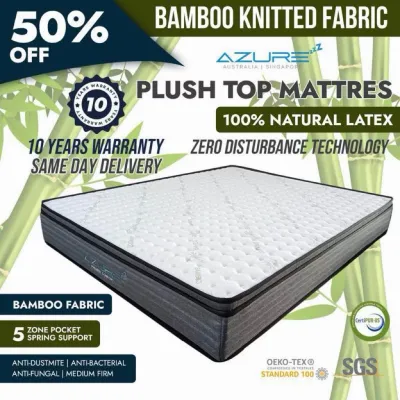
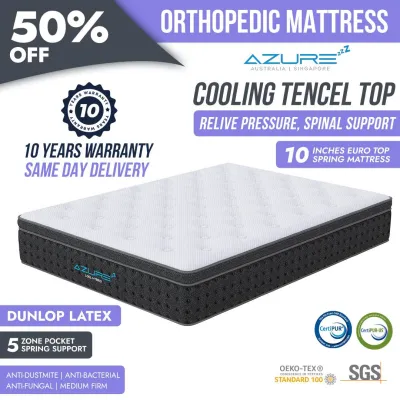

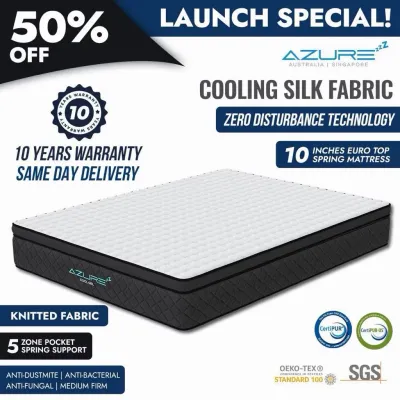
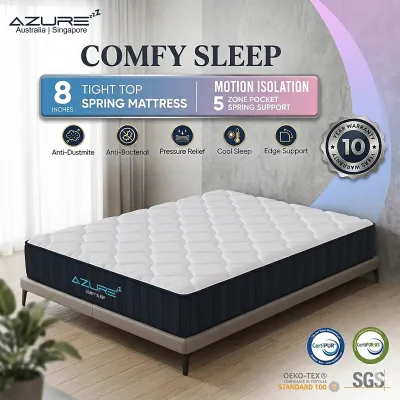
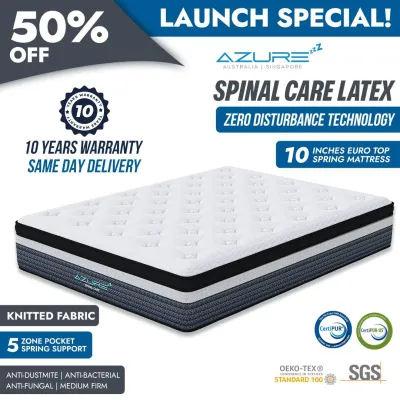
Prices are valid at publication and may change. Please refer to the product page for the latest price.
Another critical concept to master is the distinction between initial “feel” and underlying “support.” The initial feel of a mattress is determined by its comfort layers—the top sections made of materials like memory foam, latex, or quilted fiber that you feel immediately upon lying down. This layer is responsible for cushioning your pressure points and providing a plush or contouring sensation. In contrast, the underlying support is determined by the core layer, which typically consists of pocketed coils or high-density support foam. This core layer keeps your spine aligned and prevents your body from sinking too deeply into the mattress, regardless of how soft or firm the top comfort layer feels.
Matching Firmness to Your Sleep Style and Body Type
Your primary sleeping position is the most influential factor in determining which firmness level will keep your spine in a neutral alignment. Side sleepers, for instance, require a mattress that offers significant pressure relief at the shoulders and hips, which are the widest parts of the body and bear the most weight in this position. A mattress that is too firm can cause pressure build-up in these areas, leading to numbness, tossing and turning, and morning aches. Consequently, side sleepers generally benefit from plush to medium options (typically rated 4 to 6 on the scale) that allow the shoulders and hips to sink in just enough to keep the spine straight.

For back and stomach sleepers, the primary goal is to prevent the pelvis and hips from sinking too deeply into the mattress, which can arch the lower back and cause severe strain over time. Back sleepers need a balance of contouring for the lower lumbar region and firm support for the shoulders and hips, making medium-firm options (rated 6 to 7) highly suitable. Stomach sleepers require even more robust support to keep their hips level with their shoulders; a mattress that is too soft will cause the midsection to sag, putting pressure on the lower spine. Therefore, stomach sleepers usually favor firm models (rated 7 to 8) that offer a flat, stable sleeping surface.
Your body weight also plays a crucial role in how you perceive mattress firmness and how much support you actually receive. Lighter individuals (typically under 60 kg) exert less downward force on the mattress and may perceive a medium mattress as quite firm, as they do not sink deeply enough to engage the comfort layers fully. For these sleepers, a slightly softer model may be necessary to achieve adequate pressure relief. Conversely, heavier individuals (typically over 90 kg) exert more force and will sink deeper into the mattress structure. They require a mattress with a robust support core—such as thick pocketed coils—and a firmer comfort layer to prevent bottoming out and to maintain proper spinal alignment throughout the night.
Comparing Structural Specs Across Azure Firmness Options
When comparing different Azure firmness options, looking beyond marketing labels and examining structural specifications is key to understanding long-term performance. The comfort layer materials are the first structural element to evaluate. Memory foam comfort layers conform closely to the body’s shape, offering excellent pressure relief and a contouring sensation, though they can retain heat in warm climates. Latex comfort layers offer a more responsive, bouncy feel and natural breathability, making them a popular choice for sleepers who prefer to sit on top of the mattress rather than sink into it. The thickness and density of these comfort layers directly impact how plush the mattress feels and how well it cushions your joints.
The support core is the backbone of the mattress and determines its overall durability, edge support, and motion isolation. Pocketed coils compress independently, meaning movement on one side of the bed does not transfer to the other—a crucial feature for couples. Additionally, pocketed coils allow for excellent airflow, helping to dissipate heat in Singapore’s humid climate. High-density foam bases are another common support core option, providing a stable, quiet foundation but generally offering less edge support and airflow than coil systems. Evaluating the coil count, coil gauge, and base foam density will give you a clear indication of the mattress’s structural integrity.
To help you systematically evaluate these structural details when browsing Azure’s product pages or visiting a showroom, use the following specification checklist to compare different models:
| Specification Category | Key Metrics to Verify | Why It Matters for Firmness & Comfort |
|---|---|---|
| Comfort Layer Material | Material type (e.g., memory foam, latex, gel-infused foam) | Determines the initial surface feel, contouring, and heat retention. |
| Comfort Layer Thickness | Exact depth of the top comfort and transition layers | Thicker layers provide more cushioning; thinner layers feel firmer. |
| Support Core Type | Pocketed coils vs. high-density polyfoam base | Impacts overall spinal support, motion isolation, and airflow. |
| Coil Count & Gauge | Number of coils and wire thickness (if applicable) | Higher coil counts and thicker wire (lower gauge) offer firmer support. |
| Edge Support System | Reinforced foam encasement or thicker perimeter coils | Prevents sagging when sitting on the edge and expands usable sleep surface. |
| Cover Material | Fabric type (e.g., Tencel, bamboo, cooling knit) | Affects surface breathability and moisture-wicking in humid weather. |
Essential Pre-Purchase Checks for Space and Policies
Before finalizing your choice of an Azure mattress, you must perform several practical checks to ensure the physical product fits your home and your purchase is fully protected. Start by verifying the exact finished dimensions of the mattress, including its depth, against your current bed frame or headboard clearance. A mattress that is exceptionally thick may require deep-pocket sheets or make it difficult to climb into bed, especially if your bed frame is already elevated. Additionally, measure your bedroom’s walking space to ensure the mattress size (such as Queen or King) allows for comfortable movement around the room, which is particularly important in compact Singapore HDB flats and condominiums.
Beyond bedroom space, you must plan for the delivery logistics. Measure your doorways, hallways, and especially your lift access or stairwells to ensure the delivery team can safely transport the mattress to your bedroom. Many modern mattresses are delivered compressed in a box, which simplifies transport through tight spaces, but it is still vital to confirm the packaged dimensions. Furthermore, check the manufacturer’s policies regarding delivery options, professional setup services, and old mattress disposal availability in Singapore. Having a clear plan for removing your old mattress can save you significant hassle and unexpected fees on delivery day.
Finally, protect your investment by thoroughly reviewing the brand’s sleep trial period, warranty terms, and return conditions. Because it can take up to 30 nights for your body to adjust to a new mattress, a sleep trial is an invaluable safety net if the firmness level you chose turns out to be unsuitable. Verify whether the trial allows for a direct exchange to a different firmness level or a full refund, and check if there are any return shipping or restocking fees. Always check the official Azure website or authorized local retailers for the most current S$ pricing, promotional bundles, and warranty details to ensure you are getting the optimal value and protection for your purchase.
Frequently Asked Questions (FAQ)
Can I adjust the firmness of my Azure mattress if it feels wrong?
If your Azure mattress feels slightly too firm or too soft after the initial adjustment period, you have several practical options to modify its feel. First, check if the specific model you purchased features a flippable design with dual firmness sides, which allows you to flip the mattress over to access a different feel. If the mattress is single-sided, adding a high-quality mattress topper is an effective way to alter the surface comfort; a plush memory foam or latex topper can soften a firm bed, while a dense, firm topper can add surface support to a soft bed. Before making any modifications, always review the brand’s official sleep trial and exchange policies, as exchanging the mattress for a different model during the trial period is often the most suitable long-term solution.
Is a firm mattress always the best choice for back pain?
There is a common misconception that an exceptionally firm mattress is the universal solution for back pain, but modern sleep science suggests otherwise. While a mattress must provide enough support to prevent your spine from sagging, an overly firm surface can create painful pressure points at your shoulders and hips, forcing your spine out of its natural alignment. For most sleepers experiencing back pain, a medium-firm mattress offers the ideal balance of contouring support and pressure relief, keeping the spine neutral while cushioning the body. If you suffer from chronic or severe back pain, it is highly recommended to consult a healthcare professional or physical therapist for personalized advice rather than relying solely on mattress firmness to resolve the issue.

Community discussion
Share your experience or ask a question. Comments are reviewed before publication.