
Choosing the correct capacity for a shoe cabinet assembled in your home requires balancing your current footwear collection, your household size, and the physical constraints of your entryway. In Singapore, where space in HDB flats and condominiums is highly optimized, selecting the wrong size can lead to cluttered corridors or cramped foyers. To find the ideal fit, a general rule of thumb is to allocate storage for at least six to eight pairs of shoes per adult, plus a 20% buffer for guests and future purchases.
A shoe cabinet assembled from modular or flat-pack parts offers a practical, customizable solution for local homes. However, capacity is not just about the total number of pairs; it also depends on shoe types, shelf depths, and the physical footprint of the unit. Understanding how your household’s daily habits interact with furniture dimensions is the key to maintaining an organized, welcoming entrance.
Assessing Your Household's Shoe Storage Needs
Before browsing online marketplaces or visiting local showrooms, conduct a thorough inventory of your household’s footwear. Lay out every pair and separate them into distinct categories: daily essentials, occasional wear, formal shoes, and sports gear. This exercise prevents underestimating your storage requirements and helps you visualize the types of shelves you actually need.
Products mentioned in this guide
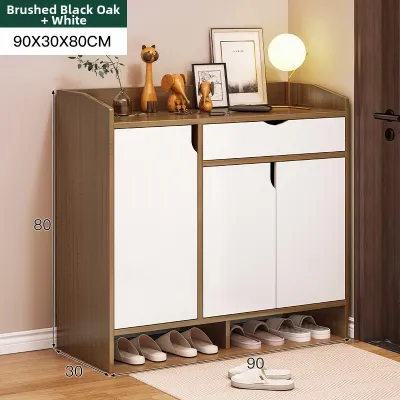
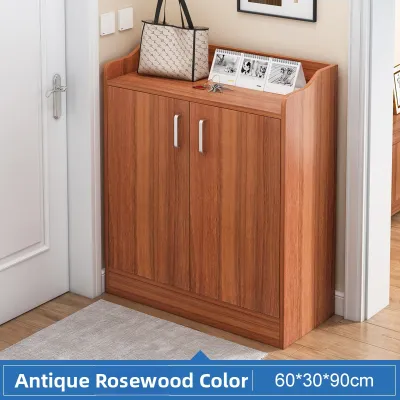
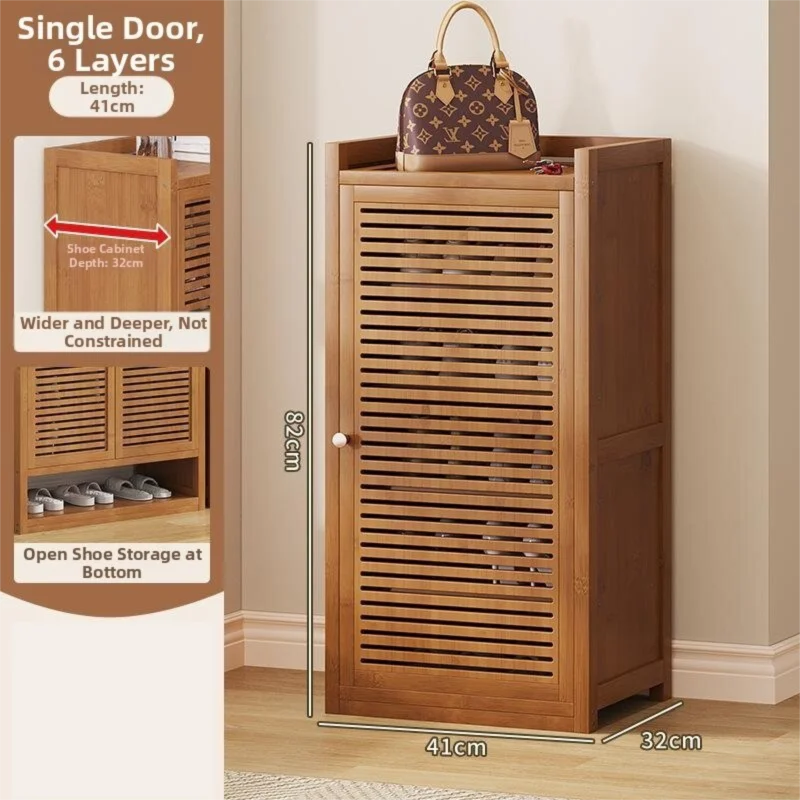
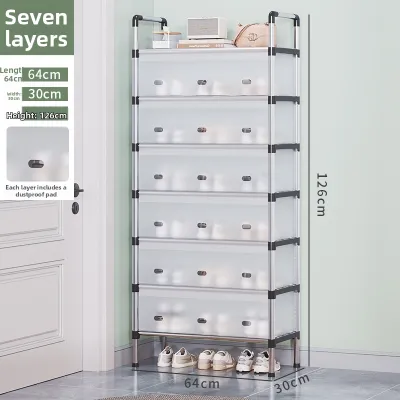
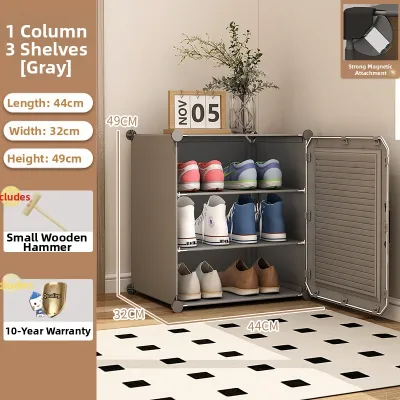
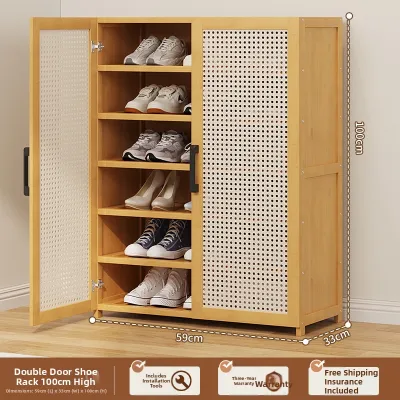
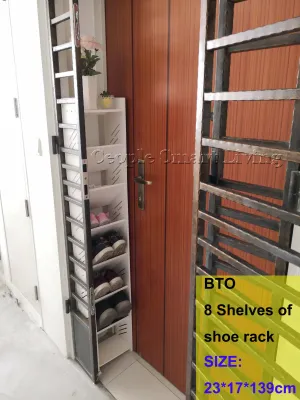

Prices are valid at publication and may change. Please refer to the product page for the latest price.
In Singapore, the tropical climate and casual lifestyle heavily influence the composition of a typical shoe collection. Local entryways are dominated by lightweight sandals, slip-ons, slides, and breathable canvas sneakers, with very few bulky winter boots or heavy leather footwear. Because flat shoes and sandals stack more compactly than structured boots, you can often fit more pairs into a standard shelf, provided the cabinet has adequate ventilation to combat high humidity.
When calculating your final capacity, always build in a buffer for future lifestyle changes and social habits. If you frequently host gatherings, you will need dedicated space for guest slippers near the door. Additionally, allocate a small section or drawer within the cabinet for shoe care accessories, such as moisture-absorbing charcoal bags, cleaning brushes, and water-resistant sprays, keeping these items easily accessible yet out of sight.
Matching Cabinet Capacity to Household Size
Selecting the right capacity involves matching the physical size of the furniture to the number of occupants in your home. While a single person might only need a minimalist rack, a multi-generational family requires a highly organized, high-capacity storage system.

Singles and Couples (1-2 People)
For single professionals or couples residing in compact studio apartments, one-bedroom condos, or two-room HDB flats, a compact shoe cabinet assembled with a slim profile is usually sufficient. A capacity of 10 to 15 pairs easily covers daily wear, athletic shoes, and a few formal options.
To maximize narrow foyers or tight walkways near the main door, look for ultra-slim tipping-bucket cabinets. These designs store shoes vertically rather than horizontally, reducing the cabinet’s depth to as little as 15 to 20 centimeters. This space-saving configuration keeps the entryway clear while providing enough storage for two people’s primary footwear.
Small Families (3-4 People)
As a household grows to include children, shoe storage needs increase significantly, requiring a capacity of 20 to 30 pairs. Children’s shoes may be small, but school shoes, sports cleats, and play sneakers accumulate quickly, demanding a more robust storage solution.
For small families, a double-door assembled cabinet with a depth of 30 to 35 centimeters is highly recommended. Look for models featuring adjustable or removable internal shelves. This flexibility allows you to lower shelves to accommodate tall high-tops and adult heels, or add extra tiers to neatly stack smaller children’s shoes without wasting vertical space.
Large Households (5+ People)
Multi-generational households or homes with five or more active residents face a major storage challenge, often requiring capacity for 40 or more pairs of shoes. Attempting to fit all of these into a single massive cabinet can overwhelm a standard Singaporean entryway, making the space feel dark and cramped.
Instead of one oversized unit, consider a modular approach by combining a primary assembled shoe cabinet with supplementary storage. You can place a mid-sized cabinet inside the foyer for daily wear and pair it with an outdoor-rated storage bench or slim wall-mounted racks. This division of storage keeps the most frequently used shoes easily accessible while keeping occasional footwear organized elsewhere.
Measuring Your Entryway for a Shoe Cabinet Assembled in Your Space
A common pitfall is purchasing a cabinet that fits your shoes but fails to fit your home. Precise spatial planning is essential to ensure your new furniture does not obstruct daily foot traffic or violate building safety codes.
Begin by measuring the exact width, depth, and height of your designated entryway floor area. Use a metal measuring tape for accuracy, and note any architectural features that could interfere with installation, such as baseboards, light switches, electrical outlets, or DB box doors. If your entryway features a recessed niche, ensure you measure the narrowest point of the opening.
Next, evaluate the clearance required for doors and walkways. Open your main entrance door fully to check its swing radius and ensure it will not strike the cabinet. You must also account for the clearance needed to open the cabinet doors or pull out drawers comfortably without blocking the passage. In high-traffic entryways, sliding doors or open-front designs can eliminate door-swing issues entirely.
Before ordering, verify that the packaged dimensions of the unassembled flat-pack can easily fit inside your building’s lift and through your front doorway. Once assembled, ensure the unit is anchored securely to the wall, especially for tall, slim designs, to prevent tipping and guarantee long-term stability.
For those planning to place their shoe cabinet outside the main door in an HDB corridor, strictly adhere to local fire safety regulations. HDB guidelines require maintaining a minimum clear escape passage of 1.2 meters along the common corridor. Placing large, bulky furniture that reduces this width is a safety hazard and can result in compliance issues with town councils.
If placing a cabinet in a semi-outdoor corridor, do not rely solely on material labels like “solid wood” or “engineered board” as a guarantee of weather resistance. Instead, inspect the protective finish, check the quality of the joints, and review the manufacturer’s care instructions to ensure the unit can withstand Singapore’s high humidity and occasional rain spray.
Finally, always compare your entryway measurements against the external dimensions of the shoe cabinet assembled, rather than its internal storage capacity. Manufacturers often list internal shelf widths, but decorative top panels, protruding handles, and outward-slanted legs add extra centimeters to the overall footprint. Ensure the total external volume fits comfortably within your measured boundaries.
Common Sizing Mistakes to Avoid
To ensure long-term satisfaction with your storage setup, avoid several frequent errors that homeowners make during the planning and assembly phases.
One major mistake is ignoring internal shelf height. Fixed-shelf cabinets assume an average shoe height, which works well for flats and low-profile sneakers but fails to accommodate high-top basketball shoes, ankle boots, or high heels. If you own these styles, buying a cabinet with fixed shelves will force you to store shoes on their sides, which wastes space and can damage the footwear’s structure.
Another common error is choosing a cabinet that is too deep for the space. While a depth of 40 centimeters easily accommodates large men’s shoes placed straight in, it can severely restrict movement in narrow Singaporean condo corridors. If space is tight, look for cabinets that store shoes at an angle, or measure your largest pair of shoes to find the minimum depth required, which is often around 32 to 35 centimeters.
Do not calculate capacity solely by the manufacturer’s stated “number of pairs.” This estimate is typically based on standard, narrow women’s flats or dress shoes. If your household mostly wears wide athletic sneakers, chunky running shoes, or broad men’s leather shoes, you will fit fewer pairs per shelf than advertised. Measure the width of three pairs of your widest shoes placed side-by-side to determine the actual shelf width you need.
Frequently Asked Questions (FAQ)
How do I know if an assembled shoe cabinet will fit my HDB corridor?
To determine if a cabinet is safe for your HDB corridor, measure the total width of the hallway outside your unit. Subtract the depth of the cabinet from this measurement; the remaining space must be at least 1.2 meters to comply with Singapore Civil Defence Force (SCDF) fire safety guidelines. Additionally, ensure the cabinet is not placed near staircase landing areas or fire hose reels, and verify any specific estate rules with your local town council before assembly.
Can I add more tiers to my assembled shoe cabinet later?
Most standard flat-pack assembled shoe cabinets feature a fixed outer frame engineered to support a specific load capacity, meaning you cannot safely extend them vertically or stack multiple units. Attempting to add heavy tiers to a completed frame can compromise its stability and increase the risk of tipping. If you anticipate your storage needs growing, it is best to purchase a slightly larger unit initially, choose a modular system designed for expansion, or plan to place a second matching cabinet side-by-side.

Community discussion
Share your experience or ask a question. Comments are reviewed before publication.