
Standard Zinus bed frames can be a practical addition to a child’s bedroom, but safety depends on the specific model, your child’s age, and how the bed is configured. Because standard adult bed frames are not inherently designed with the specialized safety features of dedicated children’s furniture, parents must actively evaluate physical dimensions, material certifications, and structural stability before introducing one to a child’s room.
In Singapore, where space optimization is key and bedrooms often serve as multi-functional play areas, choosing the right bed frame involves balancing comfort with physical safety. While many standard frames are used successfully in youth rooms, they do not always come with built-in barriers or child-friendly edge protection. This guide provides a comprehensive checklist to help you evaluate physical hazards, verify material safety, and ensure proper assembly for your child’s specific needs.
Key Safety Considerations for Children's Beds
When setting up a sleeping environment for a child, fall prevention is the most immediate concern. The height of the bed frame, combined with the mattress thickness, determines how far a child could fall if they roll out of bed. For younger children or active sleepers, a lower profile frame is generally safer because it minimizes the distance to the floor and reduces the impact of an accidental fall.
Products mentioned in this guide
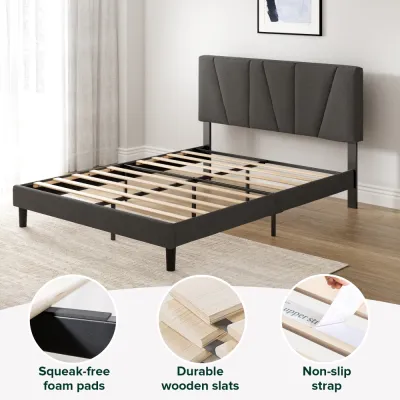
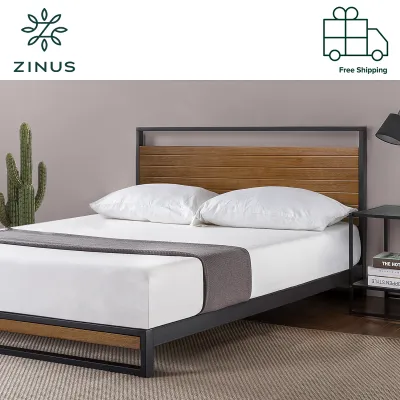
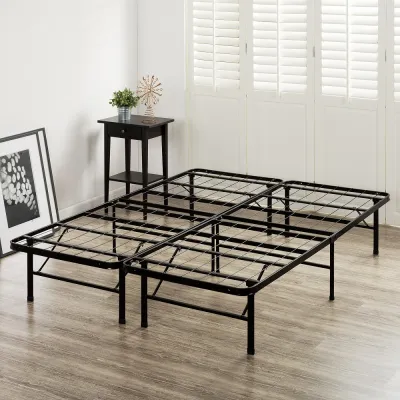
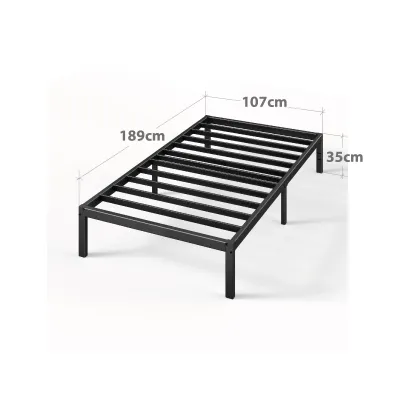
Prices are valid at publication and may change. Please refer to the product page for the latest price.
Entrapment risks represent another critical hazard that parents must address. Gaps between the mattress and the frame, or between the frame and the bedroom wall, can easily trap a child’s limbs, hands, or even their head. These gaps often occur when a mattress is not sized correctly for the frame or when the frame shifts during active play.
Structural integrity is also paramount because children do not use beds solely for sleeping. A child’s bed must withstand the dynamic forces of climbing, sitting on the edges, and occasional jumping. A frame that wobbles or has weak joint connections can quickly become a safety hazard under the active daily movements of growing children.
Evaluating a Zinus Bed Frame for Child Use
Assessing a standard bed frame for a child’s room requires a hands-on inspection of its design, dimensions, and structural components. Rather than relying solely on product descriptions, parents should systematically evaluate how the frame’s physical features align with child safety guidelines.

Guardrails and Edge Protection
Standard adult bed frames rarely feature built-in guardrails, meaning parents must evaluate if the frame’s design can accommodate aftermarket safety rails. Check the height of the frame’s side rails and determine if there is a flat, stable surface where a clamp-on or under-mattress guardrail can be securely attached. Some platform models have flush sides that make it difficult to secure external safety barriers.
If you install an aftermarket guardrail, verify that it fits tightly against the mattress without leaving any dangerous gaps. A loose guardrail can create a hazardous pocket where a child could become wedged. Always check the manufacturer’s manual for both the bed frame and the guardrail to ensure compatibility and to confirm that the installation does not compromise the frame’s structural integrity.
Additionally, examine the corners and edges of the frame. Sharp metal corners or rough wooden edges pose a bruising hazard for active children. If the frame has sharp profiles, consider adding soft corner guards or choosing an upholstered model that provides built-in cushioning against accidental bumps.
Slat Spacing and Mattress Fit
Slat spacing is a critical factor in preventing limb entrapment and ensuring proper mattress support. Measure the distance between the slats on your specific frame model. For children’s safety, slats should be spaced closely enough to prevent a child’s foot or leg from slipping through if they stand on the bed. Generally, spacing of less than 7.5 centimeters is recommended to ensure safety and prevent mattress sagging.
The fit of the mattress within the frame must be exceptionally snug. When placing the mattress onto the frame, check all four sides for any visible gaps. If you can easily slide your hand or arm between the mattress and the frame’s outer lip, the gap is too wide and could trap a child’s foot or leg during the night.
Inspect the material of the slats and the center support structure. Wooden slats should be sturdy and free of large knots or cracks that could split under sudden weight. Metal slats must be welded securely to the outer frame. Ensure the center support legs rest flat on your floor, as any tilting can cause the slats to shift or collapse under dynamic load.
Stability and Weight Capacity
Before allowing your child to use the bed, locate the manufacturer’s stated static and dynamic weight limits for the specific model. While standard frames often support significant static weight, dynamic forces—such as a child jumping or multiple children sitting on the edge—put localized stress on specific joints and slats.
In Singapore, residential flooring often consists of smooth ceramic tiles, polished wood, or vinyl planks. These surfaces can cause a lightweight bed frame to slide easily when a child climbs in or out. Inspect the leg design and install high-quality, non-slip rubber pads on all floor contact points to keep the frame firmly anchored in place.
Evaluate the potential for tip-over hazards, particularly if the frame features a tall, heavy headboard or if your child is prone to climbing. If the bed is positioned away from the wall or if the headboard feels top-heavy, consider anchoring the headboard directly to the wall using appropriate hardware to prevent the frame from tipping backward or shifting during play.
Checking Material Safety and Certifications
Material safety is just as important as physical stability, especially since children spend hours in close contact with their beds. When evaluating a frame, look for clear information regarding volatile organic compound (VOC) emissions, wood treatments, and paint or finish safety. This information is typically found on the product packaging, the manufacturer’s official website, or the product specification sheet.
For upholstered frames or models that include foam padding, look for recognized international certifications such as CertiPUR-US or OEKO-TEX. These certifications indicate that the foam and textiles have been tested for harmful chemicals, heavy metals, and flame retardants. For wooden frames, check if the finishes are water-based or certified non-toxic to ensure they do not off-gas harmful substances into your child’s bedroom.
If you cannot find explicit material safety documentation for a specific model, do not assume it is safe. Contact the manufacturer’s official customer support channel to request safety data sheets or clarification on the finishes used. If the support team cannot provide clear verification of non-toxic materials, it may be safer to choose a different model or a dedicated children’s bed with fully documented certifications.
Safe Assembly and Ongoing Maintenance
A bed frame is only as safe as its assembly. When putting the frame together, follow the manufacturer’s instructions precisely, paying close attention to the specified torque and fastening sequence. Over-tightening screws can strip the threads in metal frames or crack the wood in timber models, while under-tightening leaves joints loose and prone to wobbling.
Establish a regular maintenance schedule to keep the bed structurally sound. The physical movement of a child using the bed will naturally cause screws and bolts to loosen over time. Perform a thorough check and tighten all hardware after the first few weeks of use, and repeat this inspection every few months to ensure the frame remains rigid.
During your regular maintenance checks, run your hands along the frame to inspect for physical wear. For wooden frames, check for emerging splinters, cracks, or peeling finishes that could injure a child. For metal frames, inspect the joints for loose welds, sharp burrs, or signs of rust, which can develop more quickly in Singapore’s humid climate.
When to Choose a Dedicated Kids Bed Instead
While a standard adult frame can be adapted for older children, there are clear developmental stages where a dedicated kids’ bed is the safer choice. For toddlers transitioning from a crib, a standard frame is often too high off the ground, making independent entry and exit difficult and increasing the risk of serious falls.
Dedicated children’s beds are engineered from the ground up with youth safety standards in mind. They typically feature integrated low-profile guardrails, rounded corners, and a very low clearance to the floor, which eliminates the need for aftermarket modifications. These built-in features provide peace of mind that standard frames cannot guarantee without additional accessories.
If you are using a standard frame as a temporary solution, have a clear transition plan. Ensure your child has the physical coordination and spatial awareness to sleep safely without rolling off before removing temporary guardrails. If the frame cannot be modified safely or does not fit your child’s current developmental stage, investing in a dedicated kids’ bed is the most responsible decision.
Frequently Asked Questions (FAQ)
Do standard Zinus bed frames come with built-in guardrails?
Standard Zinus bed frames are designed primarily for adult or general youth use and typically do not include built-in guardrails. Parents planning to use these frames for younger children should check the specific model’s design and purchase compatible, secure aftermarket guardrails if necessary.
What is the safe weight limit for a child jumping on the bed?
Manufacturers specify static weight limits for normal sleeping use, but jumping creates high dynamic impact forces that can exceed these limits and damage the slats or joints. To prevent structural failure and injury, children should be discouraged from jumping on any standard bed frame, and parents should refer to the product manual for specific weight restrictions.
Are metal Zinus frames safer than wooden ones for kids?
Neither material is universally safer; both have distinct characteristics. Metal frames are highly durable and less prone to splintering, but they can have hard edges or joints that require regular tightening. Wooden frames offer a softer aesthetic but must be checked periodically for splinters, cracks, or loose hardware. Parents should choose based on the specific model’s construction quality and safety features.

Community discussion
Share your experience or ask a question. Comments are reviewed before publication.