
Finding the right office chair for a home office in Singapore requires balancing physical comfort, space constraints, and the local tropical climate. While Airflex has gained attention as a popular ergonomic option, comparing it against other established brands in the market involves looking beyond marketing claims. To make an informed decision, you must evaluate how each chair’s physical dimensions, adjustability ranges, material compositions, and warranty terms align with your specific body type and home setup. This guide provides a structured framework to compare Airflex with alternative brands, helping you verify which chair delivers the best long-term value for your workspace.
Key Specifications to Compare Before Buying
Before committing to any office chair, establishing a baseline checklist of physical specifications is essential to avoid delivery and installation issues. Many Singaporean homes, particularly HDB flats and condominiums, have tight entryways, narrow hallways, and compact lift access. You must verify the finished outer dimensions of the chair—including the maximum width of the five-star base and the highest point of the headrest—against your home’s entry points. A chair that cannot clear your doorway or fit comfortably inside your passenger lift will cause immediate delivery complications.
Beyond delivery logistics, the chair’s footprint must match your designated work area. Measure the floor space where the chair will sit, keeping in mind that a chair requires additional clearance when fully reclined or swiveled. Compare the maximum weight capacity and recommended user height ranges provided by Airflex and competing manufacturers. A chair designed for a maximum load of 100 kg may exhibit different stability characteristics near its limit compared to one rated for 150 kg. Ensure the seat height adjustability range allows your feet to rest flat on the floor while keeping your thighs parallel to the ground.
Products mentioned in this guide
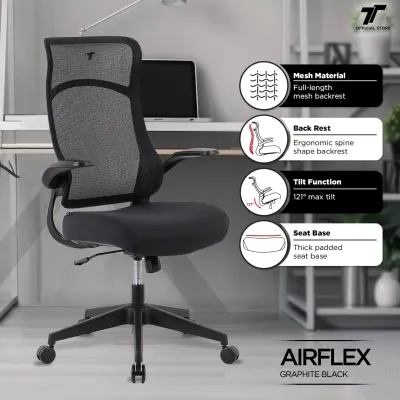
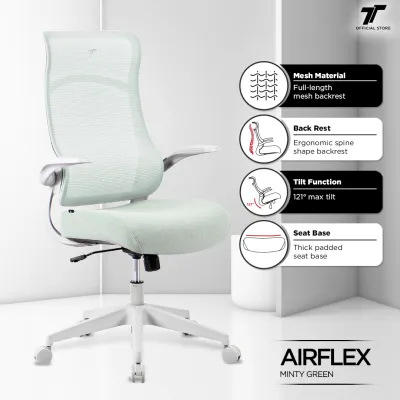
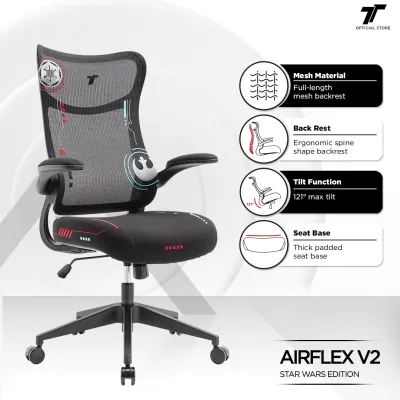
Prices are valid at publication and may change. Please refer to the product page for the latest price.
Seat depth is another critical dimension that varies significantly between brands. If a seat pan is too deep, it can press against the back of your knees, restricting circulation; if it is too shallow, it will not provide adequate thigh support. Look for models that offer an adjustable seat slide mechanism, which allows you to customize the depth. When comparing Airflex to other brands, compile these physical measurements into a direct comparison checklist based on official manufacturer spec sheets before making a purchase.
Assessing Ergonomic Adjustments for Long Work Hours
Ergonomic chairs are designed to support dynamic sitting postures during extended working sessions, but their effectiveness depends entirely on how well the adjustments match your body mechanics. The lumbar support mechanism is the foundation of back comfort. When comparing brands, distinguish between fixed lumbar cushions, passive self-adjusting systems, and manual height-and-depth adjustable supports. A fixed support may not align with the natural curve of your spine if your height falls outside the manufacturer’s average design profile, whereas an adjustable lumbar system allows you to pinpoint the exact support location.

Armrest articulation is another area where brands differentiate themselves, often categorized from 1D to 4D adjustments. Basic 1D armrests only adjust for height, while 4D armrests allow you to modify height, depth, angle, and width. Proper armrest alignment is crucial for reducing strain on your shoulders and neck; your elbows should rest at a 90-degree angle, level with your desk surface. If you frequently transition between typing, reading, and video calls, highly adjustable armrests will help you maintain ergonomic alignment across different tasks.
Recline tension control and locking positions dictate how the chair responds to your movement. Some chairs utilize a weight-activated system that automatically adjusts the recline resistance based on your body weight, while others feature a manual tension knob. Verify whether the chairs you are comparing allow you to lock the backrest at multiple specific angles or if they only offer a free-float mode with tension adjustment. A robust locking mechanism is particularly important if you prefer an upright posture for focused typing and a relaxed recline for reading or virtual meetings.
Material Choices and Suitability for Singapore Homes
The tropical climate of Singapore introduces unique challenges for office chair materials, making breathability and moisture resistance top priorities. Mesh backrests and seats are highly favored for their superior airflow, which helps dissipate body heat and prevent sweat buildup during long hours in non-air-conditioned rooms. However, not all mesh is created equal; you should check the tension and elasticity of the mesh fabric. Low-tension mesh may sag over time, leading to bottoming out against the frame, whereas high-quality elastomeric mesh retains its supportive shape.
If you prefer the plush feel of a cushioned foam seat, pay close attention to the foam density and the outer upholstery material. High-density molded foam offers excellent pressure distribution and longevity, but when wrapped in synthetic leather (PU leather), it can trap heat and humidity, leading to discomfort and eventual peeling of the material. Fabric upholstery offers a middle ground in terms of breathability but is more susceptible to staining and moisture absorption. For Singaporean homes, a mesh backrest paired with either a high-density foam seat or a full mesh seat is generally the most practical configuration for temperature regulation.
The choice of caster wheels and base materials directly impacts your home’s flooring and the chair’s overall stability. Standard hard nylon casters are suitable for carpeted floors but can scratch or gouge local flooring materials like vinyl, laminate, or polished hardwood. If your home office has hard flooring, look for chairs equipped with soft polyurethane (PU) casters, which glide quietly without damaging the surface. Additionally, evaluate the frame and base construction; heavy-duty aluminum or steel bases offer superior resistance to humidity-induced wear compared to basic nylon bases, ensuring long-term structural integrity.
Comparing Warranties, Assembly, and Long-Term Value
Evaluating the post-purchase support and warranty terms of different brands is essential for determining the true cost of ownership. A long warranty period often reflects a manufacturer’s confidence in their product’s durability, but you must read the fine print to understand what is actually covered. Standard warranties typically range from 1 to 12 years, but coverage is often split. For instance, the structural frame and aluminum base might carry a long-term warranty, while moving parts like the gas lift, recline mechanism, armrests, and mesh fabric may only be covered for a fraction of that time.
Pay close attention to warranty exclusions, which commonly include normal wear and tear, fabric fading, and mesh sagging. You should also verify the claim process for each brand available in Singapore. Some companies require you to transport the heavy chair back to their service center or pay for a technician’s transport fee, while others offer on-site inspection and parts replacement as part of their premium service. Understanding these logistical details beforehand can save you significant hassle and unexpected costs if a component fails.
Assembly services and return policies are additional factors that influence convenience and value. Some brands deliver chairs fully assembled, while others ship them flat-packed, requiring self-assembly. If you choose self-assembly, ensure the package includes clear instructions and all necessary tools, and verify the weight of the box to ensure you can handle it safely. Furthermore, check the return policy of the e-commerce platform or official showroom; a flexible return window allows you to test the chair in your actual home environment, which is the only way to truly verify its ergonomic suitability.
Decision Framework: Choosing the Right Chair for Your Setup
To finalize your decision between Airflex and alternative office chair brands, you should apply a structured decision framework based on your verified physical needs, space constraints, and budget. Begin by listing your absolute requirements, such as maximum footprint, required seat height, and necessary armrest adjustments. This initial filtering process will quickly eliminate models that are physically incompatible with your body or your home office layout.
Consider choosing Airflex if its published specifications, adjustability ranges, and weight capacities align precisely with your physical measurements, and if its pricing fits comfortably within your budget. Airflex models often appeal to users seeking a balance of essential ergonomic features without the premium price tag of high-end international brands. However, you should opt for alternative brands if you require highly specialized features—such as dynamic forward-tilt mechanisms, specialized lumbar designs, or premium upholstery options—that are not present in the Airflex lineup.
If you remain uncertain about how a chair will feel after several hours of use, the best course of action is to visit physical showrooms in Singapore. Testing a chair in person allows you to verify the tension of the mesh, the responsiveness of the recline mechanism, and the ease of adjusting the controls. If a showroom visit is not possible, carefully review detailed dimension diagrams and customer feedback regarding long-term durability on local forums and online marketplaces to make a well-informed investment for your home workspace.
Frequently Asked Questions (FAQ)
How do I measure my home office space for a new office chair?
To ensure a new office chair fits your workspace, start by measuring the height of your desk from the floor to the underside of the desktop. Compare this measurement with the chair’s maximum armrest height to ensure the armrests can slide underneath when the chair is not in use. Next, measure the available floor area, taking into account the chair’s maximum base diameter and the extra space required when you recline or swivel. Ensure there is at least 1 meter of clear space behind the desk to allow for easy entry and exit.
What should I look for in an office chair warranty?
When reviewing an office chair warranty, check the specific coverage periods for different components rather than relying on a single headline figure. Ensure that critical moving parts—such as the class 4 gas lift, caster wheels, and tension mechanisms—are covered for a reasonable duration, as these are the components most prone to wear. Additionally, clarify whether the manufacturer covers the cost of replacement parts and labor, and check if you are responsible for transporting the chair to a service center for repairs.
Are mesh office chairs better than foam for tropical climates?
Mesh office chairs generally offer superior performance in tropical climates like Singapore due to their open-weave design, which allows continuous airflow and prevents heat and moisture buildup. This makes them highly comfortable for long working hours, especially in rooms without air conditioning. However, high-density foam seats may be preferred by users who require maximum pressure relief and a plush sitting surface. If you choose foam, ensure it is upholstered in a breathable fabric rather than synthetic leather to minimize heat retention.

Community discussion
Share your experience or ask a question. Comments are reviewed before publication.