
Choosing the right coffee table involves balancing aesthetics, daily durability, and maintenance. In modern homes, particularly compact apartments where maximizing light and space is essential, clear coffee tables are highly popular. Both acrylic and glass offer a sleek, minimalist look that reduces visual clutter, but they perform very differently under the pressures of daily household life.
Neither material is universally superior; the right choice depends entirely on your household dynamics, maintenance preferences, and design goals. Acrylic offers excellent shatter resistance and seamless molding capabilities, making it ideal for active homes and modern aesthetics, but it requires careful cleaning to avoid scratches. Glass provides exceptional scratch resistance and long-term clarity with less specialized care, though it is heavier and carries a shatter risk if not properly tempered. This guide breaks down the practical trade-offs to help you select the material that aligns with your living room’s daily reality.
Visual Appeal and Design Flexibility in Your Living Room
When evaluating clear furniture, the way light interacts with the material significantly influences the overall look of your living room. Standard glass, while transparent, contains iron impurities that typically produce a distinct greenish or bluish tint along the edges. This coloration becomes more pronounced as the thickness of the glass increases, which can clash with certain color palettes. In contrast, high-quality acrylic remains optically clear throughout its entire structure, offering a water-like transparency that does not distort the colors of your rug or surrounding furniture.
Products mentioned in this guide
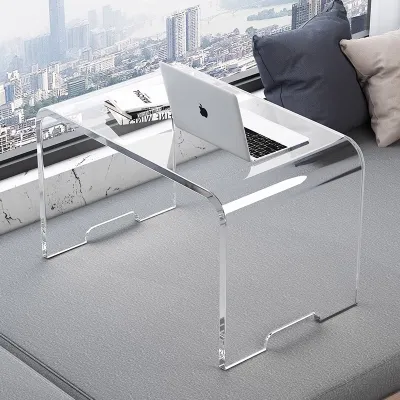
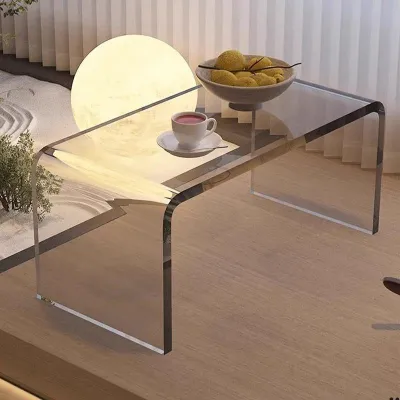
Prices are valid at publication and may change. Please refer to the product page for the latest price.
The manufacturing processes of these two materials also dictate their structural forms. Acrylic is a thermoplastic, which means it can be heated and molded into seamless, curved, or solid block shapes. This flexibility allows for iconic “waterfall” designs, where a single sheet of acrylic curves smoothly to form both the tabletop and the legs without any joints or hardware. Glass, being highly rigid, is typically limited to flat panes. To create a functional coffee table, glass must be paired with a supporting frame or base made of wood, metal, or stone, which introduces additional materials and visual elements into your space.
Both materials excel at creating a “floating” or invisible effect in a room. By allowing the floor and surrounding furniture to remain visible, a clear coffee table prevents the center of the room from feeling crowded. This visual trick is highly effective in compact living spaces, such as apartments in Singapore, where preserving the flow of light and the illusion of open floor space is a primary design objective. While a glass table achieves this with a classic, structured look, an acrylic table offers a more fluid, sculptural aesthetic that can make a small room feel significantly larger.
Furthermore, the way these materials reflect light differs. Glass has a highly reflective, crisp surface that bounces light sharply, creating bright highlights in well-lit rooms. Acrylic has a slightly softer, warmer reflective quality that absorbs and refracts light more gently. Depending on whether your living room relies on bright, direct natural light or soft, ambient artificial lighting, one material may complement your lighting design better than the other.
Durability and Safety for Daily Household Use
Household safety and physical durability are critical factors, especially in homes with active children, pets, or frequent guests. Acrylic is highly flexible and possesses exceptional impact resistance, making it virtually shatterproof. If an object is dropped onto an acrylic table, or if the table is accidentally tipped over, the material may flex or chip, but it will not shatter into dangerous, sharp shards. This makes acrylic an incredibly safe option for high-traffic areas or homes where safety is the primary concern.

Tempered glass is also highly durable and engineered to withstand significant surface impacts. However, it remains vulnerable to sharp impacts along its edges or corners. If tempered glass does break, it is designed to fracture into thousands of small, relatively blunt cubes rather than long, jagged shards. While this safety feature minimizes the risk of severe injury, a shattered glass tabletop still requires immediate cleanup and complete replacement, which can be a significant inconvenience.
The trade-off for acrylic’s impact resistance is its relatively soft surface. Acrylic is highly susceptible to micro-scratches from everyday items like ceramic mugs, keys, laptop bases, or decorative trays. Over time, these fine scratches can accumulate, giving the surface a slightly dull or cloudy appearance under direct light. Glass, on the other hand, has a much higher surface hardness. It easily resists scratches from daily use, allowing you to place items directly on the surface without the constant worry of leaving permanent marks.
To ensure physical safety and structural integrity, always verify the manufacturer’s specifications before purchasing. Look for details regarding weight capacity and material thickness; a thicker tabletop provides better stability and reduces flexing. Additionally, check that the edges of either material are properly finished. Glass tables should feature polished, beveled, or rounded edges to prevent cuts, while acrylic tables should have smooth, flame-polished edges that are comfortable to the touch and free of sharp corners.
Daily Maintenance and Long-Term Care Requirements
Keeping a clear coffee table looking pristine requires a commitment to regular cleaning, as both materials easily show fingerprints, dust, and oil smudges. However, the cleaning protocols for each material are vastly different. Glass is highly resilient and can be cleaned using standard household glass cleaners, ammonia-based sprays, and paper towels. It tolerates vigorous wiping and does not react chemically to common household cleaning agents, making daily maintenance straightforward and convenient.
Acrylic requires a much more specialized cleaning routine to prevent permanent damage. Standard glass cleaners containing ammonia or alcohol must never be used on acrylic, as they can cause a chemical reaction known as “crazing,” which creates a network of fine, microscopic cracks inside the material, permanently clouding it. Paper towels and standard sponges are also too abrasive for acrylic and will leave fine scratches. Instead, you must use a soft, clean microfiber cloth paired with a dedicated acrylic cleaner or a simple solution of mild, diluted dish soap and warm water.
In tropical climates like Singapore, high humidity and static electricity can cause dust to cling more readily to acrylic surfaces than to glass. Acrylic tends to build up a static charge when wiped, attracting airborne dust particles almost immediately after cleaning. Using an anti-static acrylic cleaner can help minimize this effect, keeping the surface clearer for longer periods between cleanings.
Over the long term, environmental exposure can affect how these materials age. Glass is chemically inert and will maintain its clarity indefinitely, regardless of exposure to sunlight or humidity. Acrylic, however, can be sensitive to environmental factors. Lower-quality or non-UV-stabilized acrylic can yellow, become brittle, or lose its clarity when exposed to direct, unfiltered sunlight over several years.
To maintain your table’s appearance, establish a clear care routine based on the manufacturer’s instructions:
- Always verify the care label and avoid using any solvent-based or abrasive cleaners on acrylic.
- Use coasters with soft felt backings under ceramic or metal objects to prevent scratching the surface of either material.
- Keep a dedicated plastic polishing compound on hand for acrylic tables; high-quality polishes can often buff out minor surface scratches and restore the material's original luster.
Weight, Stability, and Space Logistics
The physical weight of your coffee table affects both its daily stability and the ease with which you can manage your living room layout. Acrylic is lightweight, weighing approximately half as much as a glass pane of equivalent size and thickness. This makes acrylic tables exceptionally easy to lift, slide, or reposition when you are vacuuming, hosting guests, or rearranging your furniture. However, this lack of weight means that lightweight acrylic tables can slide easily on smooth floors or shift when bumped by pets or children.
Glass tables are significantly heavier, providing excellent stability. Once placed, a heavy glass table is highly unlikely to slide or tip, making it a sturdy anchor for your living room setup. The downside is that moving a glass table requires more physical effort and care to avoid dropping it or damaging your flooring. When positioning a heavy glass table, it is wise to use felt protectors or rubber bumpers on the base to distribute the weight and prevent scratching delicate flooring materials like polished marble, vinyl, or hardwood.
Before finalizing any purchase, carefully consider the logistics of delivering and installing the table in your home. This is particularly important for large, single-piece molded acrylic tables or fully assembled glass units that cannot be broken down into smaller components. Measure your doorways, corridors, stairwells, and lift dimensions to ensure the piece can be safely transported into your living room. While a lightweight acrylic table is easier to maneuver through tight spaces, its fixed, molded shape cannot be disassembled, whereas some glass tables feature removable tops that make transport more manageable.
Decision Framework: Which Material Fits Your Lifestyle?
To choose the material that best aligns with your home, evaluate your daily habits, household members, and design preferences against the characteristics of each material.
Choose an acrylic coffee table if:
- You have active children or pets and want to eliminate the risk of shattered glass in your living room.
- You prefer a modern, minimalist, or sculptural aesthetic, such as a seamless waterfall design.
- You want a lightweight piece of furniture that is easy to move, rearrange, or clean around.
- You are willing to follow a specialized cleaning routine using microfiber cloths and ammonia-free cleaners.
Choose a glass coffee table if:
- You prioritize high scratch resistance and want a surface that can handle daily wear from keys, mugs, and decor without marking.
- You prefer a classic design where a clear top is paired with a decorative wood, metal, or stone base.
- You want a low-maintenance material that can be cleaned quickly with standard household glass cleaners.
- You prefer a heavy, stable table that stays firmly in place and will not slide on smooth flooring.
Verify first if:
- For acrylic tables, check whether the manufacturer uses cast acrylic rather than extruded acrylic. Cast acrylic is of higher quality, offers superior optical clarity, and is less prone to yellowing or cracking.
- For glass tables, ensure the product specifications explicitly state that the tabletop is made of tempered safety glass, and verify the maximum weight capacity to ensure it can safely support your decorative items.
Frequently Asked Questions (FAQ)
How can I tell if an existing table is acrylic or glass?
If you are inspecting a table and are unsure of its material, you can perform a few simple, non-destructive tests. First, try the temperature test: touch the surface with your palm. Glass is an excellent conductor of heat and will feel noticeably cool to the touch, whereas acrylic acts as an insulator and will feel closer to room temperature.
Next, perform the sound test by gently tapping the surface with your fingernail or a wooden object. Acrylic will produce a dull, plastic thud, while glass will emit a sharp, high-pitched ping. Finally, look closely at the edges of the table; standard glass typically exhibits a distinct greenish or bluish tint, while acrylic remains completely clear and colorless throughout.
Does acrylic furniture inevitably turn yellow over time?
Acrylic furniture does not automatically turn yellow, but its long-term clarity depends heavily on the quality of the material and its exposure to the elements. High-quality, UV-stabilized cast acrylic is specifically formulated to resist the degrading effects of ultraviolet light, allowing it to maintain its water-clear appearance for decades under normal indoor conditions.
In contrast, cheaper, extruded acrylic or pieces that lack UV stabilizers are much more vulnerable to discoloration. To prevent yellowing, check the product specifications for UV-resistance claims, avoid placing acrylic furniture in areas that receive intense, direct sunlight, and keep the table away from active heat sources like radiators or heating vents.

Community discussion
Share your experience or ask a question. Comments are reviewed before publication.