
Choosing between a standard 3-seater leather sofa and a 3-seater leather sofa bed is a decision that shapes the flow, comfort, and utility of your living space. A standard 3-seater leather sofa is designed specifically for dedicated living rooms where daily seating comfort, deep cushioning, and long-term structural durability are the primary goals. In contrast, a 3-seater leather sofa bed serves as a dual-purpose solution, ideal for multi-functional rooms, study areas, or homes that require an extra sleeping surface for occasional overnight guests. Making the right choice requires a careful evaluation of your available room clearance, how frequently you host visitors, and your tolerance for the structural and ergonomic trade-offs that come with convertible furniture mechanisms.
Assessing Your Space and Layout Constraints
Before committing to either option, you must analyze the physical boundaries of your room. A standard 3-seater leather sofa has a fixed footprint, meaning its spatial impact remains constant from the day it is delivered. When planning your layout, measure the total length, depth, and height of the designated wall or zone, leaving sufficient clearance for walkways and adjacent furniture like coffee tables or sideboards.
A leather sofa bed, however, demands a dynamic spatial assessment. While its stationary footprint may resemble that of a standard sofa, its fully extended state requires significant forward and lateral clearance. For instance, a pull-out mechanism requires you to clear the space directly in front of the sofa, often necessitating lightweight or easily movable coffee tables. Click-clack and fold-down designs, on the other hand, require clearance behind the backrest, meaning the sofa cannot sit flush against a wall unless you are willing to pull the entire heavy frame forward every time you convert it into a bed.
Products mentioned in this guide
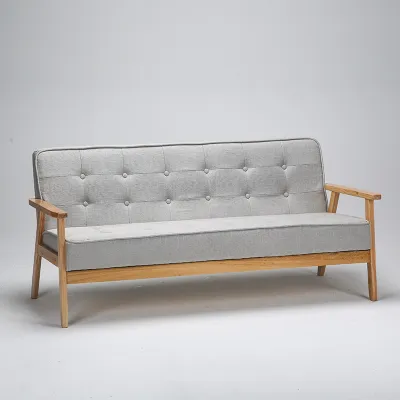
![[Free Assembly] Univonna Javier 3-Seater Sofa | Modern PU Leather Sofa with Cup Holder | 8 Color Choice | Fast & Free Delivery](https://img.lazcdn.com/g/p/e407f295afa5543300c02eeca1e12379.jpg_400x400q80.jpg_.webp)
![[SG Seller] ALANA Cowhide Leather Sofa 3 Seater Colours Available](https://img.lazcdn.com/g/p/fe0e8f47c063c62080bddddff3ff9434.jpg_400x400q80.jpg_.webp)
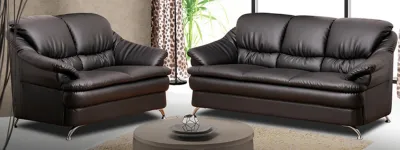
![[SG Seller] Twentyone HALF LEATHER COWHIDE SOFA (1 SEATER /2 SEATER /3 SAETER /4 / 2+L / 3+L SEATER AVAILABLE)](https://img.lazcdn.com/g/p/8b1e99fe2462b95dc28896ac60c293ca.jpg_400x400q80.jpg_.webp)
![[Free Installation] Univonna Edison PU Leather Sofa | Modern Living Room Sofa | 1 2 3 Seater Set | Free Delivery & Multiple Color Choice](https://img.lazcdn.com/g/p/c9573d8019fdaed7d48e85c4c0d84a9c.jpg_400x400q80.jpg_.webp)
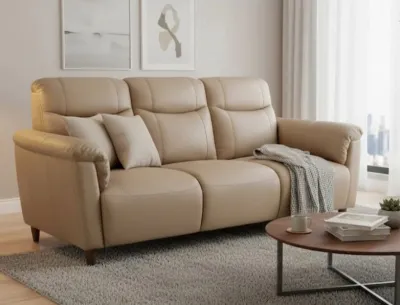
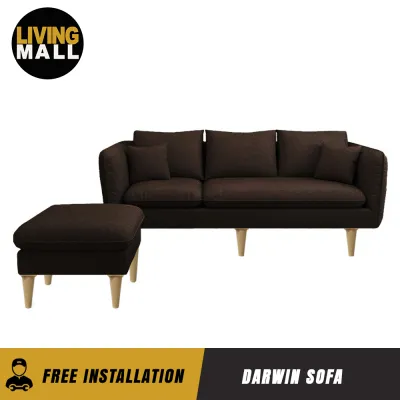
Prices are valid at publication and may change. Please refer to the product page for the latest price.
Beyond the room itself, delivery logistics are a critical factor, particularly in high-density urban environments where apartments often feature tight corridors, low ceilings, and compact passenger lifts. Sofa beds are notoriously heavy and bulky due to their internal metal frames and mattress mechanisms. You must measure the height, width, and diagonal clearance of all doorways, stairwells, and elevator entrances. Confirming these dimensions with the retailer beforehand prevents the costly scenario of a delivery team being unable to maneuver the furniture into your home. While a standard sofa might incur standard delivery fees, a heavy sofa bed might require additional handling surcharges of S$50 or more for walk-up apartments without lift access.
Comparing Daily Comfort and Seating Ergonomics
The internal architecture of a standard sofa is optimized purely for sitting, lounging, and relaxation. Manufacturers can utilize high-density foam, pocket springs, and generous padding to create deep, supportive seats and angled backrests that promote proper lumbar alignment. Because there are no mechanical parts hidden beneath the cushions, the seat height and depth can be engineered to ideal ergonomic standards, allowing you to sink comfortably into the leather during long evenings.

A 3-seater leather sofa bed must compromise on these seating ergonomics to accommodate its dual functionality. To house a folding metal frame and a mattress, the base of a sofa bed is often shallower, firmer, or positioned higher off the ground than a standard sofa. The cushions themselves are frequently thinner or denser to prevent them from bottoming out against the hard internal mechanism.
Furthermore, the backrest of a sofa bed is often set at a more upright angle to facilitate the folding transition, which can reduce lumbar support during prolonged sitting. If your primary use case is daily family lounging, these firmness trade-offs can become noticeable over time. It is essential to test the seating firmness and backrest support in person, keeping in mind that a sofa bed’s primary design priority is to balance two distinct functions rather than optimize solely for one.
Evaluating the Sleeping Function and Mattress Mechanisms
If you decide that a dual-purpose model is necessary, the quality of the sleeping mechanism and mattress becomes your next priority. Sofa beds generally utilize one of three main mechanisms: pull-out, click-clack, or fold-down. A pull-out mechanism features a metal or wooden frame that glides forward from beneath the seat cushions, revealing a folded mattress. This design offers a traditional bed feel but involves more moving parts and physical effort to operate. Click-clack and fold-down mechanisms are simpler, requiring you to push the backrest forward until it clicks, then lay it flat. While easier for a single user to operate, they often use the sofa’s seating cushions as the sleeping surface, resulting in a firmer feel and a central seam.
The thickness and material of the integrated mattress or sleeping panels directly influence sleep quality. Standard pull-out mattresses are typically thin—often between 5 to 10 centimeters—to allow them to fold into the sofa frame. Foam, latex, or pocket-sprung mattresses offer varying levels of support, but none will fully replicate the feel of a dedicated bedroom mattress.
When evaluating these mechanisms, inspect the frame for support bars, hinges, or gaps. In lower-quality models, a metal support bar can sometimes be felt directly through a thin mattress, leading to an uncomfortable night’s sleep. Look for robust frame construction and smooth mechanical transitions that do not require excessive force to open or close.
Maintenance and Longevity of Leather Upholstery
Leather is a premium, durable material, but its longevity is closely tied to how it is treated and maintained. On a standard 3-seater leather sofa, wear and tear are distributed relatively evenly across the seating cushions and armrests. Routine maintenance involves simple dusting, wiping with a damp cloth, and applying a dedicated leather conditioner every few months to keep the material supple and prevent cracking.
For a leather sofa bed, the mechanical movement introduces unique wear patterns. The process of folding, unfolding, and compressing the frame puts localized tension on the leather upholstery, particularly around the hinges, joints, and crease lines. Over time, repeated bending can cause the leather in these high-stress areas to stretch, crease, or dry out faster than the rest of the sofa.
To protect your investment, always refer to the manufacturer’s specific care instructions. It is crucial to apply leather conditioner more frequently to the crease points and mechanical borders to maintain flexibility in the fibers. Additionally, when the sofa bed is converted, use a mattress protector and high-quality bed sheets to prevent sweat, body oils, and friction from damaging the leather surfaces underneath. In tropical climates with high humidity, ensuring adequate ventilation around the sofa bed is also important to prevent moisture from getting trapped within the folded mechanism and upholstery.
Decision Framework: Which 3-Seater Leather Sofa Fits Your Lifestyle?
To finalize your decision, evaluate your living arrangements against this practical framework:
- Choose a standard 3-seater leather sofa if:
- Your living room is the primary hub for daily relaxation, and seating comfort is your absolute priority.
- You rarely or never host overnight guests, or you have a dedicated guest bedroom with a standard bed.
- You prefer deep, plush cushions, optimal lumbar support, and a classic, low-profile aesthetic.
- You want a lighter piece of furniture that is easier to move, clean under, and rearrange.
- Choose a 3-seater leather sofa bed if:
- You live in a compact apartment, studio, or home where maximizing floor space is essential.
- You frequently host overnight guests but lack the space for a dedicated guest room.
- You want to convert a home office or study into a temporary bedroom when needed.
- You are comfortable with a firmer seating profile and are willing to perform regular maintenance on the folding mechanisms and leather creases.
Before making any purchase, verify the exact dimensions of your chosen model. Ensure that the fully extended sofa bed fits comfortably within your room without blocking essential pathways, doors, or electrical outlets. Check the weight of the unit to ensure your flooring can support it, and confirm that your building’s lift and doorways can accommodate the delivery.
Frequently Asked Questions (FAQ)
Does a leather sofa bed require special conditioning compared to a standard sofa?
Yes. The physical impact of repeated bending, stretching, and mechanical tension on leather fibers at the fold lines makes these areas highly susceptible to drying and cracking. While a standard sofa requires general conditioning, a leather sofa bed needs targeted application of manufacturer-approved leather conditioners along the crease lines, hinges, and high-friction zones. Always check the product manual for specific guidelines on approved care products to avoid degrading the finish or structural integrity of the leather.
Can I replace the mattress inside a 3-seater leather sofa bed?
Whether you can replace the mattress depends entirely on the design of your specific model. For traditional pull-out sofa beds that feature a separate, independent mattress resting on a metal or wooden frame, you can often find replacement mattresses of matching dimensions. You must check the product manual or contact the manufacturer to confirm the exact allowable thickness and dimensions, as a mattress that is too thick will prevent the mechanism from folding shut. Conversely, click-clack or fold-down designs that utilize the integrated seating cushions as the sleeping surface do not have a replaceable mattress, meaning the entire unit must be serviced or replaced if the cushioning degrades.

Community discussion
Share your experience or ask a question. Comments are reviewed before publication.