
Selecting a 12cm mattress in Singapore requires a careful balance between space optimization and physical support. Often sought after for space-saving furniture setups—such as bunk beds, pull-out trundles, and convertible sofa beds—a thin-profile mattress must work harder than its thicker counterparts to deliver adequate pressure relief and spinal alignment. Because there is less material to cushion your body, the internal construction, density, and material quality become critical factors in preventing you from bottoming out against the bed base.
When evaluating options in the Singapore market, you will find that reputable mattress brands offer 12cm models in various materials, including high-density polyurethane foam, natural latex, and slim pocket spring systems. The right choice depends entirely on who will be sleeping on the mattress, how often it will be used, and the specific frame it will inhabit. By understanding the mechanical limits of a thin profile and matching it to your specific household setup, you can secure a comfortable, safe, and durable sleeping surface without sacrificing valuable square footage.
When to Choose a 12cm Mattress: Use Cases and Limitations
A 12cm mattress is primarily designed for specialized applications where vertical clearance is limited. In Singapore’s compact apartments, maximizing vertical space is a common strategy, making loft beds and bunk beds highly practical. A thin mattress is essential in these setups to ensure that safety rails remain effective. Similarly, trundle beds—which slide underneath a primary bed frame—require a low-profile mattress to slide in and out smoothly without catching on the upper frame.
Products mentioned in this guide
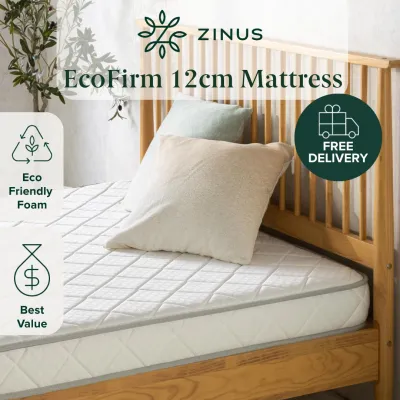
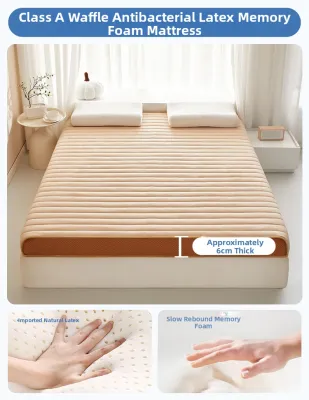
Prices are valid at publication and may change. Please refer to the product page for the latest price.
Despite their spatial advantages, 12cm mattresses have distinct physical limitations. The primary constraint is weight capacity. A standard adult mattress is typically 20cm to 30cm thick, allowing for multiple layers of transition and support foams. In a 12cm profile, these layers are compressed. Consequently, heavier individuals (typically those weighing over 80kg) may find that a 12cm mattress does not provide sufficient depth to absorb their body weight, leading to pressure points on the hips and shoulders as they press through to the solid base below.
For daily use by average-weight or heavier adults, a thicker mattress is generally recommended to maintain proper spinal alignment over several years. However, for toddlers, young children, or occasional guest use, a well-constructed 12cm mattress can offer excellent support. It is also highly suitable for temporary living arrangements or minimalist floor-sleeping setups where portability and ease of storage are prioritized. Understanding these boundaries ensures you do not expect a thin utility mattress to perform like a premium multi-layer luxury mattress.
Matching 12cm Mattress Features to Specific Sleeping Setups
Not all 12cm mattresses are built the same, and a material that excels on a solid platform may fail completely inside a folding sofa bed. To make an informed purchase, you must match the internal engineering of the mattress with the physical demands of your bed frame. This requires looking past marketing claims and examining the technical specifications provided by the manufacturer.

Before committing to a specific brand, always verify the frame compatibility guidelines. Some manufacturers explicitly state whether their thin mattresses are suitable for slatted bases, solid platforms, or adjustable frames. Ignoring these guidelines can void your warranty and lead to premature sagging or structural failure of the mattress core.
Bunk Beds and Loft Beds: Safety and Weight Limits
When equipping a bunk bed or loft bed, safety is the single most important consideration. Singaporean home safety guidelines and international standards emphasize the importance of guardrail clearance on elevated beds. To prevent accidental falls during sleep, the top of the mattress must sit significantly below the upper edge of the guardrail. A 12cm mattress is often the maximum recommended thickness for these setups, as it preserves at least 12.7cm of protective barrier above the sleeping surface.
Beyond height clearances, you must calculate the total weight load on the elevated frame. Every bunk bed has a maximum weight capacity specified by the manufacturer, which includes the weight of the mattress and the sleeper combined. Because solid wood or metal bunk frames have strict structural limits, choosing a lightweight 12cm foam mattress over a heavy pocket-spring alternative can save valuable weight capacity, ensuring the safety of the occupant.
To verify compatibility, check the mattress label and product specifications for certifications regarding bunk bed safety. Look for fire-retardant properties and certifications like CertiPUR-US or OEKO-TEX, which ensure the foam does not emit harmful volatile organic compounds in the enclosed space of a bunk bed. Additionally, ensure the mattress fits snugly within the bunk frame; gaps wider than 3cm between the mattress and the frame sides can pose a dangerous entrapment hazard for young children.
Sofa Beds and Trundle Beds: Flexibility and Folding Mechanisms
Sofa beds and trundle beds subject a mattress to unique mechanical stresses. A mattress used in a bi-fold or tri-fold sofa bed must be flexible enough to bend repeatedly without developing permanent creases, tears, or structural weak points. For these folding mechanisms, high-density polyurethane foam or natural latex mattresses are highly preferred over spring-based models.
Using a mattress with rigid internal springs in a folding sofa bed can damage both the mattress and the metal folding mechanism. The constant bending can warp the steel coils, leading to protruding wires and an uneven sleeping surface. If you must use a spring mattress, it must be specifically certified by the manufacturer as flexible and designed for folding frames. For trundle beds that slide flat beneath another bed, flexibility is less of an issue, but the exact height clearance remains critical.
Before purchasing, measure the internal cavity of your sofa bed or trundle drawer. A trundle drawer may have a clearance of exactly 13cm; choosing a mattress that is advertised as 12cm but expands to 13.5cm due to manufacturing tolerances will prevent the trundle from closing. Always allow a safety margin of at least 1 to 2cm to accommodate fabric bunching, sheets, and minor variations in mattress expansion.
Floor Sleeping and Minimalist Frames: Support and Airflow
Placing a 12cm mattress directly on the floor or on a low-profile minimalist platform presents distinct ergonomic and hygienic challenges. When sleeping close to the floor, the mattress must have a highly supportive, firm base core. Without a thick comfort layer, a soft 12cm mattress will easily bottom out, leaving your hips and shoulders resting against the unyielding floor, which can cause chronic back pain and stiffness.
Hygiene is another critical factor, particularly in Singapore’s hot and humid climate. When a mattress sits directly on the floor, air cannot circulate underneath it. Body heat and sweat penetrate the mattress during the night, creating a warm, damp environment at the base. This is a prime breeding ground for mold, mildew, and dust mites. To mitigate this risk, choose a mattress with an open-cell foam structure or a breathable latex core that promotes airflow.
Furthermore, look for models that feature removable, washable covers. This allows you to easily clean the outer layer, which accumulates dust and dirt more quickly at floor level. If you sleep on the floor, make it a habit to prop the mattress vertically against a wall at least once a week to allow the underside to dry completely. Alternatively, place a breathable tatami mat or a low-profile slatted wooden roll underneath the mattress to create a vital air gap.
How to Evaluate Mattress Brands for Thin Profiles
When shopping for a 12cm mattress in Singapore, you will encounter numerous brands online and in showrooms. Because you cannot always test the long-term durability of a thin mattress in a few minutes, you must evaluate brands based on their transparency and customer policies. Reliable brands provide detailed specifications about what goes inside their mattresses rather than relying on vague marketing terms.
First, look for brands that disclose the density of their foam layers. For a polyurethane foam mattress, a density of at least 28 kg/m³ to 35 kg/m³ is recommended for the support core to ensure it resists sagging over time. If a brand refuses to share density figures, it may be using low-density, cheap foam that will flatten within a few months of use. For latex mattresses, look for indications of whether they use 100% natural latex or a synthetic blend, as natural latex offers superior resilience and breathability.
Second, carefully scrutinize the trial periods and return policies. Many modern mattress-in-a-box brands offer home trials, but these policies often contain hidden clauses. Verify if the trial applies to their 12cm utility models, as some brands restrict trials to their premium, thicker mattresses. Check the exact costs associated with a return: does the brand offer a free pickup, or will you be charged a restocking fee? In Singapore, return fees can range from S$50 to S$150, which can represent a significant portion of a thin mattress’s purchase price.
Finally, assess the brand’s local customer support infrastructure. A brand with a physical showroom or a dedicated local service center in Singapore is generally easier to deal with if you need to make a warranty claim. Check online reviews on independent platforms to see how the brand handles warranty disputes, delivery delays, and customer inquiries. A long warranty period (such as 10 years) is only valuable if the company is responsive and has a clear, straightforward process for evaluating claims.
Pre-Purchase Checklist: Dimensions, Clearances, and Warranties
To avoid the hassle of returning a mattress that does not fit, complete this comprehensive checklist before finalizing your purchase.
- Measure the Inner Frame Dimensions: Do not rely on standard size labels (like Single or Super Single), as dimensions can vary slightly between European, American, and Asian standards used by different furniture brands in Singapore. Use a metal measuring tape to measure the exact inner length and width of your bed frame.
- Account for Manufacturing Tolerances: Mattresses are soft goods, and standard manufacturing tolerances allow for a variance of up to 2cm in length, width, and thickness. Ensure your frame has a small buffer to accommodate these potential variations.
- Check Critical Clearances:
– For bunk beds: Measure from the top of the mattress surface to the top of the guardrail. Ensure this distance is at least 12.7cm.
– For trundles: Measure the vertical clearance of the trundle cavity when closed. Subtract 2cm from this measurement to find your maximum mattress thickness, allowing room for bedsheets and blankets.
– For sofa beds: Verify the maximum thickness the folding mechanism can accept without straining the hinges. - Review the Warranty Terms:
– Identify the sagging threshold: Most warranties only cover visible indentations that exceed a specific depth (e.g., 2.5cm or 4cm). For a 12cm mattress, a 4cm sag represents a massive loss of support, so look for brands with a lower sagging threshold (such as 1.5cm to 2cm).
– Check the base requirements: Ensure your intended bed base (e.g., slat spacing wider than 8cm) does not void the warranty.
– Understand the stain clause: Almost all mattress warranties are voided if the mattress has stains. Protect your investment by purchasing a high-quality, waterproof mattress protector alongside your new mattress.
Frequently Asked Questions (FAQ)
Can a 12cm mattress provide enough support for adults?
Yes, a 12cm mattress can provide adequate support for adults, but its performance depends heavily on the density and quality of the materials used. Support is not determined by thickness alone; rather, it is a function of how effectively the mattress core resists compression. A high-density foam or natural latex core can keep an adult’s spine aligned by preventing the heavier parts of the body, such as the pelvis, from sinking too deep.
However, there are physical limits to what a thin profile can achieve. For daily use, adults weighing over 80kg may find that a 12cm mattress bottoms out under their pressure points, leading to discomfort. For heavier individuals, a 12cm mattress is best reserved for short-term guest use, while a thicker profile (15cm to 20cm) is recommended for long-term, daily sleep.
Do I need a special bed frame for a 12cm mattress?
You do not necessarily need a specialized bed frame, but you must ensure your existing frame provides flat, rigid, and continuous support. Because a 12cm mattress is thin, it is highly sensitive to the surface beneath it. If you place it on a slatted frame with wide gaps (greater than 5cm to 7cm), the mattress will sag into the gaps under your body weight, causing an uneven sleeping surface and damaging the mattress structure.
To optimize support, use a solid platform base or add a bunkie board (a slim, supportive wooden barrier) over a slatted frame. This distributes your weight evenly across the entire surface. If you are using the mattress on a bunk bed or trundle, ensure the frame’s support slats are tightly spaced and securely fastened to prevent the thin mattress from slipping or shifting during use.

Community discussion
Share your experience or ask a question. Comments are reviewed before publication.