
To find the ideal YHL wardrobe size and configuration for a Singapore HDB bedroom, you must match the wardrobe’s physical footprint directly to your room’s layout constraints while leaving a minimum of 50 to 60 cm of clearance for walkways. For compact HDB common rooms, a 2-door sliding wardrobe (typically 1.2 to 1.5 metres wide) maximizes floor space. For larger master bedrooms, modular 3-door or 4-door configurations (1.8 to 2.4 metres wide) with sliding or hinged doors offer optimal storage, provided they do not block en-suite bathroom doors, air-conditioning trunking, or window light.
Understanding Your HDB Bedroom Space Before Choosing a Wardrobe
Common rooms in modern HDB flats are compact, often measuring around 9 to 10 square metres. This tight footprint leaves very little margin for error when placing a queen-sized bed alongside a standard wardrobe. Master bedrooms, while more generous at approximately 12 to 14 square metres, must still accommodate additional features like en-suite bathroom entryways and larger bed frames, requiring a strategic layout approach.
Do not rely on the floor plan’s general square footage when shopping for a YHL wardrobe. You must measure the exact wall length, floor-to-ceiling height, and depth of the designated wardrobe nook. HDB walls are rarely perfectly straight, so take measurements at three different points—bottom, middle, and top of the wall—to identify any slants or structural variations.
Products mentioned in this guide
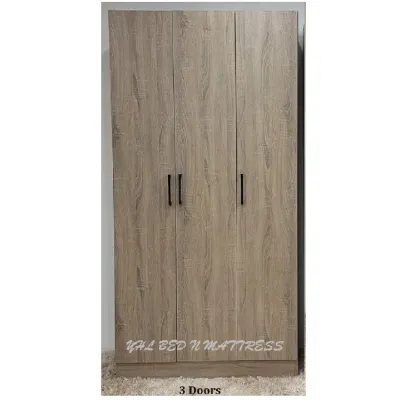
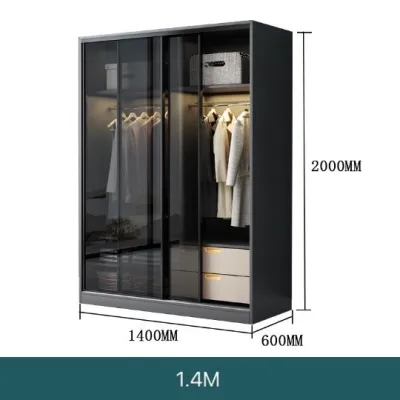
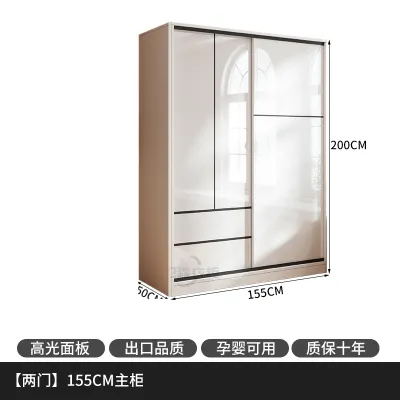
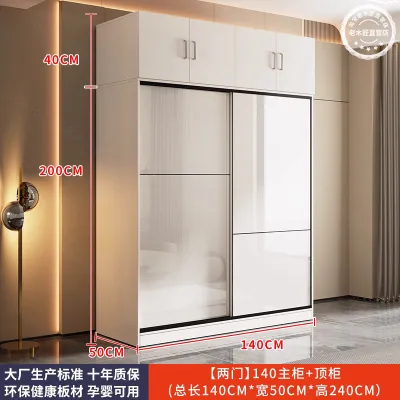
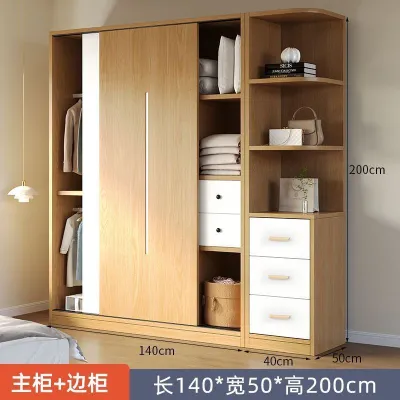

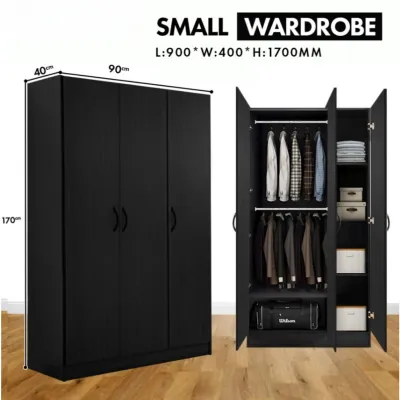
Prices are valid at publication and may change. Please refer to the product page for the latest price.
Take note of the bedroom door swing path. A wardrobe placed too close to the entrance can restrict how far the room door opens. Walking paths to the bed, windows, and study desks must remain unobstructed, ideally keeping a clear passage of at least 60 cm. Additionally, look upward to check for false ceilings, decorative cornices, or beams that lower the effective ceiling height in specific areas of the room.
Physical measurements are a mandatory first step before you browse any product catalog. Knowing your exact limits prevents the frustration of falling in love with a model that physically cannot fit or be assembled in your home.
Matching YHL Wardrobe Dimensions and Door Types to Your Room
YHL offers wardrobes in several standard widths, usually categorized by the number of doors or modular segments. These typically range from compact 2-door units (around 1.2 metres or 4 feet) to expansive 3-door and 4-door systems (ranging from 1.5 to over 2.4 metres). Evaluating these dimensions against your measured wall space determines whether you can opt for a pre-assembled standalone unit or if you need to piece together modular sections.

The choice between hinged and sliding doors is one of the most critical spatial decisions you will make. Hinged doors require a clear swing zone in front of the wardrobe, usually needing an extra 45 to 60 cm of open space to open fully. This makes them less suitable for narrow walkways. Sliding doors, on the other hand, operate entirely within the wardrobe’s frame, making them the superior choice for tight layouts where the bed sits close to the wardrobe.
Always leave a small buffer space of at least 5 to 10 cm on either side of the wardrobe. This gap is essential for visual balance, allows room for light switches or wall sockets, and accommodates minor measurement discrepancies. Shoving a wardrobe tightly into a corner without a buffer can block access to adjacent power outlets or make it difficult to open doors near side walls.
Space-Saving Configurations for HDB Common Rooms
For HDB common rooms, the priority is minimizing the wardrobe’s physical footprint while maximizing vertical storage. A 2-door sliding wardrobe with a width of 1.2 to 1.5 metres is generally the most practical configuration. Because sliding doors do not project outward, you can place the bed closer to the wardrobe without restricting access to your clothes.
To compensate for the narrower width, focus on utilizing vertical space. Opting for taller wardrobe models (such as those reaching 2.1 to 2.4 metres in height) allows you to store seasonal items, bedding, or luggage on the topmost shelves, freeing up lower, easily accessible areas for daily wear.
Before finalizing your choice, verify the exact external depth of the chosen model. Standard wardrobe depths range from 55 to 65 cm. In a compact common room, even a 5 cm difference can determine whether you have a comfortable walking path around the bed or a cramped bottleneck that makes moving around the room difficult.
Maximizing Storage in HDB Master Bedrooms
HDB master bedrooms offer the luxury of wider configurations, making 3-door or 4-door wardrobes highly viable. These larger units (typically 1.8 to 2.4 metres wide) allow you to divide storage space logically between partners. When planning the layout, balance the wardrobe’s footprint with your bed placement, ensuring there is enough clearance for bedside tables and drawers.
If your master bedroom layout allows for a wide clearance between the bed and the wardrobe, hinged doors can be an excellent choice. Hinged doors allow you to open the entire wardrobe simultaneously, providing a complete, unobstructed view of your clothing collection. This is a distinct advantage over sliding doors, where one half of the wardrobe is always hidden behind the other.
Be mindful of the wardrobe’s position relative to natural light and room access. Avoid placing a tall wardrobe where it blocks natural light from the windows or casts deep shadows across the room. More importantly, ensure the wardrobe does not interfere with the walkway leading to the en-suite bathroom, as this path experiences high foot traffic throughout the day.
Optimizing Internal Configurations for Everyday Use
Maximizing your wardrobe’s utility is not just about its external size; it depends heavily on how the interior is organized. Standard internal setups often feature a mix of hanging rails and shelves. If your wardrobe consists mostly of shirts, blouses, and folded trousers, a double hanging rail configuration is highly efficient. This setup stacks two rails vertically, doubling your hanging capacity for shorter garments. For long dresses, coats, or traditional wear, dedicate a section to a single hanging rail with a high clearance, leaving the space below for low storage boxes.
Drawers play a significant role in organizing smaller items like undergarments, socks, and accessories. You must choose between integrated internal drawers and external drawer units. Internal drawers keep the exterior of the wardrobe looking sleek and uniform, but they do consume valuable lower hanging space. External drawers offer quick access without opening the main wardrobe doors, which can save time during busy mornings, though they require clear space in front of the wardrobe to pull out fully.
Adjustable shelving and modular add-ons provide the flexibility needed to adapt to changing storage requirements. Over time, your wardrobe needs may shift from daily office attire to bulky winter wear for travel, or you may need space to tuck away hand luggage. Adjustable shelves allow you to reconfigure the interior height easily, ensuring you do not waste vertical space on half-empty shelves.
When browsing catalog options, carefully review the specific internal module options, shelf depths, and hanging rail heights. Match these specifications directly against your personal wardrobe inventory. For example, if you have a large collection of long coats, ensure the single-rail section has sufficient height to prevent your garments from bunching at the bottom.
Finally, always check the internal depth of the wardrobe. While the external depth might be 60 cm, the usable internal depth is often several centimetres less due to the door tracks and back panel. Ensure the internal depth is at least 50 to 55 cm so that standard clothes hangers can hang straight. If the internal space is too shallow, your clothes will sit at an angle, causing them to rub against the doors or get caught in sliding door tracks.
Critical Pre-Purchase Checks to Avoid Sizing Mistakes
Even with careful planning, small structural details in HDB flats can disrupt your wardrobe installation. Skirting boards along the base of the wall can prevent a wardrobe from sitting completely flush against the wall, creating a gap at the back or altering the overall depth calculation. Similarly, ceiling cornices, decorative plasterwork, and air-conditioning trunking running along the top of the walls can obstruct tall wardrobes. Always check for the placement of power sockets, light switches, and telephone jacks; covering these up can limit your room’s functionality.
The door swing conflict is another common oversight. Ensure that when the wardrobe doors are fully open, they do not collide with the main bedroom door, the bed frame, bedside tables, or low-hanging ceiling fans. A ceiling fan’s blades must have safe clearance from the top of the wardrobe door to prevent dangerous contact when the fan is running.
To ensure a seamless purchase and installation process, use this final pre-purchase checklist:
- External Dimensions: Verify the exact external height, width, and depth, making sure to account for any protruding handles, hinges, or decorative top caps.
- Delivery Access: Check the dimensions of your HDB estate's lift, staircase landings, and corridor widths. Large wardrobe panels must be transported easily from the loading bay to your unit without getting stuck.
- Assembly Clearance: Confirm the manufacturer's required clearance for assembly. Many tall wardrobes are assembled flat on the floor and then tilted upright. This process requires a certain amount of ceiling clearance (often 5 to 10 cm more than the wardrobe's actual height) to stand the unit up successfully.
If your room measurements are borderline or if your HDB flat features unusual structural pillars or slanted walls, do not guess. It is highly recommended to consult official specifications or contact customer service. Providing them with your exact room dimensions and photos of the space can help verify whether your chosen wardrobe configuration will install safely and function perfectly in your home.
Community discussion
Share your experience or ask a question. Comments are reviewed before publication.