
Setting up a productive home office or a dedicated learning environment often begins with a fundamental question: should you buy a work table or a study desk? While these terms are frequently used interchangeably, they represent distinct design philosophies tailored to different workflows, spatial constraints, and ergonomic needs. Selecting the wrong option can lead to a cluttered surface, restricted legroom, or a workspace that simply does not fit your daily routine. The primary difference lies in their design intent: a work table prioritizes a spacious, unobstructed, and highly versatile flat surface suitable for diverse hands-on projects or multi-monitor setups, whereas a study desk is a focused, task-oriented piece of furniture featuring integrated storage, compact dimensions, and dedicated features tailored for reading, writing, or single-computer tasks. By analyzing how these structural variations impact your daily comfort and productivity, you can make an informed investment that enhances both your room’s layout and your personal efficiency.
What are the core functional differences between a work table and a study desk?
The core functional difference lies in their structural purpose: a work table is designed as an open, adaptable platform for varied physical or digital tasks, while a study desk is engineered as a dedicated workstation with built-in organization to support focused cognitive work.
A work table is fundamentally a minimalist, high-utility surface. Its design philosophy centers on providing maximum, uninterrupted horizontal space. Because it lacks built-in overhead shelves or fixed drawer units, it offers a clean slate that can adapt to changing needs. On any given day, a work table might host a dual-monitor computer setup, serve as a cutting station for fabric, or act as a collaborative surface where two people can work side-by-side. The absence of restrictive under-desk cabinetry means you can move freely along its perimeter, making it highly suitable for dynamic tasks that require standing, stretching, or shifting positions.
Products mentioned in this guide
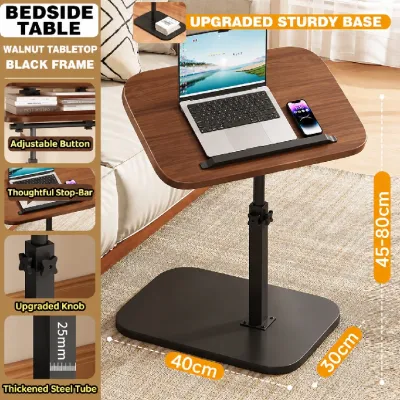
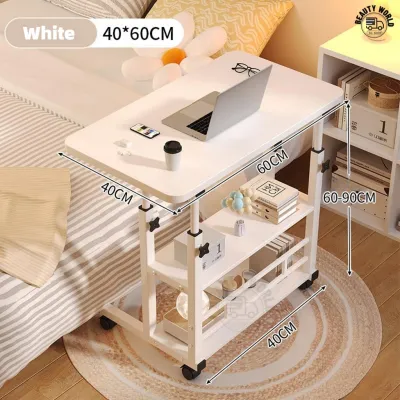
3 Lazada user ratings
Although the table is small but i like the colour and it is put a lot of things below the table will not stand up a lot of space. It is wort…Read full reviewShow less
Although the table is small but i like the colour and it is put a lot of things below the table will not stand up a lot of space. It is worth it.
Easy to assemble. Good quality. Delivery was fast. Delivered the next day.
very fast delivery
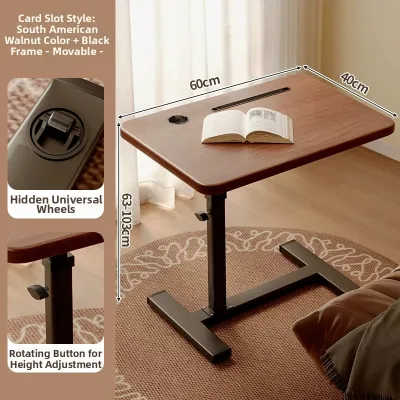
116 Lazada user ratings
The table is amazing, super easy to set up, and has no weird smell. I just wiped it once and it was ready to use. It took me about 20 minute…Read full reviewShow less
The table is amazing, super easy to set up, and has no weird smell. I just wiped it once and it was ready to use. It took me about 20 minutes to assemble it. The tabletop is really flexible; you can put it on either side of the bed by just flipping this panel around. Now with this table, I barely want to get out of bed. I even eat my fruit on it. 😍😗
I got it set up today, and I'm really happy with this multifunctional desk. It meets all my various needs. Setting it up is quite simple, bu…Read full reviewShow less
I got it set up today, and I'm really happy with this multifunctional desk. It meets all my various needs. Setting it up is quite simple, but you need patience and attention to detail.
It's really convenient and practical, just a bit wobbly for doing homework, but other than that, it's great!
Sturdy and stable: pretty good, Appearance and material: decent, Overall feel: great, Craftsmanship: good
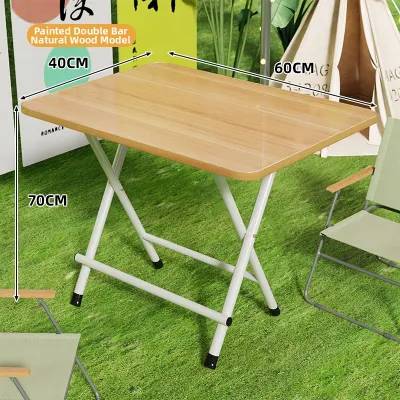
265 Lazada user ratings
This foldable table is incredibly practical! The natural wood color has a clear texture and a warm feel, with rounded edges that prevent bum…Read full reviewShow less
This foldable table is incredibly practical! The natural wood color has a clear texture and a warm feel, with rounded edges that prevent bumps—such thoughtful details. The metal frame is sturdy and stable, easily supporting a computer, books, or utensils without any issue. The folding design is super convenient; it’s easy to store when not in use, making it perfect for renters or small homes. Setup is a breeze—just open it up and it's ready to go, making it very versatile. The tabletop size is just right for one person to work or eat comfortably, and the height is ergonomic, so sitting for long periods isn’t tiring. It’s a great value with solid craftsmanship, no odor, and it looks good while being practical. Whether you need it for temporary work, a simple dining table, or a study desk, it can do it all. I highly recommend it for anyone needing flexible space!
It's a good product overall with a nice color scheme. It is lightweight, stable without any wobbling, and offers great value.
The quality is great, the color looks even better in person, and the table is quite stable.
The quality is definitely a plus.
If you want to buy it, go ahead!
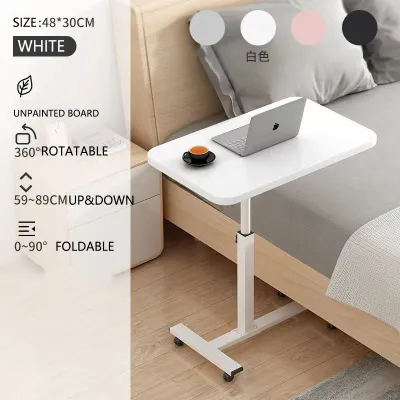
126 Lazada user ratings
1) Ordered black top and came white top 2) Instructions in foreign language where I used the Google translate then 3) Easy to assemble 4) Th…Read full reviewShow less
1) Ordered black top and came white top 2) Instructions in foreign language where I used the Google translate then 3) Easy to assemble 4) The finishing quite rough, see last two pictures
Instruction manual not very clear but managed to figure it out. A bit wobbly. There’s a little flaw on the table top. Delivery was quick in …Read full reviewShow less
Instruction manual not very clear but managed to figure it out. A bit wobbly. There’s a little flaw on the table top. Delivery was quick in 2 days. At this price point, cannot complain.
I like the size - just what I needed 🎨Design:Rounded corners - safer for kids 🛠️Durability:not shaky - should last. 📦Storage Space:I folded i…Read full reviewShow less
I like the size - just what I needed 🎨Design:Rounded corners - safer for kids 🛠️Durability:not shaky - should last. 📦Storage Space:I folded it when not in use - save space
This item is suitable for side table for work desk and also convenience at pc work at bed side. The angle is adjustable. Adjustable height f…Read full reviewShow less
This item is suitable for side table for work desk and also convenience at pc work at bed side. The angle is adjustable. Adjustable height for comfort, Thats perfect.
wheels are not very smooth to move around even without weight on top. good packaging and fast delivery. Cannot tightened the knob tightly
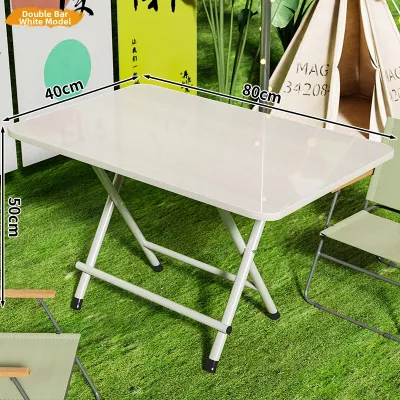
24 Lazada user ratings
No unpleasant smell. The table is very stable when holding things. It's quite good, feels solid, and works well.
The quality is excellent. The customer service is absolutely wonderful and they resolved my issue immediately.
The table has a modern style and is quite stable. It has a good weight to it and I really like it.
This table is perfect for a small apartment; it doesn't take up much space and is very practical.
The table is very stable under weight and doesn't wobble even when loaded with pots and pans.
Prices are valid at publication and may change. Please refer to the product page for the latest price.
In contrast, a study desk is a highly structured, self-contained unit designed for individual, stationary tasks. Historically built to facilitate reading and writing, the modern study desk is optimized for a single user working with a laptop, textbooks, or stationery. Its design actively incorporates vertical or under-desk storage, such as a pedestal of drawers, a pull-out keyboard tray, or an attached hutch with shelving. This configuration keeps essential materials within arm’s reach, minimizing the need to get up and disrupt your concentration. The study desk acts as an organizational hub, encouraging a disciplined, focused environment where everything has a designated home.
These differing design intents directly influence user behavior. A work table encourages a flexible, expansive workflow where you can spread out physical documents, reference books, and digital devices simultaneously. A study desk, however, promotes a neat, compartmentalized approach to work. It forces the user to curate their immediate workspace, keeping only active materials on the surface while filing away reference items in the integrated drawers.
How do surface dimensions and space requirements dictate your choice?
Surface dimensions and room space dictate your choice by determining whether you need a deep, expansive surface to spread out physical items or a compact footprint that fits neatly into a small room. Work tables generally offer greater depth and width to accommodate large-scale tasks, whereas study desks are scaled down to fit standard residential rooms without disrupting traffic flow.

When evaluating dimensions, depth is often the most critical yet overlooked factor. Work tables typically feature a generous depth of 70 cm to 80 cm, combined with widths from 120 cm to 180 cm. This deep profile is essential for digital professionals using large monitors, as it allows for an ergonomic viewing distance of 50 cm to 75 cm between the eyes and the screen, while leaving ample room for a keyboard and physical documents. The expansive width also ensures that peripheral equipment, such as external hard drives or drawing tablets, can sit on the surface without causing physical crowding.
Study desks, on the other hand, are engineered with space-saving efficiency in mind. They generally feature a shallower depth of 50 cm to 60 cm and a modest width of 90 cm to 120 cm. This compact footprint makes them exceptionally well-suited for smaller bedrooms, study nooks, or tight corners. While a shallow desk is perfectly adequate for a slim laptop or a single textbook, it can feel restrictive if you attempt to set up multiple monitors or large-format drafting papers.
Beyond the furniture itself, you must account for the physical space required to use it comfortably. A standard office chair requires a minimum clearance of 80 cm behind the edge of the table or desk to allow the user to push back, stand up, and sit down without striking walls or adjacent furniture. Before making a purchase, always measure your designated floor space, taking into account baseboards, radiator placement, and door swings. Additionally, verify that the delivery path—including stairwells, lift doors, and entryways—can accommodate the dimensions of the packaged flat-pack or pre-assembled frame.
Which storage and ergonomic features matter most for your daily tasks?
The storage and ergonomic features that matter most depend on whether your workflow relies on physical filing and quick access to stationery, or long hours of screen-based work requiring posture support. Study desks excel in built-in organization like drawers and hutches, while work tables offer the clean slate needed for custom ergonomic accessories and complex cable routing.
Storage configuration is a major dividing line between these two furniture types. Study desks are famous for their integrated storage solutions, which often include a stack of drawers on one side, a shallow center drawer, or an overhead hutch. While this built-in organization is incredibly convenient for handling physical paperwork, it introduces ergonomic trade-offs. Fixed under-desk drawers restrict your legroom, preventing you from shifting your legs or sliding your chair completely under the desk when not in use. This can lead to awkward seating angles and physical discomfort during long working sessions.
Work tables bypass this issue by keeping the under-desk area entirely open and unobstructed. This spacious cavity provides maximum legroom, allowing you to stretch your legs, cross your knees, or use ergonomic footrests comfortably. If you require storage, a work table allows you to add modular, mobile pedestal drawers that can be rolled away or positioned exactly where you want them. Furthermore, the clean, uniform edges of a work table’s top make it highly compatible with aftermarket ergonomic accessories. You can easily clamp on dual-monitor arms, adjustable keyboard trays, or desk-mounted task lights without worrying about decorative trim blocking the clamps.
Cable management is another critical consideration for modern, tech-heavy setups. Because work tables are open, they often require deliberate cable organization to prevent a messy tangle of cords from hanging beneath the surface. Many high-quality work tables address this by incorporating under-desk cable trays, wire baskets, or magnetic cord organizers. Study desks, conversely, often feature built-in grommets—plastic-lined holes in the desktop—that allow you to route computer and lamp cables directly down to a power strip hidden in a lower compartment.
How do material finishes and frame stability differ between the two?
Material finishes and frame stability differ based on the expected physical demands of each setup, with work tables requiring heavy-duty frames and scratch-resistant surfaces, and study desks focusing on smooth, tactile finishes suitable for writing. Verifying these construction details ensures your furniture can support your equipment without wobbling or wearing out prematurely.
The durability and tactile feel of your workspace depend heavily on its material composition and finish. Work tables are built to withstand diverse, sometimes rigorous activities. Consequently, their tops are frequently finished with high-pressure laminate (HPL), melamine, or thick, treated solid wood. These materials are highly resistant to scratches, impact, heat, and moisture, making them ideal if you frequently move heavy equipment, use crafting tools, or enjoy a cup of coffee at your desk. The underlying frames of work tables are typically constructed from heavy-gauge steel or solid timber trestles, providing exceptional lateral stability. This robust construction minimizes wobble, which is crucial when typing vigorously, drawing, or supporting heavy desktop computer towers.
Study desks, designed primarily for lighter cognitive tasks, often prioritize aesthetic warmth and a smooth writing surface. They are commonly crafted from engineered wood, such as medium-density fibreboard (MDF) or particleboard, finished with wood veneers or smooth lacquers. While these finishes provide an elegant look that blends seamlessly with residential bedroom decor, they require gentler care. Lacquered surfaces can scratch easily under heavy metal objects, and untreated veneers are susceptible to water damage if condensation from a cold drink seeps into the wood.
To ensure long-term satisfaction, always check the manufacturer’s weight capacity labels before purchasing. A standard study desk may support around 30 kg to 50 kg of evenly distributed weight, which is more than enough for books and a laptop. However, if you plan to mount multiple heavy monitors on a single clamp or store heavy reference manuals, a heavy-duty work table with a steel frame and a load capacity of 80 kg or more is highly recommended to prevent the desktop from bowing or sagging over time.
Which setup should you choose based on your specific workspace needs?
You should choose a work table if you require a spacious, flexible surface for multi-monitor setups, hands-on projects, or shared family activities, whereas a study desk is the ideal choice for dedicated, single-user tasks in compact spaces where built-in storage is essential. Making this choice requires balancing your daily activities, available room dimensions, and organizational habits.
To finalize your decision, it helps to map your daily routine against the specific strengths of each furniture type. A work table is the clear winner for professionals, creatives, and families who need a highly adaptable hub. If your daily work involves toggling between multiple screens, sketching on a large tablet, or assembling physical prototypes, the expansive, unobstructed surface of a work table is indispensable. It is also the superior choice if you plan to share the workspace with a partner or child, as its open design allows two chairs to sit side-by-side comfortably. Furthermore, if you already have ample storage in your room, such as bookshelves or filing cabinets, you do not need the built-in drawers of a study desk and can fully enjoy the superior legroom of a work table.
Conversely, a study desk is the ideal match for students, casual writers, and individuals with limited floor space. If your primary goal is to establish a quiet, dedicated corner for reading, writing, or attending online lectures, a study desk provides a cozy, focused environment. Its built-in drawers and shelves are incredibly valuable in compact rooms where adding separate storage units is not physically or financially practical. By keeping your pens, notebooks, and reference materials neatly tucked away in integrated compartments, a study desk helps maintain visual order in a bedroom or living area, preventing work-related clutter from spilling over into your personal relaxation space.
Ultimately, the choice comes down to a balance of space, storage, and flexibility. Before purchasing, ask yourself: Do I need built-in storage, or do I prefer maximum legroom? Will I use multiple monitors and heavy accessories, or just a single laptop? By measuring your room carefully, checking the weight capacities, and matching the furniture’s design to your specific daily tasks, you can confidently select the perfect setup to support your productivity for years to come.

Community discussion
Share your experience or ask a question. Comments are reviewed before publication.