
Selecting a dining chair with arm requires balancing daily habits, aesthetic goals, and maintenance tolerances. The decision fundamentally rests on a clear trade-off: the immediate, stress-free wipe-down convenience of solid wood versus the plush, supportive comfort of upholstered seating. In Singapore’s unique living environments—where open-concept kitchens frequently share space with dining areas and tropical humidity is a constant factor—this choice directly impacts daily comfort.
Choose Wood If:
- Your household includes young children or pets where frequent spills, sticky hands, and stray hairs are a daily reality.
- Your dining table sits in close proximity to an open kitchen, exposing furniture to airborne cooking grease.
- You prefer a minimalist cleaning routine that requires nothing more than a damp cloth to restore a pristine surface.
- You appreciate the natural, warm aesthetic of exposed wood grains and want furniture that can be easily refinished over decades.
Choose Upholstered If:
Products mentioned in this guide
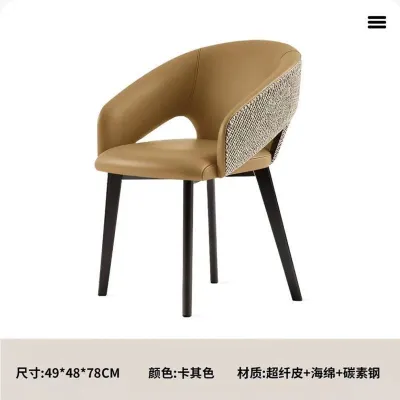
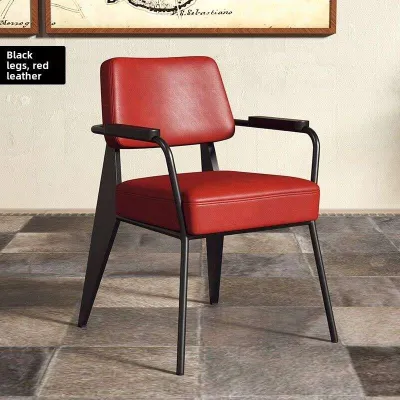
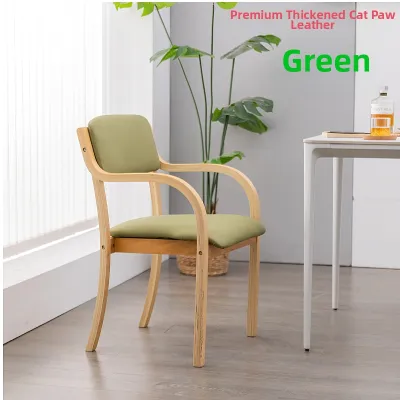
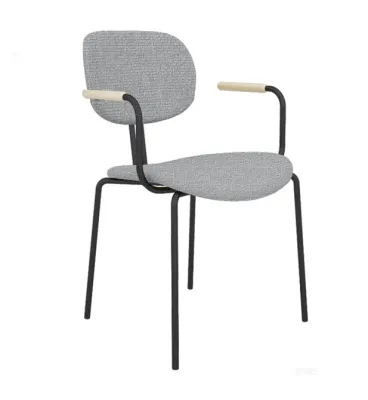
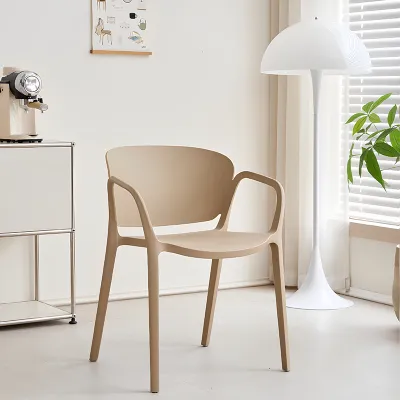
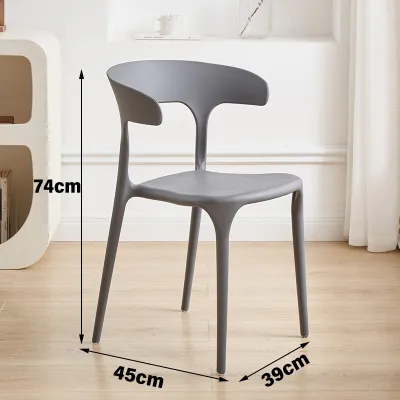
Prices are valid at publication and may change. Please refer to the product page for the latest price.
- Your dining table serves multiple purposes, such as a secondary workspace for remote work or a study area.
- You regularly host multi-course dinner parties or family gatherings where guests remain seated long after the meal has ended.
- You want to introduce soft textures, patterns, or colors to balance hard surfaces like tiled floors or glass windows.
- Your home is fully air-conditioned, mitigating the potential for heat retention in padded fabrics.
Verify First If:
- You have a compact dining area. Arm chairs require a larger physical and visual footprint. Before purchasing, you must verify that the chair's armrests will clear the lower edge of your dining table's apron, allowing them to slide underneath when not in use.
Comfort and Support: Sitting Through Long Meals and Work Sessions
The physical experience of sitting in a dining chair with arm for hours is dictated by ergonomics, material compliance, and thermal comfort. Upholstered chairs are widely celebrated for their superior pressure distribution. When you sit on a padded seat, the underlying foam compresses to conform to your body’s shape. This compression distributes your body weight across a larger surface area, significantly reducing pressure on the ischial tuberosities (the sit bones). High-quality upholstered chairs utilize high-resiliency (HR) polyurethane foam or pocket springs, which provide a supportive bounce-back feel rather than sinking completely to the hard frame below. This level of cushioning is highly advantageous during extended dinner parties or long laptop sessions.
Solid wood chairs, by contrast, rely entirely on precise physical contouring to achieve comfort. A flat, uncarved wooden seat forces your body weight onto concentrated pressure points, leading to discomfort and restlessness within a short period. To counter this, premium wooden dining chairs feature a carved saddle seat. This anatomical contouring cradles the pelvis and slopes gently downward toward the thighs, mimicking the body’s natural curvature to distribute weight more evenly. When properly sculpted, a solid wood chair can offer surprising comfort without a single millimeter of padding.
The addition of armrests introduces a significant ergonomic benefit by supporting the weight of your upper limbs. When your forearms rest naturally on a chair’s arms, the load on your trapezius and shoulder muscles is greatly reduced, preventing the slouching and neck strain often associated with armless seating. Padded, upholstered armrests offer a soft, cushioned resting place that is exceptionally gentle on the elbows. However, solid wood armrests provide a different tactile advantage. They offer a firm, unyielding grip that makes standing up much easier, which is particularly beneficial for older adults or individuals with limited mobility.
In Singapore’s tropical climate, thermal regulation is a critical component of seating comfort. Solid wood is a natural conductor that remains relatively cool to the touch. Because wood does not trap body heat, it allows air to circulate freely around your body, making it exceptionally comfortable in warm, fan-cooled spaces. Upholstery, on the other hand, can act as an insulator. The comfort of an upholstered chair in warm weather depends heavily on the fabric’s breathability. Synthetic fabrics with dense, tight weaves, such as standard polyester or faux leather, can trap heat and perspiration, leading to a sticky, uncomfortable experience. To ensure comfort in humid environments, look for breathable upholstery options like linen, cotton blends, or specialized performance fabrics with open-weave structures that facilitate airflow.
Daily Maintenance: Handling Spills, Stains, and Dust
The ease of daily maintenance is often the ultimate deciding factor for busy households. Solid wood dining chairs are incredibly forgiving when it comes to daily messes. Whether it is a splash of soy sauce, a drop of chili oil, or sticky residue from dessert, cleanup is straightforward. You can restore the surface by wiping it down with a slightly damp microfiber cloth. However, maintaining wood requires an understanding of its protective finish. Most modern wood chairs are sealed with a polyurethane or lacquer topcoat, which provides a highly durable, water-resistant barrier. To clean these surfaces safely, avoid harsh chemical sprays, abrasive scouring pads, or excessive water, which can degrade the protective sealant over time. For chairs with oiled or waxed finishes, water resistance is lower, and you must check the manufacturer’s care instructions regarding the use of specialized wood soaps and the periodic reapplication of protective oils to prevent the wood from drying out or staining.

Upholstered dining chairs demand a much more cautious and proactive approach to maintenance. Because fabrics are porous, liquid spills can quickly seep deep into the fibers and the underlying foam, leading to persistent stains, unpleasant odors, or even mold growth in humid climates. To mitigate this risk, it is essential to check the fabric care tags before purchase. Many modern upholstered chairs are wrapped in performance fabrics that have been treated with stain-resistant coatings, causing liquids to bead up on the surface for easy blotting. Alternatively, choosing chairs with removable and washable slipcovers provides a highly practical safety net, allowing you to wash away stubborn stains in a standard laundry cycle.
Routine cleaning routines also differ drastically between the two materials. Wood chairs require simple, periodic dusting to prevent fine particles from settling into carved details or joints. Upholstered chairs, however, act as filters that trap dust, pet dander, hair, and microscopic food crumbs within their fibers. To keep them hygienic, you must vacuum the upholstery regularly using a clean brush attachment, paying close attention to the crevices where the seat meets the backrest and armrests. If a spill does occur on an upholstered chair, the golden rule is to blot the liquid immediately with a clean, dry white cloth—never rub or scrub, as this pushes the stain deeper into the weave. Always refer to the manufacturer’s cleaning codes: “W” indicates that water-based cleaning agents can be used, “S” requires dry-cleaning solvents, “WS” allows for either, and “X” means the fabric should only be vacuumed or brushed.
Long-Term Durability: Wear, Tear, and Aging
Investing in a dining chair with arm means looking ahead to how the materials will age under the strain of daily use. Solid wood chairs are legendary for their longevity. As wood ages, it develops a unique character or patina. While it is susceptible to surface scratches, minor dents, and finish wear from constant handling, these markings are rarely fatal. One of the greatest advantages of solid wood is its repairability. If a wooden chair becomes heavily scratched or faded—often due to UV exposure from being placed near a sunny balcony or window—it can be sanded down, re-stained, and resealed to look brand new. Structurally, the durability of a wood chair relies heavily on its joinery. High-quality chairs utilize traditional woodworking joints, such as mortise-and-tenon or dowel connections, reinforced with corner blocks. Over time, Singapore’s fluctuating humidity can cause wood to expand and contract slightly, which may eventually loosen these joints. Fortunately, this can usually be resolved by tightening mechanical fasteners or reapplying high-strength wood glue.
Upholstered dining chairs present a different set of long-term durability challenges. The primary wear points on an upholstered chair occur where your body makes constant contact: the front edge of the seat cushion and the tops of the armrests. Over years of friction, fabrics can experience pilling, thinning, or tearing. To gauge how well a fabric will withstand daily wear, check the manufacturer’s specifications for its rub count. This rating, determined by standardized tests like the Martindale or Wyzenbeek method, measures how many cycles of friction a fabric can endure before showing significant wear. For residential dining spaces, look for fabrics with a minimum rating of 15,000 double rubs, while households with high-frequency use or pets should aim for heavy-duty commercial-grade fabrics rated at 30,000 double rubs or higher.
Beyond the fabric itself, the longevity of an upholstered chair depends on the quality of its internal cushioning and structural frame. Lower-grade polyurethane foam will lose its elasticity and compress permanently over time, leaving you with saggy, uncomfortable cushions that offer little support. To prevent this, look for chairs constructed with high-resiliency (HR) foam, which maintains its shape and supportive properties for years. Because the internal frame of an upholstered chair is completely hidden from view, it is crucial to buy from reputable manufacturers who specify the use of kiln-dried hardwood frames. Kiln-drying removes moisture from the wood, preventing the frame from warping, cracking, or developing structural weaknesses over time.
Space Planning: Table Clearance and Room Proportions
Integrating a dining chair with arm into your home requires precise spatial planning to avoid structural conflicts and visual crowding. The single most important measurement to verify is the clearance between the top of the chair’s armrest and the bottom of your dining table’s apron—the vertical wooden or metal border directly beneath the tabletop. Many standard dining tables feature aprons that hang 5 to 10 centimeters below the tabletop surface. If the armrests of your chosen chairs are higher than this lower edge, the chairs cannot be pushed under the table when they are not in use. This forces the chairs to sit permanently outward, which can obstruct pathways and significantly reduce usable floor space. This is a crucial consideration in compact Singaporean apartments, such as HDB flats or condominiums, where every square meter of walkway counts. Always measure your table’s apron height and select arm chairs with armrest heights that allow for at least 2 to 3 centimeters of clear vertical clearance.
In addition to vertical clearance, you must account for the lateral space requirements of arm chairs. Because armrests project outward from the sides of the seat, a dining chair with arm is naturally wider than an armless equivalent. While a typical armless dining chair measures between 45 and 50 centimeters in width, an arm chair usually spans between 55 and 65 centimeters. This wider profile means you cannot fit as many arm chairs along the side of a table as you could armless ones. To ensure a comfortable dining experience, you should allocate at least 60 to 70 centimeters of table length per person. This spacing prevents diners from bumping elbows while eating and allows everyone to slide in and out of their seats without disturbing their neighbors.
The visual weight of the chairs also plays a major role in how spacious your dining room feels. Fully upholstered arm chairs have solid, uninterrupted profiles that block sightlines and absorb light, making them appear visually heavy. In a small dining room, a set of six fully upholstered arm chairs can easily overwhelm the space, making the entire room feel cramped and dark. Solid wood arm chairs, particularly those designed with open spindle backs, ladder backs, or slender Mid-Century Modern frames, allow light and sightlines to pass through them. This transparency preserves a sense of openness, making the dining area feel larger and more airy. If you desire the comfort of upholstery but want to keep the space visually light, consider chairs that feature upholstered seat pads paired with open, slender wooden frames and armrests.
At-a-Glance Comparison: Wood vs Upholstered Arm Chairs
To help you quickly synthesize the differences between solid wood and upholstered arm chairs, the comparison table below outlines how each material performs across critical everyday categories. This structured overview highlights the practical trade-offs, allowing you to match the material characteristics to your household’s lifestyle and spatial constraints.
| Performance Metric | Solid Wood Arm Chairs | Upholstered Arm Chairs |
|---|---|---|
| Comfort Level | Moderate; relies on anatomical seat contouring and smooth wood armrests. | High; features padded foam seating and cushioned armrests for long sessions. |
| Spill Management | Excellent; easily wiped clean with a damp cloth; highly resistant to immediate staining. | Variable; depends on fabric treatment, cleaning codes, or presence of removable covers. |
| Routine Cleaning | Low effort; requires periodic dusting and occasional wipe-downs with wood-safe cleaners. | Moderate to high; requires regular vacuuming, spot cleaning, and fabric refreshing. |
| Long-Term Wear Focus | Surface scratches, finish wear, and joint loosening; can be sanded, refinished, and tightened. | Fabric pilling, fading, stain accumulation, and foam sagging; difficult to repair without reupholstering. |
| Space Requirements | Often visually lighter; open frames preserve sightlines; physical footprint varies by model. | Visually heavier; solid profiles can dominate small rooms; physical footprint is typically wider. |
| Best Suited For | Active households with children, humid dining spaces, and minimalist maintenance preferences. | Multi-purpose dining/working tables, formal dining rooms, and extended social gatherings. |
Final Pre-Purchase Checklist for Your Dining Space
Before finalizing your purchase of a dining chair with arm, complete these essential verification steps to ensure a perfect fit for your home.
- Step 1: Verify Table Apron Clearance. Measure the distance from the floor to the lowest edge of your dining table's apron. Compare this to the highest point of the chair's armrests. Ensure there is a clearance margin of at least 2 to 3 centimeters so the chair can slide fully underneath.
- Step 2: Calculate Lateral Spacing. Measure the total length of your dining table between the legs. Divide this length by the outer width of the arm chairs, leaving a minimum of 15 centimeters of breathing room between each chair and at least 10 centimeters of clearance from the table legs. This ensures guests can sit and stand without feeling constricted.
- Step 3: Review the Technical Specifications. Check the product's technical datasheet. For upholstered chairs, verify that the fabric has a Martindale or Wyzenbeek rating of at least 15,000 double rubs and uses high-resiliency (HR) foam. For wood chairs, confirm the joinery type (such as mortise-and-tenon) and check the recommended care instructions for the specific finish applied.
- Step 4: Test Proportions In Person. If possible, visit a showroom to test the chair's ergonomics. Verify that the armrest height allows your shoulders to relax naturally and that the seat depth supports your thighs without cutting off circulation behind your knees. Additionally, confirm that the chair dimensions will fit through your home's doorways, hallways, and lift access.
Frequently Asked Questions (FAQ)
Can you mix wood and upholstered arm chairs at the same table?
Yes, mixing wood and upholstered chairs is an excellent way to create visual interest and functional flexibility in your dining room. A common design approach is to place upholstered arm chairs at the head and foot of the table (often referred to as host chairs) while using simpler wood chairs along the sides. This arrangement establishes a clear focal point and adds a touch of formal elegance. When mixing styles, you must ensure that all chairs share a similar seat height (typically 45 to 48 centimeters from the floor) so that all diners sit at a comfortable level relative to the tabletop. To maintain visual cohesion, look for coordinating elements, such as matching the wood tone of the upholstered chair’s legs to the solid wood of the side chairs, or choosing fabrics that complement the natural grain of your dining table.
Community discussion
Share your experience or ask a question. Comments are reviewed before publication.