
A 3-seater fabric sofa can comfortably fit into most HDB living rooms, but success depends entirely on precise planning, layout constraints, and delivery access. While older flats often feature more generous living room footprints, newer Build-To-Order (BTO) flats require careful spatial management to avoid a cramped environment. Before committing to a purchase, homeowners must balance the physical dimensions of the sofa with the practical realities of daily foot traffic, door clearances, and lift capacities.
How to Measure Your HDB Living Room Space Accurately
To establish a realistic boundary for your new furniture, start by measuring the primary wall or corner where you plan to place the sofa. Use a metal measuring tape for accuracy, extending it along the baseboard to find the maximum usable width. If your living room features an open-plan layout that transitions into the dining area, define a clear boundary line on the floor using masking tape to visualize where the sofa will end.
Next, measure the depth of the space. This is the distance from the back wall to the intended front edge of the sofa’s seating area. Keep in mind that you will need to leave enough room in front of the sofa for a coffee table or a clear walkway. If you are considering a reclining fabric sofa, you must also measure the additional depth required when the footrest is fully extended and the backrest is tilted.
Products mentioned in this guide
![[SG SELLER] Premium High Quality 3 Seater Sofa Fabric Sofa Scandinavian Inspired Design | High Quality | Bedroom | Compact | Living Room | Fabric Sofa Bed | High-End | Comfortable | Durable | Designer | Luxury | HomeAndStyle | Home And Style](https://img.lazcdn.com/g/p/8af34f1e28bb4bb5e36a9c766e2a1895.jpg_400x400q80.jpg_.webp)
![[SG OPEN BOX SALE] Premium Quality 3 Seater Sofa Fabric Sofa Scandinavian Inspired Design | High Quality | Bedroom | Compact | Living Room | Fabric Sofa Bed | High-End | Comfortable | Durable | Designer | Luxury | HomeAndStyle | Home And Style](https://img.lazcdn.com/g/p/043e37ddaf58a118eb332e2d01ec2eeb.jpg_400x400q80.jpg_.webp)
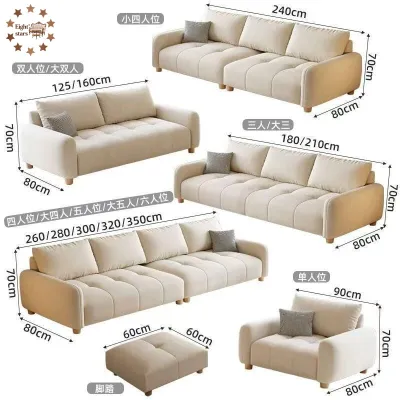
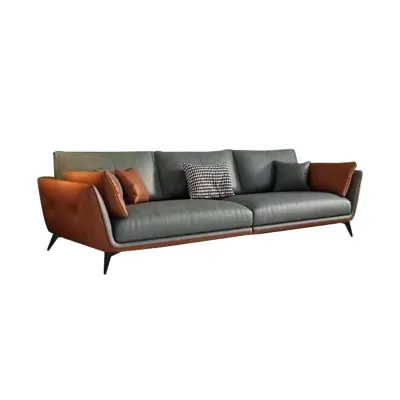
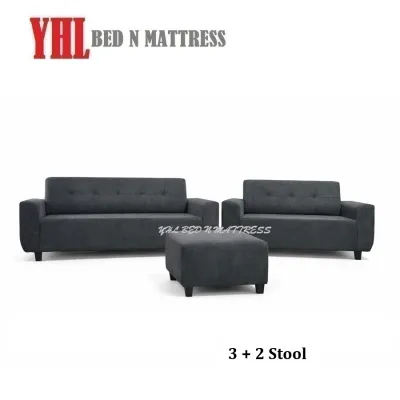
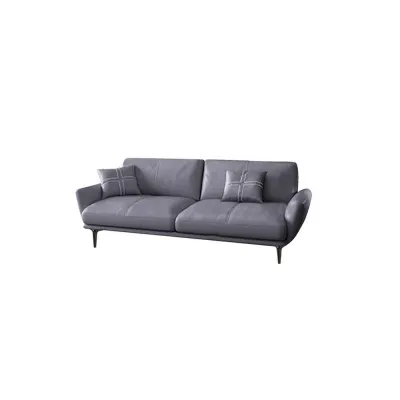
Prices are valid at publication and may change. Please refer to the product page for the latest price.
Do not overlook fixed architectural elements and utilities. Note the exact positions of wall-mounted power outlets, light switches, internet ports, and air-conditioner trunking. A sofa that blocks access to switches or sits flush against bulky trunking can create awkward gaps or safety hazards. Additionally, check the height of low-hanging window sills or wall-mounted fans to ensure the sofa backrest does not obstruct them.
Which 3-Seater Fabric Sofa Dimensions to Check
When browsing online marketplaces or visiting local showrooms, always locate the exact overall width, depth, and height on the manufacturer’s product specification sheet. Never rely on generic category labels, as a “3-seater” can range anywhere from 180 cm to over 240 cm in length depending on the design. Ensure you are looking at the maximum exterior dimensions, which represent the absolute footprint the sofa will occupy.

It is crucial to distinguish between the overall exterior dimensions and the actual usable seating area. A sofa might have a generous overall width of 220 cm, but if it features wide, overstuffed armrests, the actual seating space might only be 160 cm. If you have a compact HDB living room, prioritizing a model with slim, structured armrests allows you to maximize seating comfort without consuming excess floor area.
Additionally, examine the structural design of the sofa frame. Check whether the legs are fixed or removable, as removable legs can significantly reduce the height and depth of the piece during transport. If the sofa features a modular design, verify the dimensions of each individual section. Modular pieces are often much easier to maneuver through tight spaces and offer greater flexibility during installation.
Planning for Clearance and Daily Movement
A living room should feel open and easy to navigate, meaning your sofa must not block natural pathways. Plan for a walkway clearance of at least 60 cm to 75 cm between the edge of the sofa and other major furniture pieces, such as a coffee table or TV console. If the sofa is positioned along a primary thoroughfare—such as the path leading from the entryway to the kitchen—aim for a wider clearance of 90 cm to allow two people to pass comfortably.
Pay close attention to the swing arcs of doors and windows. Ensure that balcony sliding doors, main entrance doors, and nearby bedroom doors can open fully without striking the sofa’s frame or armrests. If your HDB flat has low windows, check that the sofa backrest does not block natural light or prevent you from opening the window panels for ventilation.
Finally, consider the viewing distance and angle to your television or primary focal point. Placing a large 3-seater too close to a TV console can cause eye strain and make the room feel disproportionately small. As a general guideline, maintain a distance of at least 1.5 to 2.5 times the diagonal screen size of your television to ensure a comfortable and ergonomically sound viewing experience.
Verifying HDB Lift and Delivery Access Constraints
One of the most common delivery mishaps in Singapore is purchasing a beautiful sofa only to find it cannot fit into the HDB lift or through the front door. Before finalizing your order, measure the width and height of the lift entrance doors, as well as the interior cabin’s height, width, and diagonal depth. If the sofa is longer than the lift height, delivery personnel may not be able to stand it upright inside the cabin.
Next, trace the physical path from the lift lobby to your living room. Measure the width of the common corridor, paying special attention to tight turning corners, low-hanging pipes, or emergency equipment boxes. You must also measure the clear opening width and height of your main gate and wooden front door, accounting for any protruding handles or security locks that might narrow the entry point.
Always confirm the delivery format with the retailer before making a purchase. Ask whether the sofa is delivered as a single, fully assembled unit, in multiple modular boxes, or if it requires on-site assembly by the delivery team. Flat-packed or modular fabric sofas are highly recommended for high-rise HDB living, as they bypass most entry constraints and can be assembled directly inside your living room.
Space-Saving Alternatives if a Standard 3-Seater Won't Fit
If your measurements reveal that a standard 3-seater fabric sofa will overcrowd your HDB living room, several practical alternatives can provide comparable seating capacity. Consider opting for a compact 2-seater sofa paired with a matching, movable ottoman. The ottoman can serve as a footrest, an extra seat when hosting guests, or even a temporary coffee table when topped with a sturdy tray, offering excellent spatial flexibility.
Another effective strategy is to look for fabric sofas specifically designed with a light visual footprint. Models with slim, minimalist armrests and tall, tapered legs allow light to flow underneath and around the furniture, making a small living room feel more spacious and airy. Choosing light-colored, breathable fabrics like linen or cotton blends can also prevent the sofa from visually dominating the room.
For highly specific layouts or awkward corners, evaluate custom-made or made-to-measure fabric sofas. Many local furniture retailers offer customization services where you can select the exact frame length, depth, and fabric type to match your HDB wall dimensions perfectly. While this option may require a longer lead time, it ensures that every centimeter of your living space is utilized efficiently without compromising on comfort.
Frequently Asked Questions (FAQ)
What is the standard length of a 3-seater fabric sofa?
There is no universal standard length for a 3-seater fabric sofa, as dimensions vary significantly based on design styles, armrest thickness, and individual brand specifications. Generally, most 3-seater sofas range from 180 cm to 240 cm in length. To avoid placement errors, always consult the manufacturer’s specific product dimension chart rather than relying on general assumptions or industry averages.
How to protect fabric upholstery in Singapore's humid climate?
To protect fabric upholstery from Singapore’s high humidity, always check the manufacturer’s care label for specific cleaning codes and recommended maintenance practices. Keep your living room well-ventilated by opening windows on dry days, or use a dehumidifier to manage indoor moisture levels and prevent musty odors. Regularly vacuum the fabric with an upholstery attachment to remove dust and allergens, and position the sofa away from direct sunlight to prevent the fibers from fading or weakening over time.
Community discussion
Share your experience or ask a question. Comments are reviewed before publication.