
When organizing a built-in wardrobe or modular closet system, footwear storage often becomes an afterthought. Standard wardrobe shelves are typically designed for folded clothing or hanging garments, leaving shoe collectors and homeowners struggling to store their shoes efficiently. To maximize every square centimeter of your closet, you must match the physical dimensions of your shoe boxes—whether they are original cardboard packaging or aftermarket rigid plastic containers—to the precise usable depth, width, and height of your shelving units.
Standard women’s shoe boxes generally measure around 30 cm in length, 18 cm in width, and 10 cm in height, while standard men’s shoe boxes typically average 33 cm in length, 20 cm in width, and 12 cm in height. Oversized footwear, such as high-top sneakers, work boots, or high heels, often comes in boxes measuring 35 to 38 cm in length, 24 to 26 cm in width, and 14 to 16 cm in height. Matching these dimensions to standard wardrobe depths (which typically range from 55 cm to 60 cm for built-ins, and 35 cm to 40 cm for shallow systems) is essential to ensure that your closet doors close fully without crushing your storage setup.
Measure Your Closet: The First Step to a Perfect Fit
Standard built-in wardrobe specifications can be highly misleading. A closet marketed with an external depth of 60 cm rarely offers 60 cm of actual, usable shelf space. The back panel, front door frame, and door mechanism all subtract from the interior clearance. Therefore, the first step to an organized wardrobe is taking precise internal measurements of your shelving.
Products mentioned in this guide
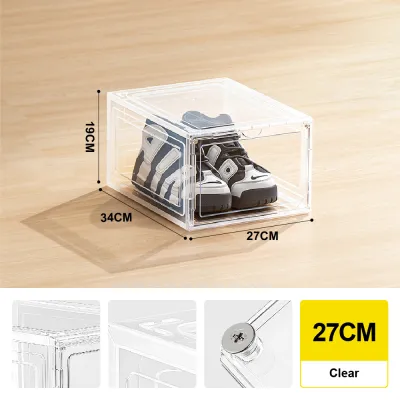
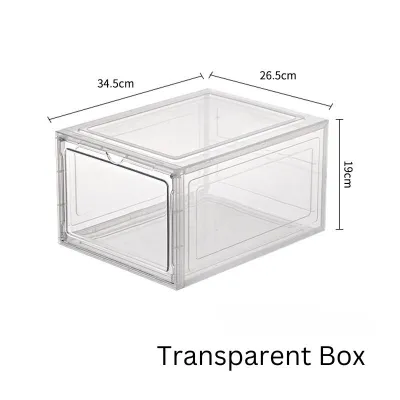
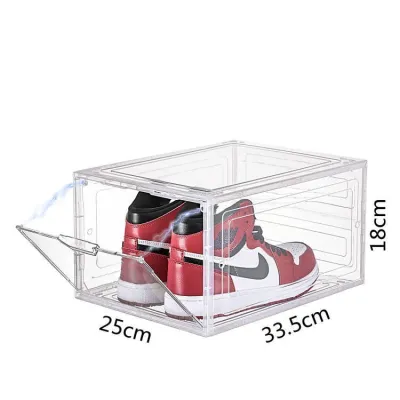
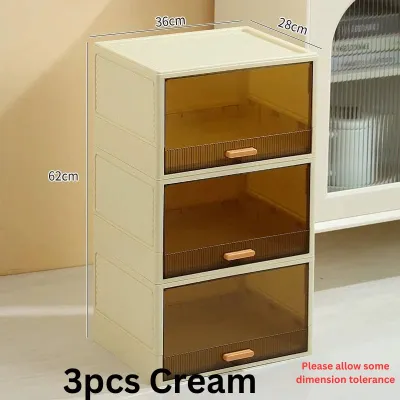
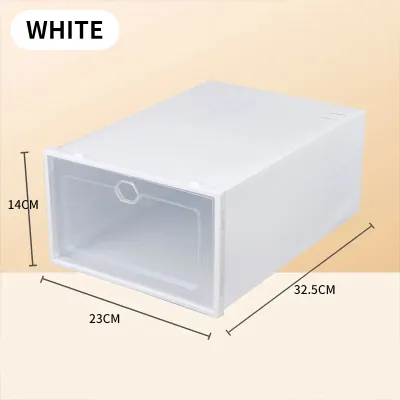
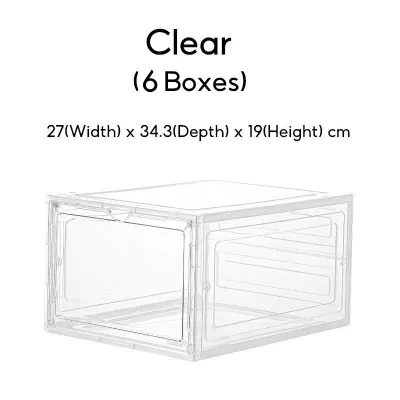
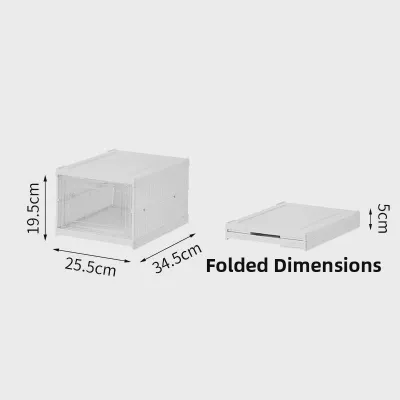
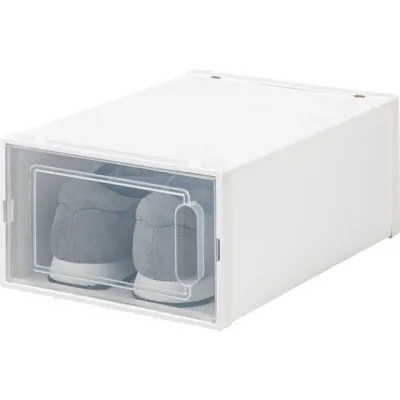
Prices are valid at publication and may change. Please refer to the product page for the latest price.
To get an accurate reading, use a rigid metal tape measure rather than a flexible fabric one, which can sag and introduce errors. Measure the internal depth from the front edge of the shelf—or the line where the closed door rests—to the very back of the wardrobe cabinet. If your wardrobe uses sliding doors, measure from the inner track of the door system, as sliding tracks can easily consume 8 to 10 cm of internal depth. Next, measure the internal width of each shelf compartment from one side wall to the other. Finally, measure the height between shelves. It is highly recommended to measure multiple shelves across your built-in system; custom carpentry and modular wardrobes can occasionally suffer from minor installation variances or slight warping over time, meaning a box that fits perfectly on the top shelf might pinch on the bottom one.
Do not forget to inspect the interior for physical obstructions. Built-in wardrobes often feature cup hinges on swinging doors that protrude 2 to 3 cm into the cabinet space, potentially blocking shoe boxes placed near the outer edges. Similarly, internal LED lighting strips, shelf support pins, and hanging rods can reduce the effective height or depth of a shelf. Always subtract these protrusions from your final measurements to determine the true, unobstructed storage footprint.
Matching Shoe Box Dimensions to Wardrobe Depths
Once you have your closet’s exact internal dimensions, you can select shoe boxes that maximize horizontal and vertical space. Footwear packaging varies significantly depending on the shoe style and target gender. Standard women’s shoe boxes generally measure around 30 cm in length, 18 cm in width, and 10 cm in height. Standard men’s shoe boxes are slightly larger, typically averaging 33 cm in length, 20 cm in width, and 12 cm in height. Oversized footwear, such as high-top sneakers, work boots, or high heels, often comes in boxes measuring 35 to 38 cm in length, 24 to 26 cm in width, and 14 to 16 cm in height.

How these boxes interact with your wardrobe depends heavily on shelf depth. In a standard built-in wardrobe with a usable shelf depth of 50 to 55 cm, both standard women’s and men’s boxes can be stored “straight-in” (with the short side or opening facing front). This orientation is highly efficient because it allows you to fit more boxes side-by-side across the shelf width. However, if you are dealing with a shallow wardrobe system—such as a 35 to 40 cm deep open-shelf unit—oversized sneaker or boot boxes will not fit straight-in without preventing the doors from closing. In this scenario, you must place the boxes “sideways” (with the long side facing front), which significantly reduces the number of units you can place on a single shelf.
To optimize your layout, calculate the exact number of boxes that can fit across a shelf by dividing the total internal shelf width by the width of your chosen shoe box. If you have a shelf width of 80 cm, you can comfortably place four standard men’s boxes (20 cm wide each) side-by-side. If you have a few centimeters of leftover space, use that gap for slim items like shoe horns or cleaning brushes rather than forcing an extra box into a tight spot, which could scratch the wardrobe’s interior laminate finish. Always ensure that the chosen box orientation leaves a 1 to 2 cm buffer zone behind the door line so that swinging or sliding doors can operate smoothly without friction or pressure.
Maximising Vertical Space: Stacking and Shelf Adjustments
Utilizing the vertical clearance of your wardrobe shelves is essential for doubling or tripling your storage capacity. However, stacking shoe boxes requires a careful evaluation of the box material and the structural stability of the stack. Rigid clear plastic stackable boxes, particularly those featuring interlocking grooves and drop-front doors, are engineered for vertical load capacity. These containers can safely be stacked 6 to 10 units high without buckling, provided they are placed on a level, stable shelf.
In contrast, original cardboard shoe boxes have very limited load-bearing capacity. In highly humid tropical climates like Singapore’s, cardboard absorbs ambient moisture from the air, which rapidly softens the material and compromises its structural joints. Stacking more than three cardboard boxes on top of each other is highly risky; the weight of the upper shoes will eventually cause the bottom boxes to sag, warp, and potentially collapse, risking damage to your valuable footwear inside.
If your built-in closet features adjustable shelf pins—commonly found in system-32 modular cabinetry—you can customize the height zones to eliminate wasted vertical air space. Group your footwear by profile height before setting your shelf heights. Create a low-profile zone with a shelf height of 12 to 15 cm for flat sandals, loafers, and slippers. Set a standard zone of 15 to 20 cm for everyday sneakers and low heels, and allocate a high-profile zone of 25 to 35 cm for boots and high-top sneakers. If your wardrobe has fixed, non-adjustable shelves with large vertical gaps, avoid tall, unstable stacks of loose boxes. Instead, install independent acrylic risers or internal wire shelf inserts. These accessories create a secondary horizontal platform, allowing you to slide out lower boxes easily without having to lift the weight of the entire stack.
Regardless of the stacking method you choose, always enforce the “finger gap” rule. Leave a clearance of 2 to 3 cm between the top of your highest shoe box and the underside of the shelf above it. This small gap allows you to easily slip your fingers in to pull a box forward, preventing you from accidentally knocking over adjacent stacks or scraping your knuckles against the shelf edges.
Common Sizing and Layout Mistakes to Avoid
One of the most frequent spatial errors is failing to account for the door opening clearance. Many homeowners measure the internal shelf space perfectly but forget that sliding doors overlap when opened, or that swinging doors do not open a full 180 degrees. This oversight means that while a row of shoe boxes may technically fit on the shelf, the physical opening of the wardrobe is too narrow to slide the end boxes out. Always verify that your boxes can clear the door frame during retrieval.
Another common mistake is stacking heavy, solid-heeled shoes or boots on top of lighter, delicate footwear. Even when using rigid plastic boxes, always place your heaviest footwear at the bottom of the stack to maintain a low center of gravity and prevent the storage tower from becoming top-heavy and tipping over. Additionally, avoid mixing and matching random, non-uniform box sizes on a single shelf. A chaotic mix of cardboard boxes, plastic tubs, and original packaging creates a jagged, uneven layout that wastes valuable air space and makes the closet look cluttered.
Finally, never force an oversized shoe box into a shelf that is slightly too shallow. Forcing a box to fit can put continuous outward pressure on your wardrobe doors, causing sliding doors to jump their tracks or swinging door hinges to become misaligned over time. It can also scrape and damage the interior wood veneer or laminate finish of your custom carpentry. If a box does not fit with at least a 1 cm clearance, seek alternative storage layouts or transfer the shoes to a more compact, uniform container.
Frequently Asked Questions (FAQ)
Can I use original cardboard shoe boxes for long-term closet storage?
While original cardboard boxes are cost-effective and come with pre-printed branding, they are generally unsuitable for long-term storage in built-in wardrobes, especially in humid climates. Cardboard acts like a sponge, absorbing moisture from the air. This damp environment weakens the box joints and creates an ideal breeding ground for mold, mildew, and destructive closet pests such as silverfish and booklice. For long-term preservation, it is highly recommended to transition your footwear to rigid, ventilated clear plastic boxes. These plastic alternatives protect against pests, do not degrade in high humidity, and allow you to quickly identify your shoes without opening every box.
How do I store oversized sneaker or boot boxes in a standard wardrobe?
Oversized sneaker and boot boxes present a unique challenge due to their bulky footprints. To accommodate them without wasting valuable shelf space, dedicate the very bottom shelf of your wardrobe—which typically has the highest vertical clearance and the strongest load-bearing support—specifically for these heavy boxes. If your shelf depth is under 50 cm, store these boxes sideways (long side facing out) to ensure the wardrobe doors can close fully. Alternatively, if the original packaging is simply too bulky for your closet layout, remove the shoes from their original boxes and store them in uniform, space-saving drop-front plastic containers. You can then flatten and store the collectible original boxes in a dry storeroom or on the topmost shelves of your closet where accessibility is less critical.
Community discussion
Share your experience or ask a question. Comments are reviewed before publication.