
Organizing a closet often leads to a cluttered visual mess where small accessories, makeup, and folded garments disappear into dark corners or deep drawers. Selecting the right Muji acrylic storage depends on matching the specific physical dimensions of your closet zones—such as shallow vanity drawers, deep wardrobe shelves, and delicate jewelry compartments—with the appropriate acrylic thickness, drawer configuration, and weight limits. By using clear, modular acrylic cases, you can maintain complete visibility of your items while protecting them from dust, provided you respect the material’s weight and environmental boundaries.
How should you measure your closet spaces before selecting acrylic organizers?
To ensure a seamless fit, you must measure the exact width, depth, and height of your closet zones while accounting for internal obstructions like drawer slides, hinges, and door clearances. Failing to measure these hidden protrusions often leads to jammed drawers or organizers that sit unevenly on shelves.
When measuring shallow vanity drawers, determine the clear internal height by measuring from the drawer bottom to the lowest point of the upper cabinet frame. Even a millimeter of clearance issue can cause an acrylic tray to catch when you open or close the drawer. For deep wardrobe shelves, measure the front-to-back depth carefully. While standard shelves might accommodate deeper boxes, you must leave enough clearance for wardrobe doors—especially sliding doors or those with soft-close hinges—to close completely without striking the front of the storage units.
Products mentioned in this guide
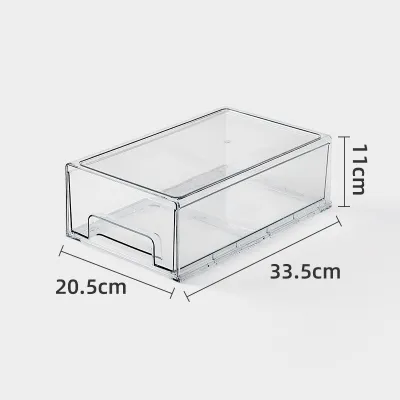
186 Lazada user ratings
🎨Design:Easy to clean and maintain, Convenient for pantry storage, Clear and transparent design,
Easy to clean and maintain, Clear and transparent design,
Clear and transparent design,
Sleek and modern look,
Prices are valid at publication and may change. Please refer to the product page for the latest price.
Additionally, check the weight capacity and structural limits of your existing closet shelving before adding heavy acrylic units. Acrylic is a dense, solid material that weighs significantly more than fabric or cardboard organizers even when empty. Stacking multiple filled acrylic drawer units on a single shelf can cause lightweight or unsupported shelves to sag over time, potentially damaging your closet structure.
Which Muji acrylic storage types are most effective for vanity and makeup drawers?
Shallow, open-top acrylic trays and modular grid dividers work best for vanity drawers, while stackable multi-drawer acrylic cases are ideal for vertical countertop storage. These configurations maximize visibility and keep daily cosmetics within arm’s reach without cluttering your workspace.

Using shallow acrylic trays and dividers allows you to categorize small items like lipsticks, eyeshadow palettes, brushes, and daily cosmetics. By choosing modular trays that fit snugly together, you can prevent the organizers from sliding around when the drawer is pulled open. For taller items like skincare bottles, serums, and pump dispensers, stackable acrylic drawers provide an excellent vertical solution that protects the containers from dust while keeping them visible.
Before purchasing, check the acrylic thickness and base stability of the units to prevent tipping when they are fully loaded. Taller drawer units filled with heavy glass skincare bottles can become top-heavy when the top drawer is fully extended. To mitigate this risk, place heavier items in the bottom drawers and consider adding small, non-slip adhesive rubber feet to the base of the unit to secure it to your vanity surface.
What acrylic organizers work best for wardrobe shelves and folded clothing?
Large, deep acrylic drawer units and open-front storage boxes are highly effective for organizing lightweight folded clothing on wardrobe shelves because they keep items visible and neatly stacked. However, you must limit their use to light fabrics to avoid overloading the material and causing structural stress.
Utilizing clear acrylic drawers for folded t-shirts, undergarments, socks, and lightweight activewear allows you to see exactly what is inside without rummaging through stacks. This visibility helps maintain organization over time, as you do not need to disturb other garments to find a specific item. Open-front boxes are also useful for quick-access items on upper shelves, providing a clear barrier that keeps stacks from toppling over.
Despite these benefits, you should avoid using acrylic organizers for heavy winter coats, dense denim, or bulky sweaters. The sheer weight of these fabrics can exceed the load capacity of the acrylic panels, leading to bowing, cracking, or scratching of the polished surface. Furthermore, ensure your wardrobe shelves are not exposed to direct sunlight, as UV rays can degrade acrylic over time, causing it to yellow or become brittle. Because acrylic is non-porous, ensure your closet has adequate ventilation to prevent moisture buildup around folded fabrics.
How can you use acrylic cases to organize small accessories and jewelry sections?
Compartmentalized acrylic cases with secure, dust-proof lids are the most effective choice for protecting and displaying small accessories like necklaces, watches, and rings. Adding soft, removable liners to these cases prevents delicate metals and gemstones from sliding and scratching against the hard acrylic surface.
Choosing dust-proof acrylic cases with secure lids or drawer designs keeps dust and airborne particles off your jewelry, reducing the need for frequent cleaning and polishing. For necklaces and bracelets, look for cases that feature hanging hooks or specialized compartments to prevent tangling, which can cause micro-scratches on delicate chains.
Using adjustable acrylic dividers allows you to customize the compartment sizes to accommodate varying accessory sizes, from small stud earrings to larger statement pieces. Because acrylic is a hard, smooth plastic, items can slide around when drawers are opened or closed. Placing non-slip felt, velvet, or silicone liners inside the bases of the compartments protects both the jewelry and the acrylic from unsightly scratches while keeping each piece securely in place.
When should you avoid acrylic and choose alternative closet storage materials?
You should avoid acrylic storage in high-humidity areas, locations exposed to high heat, or when storing exceptionally heavy items that require structural reinforcement. In these scenarios, materials like wood, metal, or breathable fabric bins provide safer and more durable alternatives.
Recognizing when heavy items require wood, metal, or reinforced fabric bins is crucial for structural safety. If you are organizing heavy items like boots, winter gear, or large bags, opt for sturdy wood or metal shelving that handles high load capacities without warping or cracking. Acrylic is prone to scratching when subjected to rough surfaces or heavy friction, making it unsuitable for high-wear areas.
Identify high-humidity or high-heat closet zones, such as closets adjacent to bathrooms or those near heating vents, where acrylic may warp, cloud, or degrade over time. In these environments, breathable canvas or woven baskets are better suited because they allow air circulation, protecting delicate fabrics from mold and mildew. Finally, evaluate the need for opaque or breathable storage for delicate fabrics and light-sensitive items; clear acrylic offers no protection from ambient light, which can fade sensitive dyed fabrics over extended periods.
Community discussion
Share your experience or ask a question. Comments are reviewed before publication.