
Choosing a mother of pearl coffee table requires balancing its natural iridescence with your living room’s existing design language. Because this organic material can be sliced, dyed, and arranged into intricate mosaic patterns or sleek, solid-sheet veneers, it does not belong to just one style. The key to finding the right match lies in identifying whether your space needs a bold, high-contrast focal point or a subtle, light-reflecting texture that softens modern lines. By analyzing your current furniture, layout, and daily habits, you can select a design that elevates your home without clashing with your established decor.
Unlike standard wood or glass surfaces, mother of pearl interacts dynamically with light, shifting in tone throughout the day. This unique characteristic means the table will inevitably draw the eye, making it essential to choose a style that harmonizes with your room’s overall mood. Whether your home leans toward a relaxed bohemian sanctuary, a clean-lined minimalist retreat, or a highly stylized vintage parlor, there is a shell-inlaid design that can seamlessly complete your space.
Assess Your Existing Living Room Aesthetic
Before browsing specific table designs, take a step back to evaluate the dominant visual elements of your living room. Start by identifying the existing focal points, such as a bold fireplace, a colorful accent wall, or a large sectional sofa. A mother of pearl table possesses a natural luster that commands attention, so you must decide if you want it to serve as the primary centerpiece or as a supporting accent that complements other standout features.
Products mentioned in this guide
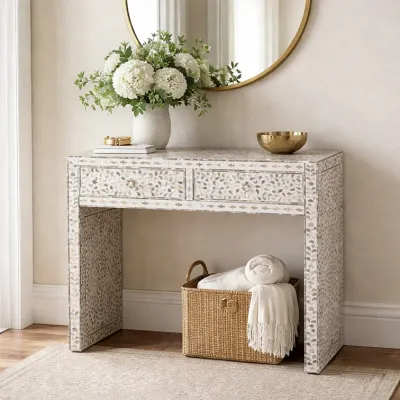
Prices are valid at publication and may change. Please refer to the product page for the latest price.
Next, analyze your room’s color palette and overall mood. Spaces dominated by cool tones like slate grey, navy, and crisp white benefit from tables with pale, silvery shell tiles set in light-colored resin. Conversely, rooms filled with warm earth tones, terracotta, and olive green pair beautifully with cream, amber, or dark-backed shell inlays. Consider the balance of textures as well; if your room already features high-gloss lacquered surfaces or polished metals, a matte-finished or subtly textured shell table will prevent the space from feeling overly reflective.
Finally, take inventory of your existing furniture materials and finishes. A living room furnished with raw, rustic oak or matte black metal requires a thoughtful transition to accommodate the delicate sheen of shell inlay. Look for common design threads, such as matching the metal legs of the coffee table to the brass accents on your lighting fixtures, or choosing a wood-trimmed shell table that echoes the grain of your sideboards. Ensuring these material connections exist prevents the new addition from looking out of place.
Match Mother of Pearl Designs to Your Decor
Mother of pearl is an incredibly versatile medium, capable of being shaped into vastly different visual styles depending on how the raw shell is processed and arranged. The final aesthetic of the table is dictated by three primary factors: the base material, the density of the pattern, and the overall silhouette. Understanding how these elements interact allows you to narrow down your choices to the specific design family that matches your home.

Some tables feature tiny, hand-cut fragments arranged in dense, high-contrast mosaic patterns, while others utilize large, seamless tiles that showcase the natural, uninterrupted grain of the shell. The choice of backing material—ranging from dark charcoal resins to warm natural woods—also plays a massive role in defining the table’s character. By matching these design characteristics to your established decor style, you can find a piece that feels custom-made for your room.
Traditional and Bohemian Inlay
Traditional and bohemian spaces thrive on global influences, rich textures, and handcrafted details. For these interiors, a mother of pearl table featuring intricate, hand-cut bone-and-shell inlay is an exceptional choice. These designs often showcase elaborate floral motifs, mandalas, or repeating geometric patterns set against contrasting resin backings, such as deep black, emerald green, or soft grey.
This style of table pairs beautifully with warm wood tones, layered textiles, and vintage accents. If your living room features tufted leather sofas, woven jute rugs, or embroidered throw pillows, the detailed craftsmanship of a traditional inlay table will feel right at home. The organic variations in the hand-cut shell pieces enhance the cozy, curated feel of a bohemian or globally inspired space, celebrating artisanal character over factory-made perfection.
Modern Minimalist and Geometric
If your aesthetic leans toward modern, Scandinavian, or minimalist design, you might worry that a shell table will feel too ornate. However, contemporary designers often adapt mother of pearl into clean, streamlined forms that emphasize texture over complex patterning. Look for tables that utilize solid shell veneers, where larger, rectangular tiles of pearl are laid in simple brick, herringbone, or parallel patterns with minimal color contrast.
These modern designs focus on clean lines and simple geometric bases, such as solid plinths or slender, powder-coated metal frames. By keeping the pattern simple, the table avoids creating visual clutter while still introducing a subtle, iridescent texture to a streamlined room. This style is ideal for softening the hard edges of minimalist furniture, adding a touch of organic warmth to a space dominated by concrete, glass, and matte metals.
Art Deco and Vintage Glamour
For those who love luxury, retro-inspired interiors, or Hollywood Regency glamour, mother of pearl offers the perfect touch of opulence. To capture this aesthetic, look for tables featuring bold symmetry, sunburst patterns, or fan-shaped shell arrangements. These pieces often incorporate metallic accents, such as polished brass, gold-plated trim, or mirrored bases that amplify the reflective qualities of the shell.
An Art Deco-inspired table acts as a true statement piece, holding its own in rooms filled with rich fabrics like velvet and silk. It coordinates beautifully with jewel-toned upholstery, high-gloss lacquered cabinetry, and sculptural lighting. The key to styling this look is to embrace the drama; let the table shine by placing it on a solid-colored, high-pile rug that allows the intricate, shimmering patterns of the base and tabletop to take center stage.
Verify Space, Proportions, and Daily Practicality
Once you have identified the style that matches your aesthetic, you must verify that the table physically fits your living room layout and meets your daily functional needs. Begin by measuring your available floor space. As a general rule, leave approximately 30 to 45 centimeters of clearance between the coffee table and your sofa to allow for comfortable legroom and easy traffic flow.
Next, check the height of the table relative to your seating. For optimal ergonomics, the top of the coffee table should sit within 2 to 5 centimeters of your sofa’s seat cushions. A table that is too high will disrupt the sightlines of the room, while one that is too low can be uncomfortable to reach. Additionally, consider the visual weight of the design; solid plinth tables with dense, dark patterns can feel heavy and may overwhelm a compact apartment living room, whereas an open-frame table with a light shell top preserves a sense of spaciousness.
In typical apartment layouts, such as cozy condominiums or HDB flats, physical access is another crucial factor. Before finalizing your purchase, verify the packaged dimensions of the table to ensure it can easily clear passenger lifts, narrow corridors, and standard doorways during delivery. If your building has tight stairwells or restricted lift heights, a flat-packed table or a lighter, open-frame design may be much easier to transport and assemble than a heavy, fully assembled solid plinth model.
Review Maintenance and Lifestyle Compatibility
Because mother of pearl is a natural material composed of calcium carbonate, it requires specific care to maintain its luster over time. Before purchasing, review the manufacturer’s care instructions to ensure the maintenance routine aligns with your household’s lifestyle. Standard household glass cleaners, ammonia-based sprays, and abrasive scrubbing pads can permanently etch the delicate shell surface or degrade the protective resin coating.
Assess the daily risks in your household, such as active pets, young children, or frequent entertaining. Mother of pearl surfaces can be sensitive to heavy impacts, sharp objects, and extreme heat. If your coffee table is likely to host hot mugs, condensation-heavy cold drinks, or messy snacks, you must commit to using protective measures. Keep a stylish set of coasters and trivets nearby, and ensure that any spills—especially acidic liquids like orange juice, wine, or coffee—are wiped up immediately with a soft, damp cloth.
To preserve the table’s surface, plan to use felt pads under decorative trays, vases, or books to prevent micro-scratches. Regular dusting with a dry, lint-free microfiber cloth is usually all that is required to keep the surface clean. By understanding these care requirements upfront, you can decide if a delicate, high-contrast mosaic table is right for your home, or if a more durable, heavily lacquered veneer design is better suited to your daily routine.
Frequently Asked Questions (FAQ)
Can a mother of pearl coffee table work in a small living room?
Yes, a mother of pearl table can work beautifully in a smaller living room if you select the right design. To keep the space feeling open and airy, choose a table with a round or oval silhouette, which eases traffic flow in tight quarters. Opt for minimalist or geometric styles featuring light-colored shell tiles and slender, exposed legs rather than a solid, block-like plinth. Avoiding dense, high-contrast patterns will also prevent the table from dominating the room visually, allowing its natural iridescence to brighten the compact space.
How do I prevent the shell surface from yellowing or dulling?
To keep the shell surface from yellowing or losing its luster, position the table away from windows that receive prolonged, direct sunlight, as ultraviolet rays can discolor both the natural shell and the binding resin over time. Dust the surface regularly with a soft, dry microfiber cloth to prevent abrasive dust particles from settling into the finish. Always check the specific product manual before applying any polishes, waxes, or sealants, and strictly avoid harsh chemical cleaners, vinegar, or citrus-based sprays that can erode the calcium-based shell.
Community discussion
Share your experience or ask a question. Comments are reviewed before publication.