
Choosing the right mattress firmness is the single most important decision you will make for your sleep health. The ideal level of firmness keeps your spine in neutral alignment while cushioning your body’s sensitive pressure points. Because everyone distributes weight differently, a mattress that feels like a supportive cloud to one person might feel like a rigid board to another.
To find the perfect match within the King Koil range, you must look beyond generic comfort labels. By evaluating your primary sleeping position, factoring in your body weight, and understanding how different mattress constructions behave, you can select a bed that delivers restorative sleep night after night.
Quick Diagnostic: Matching Firmness to Your Sleep Profile
Before diving into the mechanics of mattress construction, you can use your primary sleeping position and body weight to establish a reliable baseline. This quick reference guide maps common sleep profiles to their recommended firmness categories.
Products mentioned in this guide
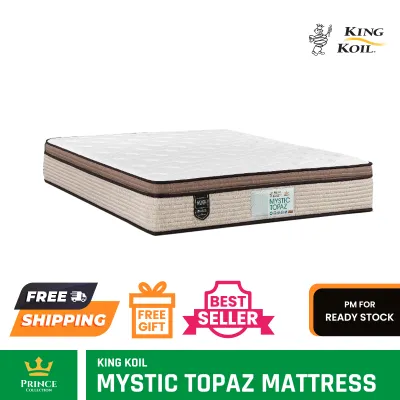
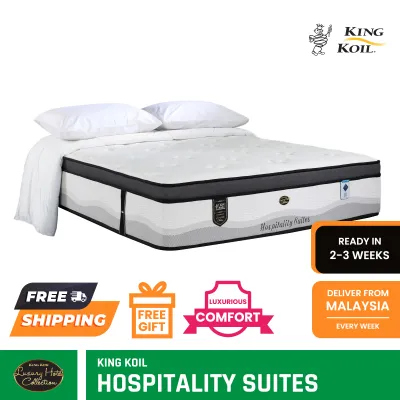
Prices are valid at publication and may change. Please refer to the product page for the latest price.
| Primary Sleeping Position | Typical Body Weight | Recommended Firmness Category | Common King Koil Labels |
|---|---|---|---|
| Side Sleeper | Under 60 kg | Medium-Soft to Medium | Plush / Luxury Plush |
| Side Sleeper | 60 kg to 90 kg | Medium | Cushion Firm / Medium |
| Back Sleeper | Under 60 kg | Medium | Cushion Firm / Medium |
| Back Sleeper | 60 kg to 90 kg | Medium-Firm | Firm / Medium-Firm |
| Back Sleeper | Over 90 kg | Firm to Extra Firm | Extra Firm / Super Firm |
| Stomach Sleeper | Any Weight | Firm to Extra Firm | Firm / Extra Firm |
While this matrix provides an excellent starting point, individual King Koil collections use specific naming conventions that can vary slightly. For example, a “Plush” model in a hospitality-grade collection might offer a different level of surface yield compared to a “Plush” model in an orthopaedic-focused line. Always use these categories as a baseline and cross-reference them with the physical specifications of the specific model.
Your body weight is the ultimate modifier in this equation. A heavier sleeper will compress the comfort layers much more deeply than a lighter sleeper, altering the perceived firmness of the mattress. To find a truly personalized fit, you must look closely at how these physical forces interact with the mattress core.
Understanding the King Koil Firmness Scale
King Koil categorizes its mattresses across a spectrum ranging from ultra-plush to extra-firm. Understanding these tiers helps you decode the product tags you will encounter when browsing online or visiting a showroom in Singapore.

- Plush / Luxury Plush: These mattresses feature thick, contouring comfort layers on top. They are designed to let you sink gently into the surface, offering maximum pressure relief for sensitive joints.
- Medium / Cushion Firm: Offering a balanced feel, these models provide a supportive foundation with just enough surface cushioning to cradle your shoulders and hips without letting you sink too deeply.
- Firm: These mattresses prioritize structural support, offering a solid, flat surface with minimal sinkage. They keep your body positioned "on top" of the bed rather than "in" it.
- Extra Firm / Super Firm: Engineered with heavy-duty coil systems and dense upholstery layers, these models provide maximum resistance to compression, making them ideal for those who require rigid spinal support.
The perceived firmness of a mattress is heavily influenced by its internal construction. For instance, pocketed spring systems conform independently to your body’s contours, making them excellent for localized pressure relief and reducing motion transfer between partners—a key benefit if you share a bed in a compact apartment. In contrast, continuous coil systems distribute weight across an interconnected wire grid, providing a highly stable and traditionally firm sleeping surface.
Additionally, the top style of the mattress plays a major role. A pillow-top or euro-top model features an extra layer of padding stitched directly to the surface, which immediately softens the initial feel of a firm support core. A tight-top mattress, which lacks this extra padding, delivers a more direct, responsive connection to the underlying spring system. When evaluating a mattress, always distinguish between the core “support” (which keeps your spine aligned) and the surface “comfort” (which cushions your body).
3-Step Self-Assessment to Find Your Ideal Firmness
Finding your ideal mattress firmness requires a systematic look at your physical profile and daily sleep habits. By following these three structured steps, you can narrow down your options and avoid the common pitfalls of mattress shopping.
Step 1: Analyze Your Primary Sleeping Position
Your sleep posture dictates how your body weight is distributed and where you need the most support to keep your spine straight.
- Side Sleepers: When you sleep on your side, your shoulders and hips project outward, bearing the majority of your body weight. If your mattress is too firm, these areas will experience high pressure, leading to restricted blood circulation and morning aches. Side sleepers require a Medium-Soft to Medium mattress that allows these joints to sink in just enough to keep the spine in a straight, horizontal line.
- Back Sleepers: This position distributes your weight relatively evenly, but it leaves a natural gap at your lower lumbar region. If your mattress is too soft, your hips will sink too deeply, bowing your spine downward. If it is too firm, your lower back will hover unsupported, causing muscle tension. A Medium to Medium-Firm mattress is ideal, as it cradles the pelvis while maintaining the natural S-curve of your spine.
- Stomach Sleepers: Sleeping on your stomach is highly sensitive to mattress support. If the mattress comfort layers are too soft, gravity pulls your midsection downward, hyperextending your lower back and straining your spine. Stomach sleepers must opt for a Firm or Extra Firm mattress to keep the hips level with the shoulders throughout the night.
- Combination Sleepers: If you frequently switch positions, you need a mattress that adapts quickly to movement. A highly responsive Medium-Firm pocketed spring mattress is usually the most accommodating choice, offering enough surface give for side sleeping while providing the structural integrity needed for back or stomach sleeping.
Step 2: Factor in Your Body Weight
The relationship between your body weight and the mattress surface determines how much the comfort layers will compress.
- Lighter Sleepers (Under 60 kg): If you have a lighter frame, you do not exert enough force to compress the comfort layers of a firm mattress. As a result, a "Medium" mattress may feel quite firm to you, and a "Firm" mattress can feel like sleeping on a hard floor. Lighter individuals generally benefit from softer models, such as Plush or Medium-Soft, to achieve proper pressure relief.
- Average Weight Sleepers (60 kg to 90 kg): Most standard mattress firmness ratings are calibrated around this weight bracket. If you fall into this range, a Medium or Cushion Firm mattress will perform as intended, offering a balanced combination of support and contouring.
- Heavier Sleepers (Over 90 kg): Heavier individuals exert significant downward pressure, causing comfort layers to compress fully. On a soft mattress, this can lead to "bottoming out" against the hard support core, causing spinal misalignment. Heavier sleepers should look for Firm or Extra Firm models, ideally constructed with thick comfort layers and high-density pocketed coils, to ensure lasting support and durability.
Step 3: Assess Your Comfort Preferences and Pain Points
Subjective comfort and existing physical conditions can override general guidelines, making it essential to tune into your body’s signals.
- Hugging vs. Sleeping On Top: Decide whether you prefer the sensation of being cradled by your mattress (common in plush, thick pillow-top models) or the feeling of sleeping on a solid, highly responsive surface (common in firm tight-top models).
- Targeting Joint Pain: If you wake up with sore shoulders or hips, your mattress is likely too firm, creating localized pressure points. If you wake up with a dull, aching lower back, your bed is likely too soft, failing to support your core.
- Spinal Alignment Check: Regardless of how luxurious a soft mattress feels when you first lie down, it is the wrong choice if it causes morning stiffness. Your ultimate goal must always be neutral spinal alignment, where your head, shoulders, hips, and knees rest in a balanced, tension-free posture.
How to Test and Verify Your Choice In-Store and Online
Once you have narrowed down your ideal firmness level, you need to verify your choice through careful testing or online research to ensure a successful purchase.
- In-Store Testing: When visiting a showroom in Singapore, do not simply sit on the edge of the mattress or press it with your hand. Lie down in your natural sleeping position and remain there for at least 10 to 15 minutes. Wear loose, comfortable clothing and bring your own pillow if possible to simulate your actual sleep environment. Pay close attention to whether your hips feel properly aligned and if you experience any pressure on your shoulders.
- Online Purchasing: If you are purchasing through an online marketplace or brand website, pay close attention to the exact model names and specifications. Minor differences in product names can indicate entirely different firmness levels or support systems. Read the detailed specifications regarding the spring count, foam density, and top style to confirm the mattress matches your self-assessment.
- Post-Purchase Safety Net: Before checking out, review the retailer's sleep trial period, return policies, and warranty terms. In Singapore, return conditions vary widely; some retailers offer a 100-night trial but charge a delivery or restocking fee, while others may only allow a one-to-one exchange. Additionally, keep in mind that many manufacturers recommend a mandatory break-in period of 14 to 30 days to allow your body to adjust to the new support structure before initiating a return.
Frequently Asked Questions (FAQ)
Can I change the firmness of my King Koil mattress later?
Yes, you can make minor adjustments to the surface feel of your mattress after purchase. If your mattress feels too firm, adding a high-quality natural latex or memory foam mattress topper can introduce immediate plushness and pressure relief without compromising the underlying support core. Conversely, if your mattress feels slightly too soft, ensuring it is placed on a solid, non-flexing bed base or adding a flat, sturdy support board can slightly increase the perceived firmness. However, these are surface-level adjustments; they cannot fix a mattress that has begun to sag or one with a structurally compromised spring system.
Is a firmer King Koil mattress always better for back pain?
No, the belief that an ultra-firm mattress is the cure-all for back pain is a common misconception. While robust support is essential to keep your spine from sagging, an excessively firm mattress can actually worsen back pain by creating harsh pressure points at your shoulders and hips, forcing your spine into an unnatural alignment. For most sleepers, a medium-firm mattress offers the optimal balance of support and contouring. If you experience chronic, severe, or persistent back pain, it is always best to consult a qualified healthcare professional or physiotherapist for personalized advice tailored to your medical history.
Community discussion
Share your experience or ask a question. Comments are reviewed before publication.