
Selecting the right coconut fibre mattress firmness requires balancing your primary sleeping position with your body weight and the mattress’s internal construction. Because pure coconut coir is exceptionally rigid, modern manufacturers blend it with softer comfort layers to accommodate different sleep postures. Side sleepers require a medium to medium-soft feel achieved through thick latex or foam comfort layers to cushion the shoulders and hips. Back sleepers benefit from a medium-firm feel that supports the lumbar spine, while stomach sleepers need a firm to extra-firm mattress with minimal comfort cushioning to prevent the pelvis from sinking.
Understanding Coconut Fibre Mattress Firmness
Coconut coir is a natural material harvested from the fibrous outer husk of coconuts. These tough, dense fibres are cleaned, spun, and bonded together to create highly resilient sheets used as the core of the mattress. In Singapore’s tropical, high-humidity climate, coconut fibre is highly valued for its natural breathability. The open, porous structure of the coir sheets contains millions of microscopic air pockets, allowing heat and moisture to escape far more efficiently than they do from solid synthetic foam. However, coir’s natural moisture-wicking properties do not make it entirely immune to mold; buyers should verify that the mattress has received proper anti-fungal treatments and ensure the bedroom remains well-ventilated.
Pure, untreated coconut coir is incredibly stiff, offering a sleeping surface comparable to a carpeted floor. To introduce elasticity and prevent the fibres from becoming brittle or shedding over time, manufacturers spray the coir with liquid latex to create rubberised coir. This process adds a subtle springiness while preserving the high density and structural stability of the material. Even with rubberisation, a pure coir core remains exceptionally firm.
Products mentioned in this guide
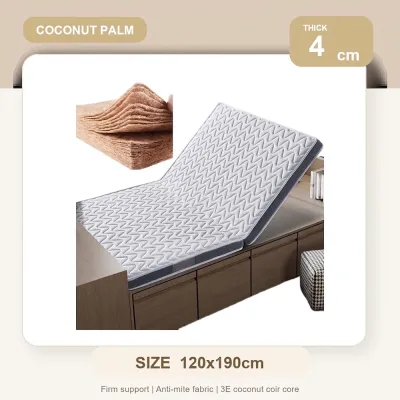
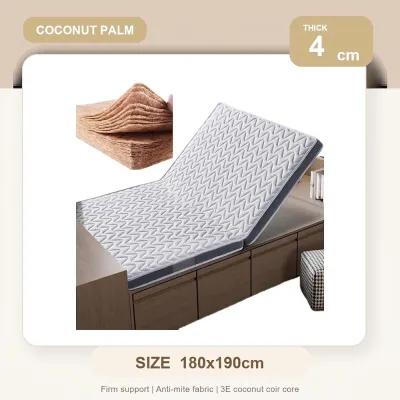
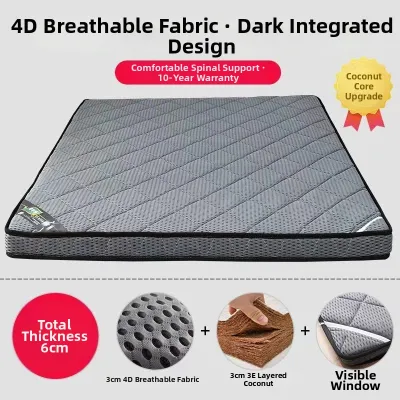
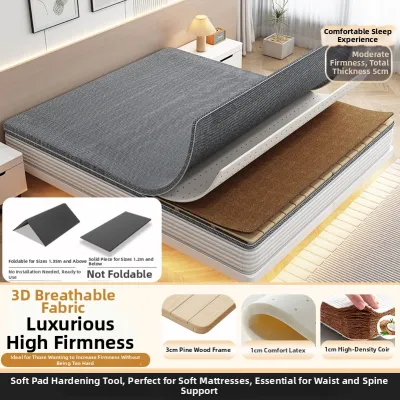
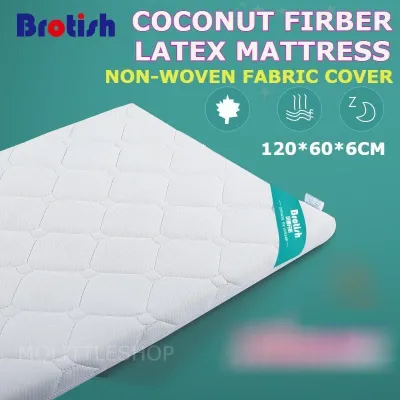
![[SG SELLER] Brotish Coconut Fiber Latex Mattress 120*60*6CM Bed Breathable Fast-Dry Detachable Washable Cover](https://img.lazcdn.com/g/p/9c0ef6a18ad31b3f4e30e330e91ecea2.jpg_400x400q80.jpg_.webp)
![[SG INSTOCK] Multiple Sizes Coconut Fibre Latex Mattress](https://img.lazcdn.com/g/ff/kf/S75bfcf42496a48a2bc29ba06f4f26c41E.jpg_400x400q80.jpg_.webp)
![[INSTOCK OVAL SERIES] LittleBabyBernice™ Premium Coconut Fibre Baby Mattress | Newborn Support Cooling Cot Mattress](https://img.lazcdn.com/g/ff/kf/S35781472dd344be3802d7af2878ff1ebK.jpg_400x400q80.jpg_.webp)
Prices are valid at publication and may change. Please refer to the product page for the latest price.
Therefore, the actual firmness level of a modern coconut fibre mattress is determined by the comfort layers placed on top of the coir core. Manufacturers layer materials like natural latex, memory foam, or polyurethane foam over the rigid coir base to create a structural gradient. When shopping, it is important to understand that a “soft” or “medium” coir mattress does not have soft coir; rather, it features a thicker, more cushioned comfort layer over a highly supportive, rigid coir foundation.
Matching Firmness to Your Sleeping Position
To achieve restful sleep, your mattress must support your body in a way that maintains the natural alignment of your spine. When your spine is properly aligned, your muscles can fully relax, and you avoid waking up with stiffness or chronic joint pain. Because different sleeping positions distribute your body weight across different contact points, your preferred posture dictates the ideal thickness and firmness of your mattress’s comfort layers.

Side Sleepers
Side sleepers concentrate the majority of their body weight onto two primary areas: the shoulder and the hip. If you sleep on your side on an excessively firm mattress, these protruding joint areas bear intense pressure, which can restrict blood flow and lead to numbness, tossing and turning, or joint soreness.
For side sleeping, a medium to medium-soft overall feel is highly recommended. This is best achieved by choosing a hybrid mattress that features a thick comfort layer—ideally 5 to 7.5 centimetres of natural latex or pressure-relieving memory foam—on top of the rigid coir base. This design allows your shoulder and hip to sink sufficiently into the top layer to keep your spine straight and level, while the underlying coir core provides the deep support needed to prevent your midsection from sagging.
Back Sleepers
Back sleepers require a balanced surface that supports the natural “S” curve of the spine. If the mattress is too soft, your pelvis will sink too deeply, creating an unnatural hammock effect that strains the muscles and ligaments of your lower back. If the mattress is too rigid, it will fail to contour to your body, leaving your lumbar spine suspended in the air without support and forcing your lower back muscles to remain tense throughout the night.
A medium-firm feel is the optimal choice for back sleepers. In a coconut fibre mattress, this is typically constructed using a moderate comfort layer of approximately 3 to 5 centimetres of natural latex or medium-density foam over the coir base. The firm coir core acts as a stable foundation that prevents deep sinking, while the moderate comfort layer contours gently to the curve of your lower back, distributing your body weight evenly across the entire surface.
Stomach Sleepers
Stomach sleeping is highly prone to causing lower back pain because gravity naturally pulls your heavier midsection downward. If your mattress yields too much under your abdomen, your spine is forced into an unnatural backward arch, putting severe pressure on your lumbar vertebrae and surrounding muscles.
To prevent this spinal hyperextension, stomach sleepers require a firm to extra-firm mattress. A coconut fibre mattress is exceptionally well-suited for this position due to the natural rigidity of the coir core. Look for a configuration with a very thin comfort layer—typically less than 3 centimetres—or a traditional dual-sided mattress where one side consists of pure rubberised coir with minimal quilting. This dense setup keeps your hips elevated and aligned with your shoulders, protecting your lower back from strain.
How Body Weight Changes Your Firmness Needs
Your body weight significantly influences how a mattress feels and performs because it determines how deeply you compress the comfort layers. A mattress that feels perfectly medium-firm to a lighter individual may feel overly soft and unsupportive to a heavier sleeper.
Heavier individuals (typically weighing over 80 kilograms) exert substantial downward pressure on a mattress. If they choose a mattress with a thin or low-density comfort layer, they will compress it completely, bottoming out directly onto the rigid coir core and experiencing painful pressure points. To prevent this, heavier sleepers should look for a thicker coir core paired with a high-density latex or high-resilience foam comfort layer that can absorb weight without collapsing, ensuring proper support and long-term durability.
Lighter individuals (typically weighing under 60 kilograms) do not exert enough downward force to compress firm comfort layers. On a standard firm coir mattress, they may feel as though they are sleeping on a solid wooden board because their body weight is insufficient to activate the comfort materials. Lighter sleepers should opt for a softer overall rating with a thicker, plusher comfort layer to ensure they receive adequate contouring and pressure relief.
Average-weight sleepers (between 60 and 80 kilograms) generally find that standard firmness recommendations align well with their sleeping positions. However, they should still pay close attention to the ratio of coir to comfort materials to fine-tune their comfort, ensuring they do not experience joint pain or spinal misalignment.
Evaluating Comfort Layers: What Makes a Coir Mattress Soft or Firm?
To make a confident purchase, you must look beyond generic marketing terms and inspect the specific internal construction of the mattress. The materials layered over the coir core dictate the mattress’s overall feel, breathability, and durability.
Pure Coir Constructions: These mattresses consist almost entirely of rubberised coconut coir covered in a thin, quilted fabric cover. They are exceptionally firm, traditional, and highly durable, but they offer virtually no pressure relief or contouring. They are best suited for sleepers who specifically prefer an ultra-firm surface, or for temporary orthopedic use under medical advice.
Coir Paired with Natural Latex: This is the most popular hybrid configuration. Natural latex is highly responsive, durable, and naturally open-celled, which complements the breathability of the coconut fibre. This combination provides a medium-firm feel with excellent bounce, making it easy to turn over while maintaining a cool sleeping temperature—an important consideration for Singapore’s warm nights.
Coir Paired with Polyurethane Foam: This hybrid option is often more budget-friendly. Polyurethane foam can be engineered to various firmness levels, allowing for precise comfort customization. However, standard polyurethane foam tends to retain more body heat than natural latex and may soften more rapidly over years of use.
Verification Check: Always ask the retailer for a cross-section diagram or the exact specifications of the mattress layers. Do not rely solely on a generic “coconut fibre mattress” label. Verify the thickness of the top comfort layer (measured in centimetres) and the density of the materials used. A thicker comfort layer directly correlates to a softer initial feel, regardless of the coir core’s thickness.
Quick Selection Guide: Recommended Mattress Structures by Profile
To simplify your decision, the table below maps different user profiles to their ideal coconut fibre mattress configurations based on sleep position and body weight.
| Sleep Position | Body Weight | Recommended Mattress Structure | Target Firmness Feel |
|---|---|---|---|
| Side Sleeper | Under 60 kg | Thick comfort layer (5–7.5 cm latex/foam) over coir base | Medium-Soft |
| Side Sleeper | 60–80 kg | Moderate comfort layer (5 cm latex) over coir base | Medium |
| Side Sleeper | Over 80 kg | Thick high-density comfort layer (7.5 cm latex) over thick coir base | Medium-Firm |
| Back Sleeper | Under 60 kg | Moderate comfort layer (5 cm latex/foam) over coir base | Medium |
| Back Sleeper | 60–80 kg | Moderate comfort layer (3–5 cm latex) over coir base | Medium-Firm |
| Back Sleeper | Over 80 kg | Thin high-density comfort layer (3 cm) over heavy-duty coir base | Firm |
| Stomach Sleeper | Any Weight | Very thin comfort layer (under 3 cm) over thick coir base | Firm to Extra-Firm |
Before finalizing your purchase, keep these essential buying caveats in mind:
- Delivery and Access: Coconut fibre mattresses are highly rigid and heavy. Unlike pocket spring or pure foam mattresses, they cannot be rolled or compressed into a box. Before ordering, measure your home's entryways, door frames, and the dimensions of your building's lift. In Singapore, older HDB lifts or tight stairwells can pose significant delivery challenges. Ensure the delivery team has clear access and verify if additional manual carrying fees apply.
- Sleep Trials: Because firmness is highly personal, look for brands offering a sleep trial (ideally 100 nights) that allows you to test the mattress in your own home.
- Warranty Terms: Check the warranty details carefully. Ensure the warranty covers both the coir core against sagging and the comfort layers against premature softening or indentation.
Frequently Asked Questions (FAQ)
Can I soften a coconut fibre mattress that feels too hard?
Yes, you can easily soften the surface feel of a rigid coir mattress by adding a high-quality mattress topper. A 5 to 7.5-centimetre topper made of natural latex or memory foam is a reversible, low-risk solution. It provides the necessary pressure relief for your shoulders and hips while preserving the deep, stable support of the underlying coconut fibre core.
Do coconut fibre mattresses sag over time and change firmness?
Coconut fibre mattresses are highly resistant to sagging compared to pure foam or low-quality spring mattresses because the coir core is incredibly dense and structurally stable. However, the top comfort layers (such as polyurethane foam or latex) will naturally soften over years of continuous use. To ensure even wear and extend the lifespan of your mattress, rotate it 180 degrees every three to six months. If your mattress is dual-sided, flip it regularly according to the manufacturer’s care instructions.
Community discussion
Share your experience or ask a question. Comments are reviewed before publication.