
Finding the right mattress is a critical decision for your daily well-being, directly impacting your posture and long-term spinal health. When selecting a Bed and Basics mattress, the ideal choice depends on your unique sleeping style, body weight, and personal firmness preferences. Because everyone distributes weight differently across their shoulders, hips, and lower back, a mattress that feels perfectly supportive to one person might cause discomfort or stiffness for another. By understanding how different mattress constructions—such as pocket springs, memory foam, and hybrid designs—interact with your body mechanics, you can confidently navigate the available options to find a bed that keeps your spine aligned and your joints cushioned throughout the night.
Understanding Your Sleep Profile and Support Needs
To choose a mattress that truly supports your body, you must first analyze your dominant sleeping position and how it affects your physical alignment. Your sleeping posture determines where your body exerts the most pressure. For instance, side sleepers concentrate most of their body weight on narrow areas like the shoulders and hips, which can lead to painful pressure points if the mattress is too rigid. Back sleepers distribute their weight more evenly but require consistent support under the lumbar curve to prevent the lower spine from collapsing. Stomach sleepers face the opposite challenge, as an overly soft mattress allows the pelvis to sink too deeply, arching the lower back into an unnatural and painful position. Combination sleepers, who shift between multiple positions throughout the night, require a highly responsive surface that allows them to turn easily without feeling stuck.
Beyond your preferred position, your body weight plays a critical role in how you perceive mattress firmness and support. A mattress that feels medium-firm to a lighter individual may feel significantly softer to a heavier sleeper, as heavier bodies sink deeper into the comfort layers and engage more with the supportive core. This deeper sinkage means that heavier individuals generally require thicker comfort layers or more robust support systems, such as high-gauge pocket coils, to prevent bottoming out. Conversely, lighter individuals may not exert enough force to compress firmer materials, meaning they might miss out on the contouring benefits of memory foam or plush comfort layers unless they opt for a softer model.
Products mentioned in this guide
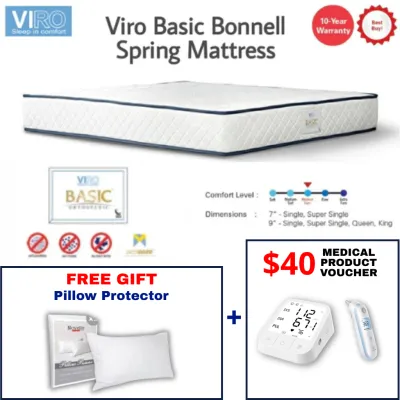
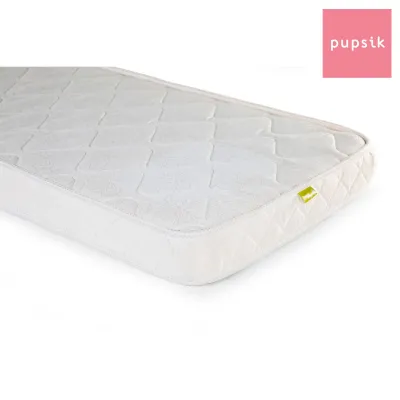
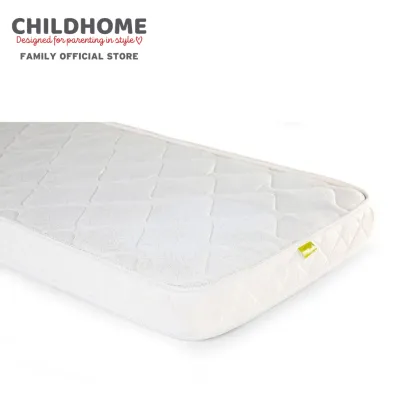
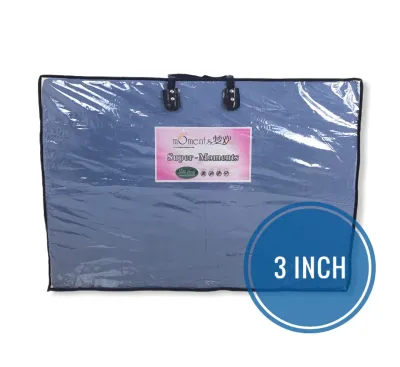
793 Lazada user ratings
Mattress received in good condition within a few days. Super fast delivery. The foam is firm but comfortable. Price is also reasonable. Had …Read full reviewShow less
Mattress received in good condition within a few days. Super fast delivery. The foam is firm but comfortable. Price is also reasonable. Had tried out for a few days and is satisfied with the purchase. Highly recommended.
This foldable foam mattress is a space-saving marvel. Its versatility and comfort make it a practical choice for guests or temporary bedding…Read full reviewShow less
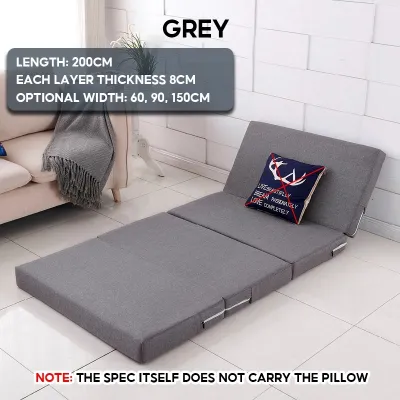
This foldable foam mattress is a space-saving marvel. Its versatility and comfort make it a practical choice for guests or temporary bedding, offering a convenient solution without compromising on a good night's sleep.
One day are delivered. Thanks so much seller Mattress very like it and matching pictures
Repeat purchase, comfy & nice foam mattress with fast delivery. Thank you seller!
Compact and easy to store, a little soft but still ok. delivery took long
37 Lazada user ratings
Mattress is firm and wide enough . Easy to fold
Nice and comfortable
🛏️舒适: 压力均衡, 中等硬度,
Prices are valid at publication and may change. Please refer to the product page for the latest price.
Achieving neutral spinal alignment is the ultimate goal of any supportive mattress. When you lie down, your spine should maintain the same natural, gentle curves it has when you are standing upright. If a mattress is too soft, your heaviest parts will sink too far, pulling your spine out of alignment and straining the surrounding muscles and ligaments. If the mattress is too firm, it will push against your body’s natural curves, leaving gaps of unsupported space and forcing your muscles to work overtime to keep your body stable. A truly responsive mattress adapts dynamically to your movements, distributing your weight evenly and relieving pressure where it is needed most.
Matching Bed and Basics Mattress Types to Your Sleep Position
When browsing the Bed and Basics selection, you will encounter several primary mattress construction types, each offering distinct benefits for different sleeping styles. Traditional innerspring mattresses rely on interconnected coils that provide a highly buoyant, traditional feel with excellent airflow, though they may transfer motion across the bed when a partner moves. Pocket spring mattresses improve on this design by enclosing each coil in its own fabric pocket, allowing them to compress independently. This independent movement provides targeted contouring to your body shape while significantly reducing motion transfer, making it an excellent choice for couples.

Memory foam mattresses use dense, polyurethane-based foams that react to body heat and pressure, slowly contouring to your exact shape to distribute weight evenly and eliminate pressure points. While memory foam offers exceptional motion isolation and pressure relief, it can sometimes retain heat, which is an important consideration in Singapore’s warm, humid climate. Hybrid mattresses combine the supportive, breathable foundation of pocket springs with the contouring comfort layers of memory foam or latex on top. This hybrid design seeks to offer the best of both worlds: the deep pressure relief of foam paired with the responsive bounce and airflow of coils. Latex mattresses, made from natural or synthetic rubber, offer a highly responsive, resilient feel that lifts the body rather than cradling it, providing excellent durability and natural temperature regulation.
Ideal Mattress Types for Side Sleepers
Side sleepers require a mattress construction that prioritizes deep contouring and pressure relief. Because the shoulders and hips project outward in this position, they bear the brunt of the body’s weight against the mattress surface. If the comfort layers are too thin or firm, these areas will experience high pressure, leading to restricted blood circulation, numbness, and frequent tossing and turning. To prevent this, side sleepers should look for mattresses featuring thick comfort layers of memory foam, gel-infused foam, or plush pillow tops that can gently cradle these prominent joints.
In terms of firmness, a medium-soft to medium feel is generally ideal for side sleeping. This level of firmness allows the shoulders and hips to sink just enough to align the spine horizontally, while still providing sufficient upward support to keep the waist and torso from sagging. Hybrid models with pocketed coils and a thick foam comfort layer are highly effective here, as the individual coils adjust to the sharp curves of the shoulders and hips while the foam minimizes joint friction. If you prefer an all-foam mattress, ensure it has a multi-layered design with a softer transition foam layer to prevent you from pressing directly against the firm support core.
Ideal Mattress Types for Back Sleepers
Back sleepers need a balanced combination of consistent support and gentle contouring to maintain a healthy posture. When lying on your back, your head, shoulders, and hips should rest comfortably while the mattress fills in the natural gap beneath your lower back. If the mattress is too soft, your hips will sink too deeply into the core, creating a hammock effect that strains the lumbar muscles and can lead to chronic lower back pain. If the mattress is too firm, it will fail to conform to the curve of your lower back, leaving your lumbar spine completely unsupported and suspended in the air.
To achieve the perfect balance, back sleepers should focus on hybrid or medium-firm pocket spring mattresses. The pocketed coils provide a sturdy, resilient foundation that keeps the pelvis properly elevated, while a moderate comfort layer of high-density foam or latex contours slightly to the lower back to relieve tension. This setup ensures that your weight is distributed evenly across the entire surface of the bed. Avoid mattresses with overly thick, plush pillow tops that lack a supportive underlying structure, as these can gradually sag under your hips over time and compromise your spinal alignment.
Ideal Mattress Types for Stomach and Combination Sleepers
Stomach sleepers and combination sleepers have highly specific support requirements that demand careful attention to mattress responsiveness and firmness. Sleeping on your stomach is widely considered the most challenging position for spinal alignment, as gravity naturally pulls your midsection downward. If your mattress is too soft, your pelvis will sink deep into the comfort layers, hyperextending your lower spine and causing significant lower back strain. To prevent this, stomach sleepers require a firm to extra-firm mattress with a highly supportive core, such as a dense innerspring system or a high-density foam base, to keep the hips and pelvis elevated in line with the shoulders.
Combination sleepers, on the other hand, need a mattress that facilitates easy movement as they transition between different positions throughout the night. If a mattress has too much “sink” or a slow-moving memory foam surface, combination sleepers may feel trapped in one spot, requiring extra physical effort to turn over, which can disrupt deep sleep cycles. For these sleepers, a highly responsive hybrid mattress or a latex model is ideal. The natural bounce of latex or the active push-back of pocket coils allows you to move effortlessly across the surface, while the comfort layers adapt quickly to whatever position you land in, ensuring continuous support and pressure relief.
Choosing the Right Firmness Level for Your Body and Posture
Translating subjective descriptions of mattress firmness into objective criteria is essential when shopping online or in-store. The mattress industry typically uses a standard 1-to-10 firmness scale, where 1 represents an incredibly soft surface with almost no resistance, and 10 represents an extremely rigid, board-like feel. Most mattresses on the market fall between a 3 (soft) and an 8 (firm). Understanding where you sit on this scale requires looking beyond the manufacturer’s marketing labels and evaluating how your specific body type and posture interact with different materials.
For lighter individuals (under 60 kg), a mattress rated as “medium-firm” (around a 6 on the scale) may actually feel quite firm, as they do not have enough body mass to compress the upper comfort layers. These sleepers often benefit from choosing a slightly softer rating (around a 4 or 5) to achieve proper contouring. Conversely, heavier individuals (over 90 kg) will compress comfort layers much more deeply, meaning a “medium” mattress (around a 5) may feel overly soft and lack the necessary support. Heavier sleepers should look for mattresses rated between a 7 and an 8, prioritizing models with robust support cores, such as thicker coil gauges, to ensure the mattress does not bottom out under pressure.
When evaluating a mattress, it is also important to consider the physical properties of the materials and how they behave in real-world conditions. For instance, memory foam is highly temperature-sensitive; it becomes softer and more pliable when exposed to body heat and warm room temperatures, and firmer in cold, air-conditioned environments. In Singapore’s tropical climate, a memory foam mattress may feel slightly softer than it would in a colder region, making open-cell foams or gel-infused layers highly desirable to help dissipate heat and maintain a consistent feel. Additionally, all new mattresses undergo a “break-in” period during the first few weeks of use. The comfort layers will gradually soften and conform to your body shape, so a mattress that feels slightly stiff out of the box will typically settle into its true, intended firmness level after a few weeks of regular sleep.
To verify the true support capabilities of a mattress rather than relying solely on surface feel, check the manufacturer’s technical specifications. Look for details such as foam density, which is measured in kilograms per cubic meter (kg/m³). Higher-density foams (typically 50 kg/m³ or above) offer superior durability, better pressure distribution, and longer-lasting support compared to low-density alternatives. For spring and hybrid mattresses, pay attention to the coil gauge, which refers to the thickness of the steel wire used in the springs. A lower gauge number (such as 12 or 13) indicates thicker, stiffer coils that provide a firmer, more supportive feel, while a higher gauge number (such as 15 or 16) indicates thinner, more flexible coils that offer a softer, more contouring response.
Testing and Buying Your Mattress in Singapore
Before making a final purchase, visiting a local showroom to test your shortlisted Bed and Basics mattresses can save you from the hassle of a mismatched return. When testing a mattress in person, avoid the common mistake of simply sitting on the edge or lying down for just a few seconds. To get an accurate sense of how the mattress will perform overnight, lie down in your primary sleeping position for at least 10 to 15 minutes. If possible, bring your own pillow from home, as the loft and firmness of your pillow significantly affect your overall spinal alignment and how your shoulders settle into the mattress surface. Pay close attention to whether your muscles feel relaxed, whether you feel any pressure points on your hips or shoulders, and how easy it is to roll over.
Beyond the physical feel of the mattress, you must carefully evaluate the post-purchase terms and logistics offered by the retailer. Verify the specific details of the local warranty, ensuring you understand what constitutes a manufacturing defect (such as a permanent sag of a certain depth) versus normal wear and tear. Check the delivery logistics, including whether the delivery team will bring the mattress up to your apartment, assemble it if necessary, and dispose of your old mattress. Be sure to clarify the terms of any trial period or return policy; some retailers offer a comfort trial that allows you to test the mattress at home for a set number of nights, but these policies often come with specific conditions, such as requiring you to use a mattress protector or charging a restocking fee for returns.
Finally, practical spatial measurements are critical to ensure your new mattress fits seamlessly into your home. Before ordering, measure your existing bed frame’s internal dimensions, as standard mattress sizes (Single, Super Single, Queen, King) can vary slightly between different regions and manufacturers. Ensure that the mattress thickness is compatible with your headboard height and does not make the bed too high or too low to get in and out of comfortably. Additionally, measure your doorways, hallways, stairwells, and lift access to guarantee that the delivery team can safely transport the mattress into your bedroom without damaging your walls or the mattress itself.
Frequently Asked Questions (FAQ)
How often should I replace my Bed and Basics mattress?
Generally, a high-quality mattress should be replaced every 7 to 10 years, depending on the materials used, how frequently it is slept on, and how well it has been maintained. Over time, the internal support structures—whether they are steel coils or high-density foam cores—gradually lose their resiliency and ability to rebound, leading to a loss of consistent support. You can identify when it is time for a replacement by looking for clear physical signs of wear. These include visible sagging or body impressions deeper than a few centimeters, persistent squeaking or creaking noises from the springs, or if you consistently wake up with unexplained morning stiffness, backaches, or joint pain. If you find that you sleep significantly better when staying in hotels or guest rooms than you do in your own bed, it is a strong indicator that your current mattress is no longer providing the support your body needs.
Can I use my existing bed frame with a new Bed and Basics mattress?
Yes, you can often use your existing bed frame with a new mattress, but you must verify that the frame provides adequate, flat support to protect the mattress structure and keep your warranty valid. Different mattress constructions require specific types of support; for example, heavy hybrid and memory foam mattresses need a sturdy, unyielding foundation to prevent them from sagging prematurely. If you have a slatted bed base, check the spacing between the slats. Most manufacturers recommend that slats be no more than 5 to 7 centimeters apart to prevent the mattress from squeezing through the gaps and wearing out unevenly. If your frame has wider gaps, you may need to place a solid bunkie board or a sheet of plywood over the slats to create a uniform surface. Always consult the manufacturer’s warranty guidelines, as using an improper or unsupportive bed frame can void your coverage if the mattress suffers structural damage as a result.
Community discussion
Share your experience or ask a question. Comments are reviewed before publication.