
Choosing the right TV console size requires balancing the physical dimensions of your television, the storage requirements of your media equipment, and the layout of your living room. A console that is too small makes your entertainment setup look top-heavy and unstable, while an oversized unit can overwhelm your living space and block essential walkways. To achieve both visual harmony and practical functionality, the console should extend past the sides of your television screen and fit comfortably within your room’s traffic paths.
Measure Your TV and Media Equipment Footprint
Before browsing furniture catalogs, you must establish the exact physical dimensions of your television and any accompanying media components. Many homeowners make the mistake of relying solely on the diagonal screen size advertised by manufacturers. Because diagonal measurements do not account for the bezel or the physical frame of the TV, they do not represent the actual width. Use a measuring tape to find the true horizontal width from left to right, as well as the total height from the bottom of the stand to the top of the frame.
Next, measure the footprint of the TV stand itself if you do not plan to wall-mount the screen. Some televisions use a central pedestal stand, while others feature wide-set legs positioned near the outer edges of the screen. You must ensure the console’s top surface is both wide and deep enough to support this stand securely, leaving a safe margin of space on all sides to prevent accidental tipping.
Products mentioned in this guide
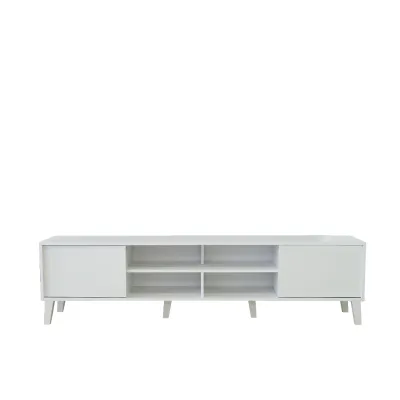
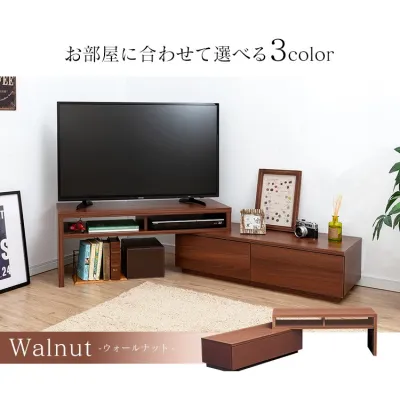
![[INNDESIGN.SG] Benice 2 Tier TV Rack / TV Cabinet / TV Console (Fully Assembled and Free Delivery)](https://img.lazcdn.com/g/p/225466a3f1bb52aa2dfd50ecd977317b.jpg_400x400q80.jpg_.webp)
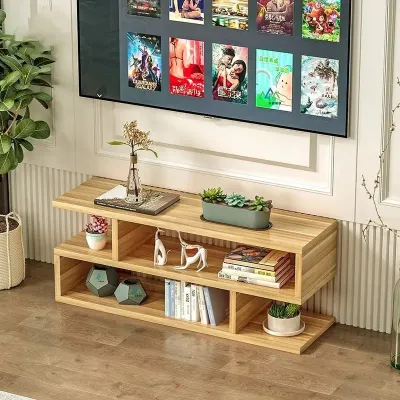
![[SG Ready Stock] Designer TV Cabinet (Wooden TV Console) Home And Style](https://img.lazcdn.com/g/p/87e73cf2dcca66015fc1d6ab80d2c425.jpg_400x400q80.jpg_.webp)
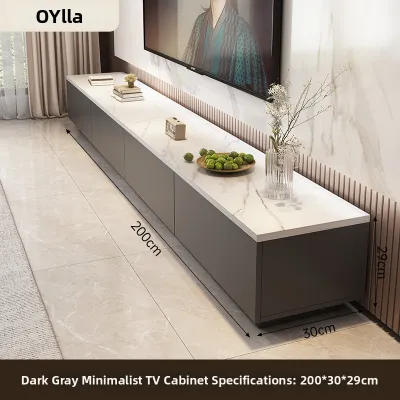
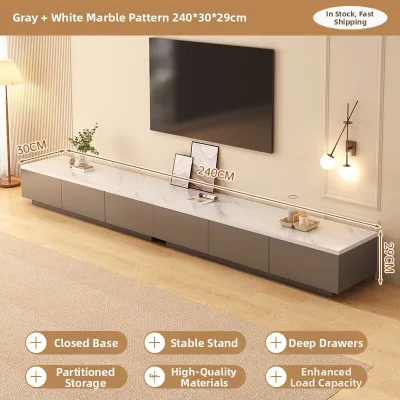
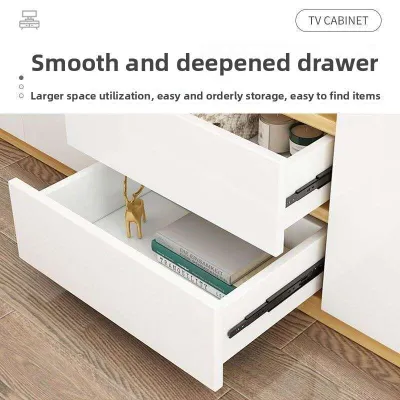
Prices are valid at publication and may change. Please refer to the product page for the latest price.
Beyond the television, catalog every piece of media equipment that will reside on or inside the console. Measure the width, height, and depth of soundbars, gaming consoles, streaming devices, and AV receivers. Pay close attention to the depth of these devices, as rear cable connections often require an additional 5 to 10 centimeters of clearance behind the unit. Check the manufacturer specifications for each electronic device to identify its ventilation requirements, ensuring there is sufficient open space around the sides and top to prevent overheating during extended use.
Calculate the Ideal TV Console Length for Visual Balance
Achieving visual balance in your living room relies on maintaining proper proportions between your television and the console beneath it. As a general interior design principle, your TV console should be wider than your television screen. A common guideline is to select a console that is at least 10 to 20 percent wider than the physical width of the TV on each side. This extra length creates a stable visual base, preventing the setup from looking top-heavy or awkward.

For a highly balanced aesthetic, aiming for a console length that is approximately 1.5 times the physical width of your television is often recommended. For example, if your television has an actual physical width of 120 centimeters, a console length of around 180 centimeters provides an excellent visual proportion. This extra space on either side of the screen also offers practical benefits, allowing you to place small decorative items, books, or compact speakers without crowding the television.
The overall scale of your living room and adjacent furniture should also influence your sizing strategy. If you have a large, deep sofa or a high ceiling, a shorter console can look dwarfed and out of place, even if it technically fits the TV. Conversely, in smaller spaces, an exceptionally long console can dominate the wall and make the room feel cramped. If you own an ultra-wide screen or a very large television, prioritize a low-profile, extra-long console to keep the center of gravity low and maintain a grounded, proportionate appearance.
Determine Depth and Height for Ergonomic Viewing
Selecting the correct depth and height for your TV console is essential for both equipment safety and physical comfort. The depth of the console must comfortably accommodate your deepest piece of media equipment. Standard consoles typically range from 40 to 50 centimeters in depth. If you use a high-performance AV receiver or an older gaming console, verify these dimensions carefully, as these units often require deeper shelves and extra room at the back for thick HDMI and power cables to bend without damage.
Ergonomics should dictate the height of your console. When you are seated on your sofa, your eyes should naturally align with the center of the television screen to prevent neck strain. For most standard sofa heights, a TV console height of 45 to 60 centimeters keeps the screen at a comfortable viewing level. If your television rests on a tall stand, you may need a lower console to keep the screen from sitting too high.
If you plan to wall-mount your television above the console, the height considerations shift. The console no longer needs to support the weight of the screen, but it still serves as a visual anchor and storage hub. In this scenario, mount the television first at your ideal seated eye level, and then select a console height that leaves a clean gap of 10 to 20 centimeters between the bottom of the TV and the top of the console. This gap maintains a modern, airy look while keeping your media accessories within easy reach.
Assess Your Living Room Layout and Walkway Clearance
A TV console must fit seamlessly into the physical flow of your home without obstructing daily movement. Begin by measuring the designated wall space where the console will stand, taking note of any wall outlets, light switches, internet ports, or structural pillars. Ensure the console does not block access to these essential utilities or force you to place your seating at an awkward angle.
Walkway clearance is a critical factor, particularly in compact apartment layouts such as Singapore HDB flats and condominiums. To maintain comfortable traffic paths, aim to leave at least 60 to 90 centimeters of open space between the front of the TV console and the edge of your coffee table or sofa. If your console features hinged doors or pull-out drawers, measure the depth of these compartments when fully extended to ensure they do not collide with other furniture or block walkways when opened.
In smaller living rooms, maximizing floor space is key to preventing a cluttered feel. Consider wall-mounted or floating TV consoles, which free up floor space underneath and create the illusion of a larger room. If you choose a freestanding console, look for models with sliding doors or open shelving, as these designs do not require extra clearance space to open. Always balance the length of the console with the scale of your main sofa to ensure the entire arrangement feels cohesive and intentional.
Common TV Console Sizing Mistakes to Avoid
Avoiding common measurement and planning pitfalls can save you from the hassle of returning heavy furniture or dealing with an awkward setup. The most frequent error is assuming that a TV’s advertised diagonal size represents its actual physical width. A 65-inch television, for instance, refers to the diagonal screen measurement; its actual physical width is usually closer to 145 centimeters. Always measure the physical width with a tape measure before selecting your console.
Another common oversight is neglecting to measure the depth of the TV stand base. While modern screens are incredibly thin, the stands or feet that support them can be surprisingly deep and wide. If the console’s top surface is too narrow, the stand may overhang the front or back edge, creating a severe safety hazard.
Finally, always check delivery access routes before finalizing your purchase. Measure the height and width of your front door, entryways, stairwells, and especially the elevator cabin if you live in a high-rise HDB or condominium. An extra-long, fully assembled console may fit perfectly on your living room wall but prove impossible to transport up the lift or through your entryway. If access is tight, look for flat-pack options or modular designs that can be assembled directly in your living room.
Frequently Asked Questions (FAQ)
Can a TV console be narrower than the TV?
It is highly recommended to avoid using a TV console that is narrower than your television. Visually, a narrower console creates an unbalanced, top-heavy appearance that makes the entire setup look unstable and cramped. From a safety perspective, if the television rests on a stand rather than being wall-mounted, a narrower console increases the risk of the TV stand overhanging the edges, making it highly susceptible to tipping over if bumped.
How much ventilation space do I need inside the console?
To prevent electronic components from overheating, you should consult the user manuals of your specific AV receivers, gaming consoles, and media players for exact clearance metrics. Generally, electronics require at least 5 to 10 centimeters of open space on the sides and top to allow heat to dissipate. When selecting a console, look for designs with open shelving, slatted doors, or built-in cable management cutouts that promote continuous airflow.
Community discussion
Share your experience or ask a question. Comments are reviewed before publication.