
Finding the right shoe rack plastic organizer for a Singapore home requires balancing storage capacity with tight spatial limits. In typical HDB flats and condominium units, entryways are highly functional transition zones where every centimeter matters. A poorly sized rack can block your main door, obstruct emergency pathways, or quickly become an eyesore. By understanding standard dimensions, calculating your actual storage needs, and assessing structural limits, you can select a plastic shoe rack that fits your space perfectly while keeping your footwear organized and accessible.
Measure Your HDB or Condo Entryway First
In Singapore’s high-density housing, entryway footprints are highly optimized. Before browsing online marketplaces or visiting local home goods stores, you must take precise measurements of your physical space. Grab a measuring tape and map out the floor width, floor depth, and vertical clearance of your designated storage spot.
Start by measuring the available floor width and depth while keeping the swing radius of your main door and metal gate in mind. In many HDB layouts, the main door opens inward, which can easily collide with a shoe rack placed directly behind it. If your door opens outward, the metal gate’s swing or lock mechanism might still clip any furniture placed too close to the frame.
Products mentioned in this guide
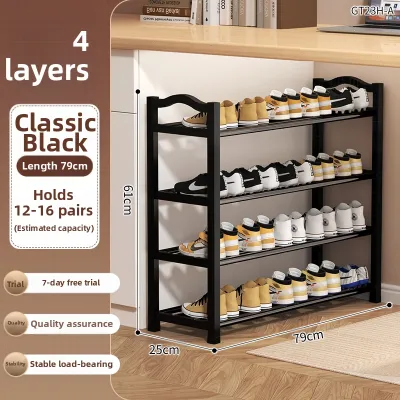
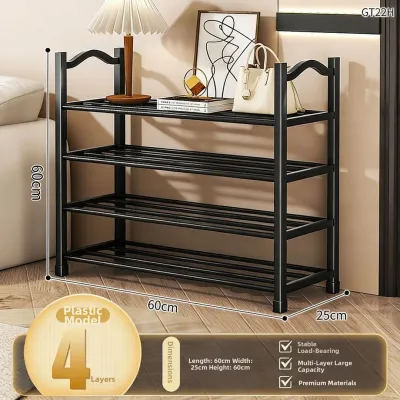
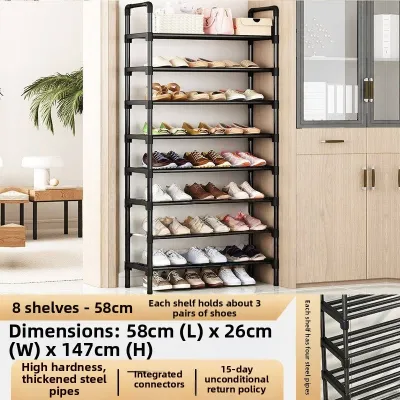
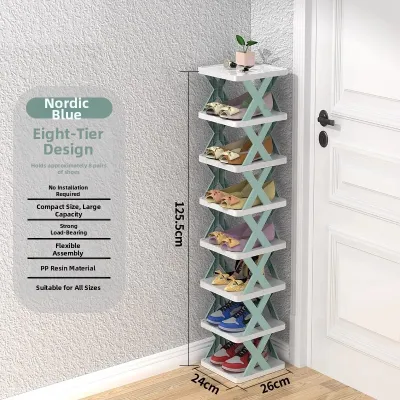
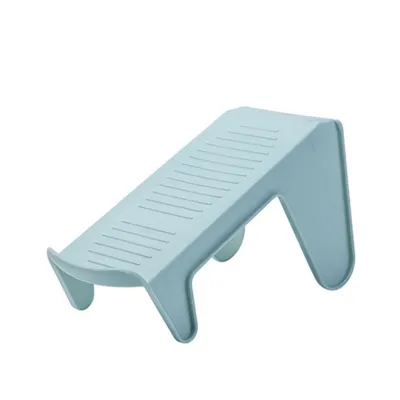
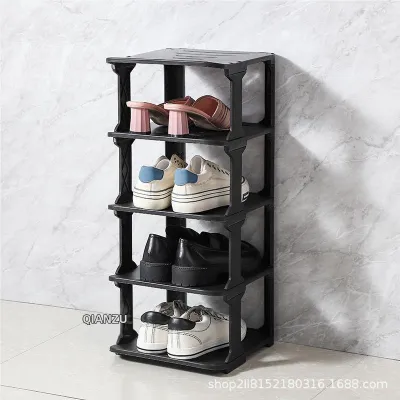
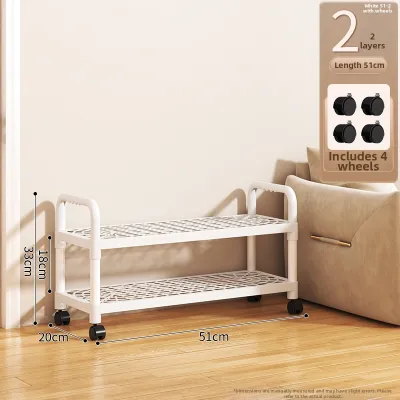
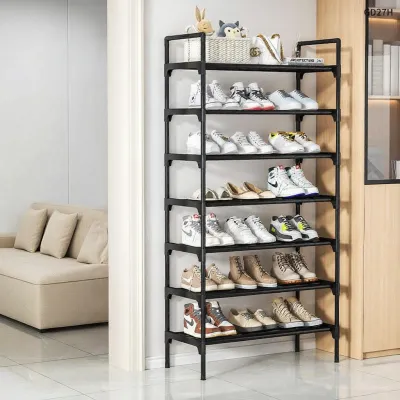
Prices are valid at publication and may change. Please refer to the product page for the latest price.
Another critical factor is the location of your household electrical distribution board (DB) box or fiber termination point. These utility boxes are frequently situated near the main entrance of modern BTO flats and condos. Your shoe rack plastic unit must not block access to these panels, as you may need to reach them quickly during a power trip or for internet maintenance.
To maintain a safe and comfortable home environment, you must leave a clear walking path. A general baseline of 60 to 80 cm is recommended for comfortable passage through the entryway. However, you should verify your actual household needs; if you regularly move baby strollers, bulky groceries, or require mobility aids like wheelchairs, you will need a wider clearance of at least 90 to 100 cm.
Do not forget to check vertical height clearance. This is especially important if you plan to tuck your shoe rack under a floating entryway console, place it near a low stairwell landing, or position it below wall-mounted mailboxes and key organizers. Measuring these boundaries beforehand prevents you from buying a unit that is too tall to fit under existing fixtures.
Standard Shoe Rack Plastic Sizes and Layout Fits
Selecting the ideal configuration of a shoe rack plastic organizer depends heavily on your apartment’s architectural layout. Plastic is a highly versatile material, allowing manufacturers to produce slim, wide, or modular designs that cater to different spatial constraints.

Slim and Tall Racks for Narrow Corridors
For tight HDB corridors, narrow foyers, or small condo entryways, slim and tall plastic racks are highly effective. These units typically feature narrow widths ranging from 40 to 50 cm and a shallow depth of 25 to 30 cm. They are designed to sit flush against the wall, taking up minimal floor space while utilizing vertical height to maximize storage.
While maximizing vertical space is an excellent strategy for tight footprints, taller plastic units require strict stability checks. Because plastic is lightweight, a tall, narrow rack can become top-heavy when loaded with shoes. Always place heavier footwear on the bottom shelves to lower the center of gravity, and check if the unit can be secured to the wall to prevent accidental tipping.
Wide and Low Racks for Open Foyers
If your apartment features a more spacious foyer or a dedicated walk-in closet area, a wide and low shoe rack is often the more practical choice. These units generally measure 60 to 80 cm in width and have a lower overall height, typically featuring only two to four tiers. This configuration provides a much lower center of gravity, which inherently improves the stability of the plastic structure.
Some low-profile plastic racks are designed to double as a seating bench, offering a convenient spot to sit while putting on or taking off your shoes. However, you must exercise caution: only use the rack as a bench if the manufacturer explicitly states a weight limit for sitting. Unrated plastic can easily crack or collapse under adult weight, leading to potential injury.
Stackable and Modular Plastic Units
Modular plastic shoe organizers offer unparalleled flexibility, allowing you to adjust your storage capacity as your shoe collection grows. These units consist of individual plastic boxes or interlocking tiers that can be configured horizontally or stacked vertically to fit unique architectural niches.
When opting for modular designs, it is crucial to inspect the quality of the interlocking mechanisms. Look for robust pegs, clips, or snap-fit joints that lock the units securely together. Additionally, always adhere to the maximum safe stacking height specified by the manufacturer, and ensure the base tiers are rated to support the cumulative weight of the upper tiers when fully loaded.
Calculate Capacity Based on Your Shoe Collection
To choose the right size shoe rack, you must calculate your required storage capacity based on your household size and the specific footwear types you own. A rack that is too small will lead to cluttered floors, while an oversized rack will unnecessarily consume valuable entryway space.
You can estimate your capacity needs by using a simple framework. Standard plastic shoe rack tiers typically hold two to three pairs of flat shoes, such as sandals, flip-flops, or low-profile canvas sneakers. However, bulkier footwear requires significantly more horizontal and vertical clearance.
- Flat Shoes & Sandals: Require approximately 15 to 20 cm of width per pair and a tier height of 10 to 12 cm.
- Bulky Sneakers & Running Shoes: Require 22 to 25 cm of width per pair and a tier height of 15 to 18 cm.
- High Heels & Boots: May require a tier height of 20 to 35 cm, or need to be stored on the top shelf where vertical space is unrestricted.
To keep your entryway manageable, consider separating your daily-use “drop zone” shoes from your seasonal or occasional footwear. Keep only your most frequently worn shoes on the entryway plastic rack. Store formal shoes, winter boots, and occasional heels in alternative storage areas, such as under-bed boxes or bedroom closets, to free up space near the front door.
Finally, remember to factor in future growth when selecting your shoe rack size. If you have a growing family with young children whose shoe sizes will increase, or if you are an avid sneaker collector, your storage needs will inevitably expand. Selecting a modular or slightly larger rack now will save you from having to replace the entire unit in a year or two.
Check Plastic Build Quality and Stability Limits
While plastic shoe racks are highly affordable, lightweight, and water-resistant, their build quality and structural limits vary significantly. Evaluating these factors before purchasing ensures your rack remains safe and functional for years to come.
Always check the manufacturer’s label or product specifications for the maximum load capacity per tier. High-density plastics like polypropylene (PP) or acrylonitrile butadiene styrene (ABS) offer better structural integrity than cheaper, thinner plastics. Keep in mind that plastic shelves can bow, sag, or even crack over time under the weight of heavy work boots, leather dress shoes, or wet footwear.
Stability is a paramount safety concern, especially in households with children or pets. Because plastic is lightweight, a fully loaded rack can easily tip over if bumped or pulled. Look for designs that feature a wider base footprint, non-slip rubber feet, or included anti-tip wall-anchoring kits. If you are assembling a tall, narrow unit, anchoring it to the wall is highly recommended to eliminate tipping risks.
Ventilation is another critical factor to consider, particularly in Singapore’s hot and humid tropical climate. Closed plastic cabinets can trap moisture and odor, creating an ideal breeding ground for mold, mildew, and bacteria on your footwear. Opt for slatted, perforated, or open-front plastic designs that promote continuous airflow. Additionally, always make it a habit to clean and dry your shoes thoroughly before placing them on the rack to prevent mold from developing.
Common Sizing and Placement Mistakes to Avoid
Avoiding common sizing and placement errors can save you from the frustration of a poorly fitting shoe rack. Many homeowners make simple mistakes during the buying process that compromise both safety and convenience.
One of the most frequent errors is ignoring door clearance. Homeowners often measure the floor space but forget to account for how the main door, security gate, or adjacent bomb shelter door swings. A rack that blocks a door even slightly will cause constant daily frustration and can damage both the door frame and the plastic rack over time.
Another mistake is overestimating the capacity of individual tiers. It is easy to assume that a 60 cm shelf will easily fit three pairs of shoes, but if those shoes are bulky basketball sneakers or wide running shoes, you may only be able to fit two pairs comfortably. Always measure the width of your widest shoes and compare them against the internal shelf dimensions.
Lastly, avoid buying a rack that is too deep for your space. A rack that protrudes too far into a narrow internal corridor or an external HDB lift lobby can create a serious tripping hazard, especially in low-light conditions. Stick to shallow designs of 25 to 30 cm for tight walkways to ensure safe, unobstructed movement.
Frequently Asked Questions (FAQ)
Can I place a shoe rack outside my HDB main door?
You must check the current guidelines set by the Housing & Development Board (HDB) and your local town council before placing any furniture in common corridors. Generally, keeping personal items like shoe racks in common areas is highly restricted to ensure clear fire escape routes. A minimum clear escape path of 1.2 meters must be maintained at all times, and placing flammable items in the corridor is strictly prohibited to ensure unobstructed access for emergency services.
How should I clean and maintain a plastic shoe rack?
To clean a plastic shoe rack, start by removing all shoes and wiping down the surfaces with a soft, damp cloth and a mild detergent or dish soap. Avoid using harsh chemical solvents, bleach, or abrasive scrubbing pads, as these can scratch, discolor, or degrade the plastic material over time. Ensure the entire rack is completely dry before placing your shoes back on the shelves to prevent moisture buildup and mold growth.
Community discussion
Share your experience or ask a question. Comments are reviewed before publication.