
To determine the ideal fabric sofa size for a typical Housing & Development Board (HDB) balcony, you must balance personal comfort with physical clearance. In Singapore’s compact residential layouts, balconies serve as precious extensions of the living space, but their limited footprints require precise planning. A standard HDB balcony comfortably accommodates a compact fabric sofa with an overall depth of 70 cm to 80 cm and a width of 120 cm to 150 cm. This sizing ensures you retain the essential 60 cm to 90 cm of unobstructed walkway clearance required for comfortable movement, cleaning, and access to other utilities. Selecting the right dimensions prevents the balcony from feeling cramped while preserving the smooth flow of light and air into your home.
Understanding HDB Balcony Dimensions and Walkway Clearance
Modern HDB flats feature a variety of balcony designs, but most share a common trait: limited depth. A typical HDB balcony ranges from 90 cm to 120 cm in depth, though some larger units offer up to 150 cm. However, the actual usable floor space is almost always smaller than the official floor plan indicates. Architectural features such as parapet walls, concrete planter boxes, drainage grates, sliding door tracks, and structural pillars frequently encroach on the floor area, shaving off valuable centimeters from the usable depth.
Establishing a clear walkway is the most critical factor for balcony livability. Ergonomic standards recommend a minimum of 60 cm of unobstructed path for a single person to pass sideways. For a natural, front-facing walk where you do not have to turn your body, an unobstructed clearance of 75 cm to 90 cm is highly recommended. If your balcony serves as a pathway to a laundry drying area, a washing machine, or an air-conditioner condenser ledge, maintaining this larger clearance becomes a necessity rather than a luxury.
Products mentioned in this guide
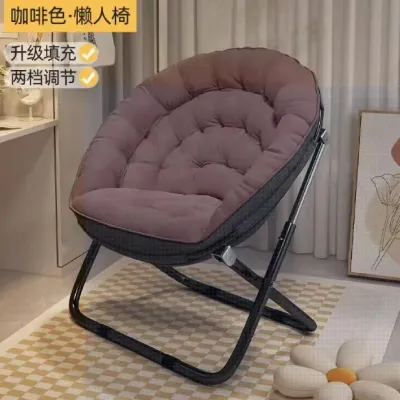
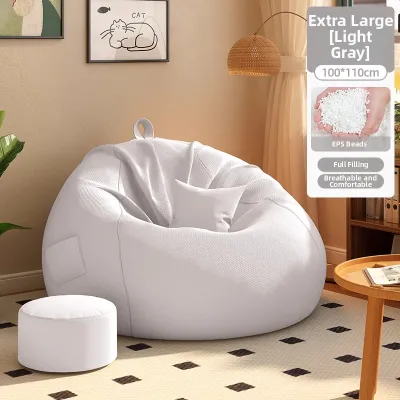
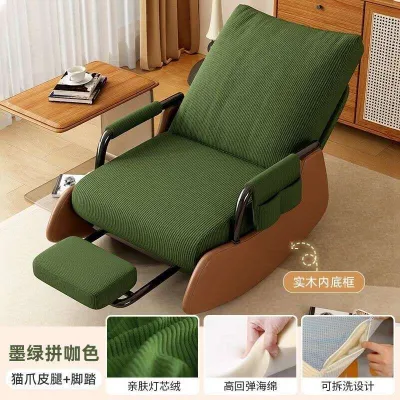
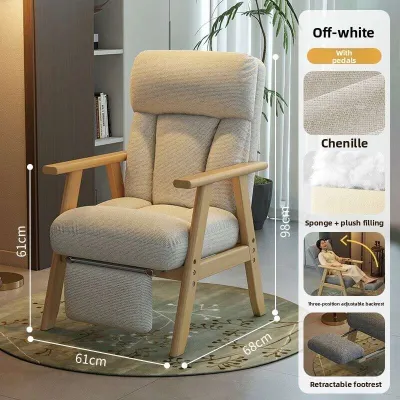
Prices are valid at publication and may change. Please refer to the product page for the latest price.
To protect this walkway, the sofa’s depth—measured from the back frame to the front edge of the seat cushion—is the most important dimension to monitor. While many homeowners focus primarily on the sofa’s width (length) to ensure it fits along a specific wall, an overly deep sofa will instantly block the walkway. For instance, a standard indoor sofa with a depth of 95 cm placed on a 110 cm deep balcony leaves a mere 15 cm of clearance, rendering the space entirely impassable. Keeping the sofa depth capped at 70 cm to 80 cm ensures that even on a narrow balcony, you retain a comfortable 30 cm to 40 cm of walking space, which can be combined with the open space of the doorway to maintain comfortable circulation.
Maximum Fabric Sofa Dimensions for Different Balcony Layouts
Narrow Balconies (Prioritizing Depth)
For narrow HDB balconies with a depth of 90 cm to 110 cm, depth is the absolute priority during selection. In these tight quarters, a compact loveseat or a 1.5-seater apartment-sized profile is the most practical choice. The maximum recommended depth for a sofa in this layout is 65 cm to 75 cm, while the width should ideally be kept between 110 cm and 130 cm. This compact footprint allows for cozy seating for one or two people without completely dominating the narrow floor plate.

When shopping, account for the physical profile of the backrest and cushions. Many sofas feature heavily padded, plush back cushions or a significantly slanted backrest designed for deep lounging. While these features increase comfort, they push the actual seating area forward and require the entire sofa frame to sit further away from the wall, effectively increasing the sofa’s physical footprint. For narrow balconies, look for designs with upright, slim backrests and firmer, low-profile cushions that provide support without wasting precious depth.
Position the sofa flush against the solid structural wall rather than the outer railing. Placing heavy furniture against the outer railing can create serious safety hazards, particularly if you have young children or pets who might use the sofa as a climbing platform to reach the top of the railing. Furthermore, keeping the sofa against the solid wall preserves your view from the living room, prevents the furniture from blocking natural light, and shields the fabric from the worst of the direct sun and driving rain.
Wider or L-Shaped Balconies (Managing Width and Flow)
Wider balconies (depths of 120 cm to 150 cm) or L-shaped configurations offer more flexibility for larger fabric sofas. For these spacious layouts, a small modular sofa or a compact L-shaped sectional can work beautifully. A modular sofa with an overall depth of 80 cm and a width of 160 cm to 180 cm can fit comfortably, provided you position the longer section strategically. Modular designs are highly advantageous because they allow you to separate the pieces or rearrange them to suit different occasions, such as opening up the floor space when hosting a larger gathering.
The primary challenge in a wider balcony is maintaining a logical flow to other functional zones. HDB balconies are rarely used solely for relaxation; they often house laundry drying systems, washing machines, potted plants, or storage cabinets. When placing a wider sofa, you must ensure it does not block access to these areas. For example, if your balcony has a built-in water tap and drainage outlet for a washing machine at one end, the sofa must be positioned far enough away to allow the appliance door to open fully and to give you comfortable standing room to load and unload laundry.
Aim to leave at least 80 cm of clear space between the sofa and any utility zones. If you plan to add a small coffee table or a side table, opt for lightweight, mobile designs that can be easily moved out of the way. A narrow, C-shaped side table that slides over the arm of the sofa is an excellent space-saving alternative to a traditional central coffee table, keeping the central walkway entirely clear for foot traffic.
Space-Saving Fabric Sofa Designs to Maximize Movement
To optimize a compact HDB balcony, look for specific design features that minimize both the physical footprint and the visual weight of the furniture. Choosing the right design elements can make a significant difference in how spacious and open your balcony feels.
- Armless or Slim-Arm Profiles: Traditional sofas often feature wide, rolled, or padded arms that add 15 cm to 30 cm to the overall width without providing extra seating. Prioritize armless designs or sofas with ultra-slim "track" arms (under 5 cm in width) to maximize usable seating while keeping the overall width compact.
- Raised Legs and Elevated Frames: Sofas that sit flush against the floor look heavy and blocky, making a small balcony feel cluttered. Instead, select a sofa with tall, slender legs (at least 15 cm off the ground). This elevation allows light to pass underneath, creating visual openness and making cleaning outdoor dust much easier.
- Low-Profile Backrests: A towering backrest blocks the line of sight from your living room, making both indoor and outdoor spaces feel enclosed. Opt for a low-profile backrest (under 75 cm in height) that sits below your balcony railing to keep sightlines clear and allow natural ventilation to flow freely.
- Strategic Fabric Selection: Singapore's high humidity, intense sunlight, and rain splashes make your fabric choice paramount. Standard indoor fabrics like cotton or linen will quickly fade and develop mold. Prioritize outdoor-rated, UV-resistant, and water-repellent fabrics such as solution-dyed acrylics or olefins, and look for fully removable, washable covers.
How to Measure and Plan Your Balcony Before Buying
Conducting precise measurements and physical planning is essential to avoid costly delivery and layout mistakes. Never rely on visual estimation or general floor plans alone, as minor architectural details can completely alter how a piece of furniture fits.
First, measure the exact usable floor depth and width of your balcony, rather than simply measuring wall-to-wall. You must explicitly exclude any protruding elements that reduce the actual floor space. These include skirting boards (which can protrude 1.5 cm to 2 cm), sliding door tracks, window grilles, wall-mounted electrical outlets, water pipes, and safety barriers. Measure the distance from the outermost edge of these protrusions to find the true maximum dimensions your sofa can occupy.
Second, plan the delivery route. Many homeowners purchase a sofa that fits their balcony, only to discover it cannot physically reach their unit. You must measure the width and height of the HDB passenger lift doors, the interior depth of the lift cabin, the width of the common corridor, and the turning clearance at the lift lobby corners. Additionally, measure your flat’s main entrance door and any internal hallways or sliding glass doors leading to the balcony. If your delivery route has tight corners, consider purchasing a modular sofa or a flat-packed model that can be assembled directly on the balcony.
Third, use painter’s tape to map out the exact footprint on your balcony floor. Leave this mockup in place for a few days. Walk around the taped area, practice opening and closing your balcony doors, and perform your daily household chores, such as hanging laundry or watering plants. This physical visualization will immediately reveal whether the remaining walkway feels comfortable or if the sofa will cause daily frustration by blocking your natural movement.
Common Sizing Mistakes to Avoid
A successful balcony setup requires anticipating how different elements in the space interact. Avoiding these common spatial planning mistakes will ensure your balcony remains functional, comfortable, and safe.
One frequent oversight is forgetting to account for wall- or ceiling-mounted fixtures. In many HDB flats, balconies are equipped with retractable laundry racks, manual pulley clotheslines, or automated ceiling drying systems. Before buying a sofa, lower your laundry rack to its lowest point and measure its clearance. A sofa with a high backrest or deep seat can easily obstruct the path of a lowering laundry rack, preventing you from utilizing your drying system effectively. Similarly, ensure that wall-mounted air-conditioning ledges or protruding window grilles do not press against the back of the sofa, which can damage both the fabric and the fixtures over time.
Another mistake is ignoring balcony door clearance. Ensure the sofa frame does not block sliding doors or prevent them from opening fully. If you have swing-out glass doors, you must leave a completely clear arc for the door to open without striking the corner of the sofa. Forcing a door to stop short against a sofa cushion not only restricts ventilation but also places constant friction on the fabric, leading to premature wear and tear.
Finally, avoid overestimating usable depth by measuring from the bare concrete wall. Always measure from the outer edge of the skirting board or any low planter ledges. A difference of just two centimeters can be the deciding factor in whether your sliding door can open smoothly or whether your walkway becomes a tight squeeze. By taking the time to verify these small details, you can select a fabric sofa that enhances your outdoor living experience without compromising the functionality of your home.
Frequently Asked Questions (FAQ)
Can I use a standard indoor fabric sofa on an HDB balcony?
You should avoid using a standard indoor fabric sofa on an open or semi-open HDB balcony in Singapore. Standard indoor fabrics, such as cotton, linen, velvet, or low-grade polyester, are not designed to withstand Singapore’s extreme tropical climate. The combination of intense ultraviolet (UV) radiation, high relative humidity, and wind-driven rain will quickly cause standard indoor fabrics to fade, weaken, and harbor mold, mildew, and unpleasant odors. Additionally, the internal wooden frames and standard foam cushions of indoor sofas are highly susceptible to rotting and warping when exposed to airborne moisture.
A standard indoor fabric sofa is only acceptable if your HDB balcony is fully enclosed with approved glass windows or high-quality zip blinds, and is regularly air-conditioned to control humidity. If your balcony is open or semi-open, you must select a sofa specifically rated for outdoor use. These models feature UV-treated, water-repellent fabrics (such as solution-dyed acrylic) and quick-dry foam cushions wrapped in breathable mesh, which allow moisture to drain rapidly. If you already have a semi-outdoor fabric sofa, using a heavy-duty, waterproof furniture cover when the sofa is not in use is highly recommended to prolong its lifespan and protect it from sudden downpours.

Community discussion
Share your experience or ask a question. Comments are reviewed before publication.