
Finding the right furniture for a compact HDB living room is often a balancing act between maximizing utility and keeping walkways clear. When space is at a premium, adding a corner table can easily turn a cozy seating area into a cramped obstacle course if the dimensions are not carefully planned. To fit a corner table without blocking traffic, you must maintain a minimum walkway clearance of 60 to 90 centimeters around the piece, select a shape that complements your seating arrangement, and accurately account for architectural features like skirting boards and power outlets before making a purchase. By taking a systematic approach to spatial planning, you can enhance your living room’s functionality while preserving a breezy, open atmosphere.
How much clearance do you need around a corner table for safe traffic flow?
To maintain comfortable and safe movement in your living room, you should aim for a minimum clearance of 60 centimeters for secondary pathways and at least 90 centimeters for primary traffic routes. Secondary pathways include the tight spaces between your sofa armrest, the corner table, and adjacent walls, where foot traffic is light and occasional. Primary routes, such as the main walkway leading from your front entrance to the kitchen or balcony, require a wider clearance of 90 centimeters to allow two people to pass each other without awkward maneuvering.
When planning these clearances, it is essential to consider the specific dynamics of your household. If you share your home with family members who use mobility aids like walking frames or wheelchairs, you will need to expand your clearance zones to at least 90 to 100 centimeters to ensure barrier-free access. Similarly, households with active pets or young children benefit from wider pathways to prevent accidental collisions with the table, which could lead to tipped-over lamps or spilled items.
Products mentioned in this guide
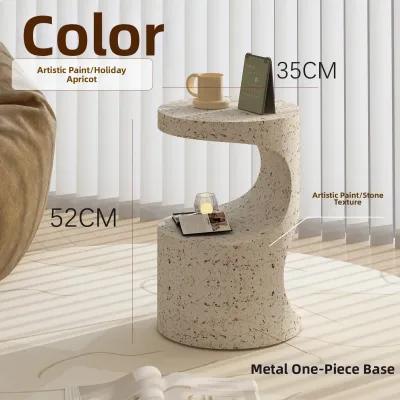
5 Lazada user ratings
The details are really perfect, and overall it's very nice with great value for money.
I finally got the side table I've been wanting, and it really didn't disappoint me.
Light and feels good.
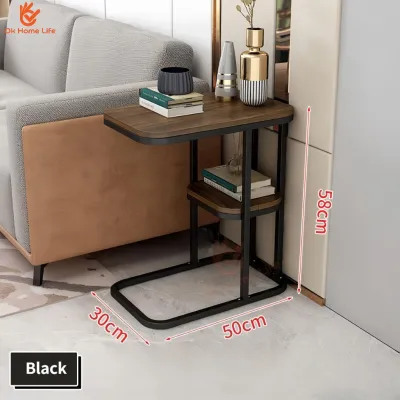
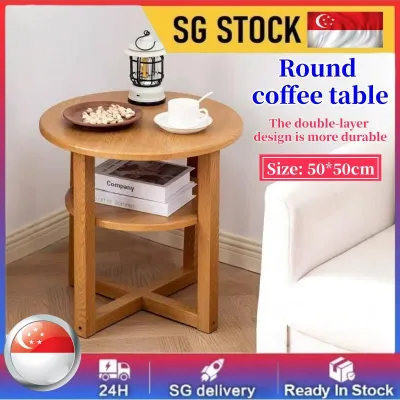
Prices are valid at publication and may change. Please refer to the product page for the latest price.
Beyond physical walking space, you must verify that the proposed table placement does not interfere with the functional elements of your living room. Check the swing paths of nearby doors, including bedroom doors, household shelter doors, or cabinets, to ensure they can open fully without striking the table. If your corner table is positioned near a balcony or window, ensure it does not block sliding door tracks or prevent you from easily reaching window handles and operating louvers. Additionally, allow enough space for curtains or blinds to hang and operate smoothly without getting bunched up behind the furniture.
How do you measure your specific HDB living room corner accurately?
Measuring your living room corner accurately requires mapping the actual usable floor space rather than simply measuring the length of the walls. Because architectural features can prevent a table from sitting flush against the wall, relying solely on wall-to-wall measurements often leads to buying a table that is too large for the physical space.

To begin, gather a reliable metal measuring tape, as fabric tapes can stretch or sag, leading to inaccurate readings. Measure the width and depth of the corner floor area where the table will sit, extending your tape measure out to the boundary of your designated walkway. It is helpful to sketch a quick floor plan on paper to record these dimensions clearly.
Next, identify and account for common architectural obstacles that reduce your usable floor footprint. Skirting boards run along the base of the walls and typically protrude by 1.5 to 2 centimeters, meaning your table cannot push completely flat against the wall. Power outlets are another critical factor; if you plan to plug in a table lamp or charger, you must allow an extra 5 to 8 centimeters of clearance so the plugs and cords are not bent or damaged against the wall.
Do not forget to look upward for other structural elements, such as air-conditioning trunking, structural pillars, or low-hanging window ledges. If trunking runs down the corner of your wall, it will restrict the height and placement of taller corner tables. Once you have noted all these obstacles, subtract their measurements from your raw floor dimensions to determine the maximum allowable width, depth, and height for your new furniture. Finally, verify that the finished dimensions of the table can easily pass through your front door, hallway, and lift during delivery.
What corner table shapes work best for compact living room layouts?
Round, oval, and triangular corner tables are highly effective for compact living room layouts because they eliminate sharp corners that obstruct pathways and consume valuable floor space. In tight quarters, a traditional square or rectangular table can create rigid boundaries that make navigating the room feel restrictive and uncomfortable.
Round and oval tables offer excellent space-saving and safety benefits, particularly in high-traffic corners. Without sharp edges, these shapes allow family members to navigate around the seating area smoothly, reducing the risk of painful bumps and bruises. This makes round designs an ideal choice if your corner table must sit close to the main pathway or near a busy doorway.
If you want to maximize every square centimeter of surface area in a tight 90-degree corner, triangular or wedge-shaped tables are exceptional alternatives. These designs are engineered to fit snugly into the corner, aligning perfectly with the intersecting walls while presenting a flat or gently curved front profile that stays flush with your sofa. Tiered or multi-level corner tables also work well in small spaces, providing vertical storage and display surfaces without expanding the physical footprint on your floor.
To prevent your living room from feeling cramped, pay close attention to the visual weight and materials of the table. Tables made with transparent glass or acrylic tops allow light to pass through, creating the illusion of a more open and airy space. Similarly, choosing a table with slender metal legs or an open-frame geometric base maintains clear sightlines across the floor, whereas a solid wooden block table can make a small corner look heavy and cluttered.
How can you test if a corner table will make your space feel cramped before buying?
You can reliably test the physical and visual impact of a corner table by creating a full-scale floor mockup using painter’s tape or cardboard boxes before making a final purchase. This low-risk visualization method helps you experience how the table will interact with your daily routines without the hassle of returning heavy furniture.
To create a floor mockup, use low-tack painter’s tape to outline the exact footprint of the table on your living room floor. If you want to test the height and overall volume of the piece, stack cardboard boxes or plastic storage bins to match the table’s three-dimensional dimensions. Leave this mockup in place for two to three days, walking around it as you normally would to see if you naturally bump into it or if it forces you to alter your usual path through the room.
During this trial period, evaluate the sightlines and spatial balance from key vantage points in your home. Stand at the main entrance of your flat and observe whether the mockup disrupts the visual flow into the living room. Sit in your primary seating areas, such as the sofa or armchair, to ensure the simulated table does not block your view of the television, window views, or adjacent decorative elements.
Finally, check the visual proportions of the mockup against your existing furniture. A corner table should harmonize with your sofa’s armrest height—ideally sitting level with or slightly below it—and should not overlap awkwardly with your living room rug or main coffee table. If the mockup makes the corner feel crowded or visually dominant, you may want to consider a smaller size or a more minimalist design before placing your order.
Community discussion
Share your experience or ask a question. Comments are reviewed before publication.