
Finding the perfect storage solution for your books in a Singapore apartment requires balancing utility with spatial harmony. In compact HDB flats and private condominiums, floor area is highly prized, making the physical footprint and visual mass of your furniture crucial considerations. Choosing the right size of book shelves is not just about ensuring your collection fits; it is about maintaining a comfortable flow of movement and light throughout your home.
To select the ideal dimensions, you must evaluate your room’s layout, identify potential structural constraints, and understand how different shelf proportions alter the perception of space. A shelf that is too deep can turn a main walkway into a cramped bottleneck, while a unit that is too tall can block natural light. By taking precise measurements and matching your furniture to your specific living conditions, you can create an organized, inviting home library that complements your apartment’s design.
Assessing Your Space: Key Measurements Before You Buy
Before browsing online catalogs or visiting furniture showrooms, you must gather precise measurements of the intended installation area and the path the furniture will take to get there.
Products mentioned in this guide
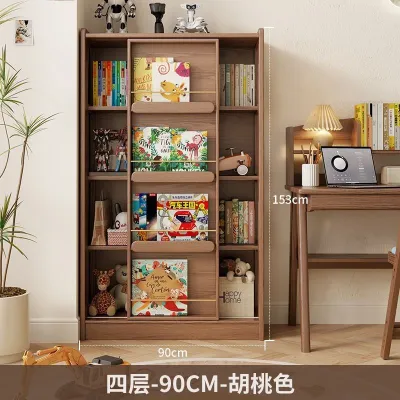
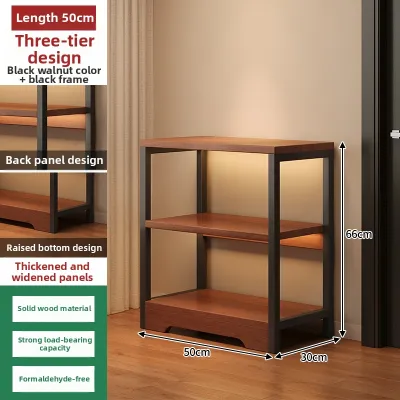
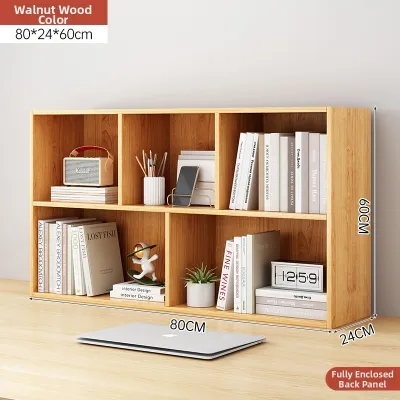
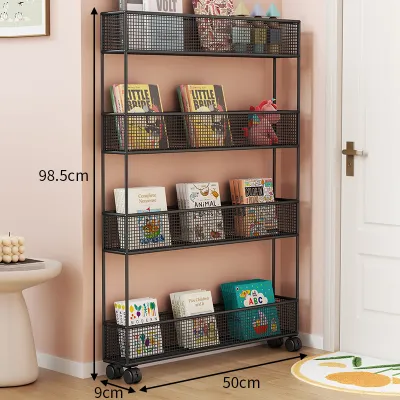
Prices are valid at publication and may change. Please refer to the product page for the latest price.
Start by measuring the exact ceiling height of your room. While standard HDB flats typically feature a ceiling height of approximately 2.6 metres, newer flats and private condos can range from 2.7 to over 3.0 metres. However, false ceilings, decorative plaster cornices, structural beams, and ceiling fans can significantly reduce your actual vertical clearance. Always measure from the finished flooring to the lowest overhead obstruction. If you are purchasing a tall, flat-pack unit that requires assembly on the floor, remember to calculate the diagonal height of the unit; if the diagonal measurement exceeds your ceiling height, you will not be able to stand the assembled bookshelf upright.
Next, map out the entire delivery path from the building’s loading bay to your apartment’s interior. Measure the height, width, and diagonal clearance of the lift doors and the lift car’s interior. Take note of narrow common corridors, tight corners in the stairwells, and the exact dimensions of your main entrance door frame. A fully assembled solid wood cabinet might fit beautifully on your living room wall, but it is useless if it cannot clear the lift entrance or turn the corner of your front foyer.
You must also identify wall-bound utilities and obstructions. Check the location of electrical sockets, light switches, fiber-optic termination points, and air-con trunking. Blocking these points restricts access and can interfere with home maintenance. If your apartment features exposed air-con trunking running along the top of the wall, you must either select a shorter shelving unit or plan for custom cutouts to accommodate the pipes.
Finally, account for the skirting boards running along the base of your walls. These boards usually protrude by 10 mm to 20 mm from the wall surface. Factor this offset into your depth calculations or look for units specifically designed with a skirting cutout.
Matching Book Shelves to Your Room Layout
Different room layouts call for distinct furniture proportions. Choosing the right configuration of book shelves allows you to maximize storage efficiency without sacrificing the usability of your room.

Tall and Narrow Book Shelves for Tight Corners
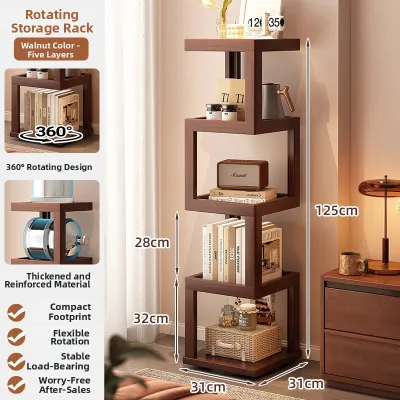
In space-constrained areas such as study nooks, small bedrooms, or narrow hallway alcoves, verticality is your greatest asset. Tall, narrow shelving units—typically measuring 40 cm to 60 cm in width and 180 cm to 210 cm in height—allow you to utilize overhead space that would otherwise go unused.
To ensure a narrow unit does not encroach on your walking space, pay close attention to its depth. Standard paperbacks require a shelf depth of only 15 cm to 20 cm, while typical novels and textbooks fit comfortably on a 28 cm to 30 cm deep shelf. Keeping the total depth of your narrow bookshelf under 30 cm ensures it sits neatly in tight corners without protruding into active walkways. Because tall, narrow units have a high center of gravity and a small footprint, they are highly susceptible to tipping. You must secure these units to the wall using sturdy L-brackets or anti-tip straps to ensure household safety.
Low and Wide Book Shelves for Open Living Areas
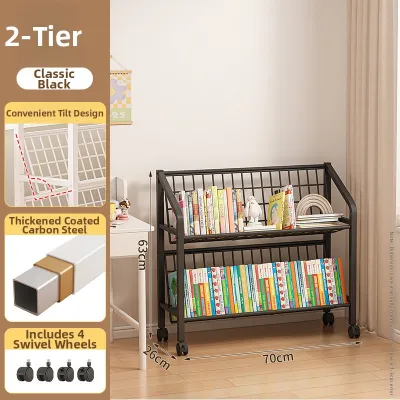
For living rooms, dining areas, or spaces directly beneath windows, low and wide shelving configurations are highly effective. These units, usually standing between 75 cm and 100 cm tall and extending 120 cm to 180 cm wide, help maintain clear sightlines across your apartment.
Keeping your furniture below eye level allows natural light to flow freely from your windows, making the entire living area feel larger and more open. In modern open-concept HDB or condo layouts, a low bookshelf can serve as an elegant, non-intrusive room divider, separating the dining zone from the living space without the need for a solid wall. Additionally, these low-profile units offer excellent dual-purpose utility. The flat top surface can serve as a media console for your television, a display area for indoor plants and artwork, or a convenient landing strip for keys and mail in an entryway.
Wall-Mounted and Floating Shelves to Save Floor Space
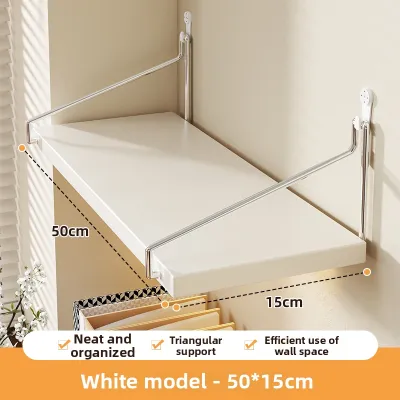
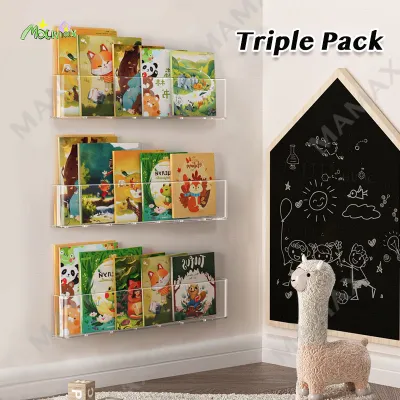
When floor space is exceptionally limited, or when you are dealing with awkward architectural alcoves, wall-mounted or floating shelves offer an excellent alternative. By lifting your storage off the ground, you keep the floor area completely clear, which visually expands the room and simplifies floor cleaning.
However, floating shelves have strict weight capacity limitations. Unlike freestanding bookcases that distribute weight directly to the floor, floating shelves rely entirely on the shear and pull-out strength of their wall anchors. A standard floating shelf may only support 5 kg to 15 kg of weight, making it unsuitable for large, heavy textbook collections. Before installing wall-mounted shelves, you must verify the structural integrity of your wall. Heavy book loads should only be mounted on solid concrete or brick walls. Lightweight partition walls, such as gypsum board or drywall common in condo bedrooms, require specialized hollow-wall anchors and should only be used to hold lighter decorative items or paperbacks.
Avoiding Overcrowding: Visual Weight and Traffic Flow
Integrating large storage units into a compact apartment requires an understanding of visual weight—the perceived heaviness of an object based on its design, color, and material. A solid, dark-stained timber bookcase with closed doors has immense visual weight, which can easily dominate a small room and make it feel cramped.
To minimize visual bulk, opt for open-back book shelves or units with glass doors. Lighter color palettes, such as natural oak, birch, or matte white, reflect more light and blend seamlessly into light-colored apartment walls, making the furniture appear smaller than it actually is. Metal frames paired with thin wooden shelves also offer a sleek, industrial look that preserves a sense of openness.
Equally important is maintaining clear traffic pathways around your furniture. As a general guideline, ensure there is a minimum of 60 cm to 70 cm of walking clearance in front of your bookshelf. If the unit features drawers or cabinet doors, you must add the depth of the open drawer or door plus an additional 45 cm of clearance. This ensures you can stand, bend down, and access your items comfortably without bumping into walls or other furniture.
Unless you are investing in custom, wall-to-wall built-in carpentry, avoid packing a freestanding bookshelf tightly into a wall recess. Leaving at least 5 cm to 10 cm of empty space on either side of the unit creates “breathing room,” preventing a claustrophobic, forced look. On the shelves themselves, practice the “one-third rule” of styling: fill one-third of the space with books, one-third with decorative items, plants, or storage boxes, and leave the remaining one-third completely empty. This intentional negative space breaks up the dense blocks of color and texture, giving your eyes a place to rest and making the entire room feel more organized.
Safety, Wall Constraints, and Installation Realities
Installing book shelves in Singapore homes involves navigating specific structural realities and safety requirements. Freestanding bookcases taller than 120 cm should always be anchored to the wall, especially in homes with active pets, young children, or elderly family members. A fully loaded bookshelf can easily weigh over 100 kg, and a child attempting to climb the shelves can cause a catastrophic tip-over accident.
Before drilling any holes, you must accurately identify your wall type. In Singapore, HDB flats and condominiums feature a mix of wall construction materials. Structural columns and load-bearing walls are made of reinforced concrete. While these walls offer exceptional holding strength, they are incredibly hard and require a heavy-duty rotary hammer drill and specialized masonry bits to penetrate. Non-structural internal walls may consist of lightweight concrete blocks, precast panels, or drywall partition walls. Drywall partitions, which are common in newer condo developments, cannot support heavy shelving brackets unless you anchor them directly into the internal metal or timber studs, or use heavy-duty toggle bolts. Never rely on standard plastic wall plugs in drywall for heavy loads.
It is also vital to distinguish between the load capacity of the shelf material and the holding strength of the wall anchor. While a solid teak or steel shelf will not sag under a heavy collection of encyclopedias, the wall anchors may fail if the installation is poor. Always use a digital wall scanner to check for concealed electrical wiring and water pipes before drilling. Additionally, adhere to your housing authority’s renovation guidelines; while drilling minor holes for furniture anchoring does not require a permit, you must never cut, chip, or alter structural reinforced concrete walls in a way that compromises the building’s structural integrity.
Common Sizing Mistakes to Avoid
To ensure a successful purchase, keep these frequent sizing and planning mistakes in mind:
- Forgetting Item Depth and Height Clearance: Do not assume all books are the same size. Standard paperbacks fit easily on a 20 cm deep shelf, but specialized items like vinyl records, oversized art books, architecture portfolios, and heavy A4 ring files require a minimum shelf depth of 30 cm to 35 cm and a vertical height clearance of at least 32 cm to 38 cm. If your shelves are too shallow, these larger items will protrude awkwardly, blocking pathways or preventing cabinet doors from closing.
- Ignoring the Delivery and Assembly Path: A bookshelf might fit your room's dimensions perfectly on paper, but if the pre-assembled unit cannot fit inside your building's lift or clear your front doorway, you will face costly return fees. For tight spaces, prioritize flat-pack furniture that can be carried in pieces and assembled directly inside the room.
- Relying Solely on Product Photos: Product images on online marketplaces and ecommerce platforms can be highly misleading. Manufacturers often use wide-angle lenses or digital staging that makes a compact bookshelf look much larger than it is, or vice versa. Always ignore the photos and focus entirely on the listed technical specifications.
- Neglecting Shelf Span and Sagging: A common mistake is choosing a long, wide shelf without adequate central support. Standard 18 mm thick particleboard or MDF shelves will begin to sag under the weight of books if the unsupported span exceeds 80 cm. If you have a large, heavy book collection, look for shelves with a shorter span (60 cm or less), thicker solid wood construction, or central vertical support panels to prevent unsightly and unsafe bending.
Before making a final decision, use masking tape or newspaper templates to outline the bookshelf’s footprint on your floor and wall. This physical representation will help you visualize the unit’s true size, ensuring it fits your space, your collection, and your lifestyle perfectly.
Community discussion
Share your experience or ask a question. Comments are reviewed before publication.