
Selecting the right automatic tv lift cabinet requires balancing your television’s physical dimensions, the lift mechanism’s mechanical limits, and your living room’s spatial constraints. In Singapore, where space in HDB flats and private condominiums is highly optimized, choosing a cabinet that is too bulky can disrupt traffic flow, while one that is too small won’t house your screen safely. To find the perfect fit, you must evaluate both the internal compartment limits and the external footprint.
By understanding how these dimensions interact, you can ensure your television glides smoothly into its housing without rubbing against the interior walls or straining the motor. This guide breaks down the precise measurements, structural clearances, and layout considerations required to integrate a motorized TV cabinet seamlessly into your home.
Quick Guide: Matching TV Size to Cabinet Dimensions
The external width of your cabinet should always be wider than the physical width of your television. A good rule of thumb is to have at least 10 to 15 centimeters of clearance on either side of the TV screen when looking at the cabinet from the front. This prevents a top-heavy visual effect where the television appears to overwhelm the furniture piece beneath it, maintaining a balanced aesthetic in your living space.
Products mentioned in this guide
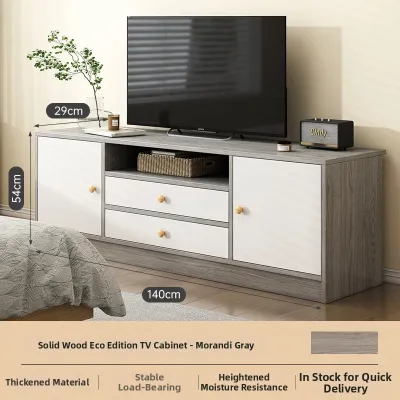
![[Cozy ]Cream Style TV Console Cabinet Floor Standing TV Cabinet Storage TV Console Integrated Wall Cabinet](https://img.lazcdn.com/g/p/fffc0788efb691c6cef657a47363726a.jpg_400x400q80.jpg_.webp)

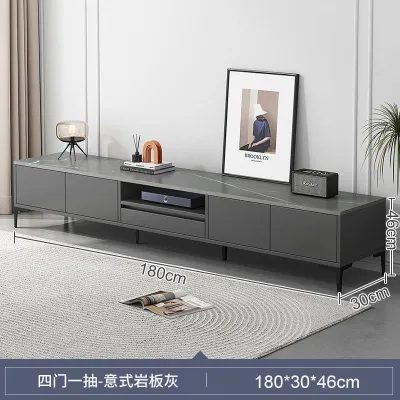
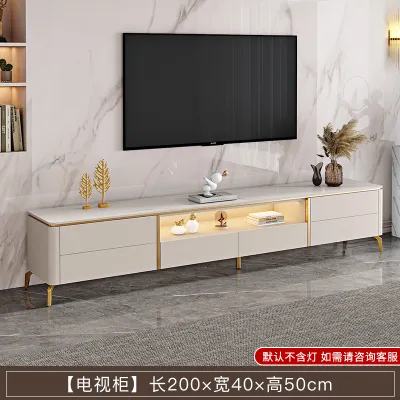
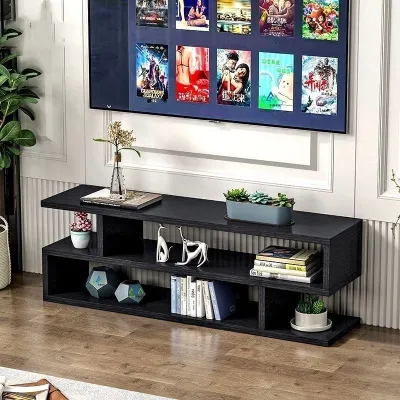
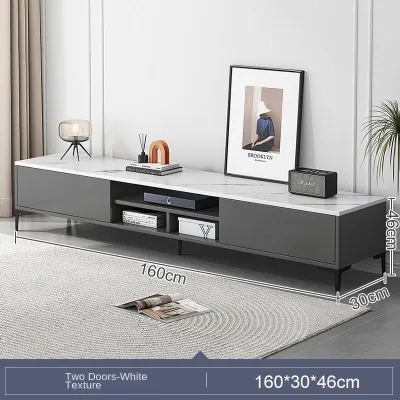
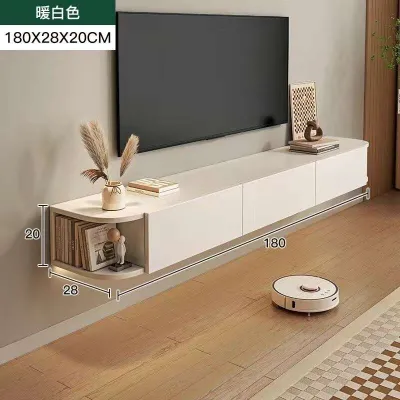
Prices are valid at publication and may change. Please refer to the product page for the latest price.
Beyond aesthetics, you must coordinate three distinct sets of dimensions: the internal compartment dimensions, the lift mechanism stroke (or travel distance), and the external footprint of the cabinet itself. The internal compartment must completely swallow the TV and its mounting hardware when retracted. The lift stroke determines how high the TV will rise, while the external footprint determines how much floor space you sacrifice in your living area.
Many homeowners mistakenly assume that knowing their TV’s diagonal screen size (such as 55-inch or 65-inch) is sufficient for purchasing an automatic tv lift cabinet. However, diagonal measurements do not account for bezel thickness, speaker placements, or the depth of the television’s chassis. You must work with the actual physical width, height, depth, and weight of your specific TV model to ensure a successful fit.
Sizing the Interior: TV Dimensions and Lift Mechanism Capacity
The internal compartment of your cabinet is a highly precise space where there is little room for error. If your measurements are off by even a few millimeters, the television may scrape against the cabinet frame or fail to retract fully, potentially damaging both the screen and the lifting mechanism.

Measuring the TV's Physical Profile
To get started, you must measure the exact physical width, height, and depth of your television using a standard measuring tape. Do not rely on the specifications listed on the box, as these sometimes omit the depth of protruding ports, power cables, or the mounting brackets attached to the back of the panel.
- Physical Width: Measure from the outermost edge of the left bezel to the outermost edge of the right bezel.
- Physical Height: Measure from the bottom edge of the frame to the top edge, excluding any tabletop stands, as the TV will be mounted directly to the lift mechanism.
- Total Depth: Measure from the front of the screen to the furthest protruding point on the back, including any HDMI cables or power plugs that insert straight into the rear panel.
Evaluating Lift Stroke and Retracted Height
The lift mechanism must be tall enough to raise the entire height of your television clear of the cabinet lid, yet compact enough to fit inside the cabinet when lowered.
- Retracted Height: This is the height of the lift mechanism when it is fully compressed. The internal height of your cabinet's compartment must be slightly taller than this measurement to allow the lid to close flush.
- Stroke Length: This refers to the total travel distance of the motorized lift. To ensure comfortable viewing, the stroke length must be equal to or greater than the physical height of your television plus the thickness of any top lid or mounting brackets.
Verifying Weight Capacity
Every motorized lift mechanism is engineered with a strict maximum load rating that must never be exceeded. Overloading the lift can cause the motor to overheat, strip the internal gears, or lead to sudden structural failure.
- TV Weight: Check your television's manual for its weight without the stand.
- Accessory Weight: Factor in the weight of any soundbars, streaming devices, or media players that you plan to mount directly to the lift bracket alongside the TV.
- Safety Margin: It is highly recommended to choose a lift mechanism with a weight capacity that exceeds your total equipment weight by at least 15 to 20 percent to ensure smooth, long-term operation.
Calculating Internal Clearances
The internal compartment must accommodate more than just the static dimensions of your television. You must also factor in the physical space required for the lift’s moving arms, the thickness of the base plate, and the dynamic movement of the cables.
- Side Clearance: Leave at least 2 to 3 centimeters of empty space on both the left and right sides of the TV inside the compartment to prevent the screen from scraping the interior cabinet walls.
- Depth Clearance: Ensure there is sufficient depth for the lift mechanism's steel columns, the TV mounting bracket, and the television itself, plus an extra 3 centimeters of buffer space to prevent cables from being pinched during operation.
- Lid Clearance: Verify how the cabinet lid operates. If the lid is pushed up by the TV, or if it opens on a hinge, ensure the lift has enough upward clearance to actuate the lid without putting undue stress on the screen's upper bezel.
External Dimensions: Proportions and Space Planning for HDBs and Condos
While the internal dimensions protect your equipment, the external dimensions of your automatic tv lift cabinet dictate how well the furniture integrates into your daily living environment. This is especially critical in Singapore’s residential developments, where floor area must be managed carefully.
Visual Proportion and Wall Space
An automatic tv lift cabinet is often the focal point of a living room, meaning its scale must match the wall against which it is placed. In a standard HDB or condominium layout, a cabinet that is too tall or wide can block natural light from windows or make the room feel cramped.
- Width Balance: If your television is 120 centimeters wide, aim for a cabinet that is at least 140 to 150 centimeters wide. This creates a grounded, balanced look when the TV is hidden.
- Height Balance: Low-profile cabinets (around 70 to 80 centimeters tall) help maintain an open, airy feel in rooms with standard 2.6-meter ceilings, which are common in newer HDB BTO flats.
Depth and Walkways in Compact Living Rooms
The depth of your cabinet directly impacts the remaining walkway space between your sofa and the television. A cabinet that protrudes too far into the room can disrupt the flow of traffic and make the seating area feel restricted.
- Walkway Clearance: Aim to maintain a minimum of 60 to 90 centimeters of clear walkway space in front of the cabinet.
- Cabinet Depth: Most motorized TV cabinets have an external depth ranging from 45 to 60 centimeters to accommodate the internal lift mechanism. If your living room is narrow, look for slimline models that utilize compact linear actuators to keep the depth closer to 40 centimeters.
Viewing Angle and Extended Height
To avoid neck strain, the center of your television screen should ideally align with your eye level when you are seated on your sofa.
- Calculating Eye Level: For most standard sofas, eye level is approximately 95 to 105 centimeters from the floor.
- Extended Height Calculation: Add the external height of the cabinet to the lift's maximum extended stroke, then subtract half of your TV's physical height. This will give you the center point of the screen when fully raised. If this number is significantly higher than your eye level, you may need a cabinet with a lower profile or a lift mechanism with an adjustable travel limit.
Floating vs. Floor-Standing Cabinets
Deciding between a floor-standing cabinet and a wall-mounted floating design affects both your floor space and your installation requirements.
- Floor-Standing Cabinets: These models sit directly on the floor, providing excellent stability and often featuring additional drawers or doors for media storage. However, you must ensure there is enough floor clearance to open these doors without hitting rugs or coffee tables.
- Floating Motorized Cabinets: Wall-mounted units free up valuable floor space, making your living room look larger and allowing for easier cleaning underneath. However, because the cabinet must support the weight of the heavy wooden structure, the lift mechanism, and the television, you must verify the structural integrity of your wall. In Singapore, concrete walls (common in older HDBs and structural columns) can easily support floating cabinets, but partition drywall (often found in newer condos) requires specialized reinforcement or anchoring directly into the metal studs.
Installation Clearances: Doorways, Ventilation, and Power Requirements
Choosing the right size cabinet is only half the battle; you must also ensure that the unit can be safely delivered into your home and operated without posing a hazard to your electronics.
Navigating Delivery Access
Before finalizing your purchase, you must plan the delivery route from the unloading bay to your living room. Motorized TV cabinets are often delivered fully assembled to protect the internal alignment of the lift mechanism, making them exceptionally heavy and bulky.
- Lift Dimensions: Measure the height, width, and depth of your building's passenger lift. Many HDB and condo lifts have weight limits and door clearances that may restrict oversized furniture.
- Corridors and Doorways: Check the width of your common corridor, any tight turns, and the clear opening width of your main entrance door. If your doorway is less than 80 centimeters wide, you may need to look for flat-pack models or ensure the cabinet can be delivered in sections.
Ventilation and Heat Dissipation
Motorized lift mechanisms and AV equipment (such as game consoles, media boxes, and amplifiers) generate a significant amount of heat during operation. If this heat is trapped inside a sealed wooden compartment, it can shorten the lifespan of your electronics and damage the lift motor.
- Airflow Gaps: Ensure there is a gap of at least 5 centimeters between the back of the cabinet and the wall to allow heat to escape.
- Internal Ventilation: Look for cabinets with built-in ventilation grilles, or consider drilling ventilation holes in the bottom and back panels of the media compartment to encourage natural convection.
Power and Cable Management
A motorized cabinet requires a reliable power source and careful cable routing to prevent accidents during operation.
- Outlet Placement: Position the cabinet close to a wall outlet so you do not have to run extension cords across walkways. Ideally, the outlet should be hidden directly behind the cabinet footprint.
- Cable Slack: When routing HDMI and power cables from the TV to the lower compartment, ensure there is enough slack to accommodate the lift's full range of motion. Use cable wrap or a drag chain mechanism to guide the cables, preventing them from catching on the lifting arms or getting pinched when the TV retracts.
Common Sizing Mistakes to Avoid When Buying a Motorized TV Cabinet
Avoiding these frequent measurement and planning errors will save you from costly return shipping fees, installation delays, or a setup that is uncomfortable to use.
- Relying Solely on Diagonal Screen Size: Assuming a cabinet built for a "55-inch TV" will fit your specific 55-inch TV is a major risk. Bezel designs and speaker configurations vary wildly across brands, making physical dimensions the only reliable metric.
- Forgetting Base Plate and Lid Thickness: Many buyers measure the TV and the lift mechanism but forget to account for the thickness of the steel base plate at the bottom and the wooden lid at the top. This omission can result in the top of the TV protruding slightly above the cabinet line when fully retracted.
- Choosing an Exact-Fit Cabinet Width: Selecting a cabinet that is exactly the same width as your television leaves zero room for internal mechanical clearance and creates an awkward, top-heavy visual profile when the screen is raised.
- Overlooking Fully Extended Height: Failing to calculate the final extended height can result in a television that rises so high it blocks window views, hits wall-mounted air conditioners, or forces you to tilt your head back uncomfortably while watching.
By taking precise physical measurements, factoring in structural mounting requirements, and planning your living room layout around traffic flow, you can select an automatic tv lift cabinet that offers both flawless mechanical performance and a beautiful, space-efficient addition to your home.
Community discussion
Share your experience or ask a question. Comments are reviewed before publication.