
Finding the right dining table often feels like a balancing act between maximizing seating capacity and preserving precious floor space, especially when navigating tight layouts or open-plan living areas. To choose the correct round dining table diameter, you must match your target seating capacity—typically requiring a diameter of 90 cm for two people, 100 to 120 cm for four, 120 to 140 cm for six, and 150 to 180 cm for eight—while ensuring you maintain a minimum clearance of 90 to 120 cm around the table’s perimeter for chairs and walkways. By understanding how these dimensions interact with your room’s physical boundaries, you can select a piece that enhances both the flow of your home and the comfort of your guests.
Round tables are naturally social, encouraging conversation by keeping everyone at an equal distance and eliminating the sharp corners that can disrupt traffic in tight spaces. However, because their footprint is curved, they occupy space differently than rectangular or square tables. Calculating the exact room you need requires looking beyond the tabletop itself to the surrounding environment, ensuring that your dining area remains functional even when every seat is occupied.
How much clearance and floor space does a round dining table require?
A round dining table requires a minimum clearance of 90 centimeters (cm) from the table edge to the nearest wall or piece of furniture to allow chairs to pull out, though 120 cm is highly recommended for comfortable walkway traffic. Measuring your total available footprint is the essential first step to ensure the room remains functional and easy to navigate. Without this buffer, a dining room can quickly feel cramped, and daily movement through the space becomes a constant hassle.
Products mentioned in this guide
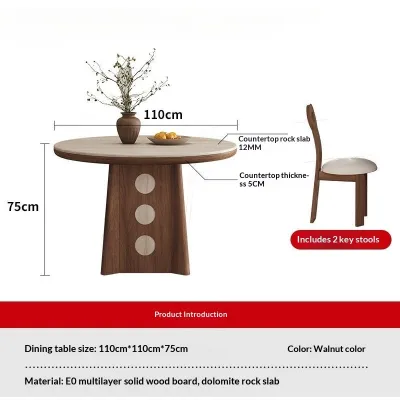
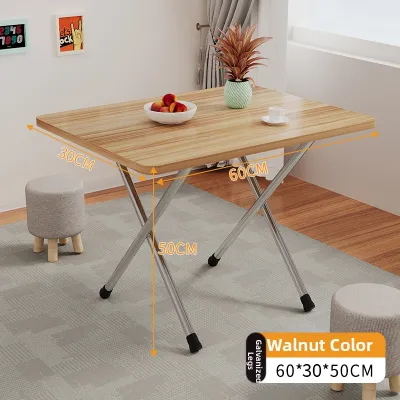

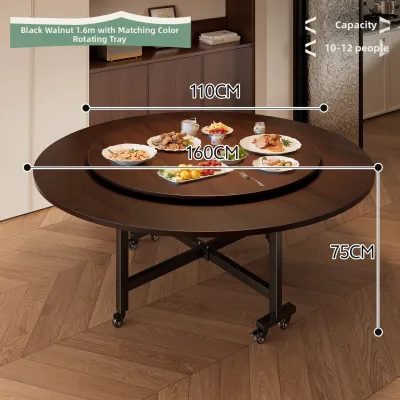
3 Lazada user ratings
First impression, the walnut texture is really nice, very grand. Been using it for a few days, it can seat about ten people, enough for gues…Read full reviewShow less
First impression, the walnut texture is really nice, very grand. Been using it for a few days, it can seat about ten people, enough for guests. It's very stable whether for eating or just as a shelf. When not in use, just fold it up against the wall, doesn't take up space.
The quality is excellent and the solid wood material feels great. It was easy to assemble and the customer service was helpful. The design l…Read full reviewShow less
The quality is excellent and the solid wood material feels great. It was easy to assemble and the customer service was helpful. The design looks beautiful, the size is just right, and it offers great value. Overall, I am very satisfied with this purchase.
It took about twenty minutes to assemble this folding dining table. The black walnut finish looks elegant and high-end. It is sturdy and sta…Read full reviewShow less
It took about twenty minutes to assemble this folding dining table. The black walnut finish looks elegant and high-end. It is sturdy and stable, and it saves so much space by folding into a corner when not in use. Very practical and highly recommended.
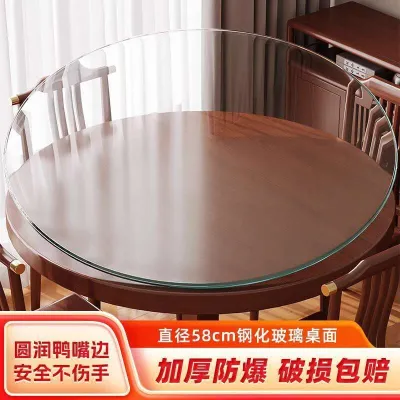
9 Lazada user ratings
I received the goods two days ago, and today they are empty. I opened them and looked at them. They look good and I like them. They are of g…Read full reviewShow less
I received the goods two days ago, and today they are empty. I opened them and looked at them. They look good and I like them. They are of good quality and affordable. Can be purchased!
The product has been received and the quality is very good. It still has a duckbill shaped edge, which looks great and is worth buying
It's really great! The goods have arrived completely and the size is appropriate. I'm very satisfied with my shopping
The glass is very good and transparent, and the size is very correct. I recommend purchasing it
Very satisfied, very good, very suitable! Moderate thickness
Prices are valid at publication and may change. Please refer to the product page for the latest price.
To calculate your total available footprint, start by measuring the length and width of the designated dining zone. If your dining area is part of an open-concept living room, define the boundaries of the dining space by identifying where other furniture, such as a sofa or sideboard, begins. Keep in mind that a round table sits in the center of its footprint, meaning you need equal clearance in all directions to maintain visual balance and physical accessibility.
The clearance behind each chair must account for three distinct phases of use: sitting down, standing up, and walking behind a seated guest. A standard dining chair requires about 45 to 50 cm of depth when tucked in, but when a person is seated, the chair is pushed back. A 90 cm clearance zone provides just enough room for a person to slide their chair out and stand up comfortably without hitting a wall.
In compact homes, such as high-rise apartments in Singapore, dining areas often double as primary walkways connecting the kitchen, living room, and bedrooms. If a major traffic path runs directly behind your dining chairs, you should aim for a clearance of 120 cm or more. This extra space ensures that family members can walk past the dining area without forcing seated diners to adjust their chairs or interrupt their meals.
What diameter round dining table accommodates 2, 4, 6, or 8 seats?
To comfortably accommodate your household, a round dining table generally needs a diameter of 90 cm for two diners, 100 to 120 cm for four, 120 to 140 cm for six, and 150 to 180 cm for eight. However, the actual seating capacity depends heavily on your chair width and whether the table features a central pedestal or individual legs. Understanding these variables allows you to maximize your seating without compromising on comfort.

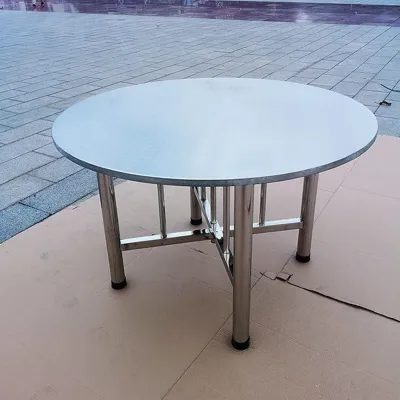
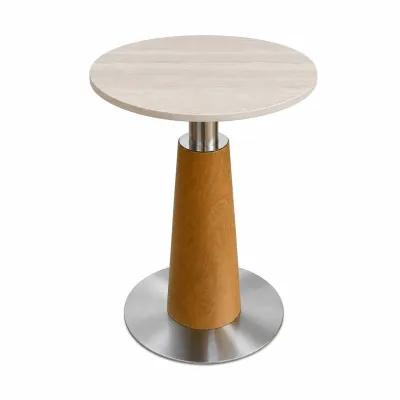
The design of the table base plays a critical role in how many chairs can realistically fit around the perimeter. A central pedestal base is highly efficient for round tables because it eliminates corner legs that block chairs, allowing you to arrange seating flexibly and even squeeze in an extra guest when hosting. Conversely, a table with four traditional legs restricts where chairs can slide in, as guests must avoid sitting directly in front of a leg, which often reduces the practical seating capacity.
For daily use, matching the table diameter to your typical household size ensures everyone has enough personal space. A 90 cm table is cozy and highly suitable for couples or small kitchens. For a family of four, a 100 to 120 cm diameter table is standard; a 100 cm table offers an intimate setting, while a 120 cm table provides ample room for place settings and serving dishes. If you regularly host six people, a 120 to 140 cm table is necessary to prevent elbow-bumping, while an eight-seater setup requires a substantial 150 to 180 cm diameter.
You must also adjust your calculations based on the style of dining chairs you plan to use. Standard armless dining chairs are typically 45 to 50 cm wide, which fits easily within standard table diameter guidelines. However, if you prefer wider, upholstered chairs or designs with armrests, you will need to choose a table at the larger end of the recommended diameter range. Armchairs require more lateral space and often cannot slide fully under the tabletop, which increases the table’s overall footprint even when it is not in use.
Finally, consider the practical layout of your table settings and serving style. While a 110 cm table can physically fit four chairs, it leaves very little surface area in the center for shared platters, serving bowls, or decorative items. If you prefer family-style dining where dishes are placed in the middle of the table, opting for a slightly larger diameter or choosing a table with a built-in lazy Susan can significantly improve your dining experience.
How can you test if your chosen round dining table will fit before buying?
You can test the fit of a round dining table by laying out its exact footprint on your floor using painter’s tape or cardboard templates, ensuring you also map out the pulled-out chairs. Additionally, you must verify that the table’s packaged dimensions can safely clear your home’s entryways, corridors, and lift doors. Taking these practical steps before making a purchase prevents costly delivery failures and ensures the furniture functions beautifully in your home.
Creating a physical mock-up is the most reliable way to visualize how a round table will interact with your existing space. Use newspaper, large cardboard boxes, or painter’s tape to outline the exact diameter of the table on your dining room floor. Once the template is in place, arrange your existing dining chairs—or boxes of similar size—around the perimeter, pulling them out to the standard 90 cm clearance mark to see if they block doorways, hit walls, or disrupt the natural flow of the room.
Delivery access is a crucial but frequently overlooked factor, especially in high-rise residential buildings common in Singapore. Measure the height, width, and diagonal clearance of your apartment’s lift doors, elevator interior, main entrance, and any narrow corridors or stairwells. A large, solid round tabletop, particularly one measuring 150 cm or more, cannot be tilted easily and may not fit into a standard passenger lift, so always check if the table base and top ship in separate, flat-packed boxes that are easier to maneuver.
Lastly, verify the table’s structural stability, assembly requirements, and weight limits by reviewing the manufacturer’s product label or manual. Pedestal tables require a heavy, well-engineered base to prevent the table from tipping when someone leans on the edge, which is an important safety consideration for households with young children or elderly family members. Ensure you understand whether the table requires professional assembly or specialized tools, and check that the floor material in your dining area can support the concentrated weight of a heavy pedestal base without scratching or denting.

Community discussion
Share your experience or ask a question. Comments are reviewed before publication.