
Finding a shoe rack that can withstand Singapore’s persistent tropical humidity requires looking past generic “waterproof” marketing claims. In a climate where relative humidity regularly exceeds 80 percent, standard furniture materials can quickly warp, rust, or become breeding grounds for mold. The most reliable waterproof shoe racks rely on non-porous materials like high-density plastics, corrosion-resistant metals, or heavily sealed natural timbers. By understanding how different materials interact with moisture, you can select an entryway organizer that protects your footwear and maintains its structural integrity for years.
Understanding Moisture Resistance in High Humidity
When shopping for entryway furniture, it is essential to distinguish between “waterproof” and “water-resistant” labels. A truly waterproof material, such as solid plastic or marine-grade stainless steel, will not absorb water or degrade even when completely submerged. Water-resistant materials, on the other hand, can only withstand temporary exposure to light moisture, such as a few raindrops on a wet umbrella, before they begin to absorb dampness.
In Singapore, the primary challenge is not just direct water contact from wet shoes, but the high ambient humidity present in unconditioned spaces like HDB corridors, balconies, and entryways. Constant exposure to moisture-laden air can slowly penetrate weak finishes, causing hidden structural damage over time. Therefore, a shoe rack’s long-term survival depends heavily on both its core material composition and the quality of its protective surface treatments.
Products mentioned in this guide
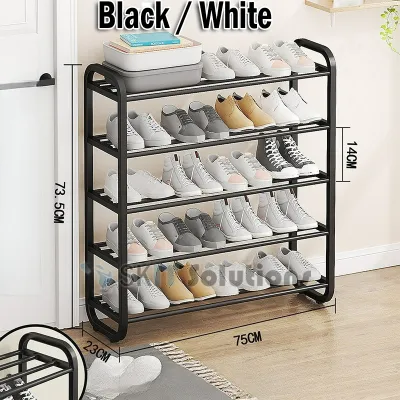
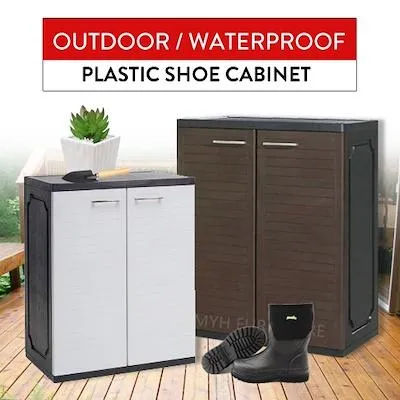
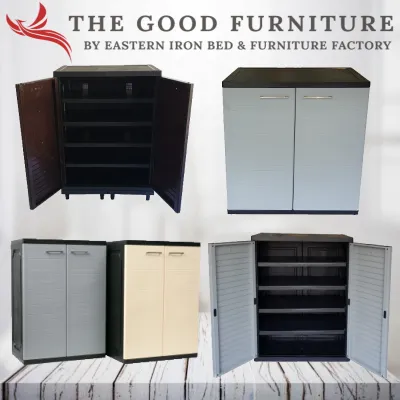
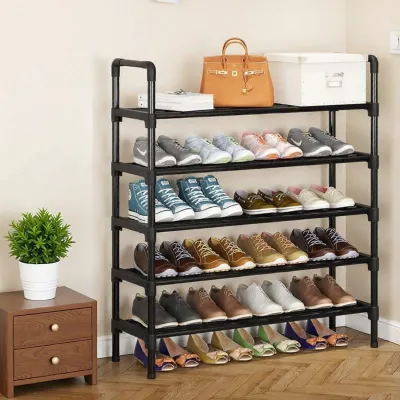
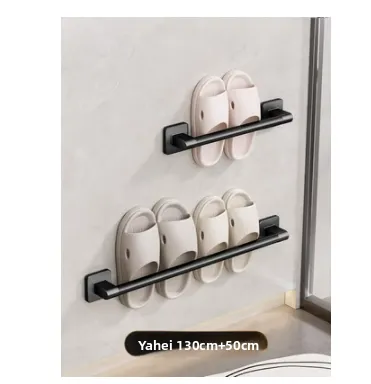
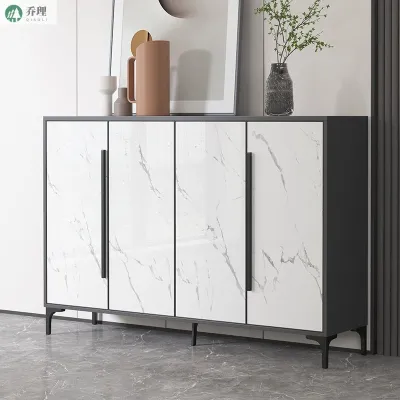
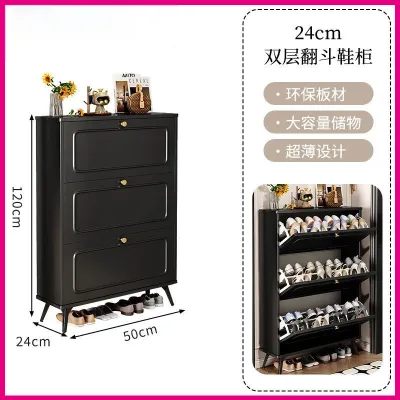
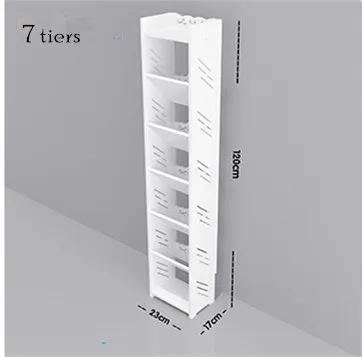
Prices are valid at publication and may change. Please refer to the product page for the latest price.
Evaluating Common Shoe Rack Materials
Selecting the right material involves balancing durability, aesthetic appeal, and structural stability under humid conditions. Synthetic polymers, metals, and treated natural woods each offer distinct advantages and trade-offs when exposed to tropical air. Understanding these material characteristics allows you to match the right shoe rack to your specific household setup and placement area.

Plastic and Resin Options
Solid plastics and synthetic resins are among the most reliable choices for high-humidity environments because they are completely non-porous. These materials do not absorb atmospheric moisture, meaning they will never rot, warp, or support mold growth on their own. They are also entirely immune to rust, making them highly suitable for outdoor corridors or damp entryways where wet umbrellas and shoes are frequently stored.
However, if you plan to place a plastic shoe rack near a sunlit window or on an open balcony, you must verify that the material is UV-stabilized. Unprotected plastics can degrade, fade, and become brittle when exposed to direct sunlight over extended periods. Additionally, lightweight plastic shelves are prone to structural sagging under heavy loads, so it is wise to check the manufacturer’s weight capacity if you store heavy boots or multiple pairs of shoes on a single tier.
Stainless Steel and Metal Alloys
Metal shoe racks offer excellent structural strength and a sleek, modern aesthetic, but their survival in humid climates depends entirely on their alloy composition and surface finish. Stainless steel is a popular choice, but you should look for specific grades, such as 304 stainless steel, which contain sufficient chromium and nickel to resist oxidation in damp air. Standard steel or iron alloys will rust rapidly if they are not protected by a robust barrier.
Many metal racks feature painted, chrome-plated, or powder-coated finishes to prevent rust. While these coatings are highly effective when intact, any scratch, chip, or dent can expose the underlying metal to moisture, leading to localized corrosion. Pay close attention to welded joints, seams, and screw holes, as these areas are highly vulnerable to moisture accumulation and are often the first places where rust begins to form.
Treated Wood, Bamboo, and Engineered Boards
Natural wood and bamboo bring warmth to an entryway, but they require specialized treatments to survive Singapore’s climate. Untreated solid wood and standard Medium-Density Fibreboard (MDF) absorb moisture from the air like a sponge, leading to swelling, warping, and rapid mold colonization. If you prefer the look of wood, ensure the product features a moisture-resistant core or is sealed with a heavy-duty polyurethane varnish or water-resistant lacquer.
Bamboo is naturally more moisture-resistant than many softwoods, but it still requires a protective sealant to prevent mold in unventilated spaces. When purchasing engineered wood products, look for those rated for high-humidity environments, such as moisture-resistant MDF (MR MDF) or marine-grade plywood. Always review the manufacturer’s care instructions, as many treated wood surfaces require periodic re-sealing or have specific limits regarding direct water exposure.
Structural and Design Features That Prevent Moisture Damage
While material selection is critical, the physical design of a shoe rack plays an equally important role in mitigating moisture damage. Proper airflow is the most effective defense against mold growth and unpleasant odors in damp footwear. Prioritize shoe racks with open, slatted, or mesh shelves rather than solid, enclosed panels. These open designs allow air to circulate freely around your shoes, helping damp soles dry much faster after a sudden tropical downpour.
The base of the shoe rack is another critical design consideration. Look for models equipped with raised feet, adjustable levelers, or protective rubber caps that lift the bottom shelf off the floor. This elevation prevents the frame from sitting in standing water during floor cleaning or when wet shoes drip onto the entryway floor.
If you prefer the clean look of an enclosed cabinet, ensure the unit features adequate ventilation. Look for designs with built-in louvered doors, mesh back panels, or dedicated ventilation cutouts. Storing damp or muddy shoes in a completely sealed, unventilated cabinet traps moisture inside, creating a humid microclimate that rapidly damages both your footwear and the cabinet structure.
How to Verify Material Claims Before Purchasing
To avoid purchasing a low-quality product disguised by clever marketing, you must actively verify material claims before making a decision. Avoid relying solely on broad terms like “waterproof” or “rust-proof” in product titles on online marketplaces. Instead, look for detailed technical specifications that list the exact materials used, such as high-density polyethylene (HDPE), powder-coated carbon steel, or marine-grade laminates.
Reading user reviews can provide valuable insights into how a shoe rack performs over time in tropical climates. Look for feedback from buyers who specifically mention using the product in humid environments, outdoor corridors, or during the monsoon season. Pay attention to any complaints regarding premature rusting, peeling paint, or mold growth within the first few months of use.
Finally, contact the seller or manufacturer directly to clarify warranty terms. Ask whether the warranty covers humidity-related issues, such as rust, joint failure, or surface peeling. A manufacturer that offers a clear warranty on these specific issues demonstrates confidence in the durability of their materials and protective coatings.
Routine Maintenance for Longevity in Damp Environments
Even the most durable waterproof shoe rack requires regular maintenance to prolong its lifespan in a humid climate. Wipe down the shelves at least once a month with a dry or slightly damp microfiber cloth to remove accumulated dust, dirt, and outdoor debris. Allowing dirt to build up can trap moisture against the surface, slowly degrading protective coatings and finishes.
Before placing your shoes on the rack, make it a habit to ensure they are reasonably dry. If you have been caught in a sudden downpour, leave your wet shoes on an entryway mat or a dedicated drip tray until the excess water has evaporated before storing them on the main rack. This simple step significantly reduces the moisture load on your furniture.
Periodically inspect the entire structure of your shoe rack, paying close attention to joints, screws, and the undersides of shelves. Look for early signs of wear, such as hairline cracks in plastic, peeling paint on metal, or soft spots on wood. Addressing these minor issues early—such as tightening loose screws or applying a touch-up sealant—can prevent widespread moisture damage and extend the life of your organizer.
Frequently Asked Questions (FAQ)
Can I use a standard wooden shoe rack in an air-conditioned room?
Yes, using a standard wooden shoe rack is much safer in an air-conditioned room because air conditioning naturally dehumidifies the indoor air. This lower humidity environment significantly reduces the risk of wood swelling, warping, or developing mold. However, you should avoid placing the rack directly in the path of dry, cold airflow from the air conditioner, as rapid temperature and moisture fluctuations can cause the wood to dry out too quickly, potentially leading to surface cracks or warping.
How do I safely clean mold off a shoe rack if it appears?
If mold appears on your shoe rack, clean it promptly using a mild solution of dish soap and warm water, or a specialized cleaner recommended by the manufacturer. Avoid using harsh household bleach, ammonia, or highly abrasive scrubbing pads, as these can strip away protective varnishes, powder coatings, or paint, leaving the underlying material vulnerable to future moisture damage. After wiping away the mold, dry the entire rack thoroughly with a clean towel and improve the room’s ventilation to prevent the mold from returning.
Community discussion
Share your experience or ask a question. Comments are reviewed before publication.