
A waterproof shoe cabinet typically holds anywhere from 12 to over 40 pairs of shoes, but the actual capacity often falls short of the number printed on the box. Choosing the right size for your household requires looking beyond standard manufacturer estimates and analyzing your family’s specific footwear habits, shoe sizes, and available entryway space. In a humid tropical climate like Singapore’s, where sudden downpours and high moisture levels are common, selecting a cabinet that balances waterproof protection with realistic storage volume is essential for keeping your home organized and your footwear mold-free.
To find the perfect fit, you must calculate your baseline storage needs, understand how internal shelf configurations impact usable space, and measure your physical layout. This guide will walk you through the practical steps to decode capacity claims, assess material durability, and choose a cabinet that accommodates your entire collection without cluttering your living space.
Assessing Your Current and Future Shoe Collection
Before browsing online marketplaces or visiting furniture showrooms, you need an accurate inventory of your household’s footwear. Begin by gathering every pair of shoes currently in use, including everyday sneakers, formal wear, athletic shoes, and casual sandals. Separating your collection into daily-use items and occasional footwear helps you determine how much high-accessibility space you require versus long-term storage.
Products mentioned in this guide

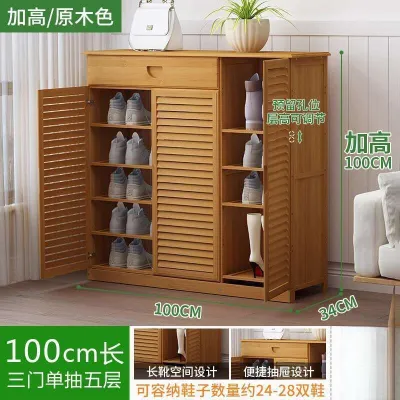
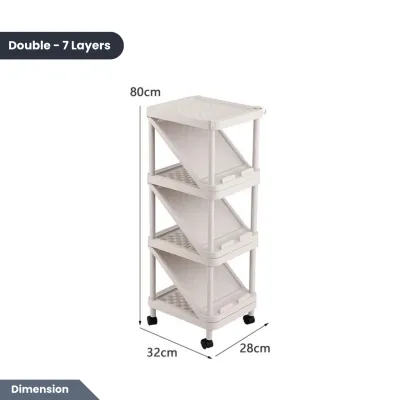
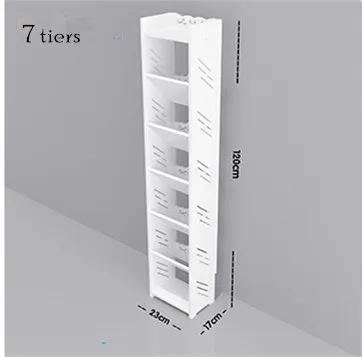
Prices are valid at publication and may change. Please refer to the product page for the latest price.
Next, group your shoes by their physical profile and height. Flat sandals, flip-flops, and low-profile sneakers take up minimal vertical space and can often be paired closely together. In contrast, high heels, mid-cut basketball shoes, ankle boots, and tall boots require significantly more vertical clearance. If you store these bulkier items without planning, you may find yourself wasting entire shelves or forcing shoes into tight spaces, which can damage their structure.
It is also wise to plan for future lifestyle changes and household growth over the next three to five years. A household with young children will quickly find that small kids’ shoes are replaced by adult-sized footwear that demands double the storage volume. Similarly, taking up new outdoor hobbies, changing job requirements, or simply having a passion for shoe shopping will steadily increase your storage needs. Selecting a cabinet with roughly twenty percent more capacity than your current inventory provides a comfortable buffer for these inevitable additions.
Decoding Manufacturer Capacity Claims and Internal Layouts
When shopping for a waterproof shoe cabinet, the advertised pair capacity should be treated as a theoretical maximum rather than a guaranteed fit. Most manufacturers calculate capacity based on standard, low-profile shoes, typically equivalent to a small or medium flat shoe size. If your household consists of individuals with larger shoe sizes, wide-fit designs, or chunky athletic trainers, the actual number of pairs you can store will be lower than the advertised figure.

To ensure your shoes fit comfortably, pay close attention to the internal shelf layout. Fixed-shelf cabinets offer excellent structural stability but limit your storage flexibility, forcing you to store tall boots on their sides or leave large empty gaps above low-profile flats. On the other hand, cabinets with adjustable or removable shelves allow you to customize the vertical spacing. This flexibility lets you compress the shelf height for flat sandals to maximize capacity while creating taller compartments for boots and high-top sneakers.
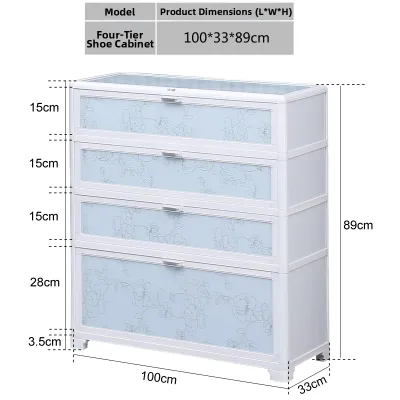
Internal depth is another critical specification that is frequently overlooked. Standard shoe cabinets generally feature an internal depth of around 30 to 35 centimeters, which accommodates most shoe sizes. However, if anyone in your home wears shoes larger than EU size 44, you must verify the internal depth before purchasing. If the cabinet is too shallow, shoes will have to be placed at an angle, which drastically reduces the horizontal capacity and may prevent the cabinet doors from closing completely.
Measuring Your Space and Clearance Requirements
Finding a cabinet with the right internal capacity is only half the battle; it must also fit seamlessly into your home’s physical layout. Start by measuring the exact footprint of your designated installation area, whether it is an indoor foyer, a sheltered balcony, or a semi-outdoor entryway. Be sure to account for baseboards, light switches, electrical outlets, and wall moldings that might prevent the cabinet from sitting flush against the wall.
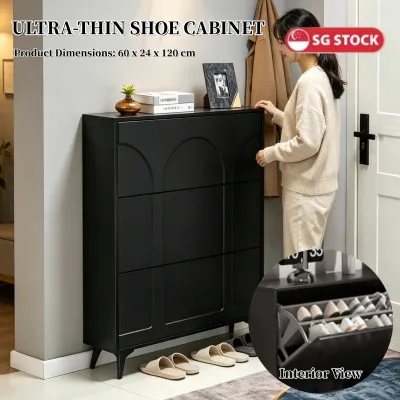
The door mechanism you choose heavily influences the clearance space required in front of the cabinet. Traditional swing-out doors require ample clearance to open fully, which can block narrow hallways or entryways when someone is retrieving their shoes. If space is tight, consider a tilt-out shoe cabinet, which stores shoes vertically and has a much shallower depth, or a cabinet with sliding doors that do not project outward. Whichever style you select, ensure there is enough room for household members to stand comfortably in front of the open cabinet without obstructing main walkways.
Finally, do not forget to plan for the delivery and assembly process. Measure the height and width of your building’s elevators, stairwell turns, and main front door to ensure the packaged or fully assembled cabinet can be transported safely to your unit. If you live in a high-rise apartment or an HDB flat, verifying these dimensions beforehand prevents the frustration of receiving a delivery that cannot physically reach your front door.
Checking Material Durability and Weight Limits
A fully loaded shoe cabinet carries a surprising amount of weight, making material durability and structural integrity paramount. Before purchasing, check the manufacturer’s specified maximum load capacity per shelf. Heavy work boots, leather dress shoes, and thick-soled sneakers can easily cause thin or poorly supported shelves to sag, warp, or slide off their support pegs over time. Look for reinforced shelf supports and robust internal framing to ensure long-term stability.
Because the cabinet is waterproof, you must inspect the specific materials and finishes used to resist moisture. High-density plastics and powder-coated metals offer excellent resistance to water and rust, making them ideal for damp environments or semi-outdoor spaces. If you prefer the look of engineered wood, verify that all edges are fully sealed with water-resistant edge banding and that the surfaces are treated with a moisture-resistant laminate or polyurethane coating to prevent swelling and peeling when exposed to wet umbrellas or damp soles.
Safety is another critical factor, especially for tall, narrow cabinets that can become top-heavy when fully loaded with shoes. Check if the cabinet includes anti-tip hardware or wall-anchoring brackets. Anchoring the cabinet securely to the wall prevents accidental tipping, which is a vital safety consideration for households with active pets or young children who might attempt to climb or pull on the cabinet doors.
Frequently Asked Questions (FAQ)
Can I keep a waterproof shoe cabinet outside my HDB flat door?
Placing a shoe cabinet in the common corridor of an HDB flat requires careful adherence to local town council guidelines and Singapore Civil Defence Force (SCDF) fire safety regulations. Generally, you must maintain a clear escape passage of at least 1.2 meters in width along the corridor to ensure safe evacuation during emergencies. Additionally, avoid placing cabinets near fire hose reels or dry risers. Even if your cabinet is made of waterproof materials, prolonged exposure to direct sunlight, driving rain, and outdoor dust can cause color fading, material degradation, and rapid dirt buildup, so a sheltered position is highly recommended.
How do I prevent odors inside a fully enclosed waterproof cabinet?
Enclosed waterproof cabinets are excellent at keeping moisture out, but they can also trap humidity and odors inside if damp shoes are stored immediately. To prevent unpleasant smells and mold growth, place moisture absorbers, activated charcoal bags, or baking soda tubs on the shelves to neutralize odors and capture excess moisture. Make it a habit to let damp or sweaty shoes air out completely in a well-ventilated area before placing them inside the cabinet. Periodically opening the cabinet doors during dry days also helps promote fresh air circulation and keeps the interior fresh.
Community discussion
Share your experience or ask a question. Comments are reviewed before publication.