
A small HDB bedroom requires smart, spatial-conscious decisions to remain functional and comfortable. When floor space is at a premium, a traditional bulky nightstand can quickly make a compact room feel cramped and restrict daily movement. Choosing the right bedside holder is one of the most effective ways to keep your nighttime essentials—such as your phone, glasses, and a water bottle—within arm’s reach without sacrificing valuable floor area. Most clamp-on and wall-mounted bedside holders are highly affordable, typically ranging from S$15 to S$45, making them a cost-effective alternative to traditional furniture.
The ideal style depends heavily on your bed frame design, your bedroom layout, and whether you are permitted to drill into your walls. By evaluating wall-mounted, clamp-on, and slim freestanding options, you can find a solution that maximizes utility while preserving a clean, open pathway around your bed.
Assessing Space Constraints in Your HDB Bedroom
Typical HDB layout realities present unique challenges when arranging bedroom furniture. Common rooms are often limited to 9 to 11 square meters, while master bedrooms must accommodate built-in wardrobes and sometimes en-suite entryways. Walkway clearance is a primary pain point in these compact layouts. If a bed is pushed against a wall or flanked by a wardrobe, a standard 45 cm wide nightstand can block wardrobe door swings or make sliding doors difficult to access.
Products mentioned in this guide
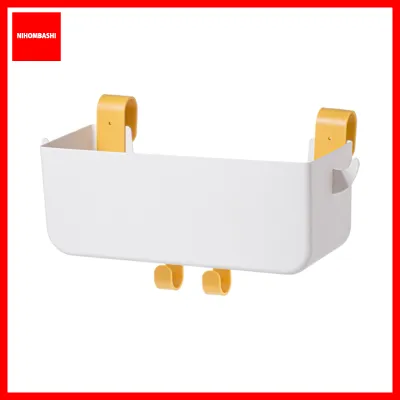
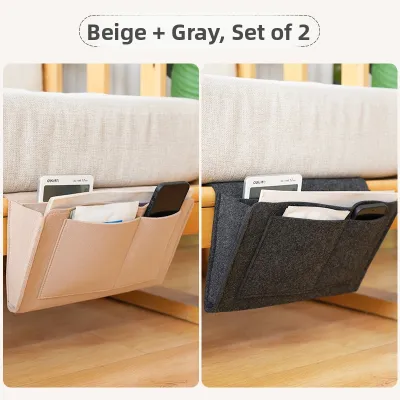
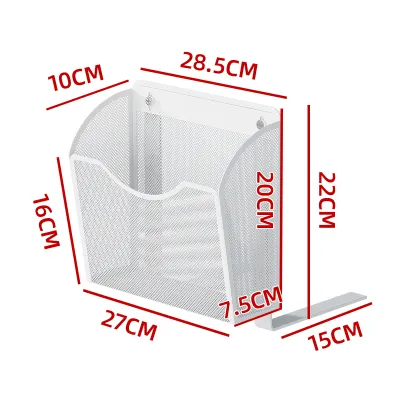
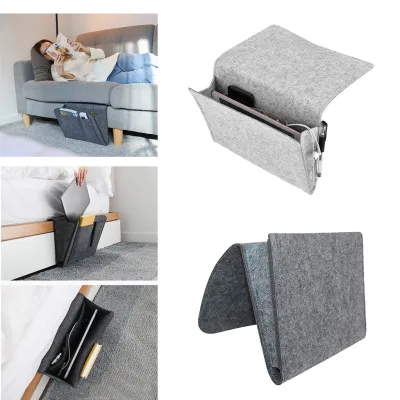
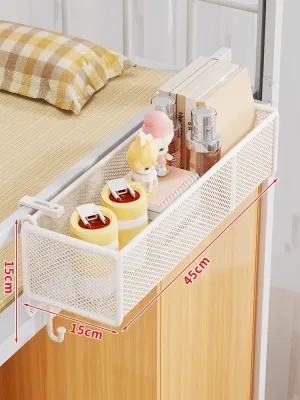
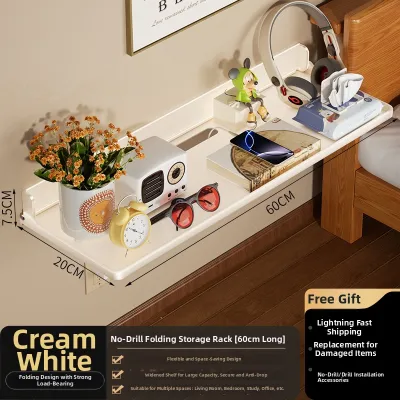
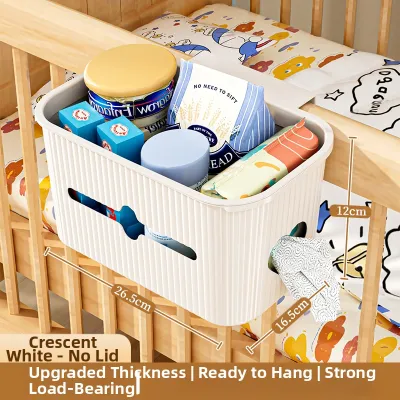
Prices are valid at publication and may change. Please refer to the product page for the latest price.
To assess your space accurately, measure the distance from the edge of the mattress to the nearest obstruction, such as a wall, wardrobe door, or bedroom entry door. Take note of the height of your mattress relative to the bed frame, as this determines how high a bedside holder must sit to remain accessible. Additionally, open all wardrobe doors and drawers fully to map out their swing paths. If your bed frame sits flush against a wall, you have virtually zero clearance for a freestanding unit, making wall-mounted or clamp-on solutions the only viable options. Identifying these hard physical boundaries before purchasing prevents the frustration of buying a holder that blocks your primary walkways or prevents you from fully opening your closet.
Comparing Bedside Holder Styles for Compact Layouts
Wall-Mounted Bedside Shelves
Wall-mounted shelves are highly effective when there is no physical gap between the bed and the wall, or when the bed frame lacks a lip or solid rail to support a clamp. By anchoring directly to the wall, these shelves completely eliminate the need for floor-based legs or bulky support structures. This open space beneath the shelf keeps the floor clear, making it much easier to vacuum, mop, or slide under-bed storage bins in and out.

However, the primary trade-off with wall-mounted designs is the installation process. Securing a shelf safely requires drilling into the wall, which means you must verify the wall material first. In Singapore HDB flats, bedroom walls are typically either solid concrete (structural walls) or lightweight partition walls (such as drywall or gypsum board). Concrete walls require a masonry drill bit and heavy-duty wall plugs, while partition walls require specialized hollow-wall anchors to prevent the shelf from pulling out under load. If you are renting your flat, you must also check your tenancy agreement to ensure drilling is permitted before proceeding with this option.
Clamp-On Bedside Caddies
For renters or those who prefer a completely non-destructive, tool-free installation, clamp-on bedside caddies offer an excellent alternative. These holders attach directly to the bed frame’s side rail or headboard using adjustable screw clamps or tension mounts. Because they require no drilling, they can be installed in minutes and easily relocated if you decide to rearrange your bedroom layout or move to a new home.
Before choosing a clamp-on model, you must perform several compatibility checks. Measure the exact thickness of your bed rail or headboard to ensure the clamp’s opening range can accommodate it. You should also check for physical obstructions, such as a mattress that fits tightly inside a recessed frame, which might block the clamp from reaching the rail. Ensure the clamp mechanism does not compress or damage the mattress fabric over time. It is important to note that clamp-on holders generally have a lower weight capacity than wall-mounted or freestanding options. They are best suited for lightweight items like a smartphone, reading glasses, or a small remote control. Always verify the manufacturer’s maximum weight limit—usually ranging from 1.5 kg to 3 kg—to avoid bending the clamp or damaging your bed frame.
Slim Freestanding Bedside Tables
When wall drilling is prohibited and your bed frame design is incompatible with clamp-on caddies—such as divan beds with no exposed side rails—an ultra-narrow freestanding unit is often the best path forward. These slim bedside tables are specifically designed for tight spaces, with some models measuring just 15 to 20 cm in depth. They stand on the floor, providing a stable surface without requiring any mounting hardware or structural modifications to your room.
The main advantage of a slim freestanding unit is its zero-installation setup and its generally higher weight capacity compared to clamp-on styles. You can safely place heavier items on it, such as a stack of books, a small table lamp, or a larger water carafe. However, the trade-off is that it still occupies physical floor space. Even a 15 cm wide table can restrict a narrow walkway if placed carelessly. You must carefully measure the clearance around the bed to ensure the unit does not obstruct the swing path of your wardrobe doors, room door, or any nearby drawers. When purchasing a slim freestanding unit, verify the finished dimensions to ensure it fits through your bedroom doorway and can be easily transported up HDB lifts.
Essential Measurements and Installation Checklists
To ensure your chosen bedside holder fits safely and does not disrupt your daily routine, use these specific measurement and installation checklists before and during setup.
Wall Installation Checks
- Identify the Wall Type: Tap the wall gently or use a stud finder. A dull, solid thud usually indicates a concrete structural wall, while a hollow sound indicates a drywall or partition wall.
- Select Appropriate Fasteners: Refer to the product's installation manual to determine the correct screw and anchor sizes. Use plastic wall plugs for concrete and toggle bolts or hollow-wall anchors for drywall.
- Locate Utilities: Avoid drilling directly above, below, or next to electrical outlets and light switches to prevent piercing hidden electrical conduits or water pipes.
- Level and Mark: Use a spirit level to ensure the mounting bracket is perfectly horizontal before marking the drill holes with a pencil.
Clamp Compatibility Checks
- Measure Bed Rail Thickness: Use a ruler or caliper to measure the exact thickness of your bed frame's side rail. Compare this with the maximum clamp opening specification of the holder.
- Check Mattress Clearance: Ensure there is at least a 1 to 2 cm gap between the mattress and the frame rail to accommodate the clamp bracket without pinching the fabric.
- Assess Height Comfort: Install the clamp at a height where you can easily reach your items while lying down, without having to stretch awkwardly or risk knocking items off the shelf when turning over.
Clearance and Walkway Verification
- Maintain Walkway Width: Ensure that the installed holder leaves at least 60 cm of clear walkway space between the bed and the opposite wall or furniture. This is the minimum width recommended for comfortable, unhindered passage.
- Verify Door Swing Radii: Open your wardrobe doors and bedroom doors completely. Ensure the holder sits entirely outside the swing arc of these doors to prevent collisions that could damage both the holder and your doors.
- Test Getting Out of Bed: Sit on the edge of the bed and simulate getting up. Ensure your knees or hips do not brush against the holder, which could cause painful bumps or knock items loose.
Weight and Load Verification
- Review Manufacturer Limits: Check the product manual for the exact maximum load capacity (typically specified in kilograms).
- Distribute Weight Evenly: Place heavier items, like a tablet or e-reader, closer to the mounting point or the center of the shelf rather than on the outer edges to maintain balance.
- Perform a Gentle Pressure Test: After installation, apply light downward pressure with your hand to verify that the brackets or clamps are secure and do not slip or flex excessively.
Common Sizing and Placement Mistakes to Avoid
Failing to plan ahead can turn a helpful organization tool into a daily inconvenience. Avoid these common mistakes when selecting and placing your bedside holder:
Ignoring Headboard Depth Many homeowners measure the distance from the wall to the bed frame but forget to account for the thickness of a padded or angled headboard. A thick headboard pushes the mattress forward, away from the wall. If you install a wall-mounted shelf flush with the wall, it may end up positioned too far behind your head, forcing you to twist awkwardly to reach your phone or water bottle. Always measure your reach from a comfortable lying position before finalizing the mounting height.
Choosing Excessive Depth While a deeper shelf provides more surface area, choosing a holder that protrudes too far from the wall or bed frame is a major hazard in a small HDB room. A shelf deeper than 20 cm in a narrow walkway can lead to painful shoulder or head bumps when you sit up or get out of bed in the dark. It also increases the risk of catching your clothing as you walk past. Keep the depth as slim as possible—ideally between 10 and 15 cm—for high-traffic walkways.
Blocking Power Outlets In many HDB bedrooms, electrical outlets are positioned close to the bed for phone chargers and bedside lamps. Installing a holder directly over or too close to these sockets can block access to the plugs or force cables to bend at sharp, damaging angles. Ensure your holder is positioned at least 10 to 15 cm away from any wall outlets, allowing sufficient clearance for charger bricks and organizing cables neatly without cluttering the space.
Overloading Beyond Specifications It can be tempting to stack multiple heavy books, a large tablet, a full thermal flask, and other personal items onto a single bedside holder. However, overloading a lightweight clamp-on caddy or a poorly anchored wall shelf risks structural failure. This can cause the holder to detach suddenly, potentially damaging your bed frame, cracking your bedroom wall, or breaking your expensive electronic devices. Stick strictly to the manufacturer’s load guidelines and store heavier items elsewhere.
Frequently Asked Questions (FAQ)
Can I install a wall-mounted bedside holder on HDB partition walls?
Yes, you can install a wall-mounted holder on HDB partition walls, but you must use the correct hardware. Unlike solid concrete structural walls, partition walls (often made of gypsum board or lightweight concrete blocks) are hollow and have much lower load-bearing capacities. Standard plastic wall plugs will not hold securely and can pull out, damaging the drywall. Instead, use specialized hollow-wall anchors, toggle bolts, or self-drilling plasterboard anchors that expand behind the wall board to distribute weight. For safety, avoid placing heavy items on shelves mounted to partition walls, or opt for a clamp-on or freestanding holder if you plan to store heavier objects.
How do I manage charging cables with a bedside holder?
To keep a compact HDB bedroom looking tidy, look for bedside holders with built-in cable management features, such as pre-drilled routing holes, cord slots, or under-shelf clips. If your holder does not have these features, you can attach small adhesive cable organizers or silicone cord clips to the underside or side of the shelf. Use Velcro ties to bundle excess cable length and secure the cord along the bed frame or down the wall. This prevents cables from dangling into walkways, becoming a tripping hazard, or getting caught in moving parts like wardrobe doors or under-bed drawers.
Community discussion
Share your experience or ask a question. Comments are reviewed before publication.