
Investing in a leather recliner in Singapore often presents a choice between high-end luxury imports and accessible mid-tier brands like Univonna. For many homeowners, the mid-tier price point is highly worth it, offering the tactile comfort of real leather and reliable reclining mechanisms without the steep premium markup. However, securing the best value requires looking past marketing buzzwords to verify the exact leather configuration, frame dimensions, and mechanical warranties before making your purchase.
Understanding Mid-Tier vs. Premium Leather Recliner Labels
When shopping for a leather recliner, understanding the distinction between material grades is crucial for setting realistic expectations. Premium brands often feature full-grain or high-grade top-grain leather across the entire chair, which retains the natural hide texture and develops a unique patina over time. Mid-tier options, including many models from Univonna, typically optimize costs by utilizing top-grain leather on high-contact areas—such as the seat, backrest, and armrests—while using matching synthetic materials like polyurethane (PU) or polyvinyl chloride (PVC) on the external sides and back. This configuration, commonly known as “leather match,” significantly lowers the retail price while maintaining a premium look and feel where it matters most.
It is important to recognize that a label of “genuine leather” does not automatically guarantee long-term durability. The longevity of any leather surface depends heavily on the thickness of the cut, the tanning process, and the protective surface treatments applied by the manufacturer. Mid-tier leather often receives a protective pigment or polymer coating that resists spills and stains better than untreated premium leathers, making it highly practical for active households. To ensure you know exactly what you are paying for, always ask the retailer for a detailed material breakdown and review the manufacturer’s care instructions rather than relying solely on broad marketing terms.
Products mentioned in this guide
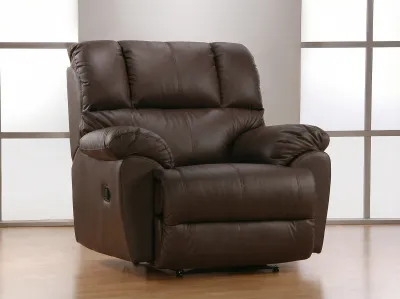
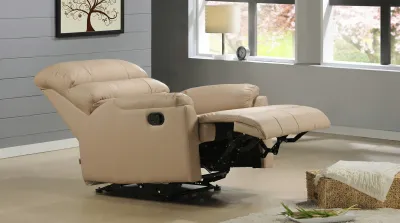
![[Free Assembly] Univonna Denise Recliner Sofa | Premium Half Leather & PU Leather Options | Manual Reclining Sofa | Custom Colors & Fast Delivery](https://img.lazcdn.com/g/p/8cc87ac88ff6b9995c7f05f6858c0792.jpg_400x400q80.jpg_.webp)
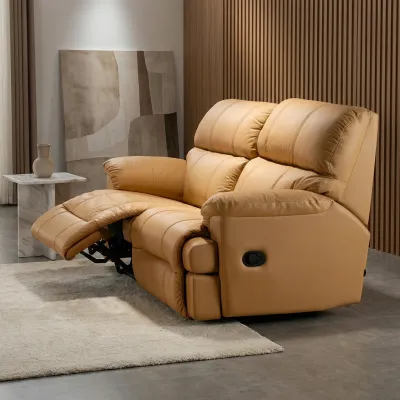
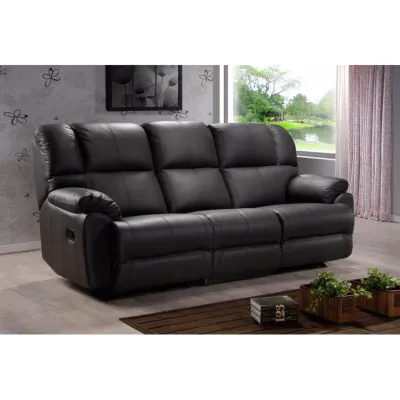
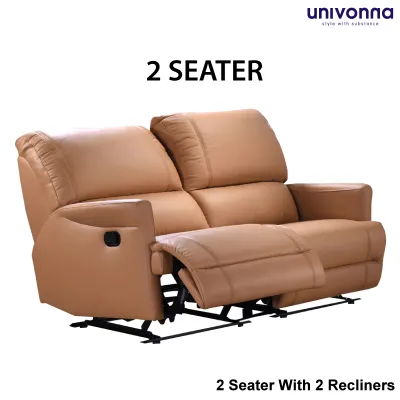
Prices are valid at publication and may change. Please refer to the product page for the latest price.
Furthermore, the term “bonded leather” should not be confused with genuine top-grain or split leather. Bonded leather consists of shredded leather scraps glued together with polyurethane, which tends to peel and crack rapidly under Singapore’s humid conditions. Premium brands strictly avoid bonded leather, whereas mid-tier brands may offer it as an entry-level option alongside their genuine leather ranges. Understanding these material differences prevents post-purchase regret and helps you align your budget with the expected lifespan of the upholstery.
Additionally, the tanning process plays a role in both the price and the environmental footprint of the furniture. Premium brands often highlight vegetable-tanned leathers, which use natural tannins and result in a stiffer, highly durable finish that softens over time. Mid-tier brands more commonly utilize chrome-tanned leathers, which are softer out of the showroom and more cost-effective to produce, though they may not possess the same structural resilience over decades of heavy use.
Essential Specs to Check Before You Buy
Before committing to a purchase, a thorough inspection of the recliner’s physical and structural specifications will help you make an objective comparison.

First, examine the leather quality and labeling by checking the physical product tags or requesting the manufacturer’s technical specification sheet. Look for explicit details regarding the leather thickness and whether the chair uses a full-leather build or a leather-match configuration. If the sales documentation does not clearly state the leather origin or grade, treat it as a signal to verify the details directly with the manufacturer.
Second, evaluate the reclining mechanism and the internal frame construction. Test both manual and motorized options in the showroom, listening for any unusual squeaks, grinding noises, or jerky movements that might indicate poor alignment. Ask the retailer for the explicit weight capacity limits of the mechanism and verify if the frame is constructed from kiln-dried hardwood or reinforced metal, both of which offer superior stability over standard plywood.
Third, measure the physical space and clearance requirements of your living room, keeping Singapore’s typical apartment layouts in mind. You must verify not only the static footprint of the chair but also its fully reclined dimensions and the required “wall-hugger” clearance behind the headrest. Additionally, measure your home’s doorway widths, hallway turns, and lift access dimensions to ensure the delivery team can safely transport the recliner into your living space without damaging the frame or your walls.
Finally, consider the power source requirements if you are opting for a motorized recliner. Electric models require proximity to a wall outlet, which may limit your placement options or require running extension cords across your living room floor. Manual recliners, while requiring physical effort to operate, offer complete placement flexibility and eliminate the risk of electrical component failure over time.
Evaluating the Price Difference and Long-Term Value
Determining whether a premium price tag is justified involves analyzing how the recliner will perform over several years in your specific living environment.
Warranty structures offer a clear window into a manufacturer’s confidence in their product’s durability. Premium brands frequently offer extended warranties covering the internal frame and reclining mechanisms for up to ten years, alongside limited coverage for the leather upholstery itself. Mid-tier brands like Univonna generally provide standard, shorter warranty periods that typically cover mechanical parts for a few years, meaning you must weigh the upfront savings against the potential cost of out-of-warranty repairs later on.
The local climate also plays a significant role in the long-term value of your investment. Singapore’s high humidity and warm temperatures can accelerate the degradation of poorly maintained leather and synthetic backings. While premium, minimally treated leathers require meticulous conditioning to prevent drying and cracking, coated mid-tier leathers are often more resilient against sweat and ambient moisture. However, if a leather-match chair is placed in direct sunlight or subjected to heavy daily use, the synthetic portions may wear at a different rate than the genuine leather sections, highlighting the importance of following the manufacturer’s exact care guidelines.
Additionally, consider the availability of replacement parts and professional repair services. Premium brands often maintain dedicated service centers that can source specific motors, switches, or matching leather panels years after a model is discontinued. Mid-tier brands may rely on generic components, which are easier and cheaper to replace but may require you to coordinate with independent furniture repair specialists if the manufacturer’s warranty has expired.
Furthermore, the long-term cost of ownership should include potential reupholstery. In Singapore, professional reupholstery services for a complex reclining chair can be highly expensive, sometimes approaching the cost of a brand-new mid-tier recliner. If you choose a mid-tier option, treating the purchase as a medium-term investment of five to eight years is often more realistic than expecting the multi-decade lifespan associated with premium, solid-wood framed luxury pieces.
Decision Framework: Which Recliner Fits Your Needs?
To finalize your decision, consider how your budget, space constraints, and lifestyle align with the characteristics of each tier.
You should choose a mid-tier option like Univonna if you want immediate comfort, modern living room aesthetics, and a practical seating solution that fits a defined budget. This choice is ideal for households seeking the luxury feel of real leather on seating surfaces while accepting standard warranty terms and a standard mechanical lifespan.
You should choose a premium brand if you require certified, high-grade leather across the entire piece, extended structural warranties, or specialized ergonomic adjustments tailored to specific physical support needs. This path represents a long-term investment in heirloom-quality furniture that can be professionally restored or reupholstered over decades.
Regardless of the brand, you must verify the product details first if the retailer cannot provide clear leather grading labels, if the explicit mechanical weight limits are missing, or if the fully reclined footprint of the chair threatens to overcrowd your available living space. Taking the time to measure your home and ask targeted questions in the showroom ensures your chosen recliner remains a comfortable, functional centerpiece for years to come.
Frequently Asked Questions (FAQ)
How can I verify the actual leather grade of a recliner in the showroom?
To verify the leather grade, look for standard manufacturer tags attached to the frame or ask the sales staff for the official product specification sheet. Genuine top-grain leather typically exhibits natural, non-repeating grain patterns and a distinct, rich aroma, whereas synthetic materials or heavily corrected leathers feel perfectly uniform and may carry a chemical scent. Do not hesitate to ask the retailer to clarify the exact percentage of genuine leather used and whether the model utilizes a leather-match design on the non-contact surfaces.
Do mid-tier leather recliners require different maintenance than premium ones?
Yes, maintenance routines depend heavily on the specific surface treatments rather than just the price tag. Mid-tier recliners with protective polymer coatings generally require simple dusting with a dry microfiber cloth and occasional cleaning with a damp cloth, avoiding harsh chemical cleaners that can strip the protective layer. Premium, uncoated leathers demand specialized leather conditioners to maintain their suppleness in Singapore’s humid climate, making it essential to consult and follow the manufacturer’s specific care label for your chosen model.

Community discussion
Share your experience or ask a question. Comments are reviewed before publication.