
Quick Answer: Is a Univonna Leather Recliner Right for You?
Choosing a leather recliner sofa is a major investment for your living room. In Singapore’s competitive furniture market, homeowners often compare Univonna, a brand known for its dedicated focus on reclining sofas, against other popular local and international furniture retailers. Making the right choice requires looking beyond surface aesthetics to understand how different brands balance leather grades, reclining mechanisms, and pricing.
There is no single “best” brand for every household; the ideal choice depends on your specific living space, usage patterns, and budget. For instance, a Univonna recliner sofa is a strong contender if you prioritize contemporary design, space-saving layouts, and mid-tier pricing. However, if your primary goal is a premium, full-grain leather heirloom piece or a highly customizable modular configuration, other established heritage or tech-focused brands may suit you better.
To help you navigate this decision, this guide evaluates leather recliners across four essential pillars: material authenticity, ergonomic support, mechanical reliability, and after-sales service. By understanding these criteria, you can confidently visit showrooms, ask the right questions, and select a sofa that offers lasting comfort.
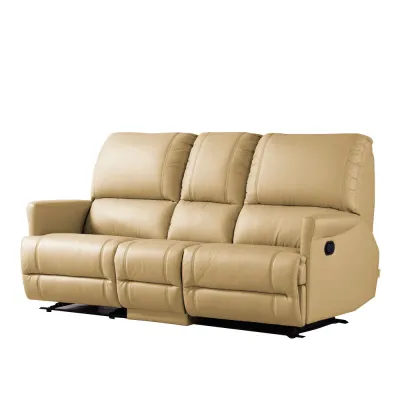
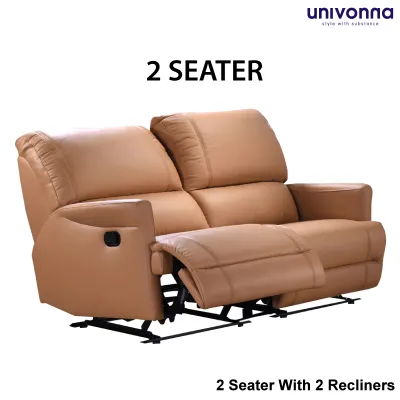
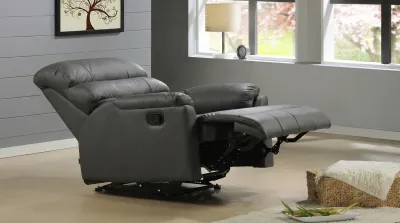
Products mentioned in this guide
![[Free Installation] Univonna Javier 3-Seater Recliner Sofa | Modern PU Leather Sofa | Comfortable Manual Recline | Custom Colors & Free Delivery](https://img.lazcdn.com/g/p/efc6050842ae33687b515884fae613f5.jpg_400x400q80.jpg_.webp)
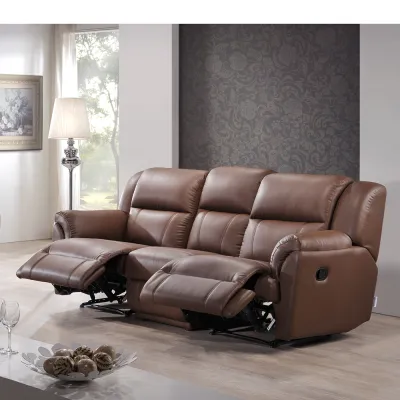
![[Free Assembly] Univonna Denise Recliner Sofa | Premium Half Leather & PU Leather Options | Manual Reclining Sofa | Custom Colors & Fast Delivery](https://img.lazcdn.com/g/p/8cc87ac88ff6b9995c7f05f6858c0792.jpg_400x400q80.jpg_.webp)
Prices are valid at publication and may change. Please refer to the product page for the latest price.
Comparing Leather Quality and Long-Term Durability
When comparing leather recliner brands, understanding the specific type of leather used is crucial for assessing long-term durability. The furniture industry uses several grades of leather, each with distinct characteristics. Full-grain leather is the highest quality, retaining the natural grain and strength of the hide, which allows it to develop a rich patina over time. Top-grain leather is slightly processed to remove imperfections, offering a more uniform appearance while maintaining excellent strength and flexibility. Below these are split leather (often labeled as “genuine leather”) and bonded leather, which consists of shredded leather scraps glued together and is highly susceptible to peeling.

To make an accurate comparison, do not rely on generic marketing terms like “premium leather” or “luxury Italian leather.” Instead, actively check the product specification sheets, tags, and showroom samples. Ask the sales representative for the technical classification of the leather. In Singapore’s hot and humid climate, high-quality top-grain or full-grain leather is highly recommended because of its natural breathability. Synthetic alternatives like polyurethane (PU) or bonded leather tend to trap body heat and moisture, which can make sitting uncomfortable and cause the material to degrade or peel prematurely.
When inspecting sofas in a showroom, use a hands-on checklist to evaluate craftsmanship. Examine the stitching along the seams; double-stitched seams are essential for recliners because they withstand the tension of the frame moving. Check the edge finishing to ensure there are no loose threads or raw, unsealed edges. Feel the surface consistency across different panels. Natural leather should feel supple and have slight variations in texture, whereas synthetic materials will feel perfectly uniform and plasticky.
Another critical factor is the use of “half-leather” configurations. To keep retail prices competitive, many brands use genuine leather only on the contact areas—the seats, backrests, and armrests. The non-contact areas, such as the outer sides and the back of the sofa, are upholstered in color-matched synthetic materials like PVC. While this is a common industry practice that lowers the purchase price, you must verify the exact ratio of genuine to synthetic material. Ensure that the synthetic match is of high quality and matches the texture of the genuine leather to prevent uneven aging or color mismatching over time.
Evaluating Comfort, Support, and Reclining Mechanisms
The internal construction of a recliner determines how well it supports your body and how long it will last before sagging. High-quality recliners typically feature high-density polyurethane foam with a density rating of 30 kg/m³ or higher. This ensures the cushion regains its shape after use. To prevent the seat from sinking over time, many premium brands incorporate pocket springs within the foam core. This hybrid construction distributes weight evenly and provides active support, similar to a high-end pocket-spring mattress. When comparing brands, ask about the density of the foam and whether pocket springs or zig-zag springs are used in the seat suspension.
The reclining mechanism itself is the mechanical heart of the sofa. Manual recliners use a physical lever or body tension to push the backrest down and lift the footrest. While manual systems have fewer parts that can break, they offer limited angles of adjustment. Motorized or electric recliners utilize internal electric motors to allow precise, continuous adjustments at the touch of a button. When testing electric recliners, pay close attention to the smoothness of the transition. The motor should operate quietly without grinding noises, jerky movements, or hesitation, which are signs of lower-quality components.
Ergonomic play a vital role in long-term comfort, especially if you plan to use the recliner for reading or watching television. Look for proper lumbar support that maintains the natural curve of your spine. Adjustable headrests are highly beneficial, as they allow you to tilt your head forward to view a screen even when the backrest is fully reclined. Additionally, check the footrest extension length; if you are taller, a footrest that is too short will leave your ankles unsupported, leading to discomfort over time.
To properly evaluate these features, do not rush your showroom visit. Sit in the recliner for at least 10 to 15 minutes. Cycle through the full range of motion multiple times. Remain in the fully reclined position for a few minutes to check for any pressure points on your lower back, thighs, or shoulders. This extended test is the only way to determine if the ergonomic design aligns with your body shape.
If you decide on a motorized recliner, keep in mind that these units require constant access to electrical power. This will influence where you can place the sofa in your living room. Furthermore, always check the manufacturer’s specified weight capacity limits. High-quality steel mechanisms are typically rated to support weights between 110 kg and 150 kg per seat. Exceeding these limits can strain the motor and misalign the metal linkages, leading to mechanical failure.
Assessing Price, Value, and After-Sales Support
Understanding what drives the retail price of a leather recliner helps you assess which brand offers the best value. The primary cost drivers include the percentage of genuine leather used, the origin of the mechanical components, and the frame material. Sofas constructed with kiln-dried solid hardwood frames are significantly more durable and expensive than those using engineered wood or plywood. Similarly, recliners equipped with globally recognized, certified mechanisms (such as those from Leggett & Platt) carry a premium price but offer greater assurance of safety and longevity compared to unbranded alternatives.
When comparing prices between Univonna and other brands, look closely at the warranty terms. A generic “5-year warranty” label can be misleading. You must verify the separate warranty periods allocated to different components. For example, a comprehensive warranty might cover the internal wooden frame for 5 to 10 years, the mechanical reclining linkages for 2 to 3 years, the electrical motors and switches for 1 to 2 years, and the leather upholstery for 1 year against manufacturing defects. Comparing these specific details prevents unexpected repair costs down the road.
After-sales support is another crucial element of the overall value proposition. In Singapore, local service centers and available replacement parts are invaluable if your electric recliner encounters an issue. Ask the retailer if they stock replacement motors, control buttons, and power adapters locally. If a brand relies on overseas shipping for minor spare parts, you could be left with an unusable recliner for weeks. Additionally, check if the brand offers professional maintenance services, such as deep cleaning or leather conditioning, which can extend the lifespan of your investment.
Finally, calculate the total cost of ownership by factoring in delivery and additional services. Some furniture retailers include delivery, professional assembly, and the disposal of your old sofa in the purchase price. Others may charge separate fees, which can add S$80 to S$250 to your total bill. Be sure to ask about these charges upfront, particularly if you live in a walk-up apartment or require delivery during specific weekend hours, as these scenarios often incur surcharges.
How to Decide: Univonna vs. Other Leading Brands
To finalize your decision, it is helpful to categorize your priorities and match them against what different brand segments offer in the Singapore market. Use the following structured framework to identify your buyer profile:
Choose Univonna if: You are looking for a contemporary, space-efficient recliner that fits comfortably within standard Singaporean living room layouts. If their showroom models provide the exact level of cushioning firmness you prefer, and their mid-tier pricing fits your budget, Univonna offers a practical balance of modern aesthetics and motorized convenience.
Choose Alternative Brand A (Heritage & Premium Specialists) if: Your primary requirement is an heirloom-quality piece made from premium, full-grain leather that will develop a unique patina over decades. If you have a larger budget (typically starting above S$3,000) and prioritize heavy-duty, solid wood frame construction, premium heritage brands are the ideal choice.
Choose Alternative Brand B (Modular & Tech-Focused Brands) if: You need a highly customizable seating arrangement, such as an L-shaped sectional with integrated reclining modules. These brands are also suitable if you want advanced features like built-in USB-C fast-charging ports, wireless charging pads, motorized lumbar support, or space-saving zero-wall-clearance designs.
Verify First if: You are considering purchasing a recliner online without testing it in person, or if the product specifications do not clearly state the exact grade of leather and the manufacturer of the reclining mechanism. Always request this information from the seller before committing to a purchase.
To assist your showroom research, use the following table to compare general brand categories across key verification points. You can use this as a template to fill in specific details during your shopping visits:
| Brand Category | Leather Type | Mechanism Type | Warranty Focus | Best For |
|---|---|---|---|---|
| Mid-Tier Specialists (e.g., Univonna) | Top-Grain / Synthetic Match | Electric or Manual | Frame & Motor (1-3 years) | Balanced budget, modern designs, standard apartments |
| Premium Heritage Brands | Full-Grain / Top-Grain | Heavy-Duty Manual or Dual-Motor | Extended Frame (5-10 years) | Long-term durability, luxury feel, spacious layouts |
| Tech & Modular Brands | Top-Grain / Synthetic Match | Smart/Multi-Motor Electric | Electronics & Mechanisms | Smart home integration, custom modular setups |
Pre-Purchase Checklist: Space, Delivery, and Assembly
Before finalizing your purchase, you must address several practical logistics to ensure your new leather recliner can be successfully delivered and installed in your home.
Space and Clearance Do not measure only the static footprint of the sofa. You must account for the clearance required when the recliner is fully extended. Traditional recliners require 30 to 50 cm of empty space behind the backrest to tilt backward. If space is limited, look for “zero-wall-clearance” or “wall-hugger” designs. These mechanisms slide the entire seating platform forward as the backrest reclines, requiring only 5 to 10 cm of clearance from the wall behind them.
Access and Delivery Recliner sofas are significantly heavier and bulkier than standard stationary sofas due to their steel mechanisms and electrical components. It is critical to measure your building’s lift door width, lift cabin height and depth, main entrance door frame, and any narrow corridor corners. Compare these measurements against the sofa’s packaged shipping box dimensions rather than its assembled dimensions, as recliners are often delivered in large, protective crates.
Power Requirements If you select an electric recliner, plan your living room layout around your electrical outlets. The sofa must be positioned close to a grounded wall outlet to prevent power cords from stretching across walkways. Loose cords create a tripping hazard and can easily be damaged by heavy foot traffic or the reclining mechanism itself.
Assembly and Placement Confirm whether the retailer’s delivery team will assemble and test the recliner on-site. Once the sofa is installed, position it away from direct sunlight from windows and keep it clear of direct drafts from air-conditioning units. Prolonged exposure to UV light and rapid temperature changes can dry out natural leather, leading to premature fading, stiffness, and cracking.
Frequently Asked Questions (FAQ)
How does Singapore's humidity affect leather recliner maintenance?
Singapore’s high relative humidity can trap moisture in the pores of genuine leather, creating an environment where mold and mildew can thrive. Conversely, running air-conditioning continuously dries out the air, which can strip the leather of its natural oils, causing it to become stiff and crack. To protect your recliner, wipe the surface weekly with a dry, clean microfiber cloth to remove dust and body oils. Apply a manufacturer-approved leather conditioner once every six months to replenish moisture. Always check the specific care label first, as synthetic match areas on half-leather sofas require different cleaning methods than genuine top-grain leather.
What should I measure before ordering a recliner for an HDB flat?
Before placing your order, measure the width and height of your HDB main entrance door, the lift door opening, and the interior dimensions of the lift cabin. You should also check for any tight, 90-degree turns in your corridor or foyer. Compare these clearances against the packaged box dimensions provided by the retailer, which are typically larger than the sofa’s assembled measurements. If your flat has restricted access, such as a narrow stairwell, inform the retailer in advance so their delivery team can conduct a site assessment or plan for alternative delivery methods.
Community discussion
Share your experience or ask a question. Comments are reviewed before publication.