
Deciding how to display your television is a critical layout choice for your living room. The debate between wall-mounting (tv hanging) and using a freestanding TV cabinet involves weighing physical space, storage requirements, structural safety, and aesthetic preferences. While a wall-mounted setup offers a sleek, space-saving profile, a dedicated cabinet provides unmatched storage capacity and structural simplicity. To make the right choice, you must evaluate your living room layout, wall construction, and lifestyle habits.
Assess Your Wall Structure and Floor Space
Before purchasing any mounting brackets or furniture, diagnose whether your living room walls can physically support a wall-mounted television. In Singapore, residential construction varies. Most HDB flats and private condominiums feature solid concrete or brick internal walls. These robust structures are ideal for tv hanging, as they easily handle the heavy shear force exerted by large screens and articulating brackets. However, drilling into concrete requires a rotary hammer drill and specialized masonry plugs to ensure a secure hold.
Conversely, newer developments or homes with modified floor plans often use drywall or gypsum partition walls to divide rooms. These hollow structures have strict weight-bearing limitations. Mounting a television directly onto drywall without securing it to the internal metal or wooden studs can lead to structural failure, tearing the plasterboard and dropping your expensive electronics. If your preferred wall is a partition wall and you cannot align the mount with the internal studs, a freestanding TV cabinet is the safer, more practical choice.
Products mentioned in this guide
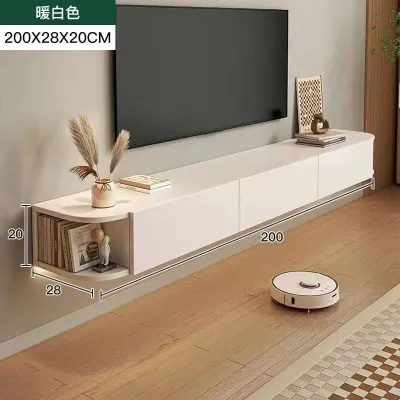
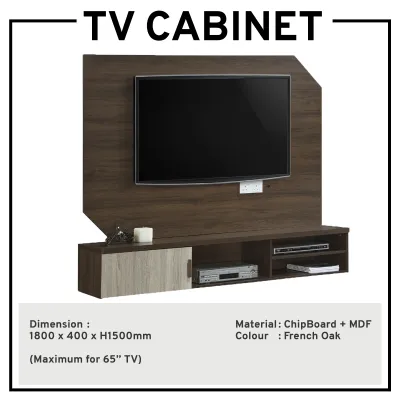

![[CozyNest ]Solid Wood Narrow Wall-mounted Kabinet Tv Dinding Gantung 160/200/240cm Hanging TV Cabinet](https://img.lazcdn.com/g/p/a40a946e25113a8da50279754579b329.jpg_400x400q80.jpg_.webp)
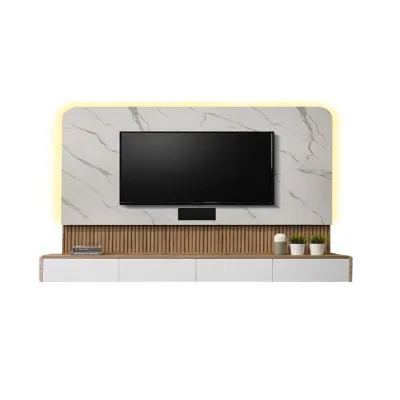
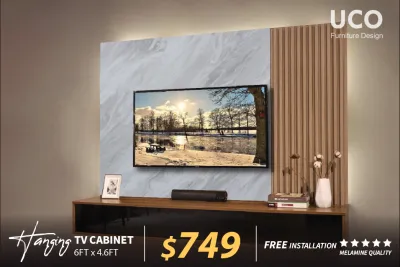
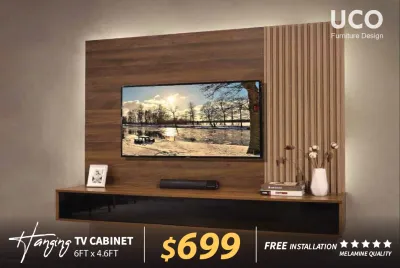
Prices are valid at publication and may change. Please refer to the product page for the latest price.
Floor space and room depth are equally crucial constraints. A traditional TV cabinet occupies a physical footprint on your floor, typically requiring a depth of 40 cm to 50 cm. You must also account for clearance space in front of the cabinet to comfortably open doors, drawers, or access cable ports. In narrow living rooms, this depth can restrict foot traffic and make the space feel cramped. In contrast, wall-mounting requires only the depth of the bracket and the television itself—usually under 15 cm in total. This opens up valuable floor area, making the entire room feel more spacious.
Evaluate lift and doorway access if buying a large, pre-assembled TV cabinet. Singapore apartments often have tight hallway corners, narrow doorways, and elevator height restrictions. Measure these entry pathways carefully to ensure the delivery team can safely transport the furniture. If access is restricted, opt for flat-packed furniture assembled on-site, or choose a wall-mounted setup to bypass delivery complications entirely.
Evaluate Your Media Storage and Lifestyle Needs
Your entertainment habits and media equipment volume heavily influence this choice. A modern home theater setup often extends to soundbars, gaming consoles, streaming set-top boxes, Wi-Fi routers, and smart hubs. A TV cabinet excels at housing these peripheral devices. It offers dedicated shelving, integrated cable management holes, and structured ventilation. This keeps your electronics organized, dust-free, and hidden from plain sight, while maintaining easy physical access to the rear input ports when you need to swap cables.

If you choose to wall-mount your television without a cabinet beneath it, finding alternative locations for these devices can be highly challenging. Running long cables to a distant shelf or hiding routers behind the screen often results in a cluttered look. While some homeowners hide small streaming sticks directly behind the TV, larger items like gaming consoles or bulky soundbars still require a stable surface or dedicated wall shelves, which can complicate the installation.
Your home maintenance routine should also guide your decision. A wall-mounted television leaves the floor completely unobstructed. This layout is highly beneficial for keeping your home clean, as it allows robotic vacuums, brooms, and mops to glide across the floor without navigating around furniture legs or trapping dust in hard-to-reach crevices. If you prefer a low-maintenance cleaning routine, lifting the television off the floor significantly reduces the time spent dusting and vacuuming.
Household dynamics, particularly the presence of young children or pets, introduce critical safety considerations. A television resting on a tabletop stand is inherently vulnerable to tipping over if bumped by an active toddler or a jumping pet. Wall-mounting keeps the screen safely out of reach, eliminating the risk of accidental tip-overs. However, if you choose a TV cabinet, look for cabinets with sturdy joints and a low center of gravity. For homes with children, you must secure the cabinet to the wall using an anti-tip safety kit to prevent the furniture itself from being pulled down.
Compare Visual Impact and Viewing Ergonomics
Your television setup’s visual weight plays a major role in defining your living room’s interior design style. A beautifully crafted TV cabinet serves as a grounded, decorative anchor in the room. It provides a flat surface to display personal items, such as art books, framed photographs, or indoor plants, which helps soften the cold, industrial look of a large black screen. This setup aligns perfectly with classic, mid-century modern, or cozy Scandinavian design styles that emphasize warmth and layered textures.
In contrast, tv hanging achieves a modern, minimalist, floating aesthetic. By removing the physical boundary of a bulky cabinet, the wall appears larger, and the entire room gains a sense of visual lightness. This is a popular choice for contemporary, industrial, or Japandi-style homes where clean lines and open spaces are prioritized. The television becomes a sleek, integrated part of the wall architecture rather than a piece of furniture sitting in the room.
Ergonomics are vital for preventing neck strain. The golden rule of TV placement is that the center of the screen should align with your eye level when you are seated comfortably on your sofa. Wall mounts offer complete flexibility in this regard, allowing you to position the television at the exact centimeter that suits your seating height. TV cabinets, however, have fixed heights. If your sofa is exceptionally low or high, a standard-height cabinet might force you to look at an uncomfortable angle, compromising your posture.
You must also balance the proportions of your television screen with your surrounding setup. Placing a massive 75-inch television on a narrow, short cabinet creates an unstable, top-heavy appearance that is both visually jarring and physically risky. If you own an oversized screen, wall-mounting it helps distribute the visual weight more evenly across the wall. Conversely, mounting a small television on a large, empty wall can make the room look sparse and unfinished. If you have a smaller screen, placing it on a well-proportioned cabinet helps frame the television and makes the setup look intentional and balanced.
The Final Verdict: Which TV Setup is Right for You?
Synthesize your living room’s layout, structural capabilities, and storage needs to make a confident decision.
Choose tv hanging if you live in a compact apartment where maximizing floor space is a priority, have solid concrete or brick walls that can easily support the weight, and prefer a clean, minimalist aesthetic. It is also the superior path if you have active young children or pets, as it keeps the expensive screen safely out of reach. If your media habits are entirely digital and wireless—relying on built-in smart TV apps rather than physical consoles—a wall mount provides a pristine, clutter-free setup.
Choose a TV cabinet if you are renting your home and want to avoid drilling large holes into the walls, or if your living room features lightweight drywall partitions that cannot safely support a heavy mount. A cabinet is also the ideal choice if you have an extensive collection of physical media, multiple gaming consoles, and complex sound systems that require dedicated shelving, easy cable access, and proper ventilation. It offers a classic, grounded look and allows you to easily rearrange your living room layout whenever you desire.
The hybrid approach offers an incredibly popular compromise. By wall-mounting your television and placing a low-profile TV console directly beneath it, you achieve a sleek, modern look while retaining essential storage space. The console provides a convenient home for your soundbar, media devices, and decorative items, while the wall-mounted television keeps the screen at the perfect ergonomic height and frees up the console’s top surface. This setup also makes it easy to hide cables behind the console or run them through a neat piece of trunking.
Essential Safety and Installation Checks
Executing your chosen setup safely is paramount to prevent property damage or personal injury.
For a wall-mounted setup, always verify the VESA mount compatibility of your television before purchasing a bracket. Ensure the bracket’s weight capacity comfortably exceeds your television’s specifications. Always use the correct wall anchors for your specific wall type; never use standard drywall plugs in a concrete wall, or vice versa. If you are mounting a screen larger than 55 inches, or if you are using an articulating full-motion mount that extends far from the wall, hire a certified professional installer to ensure the bracket is anchored securely into the structural wall.
For a TV cabinet, check the maximum load capacity to ensure it safely supports your television and devices. Place the cabinet on a completely level floor to prevent wobbling or uneven weight distribution. If you choose a tall, narrow, or lightweight cabinet, or if you have children or pets in the home, you must anchor the cabinet to the wall using an anti-tip safety kit. This simple step prevents the cabinet from tipping forward if someone pulls on a drawer or climbs the shelves.
Finally, prioritize ventilation and heat management for all your electronic devices. If you place gaming consoles, media players, or receivers inside an enclosed TV cabinet, ensure the cabinet features open backs, slatted doors, or mesh panels to allow hot air to escape. Check the finish and joint construction of wood cabinets to ensure they can withstand the localized heat generated by electronics, as well as Singapore’s humid climate. If devices are kept in a sealed compartment without airflow, they can quickly overheat, leading to hardware degradation, system crashes, or permanent damage.
Frequently Asked Questions (FAQ)
Can I wall-mount a TV on a drywall partition?
Yes, but it requires careful structural verification. Never mount a television directly onto plasterboard, as it lacks the strength to hold the weight and will tear under the load. Instead, you must locate the internal vertical studs (typically made of wood or metal) using a stud finder and secure the mounting bracket directly into them. If the studs do not align with your desired TV position, you must use specialized heavy-duty toggle bolts rated for your TV’s weight, or consult a professional contractor to reinforce the drywall partition internally before installation.
How high should a wall-mounted TV be?
The standard ergonomic recommendation is to position the television with the center of the screen at seated eye level. For typical sofas, this is usually 100 cm to 110 cm from the floor. If you have a low-profile sofa or a high-backed reclining chair, sit in your normal viewing position and have someone mark your eye level on the wall to find your custom height. For bedroom setups where you watch while lying down, mount the TV higher and use a tilting bracket to angle the screen downward toward your bed.
Do TV cabinets need to be wider than the TV?
Yes, your TV cabinet should always be wider than the television screen for both aesthetic balance and physical safety. A good rule of thumb is to choose a cabinet that is at least 10 cm to 15 cm wider than the TV frame on each side. This creates a visually stable, balanced pyramid shape rather than a top-heavy look. It also provides a protective physical boundary, reducing the risk of family members or pets accidentally bumping into the exposed edges of the screen as they walk past the cabinet.
Community discussion
Share your experience or ask a question. Comments are reviewed before publication.