
Quick Answer: Is the Budget Trade-Off Worth It?
Deciding on a gaming chair in Singapore often comes down to a fundamental question: should you opt for an entry-level option like TT Racing, or invest in a premium model? The trade-off between upfront savings and long-term comfort is a critical decision point. Ultimately, whether the lower price point is worth it depends on your daily sitting habits, physical support requirements, and how long you expect the chair to last.
TT Racing serves as a practical choice for budget-conscious gamers, casual players, or secondary room setups where extreme durability is less critical. If you only sit for a few hours a day or need a secondary chair for a guest room, the savings are highly justifiable. These chairs provide the classic gaming aesthetic and basic adjustable features without demanding a massive financial commitment.
Conversely, premium brands are the better investment for professionals, streamers, or anyone spending eight or more hours daily at a desk. In these intensive use cases, advanced ergonomics, high-density cold-cure foam, and longer comprehensive warranties justify the higher upfront cost. Rather than declaring a single absolute winner, you should frame your decision around your daily usage intensity and how you prefer to allocate your budget.
Products mentioned in this guide
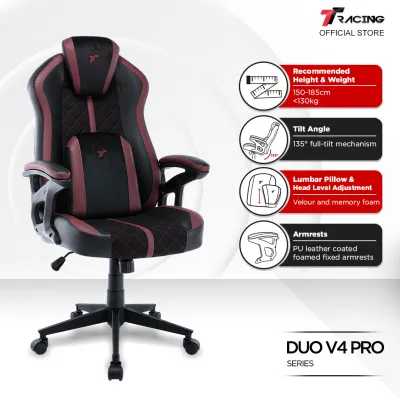
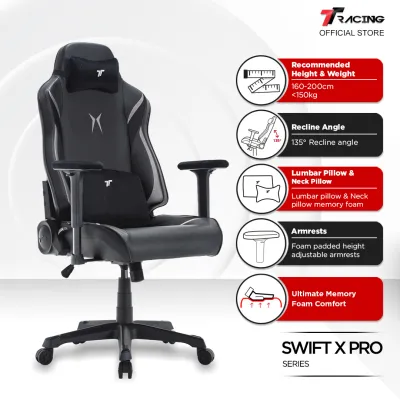
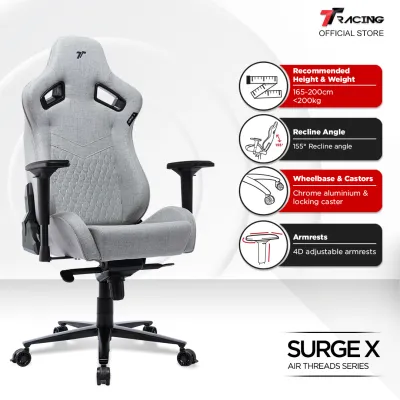

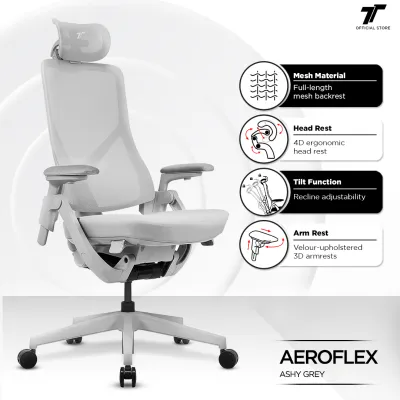
Prices are valid at publication and may change. Please refer to the product page for the latest price.
Structural Build and Safety: What to Verify Before Buying
When comparing budget and premium gaming chairs, the structural foundation is where manufacturers either invest in longevity or cut costs to meet a price point. The internal frame of a gaming chair dictates its structural integrity over years of daily weight distribution. Budget models typically utilize standard steel tubing, which is functional but can be prone to slight flexing or creaking over time under heavy use. Premium chairs, on the other hand, often feature reinforced steel frames or high-strength aluminum alloys that offer exceptional rigidity and resist warping.

The wheelbase is another critical component that directly impacts stability and safety. Budget options frequently feature heavy-duty nylon bases. While modern nylon bases are engineered to withstand significant pressure, they lack the absolute structural stiffness of the reinforced aluminum or solid steel wheelbases standard on premium models. A flexing base can alter the center of gravity, making the chair feel less stable when fully reclined.
To ensure your safety, you must look closely at the gas lift cylinder, which is the pressurized chamber responsible for height adjustment. Instruct yourself to check the manufacturer’s specification sheet for the gas lift class, aiming for a Class 3 or Class 4 rating. Do not assume safety based solely on the brand name; instead, look for recognized safety certification marks, such as TÜV LGA or SGS, stamped directly onto the metal of the cylinder itself.
Weight capacity limits require careful verification rather than passive acceptance of marketing claims. Advise yourself to match the chair’s stated maximum weight capacity with your own weight plus a safety margin of at least 15 to 20 percent. You can verify these limits by checking the physical product label or the official specification page on the manufacturer’s website before finalizing your purchase.
Finally, consider how the chair’s weight and wheel design interact with your flooring. Premium chairs often use heavier, more stable metal bases that can exert significant downward force. To protect your home flooring from scratches and scuffs, verify whether the casters are coated with polyurethane (PU). Soft PU-coated casters are generally safe for hard floors like vinyl, parquet, or tile, whereas hard nylon casters on budget models may require a protective floor mat.
Upholstery and Climate Comfort: PU Leather vs. Premium Fabrics
Singapore’s tropical climate, characterized by high humidity and warm temperatures, presents a severe test for any chair’s upholstery. The material wrapping your chair determines not only how it feels against your skin but also how well it manages heat retention. Standard PU leather, which is the default choice for most budget chairs like TT Racing, consists of a synthetic polymer backing coated with a polyurethane finish. While it is easy to wipe clean, standard PU leather tends to trap heat and moisture, leading to a sticky, uncomfortable experience during long sessions in non-air-conditioned rooms.
Premium gaming chairs address this climate challenge by offering advanced upholstery options. These include high-grade proprietary leatherettes, hybrid performance meshes, and soft-weave fabrics. Proprietary leatherettes are often engineered to be more breathable than standard PU, while soft-weave fabrics allow air to flow freely through the material, significantly reducing heat buildup. If you do not run air conditioning continuously, a fabric or mesh chair is almost always the superior choice for thermal comfort.
Material durability over years of exposure to sweat and humidity is another major point of divergence. Rather than relying on absolute claims about peeling, you should check the manufacturer’s care instructions and warranty terms to see if surface peeling or cracking is covered over time. Budget brands often exclude upholstery peeling from their standard warranty, or offer very short coverage periods, whereas premium brands sometimes provide dedicated coverage for material degradation.
To maximize the lifespan of your chair’s surface, follow a strict maintenance routine regardless of the price tier:
- Regular Cleaning: Wipe the entire surface of the chair weekly using a clean, damp microfiber cloth to remove sweat, salt buildup, and body oils.
- Avoid Harsh Chemicals: Never use alcohol-based cleaners, bleach, or abrasive detergents, as these rapidly strip away protective coatings and accelerate peeling.
- Direct Sunlight Protection: Position your chair away from windows where direct sunlight can dry out synthetic leathers and fade fabric colors.
- Immediate Drying: If you spill liquids or sweat heavily, dry the surface immediately with a dry cloth to prevent moisture from seeping into the foam beneath.
Ergonomics and Adjustability: Which Features Actually Matter?
Ergonomic design is not just about comfort; it is a matter of physical health when sitting for extended periods. The primary goal of an ergonomic chair is to support the natural curvature of your spine and keep your joints in neutral alignment. However, the level of adjustability you get varies wildly between budget and premium tiers, directly affecting how well the chair can adapt to your unique body proportions.
Armrest adjustability is a clear indicator of a chair’s ergonomic depth. Budget models often feature fixed armrests or basic 2D armrests, which only adjust vertically. Premium models typically come standard with 4D armrests that adjust in four directions: height, depth, angle, and width. This multi-directional adjustment allows you to align your elbows perfectly with your desk height, preventing shoulder strain and reducing the risk of carpal tunnel issues.
Lumbar support systems also differ significantly between the two price brackets. Budget chairs usually rely on simple, removable lumbar pillows held in place by elastic straps. While functional, these pillows can slide out of position, flatten over time, and fail to provide targeted lower back support. Premium chairs often feature built-in, adjustable lumbar mechanisms integrated directly into the backrest, allowing you to customize both the depth and height of the support via physical dials.
The recline and tilt mechanism dictates how the chair moves with your body. Basic models typically offer a simple tilt-with-lock function, where the entire chair tilts back as a single rigid unit. Advanced multi-tilt mechanisms, found on premium chairs, allow the seat pan to angle independently from the backrest. This enables a “rocking” motion that keeps your feet flat on the floor while tilting, distributing your body weight more evenly and reducing pressure on your thighs.
To make a smart purchasing decision, prioritize these features based on your specific daily activities. If you are a desk worker or an active PC gamer who sits upright, prioritize high-quality lumbar support and 4D armrests to maintain posture. If you are primarily a console gamer or use your setup to watch movies, a deep recline mechanism with a stable tilt lock may be more valuable to you than intricate armrest adjustments.
Price-to-Value Assessment: Calculating the Long-Term Cost
When shopping in Singapore, the price gap between budget and premium gaming chairs is substantial. Budget models like TT Racing generally retail between S$150 and S$350, making them highly accessible. Premium alternatives typically start around S$600 and can easily exceed S$900 depending on the material and customization options. While the upfront savings of a budget chair are tempting, you must calculate the long-term cost per year of use to determine the true value.
Consider the math behind a chair’s lifespan. If you purchase a budget chair for S$250 and it requires replacement or expensive re-upholstering after two years due to a worn-out gas lift or peeling leather, your cost of ownership is S$125 per year. If you invest S$700 in a premium chair backed by a robust five-year warranty, and it remains fully functional throughout that period, your cost of ownership drops to S$140 per year, with the added benefit of superior comfort and support during those five years.
To protect your investment, you must carefully read the warranty terms before clicking buy. Pay close attention to the distinction between structural warranties and upholstery warranties. A manufacturer might advertise a “5-year warranty,” but a closer look at the fine print may reveal that the hydraulic piston and frame are covered for five years, while the peeling leather and foam compression are only covered for one year. Budget brands often have much more restrictive clauses regarding wear-and-tear items.
Additionally, do not overlook potential hidden costs that can narrow the price gap between the two tiers. These factors can quickly add to your total expenditure:
- Shipping and Delivery Fees: Some budget brands charge extra for local delivery, whereas premium brands often bundle free shipping into their higher retail price.
- Assembly Services: If you are not comfortable assembling the chair yourself, professional assembly services can add S$30 to S$50 to your bill.
- Ergonomic Accessories: If a budget chair's basic lumbar pillow proves uncomfortable, you may find yourself spending another S$40 to S$80 on third-party memory foam cushions to make it usable.
Final Decision Framework: Which Tier Fits Your Setup?
To finalize your decision, you should objectively evaluate your daily habits, your physical environment, and your budget constraints. Both budget and premium chairs have a legitimate place in the market, but they serve entirely different user profiles.
Choose TT Racing (or similar budget tiers) if:
- Strict Budget Constraints: You have a hard spending limit and prefer to allocate your remaining funds toward PC components or peripherals.
- Casual or Low-Hour Usage: You spend less than four hours a day in the chair, making advanced ergonomic micro-adjustments less critical.
- Secondary Setups: You are furnishing a guest bedroom, a child's study desk, or a temporary rental space where long-term durability is not a priority.
- Preference for Upgrades: You enjoy changing your room's aesthetic every couple of years and do not mind replacing your chair to match new decor.
Choose a Premium Gaming Chair if:
- High-Intensity Daily Use: You work, study, or game for eight or more hours daily, making physical comfort and spinal support a top priority.
- Specific Physical Needs: You suffer from chronic lower back, neck, or shoulder pain and require precise 4D adjustments to maintain correct posture.
- Long-Term Investment Mindset: You prefer to buy a high-quality product once and enjoy peace of mind for five or more years under a comprehensive warranty.
- Premium Material Preferences: You want advanced, breathable soft-weave fabrics or high-grade hybrid leathers that perform exceptionally well in humid environments.
Verify first if:
- Desk Height Compatibility: Measure the height of your desk to ensure the chair's armrests can slide underneath when not in use, saving floor space.
- Room Dimensions: Check that your room has enough clearance for the chair's full recline radius, especially in compact Singapore HDB bedrooms.
- Return Policies: Confirm the retailer's return policy, as shipping a heavy, fully assembled chair back due to a sizing mismatch can be incredibly difficult and costly.
Frequently Asked Questions (FAQ)
Is a budget gaming chair safe for long-hour daily use?
A budget gaming chair is structurally safe to use for long hours as long as you remain within the manufacturer’s stated weight limit. However, from an ergonomic health perspective, budget chairs may lack the highly adjustable lumbar supports and multi-tilt mechanisms required to keep your body in optimal alignment over an eight-hour workday. If you do use a budget chair for extended periods, it is highly recommended to take active breaks, stand up, and stretch every hour to mitigate the risk of muscle strain and fatigue.
Do budget gaming chairs come with a reliable local warranty?
Warranty reliability for budget gaming chairs in Singapore depends heavily on the specific retailer you purchase from rather than just the brand name itself. To ensure your warranty is honored without hassle, always purchase directly from authorized local distributors or official online brand stores. Once your chair arrives, locate the physical warranty card inside the box, register your product online immediately, and clarify whether the warranty covers the cost of replacement parts, labor, and transport for repairs.

Community discussion
Share your experience or ask a question. Comments are reviewed before publication.